- Licensed Bhutanese tour operator
- Thimphu, Bhutan

Blog · Updated October 2026
Bhutan hotels and accommodation: every type of stay explained
Certified 3-star hotels, boutique lodges, farmhouse homestays, luxury lodges and trek camps. What each is like, what the rules say, and how to choose.
- Certified stays only
- Homestays included
- Luxury to simple
The rule
Tourists can only stay in certified places
You cannot book an Airbnb or a friend’s spare room in Bhutan. Tourists must stay in accommodation certified by the Department of Tourism. On 22 October 2026 the Department repeated that every provider, including village homestays, needs its clearance and certification before hosting tourists.
That sounds restrictive, but the range is wide. Since 2023, the rating system has included 1-star and 2-star hotels, and certified homestays have been allowed to host tourists. The Department has certified hundreds of smaller, non-star hotels as well. In practice you can choose anything from a farmhouse with a wood stove to one of Asia’s top lodges.
- Your operator books only certified stays
- Homestays need certification too
- Rules checked October 2026
Compare
Types of accommodation in Bhutan
| Type | What it is like | Best for | Price level |
|---|---|---|---|
| 3-star hotels | Family-run, clean and warm, Bhutanese decoration, buffet meals | Most first-time visitors | Included in standard tours |
| 4-star and boutique | Bigger rooms, better views, spas in some | Couples and comfort seekers | Moderate upgrade |
| Luxury lodges | Amankora, COMO Uma, Six Senses and similar | Honeymoons, special trips | Often above USD 1,000 per room per night |
| Farmhouse homestays | A room in a family home, meals with the family | Culture and village life | Usually one or two nights of a trip |
| Trek camps | Tents, kitchen tent and crew | Trekkers | Included in trek price |
In detail
What to expect from each kind of stay
Standard tourist hotels
Most visitors spend most nights in 3-star hotels. They tend to be family-run, with wooden panelling, painted windows and views over the valley. Rooms have private bathrooms and hot water, and many have heaters. Meals are usually buffets of Bhutanese, Indian and continental dishes. Wi-Fi works in common areas and often in rooms.
Boutique and 4-star hotels
A step up in space and finish. Some are restored traditional buildings, such as Zhiwa Ling in Paro, which is built like a dzong. Others are modern international brands in Thimphu and Paro. Expect better beds, quieter rooms and sometimes a spa or hot stone bath.
Luxury lodges
Bhutan has an unusual number of very high-end lodges for a small country. Amankora and Six Senses each run lodges across several valleys, so you can stay with one brand from Paro to Bumthang. COMO has lodges in Paro and Punakha. They are expensive, quiet and beautiful, and most guests mix them with simpler stays.
Farmhouse homestays
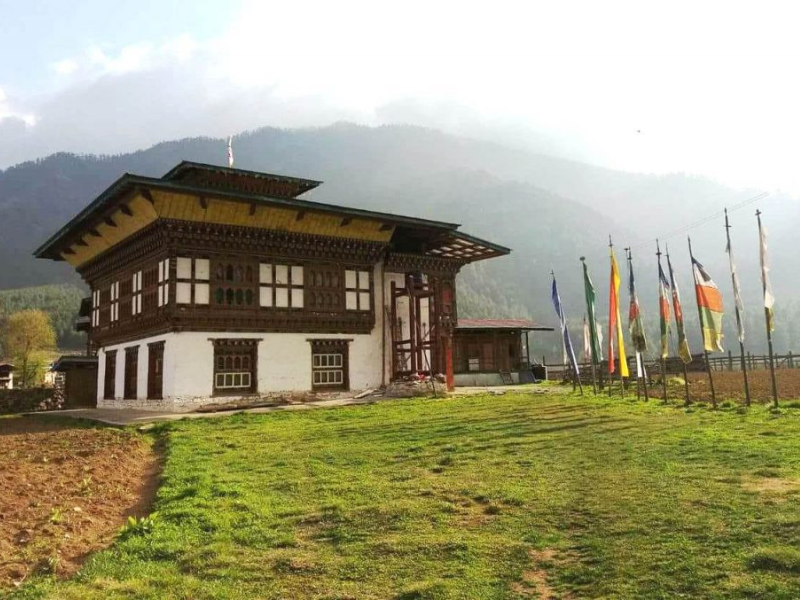
This is where many guests have their favourite evening. You sleep in a room in a traditional house, eat red rice and ema datshi with the family and maybe try ara by the stove. Bathrooms are simpler, and some are outside the main house. A hot stone bath is often on offer. One night is enough for most people.
Camping on treks
On camping treks the crew sets up sleeping tents, a dining tent and a toilet tent each afternoon. Nights are cold at altitude, so a good sleeping bag matters. See our packing list for what to bring.
Choosing
Which stays suit which travellers
Families usually do best in 3-star or 4-star hotels with connecting or family rooms, plus one homestay night that children tend to love. Couples on a honeymoon often save the luxury lodge for the end of the trip. Solo travellers do well in comfortable 3-star hotels, which keeps the single-room supplement low. Older travellers should ask for ground-floor rooms or hotels with lifts, because many buildings have steep wooden stairs.
Photographers and early risers like lodges on the valley edge, with views at dawn. Trekkers spend their last night before the trek somewhere comfortable, and their first night after it somewhere with a deep bath. We plan all of this for you, but it helps to know what to ask for.
Practical
Hotel tips for Bhutan
Heating
Ask for a heater in winter. Older buildings and farmhouses can be cold at night.
Twin or double
Many hotels have more twin rooms than doubles. Tell us which you prefer.
Wi-Fi
Available in most hotels, slower in remote valleys.
Meals
Most tours include all meals. Tell us about allergies and diets in advance.
Hot stone baths
Wooden tubs heated with river stones. Offered by many farmhouses and some hotels.
Book early
Good hotels in Paro and Thimphu fill months ahead for April, October and festivals.
Accommodation in Bhutan: questions
No. Tourists must stay in accommodation certified by the Department of Tourism.
Yes, certified homestays can host tourists. The Department of Tourism repeated in October 2026 that they need certification.
Most tourist hotels are 3-star, family-run, clean and warm, with Bhutanese decoration and buffet meals.
Yes. On a private tour we suggest hotels, and you can swap any of them for another certified option.
Most do in Paro, Thimphu and Bumthang. Ask for a heater in winter.
Want help choosing where to stay?
Tell us your budget and style and we will suggest certified hotels for each night of your trip.
