- Licensed Bhutanese tour operator
- Thimphu, Bhutan
Photography tour · 10 days, 9 nights
10 Day Bird Photography Tour in Eastern Bhutan: Yongkola, Bumdeling and the Lingmethang Road
Ten days in Bhutan’s quiet east with a birding guide: enter overland from Guwahati, shoot the forests of Deothang and Kori La, the cranes of Bumdeling in winter and the famous Lingmethang road below Yongkola.
- 10 days, 9 nights
- Overland via Samdrup Jongkhar
- Best November to May
700+
Bird species recorded in Bhutan
Yongkola
Eastern birding hotspot
Nov to Feb
Cranes at Bumdeling
Private
Birding guide and car
Trip overview
Bhutan's east, for bird photographers
Most visitors to Bhutan stay in the west. The east sees far fewer travellers, and for bird photographers that is the point. The forests between Mongar and the Kuri Chhu, and the long, winding road down from Thrumshing La to Lingmethang, are among the best birding sites in the Himalaya. Yongkola, a small settlement on that road, is known among birders across the world.
This trip enters Bhutan overland. You fly into Guwahati in India and cross the border at Samdrup Jongkhar, which saves the drive back west and lets you start birding in the warm southern foothills. From there the route climbs north to Trashigang, then to Trashi Yangtse and the Bumdeling valley, where black-necked cranes spend the winter. We then go west over Kori La to Mongar and spend two full days on the Lingmethang road before heading back south.
Your guide is a birder who knows the calls and the recent sightings. The car stops wherever a bird does. We plan the days around early mornings, when birds are most active and the light is soft, and keep the afternoons for rest, editing or a second, shorter session.
- Overland entry from Guwahati, no long backtrack
- Yongkola and the Lingmethang road
- Cranes at Bumdeling from November to February
Highlights
Key birds and places
Ward's trogon
A shy forest trogon, one of the prizes of the Lingmethang road.
Rufous-necked hornbill
Seen in the warm forests of the east and south.
Black-necked crane
Winters in the Bumdeling valley, November to February.
Beautiful nuthatch
A rare nuthatch of eastern Himalayan forest.
Sunbirds and laughingthrushes
Common on flowering trees along the roads.
Chorten Kora
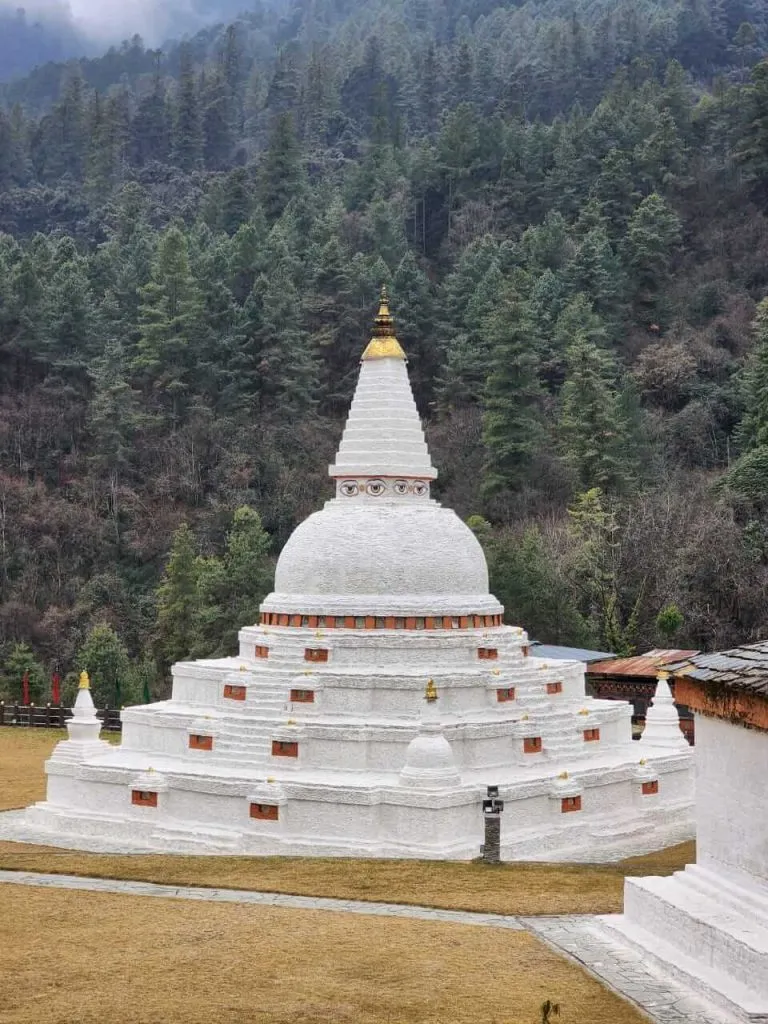
A large white stupa in Trashi Yangtse, for a break from birds.
Itinerary at a glance
Ten days in the east
Days start at first light. Sites change with recent sightings and weather.
Day 1: Guwahati to Samdrup Jongkhar
Drive from Guwahati to the Bhutan border.
Day 2: To Trashigang
Deothang and Narphung forests, on to Trashigang.
Day 3: To Trashi Yangtse
Gom Kora, Chorten Kora, Bumdeling valley.
Day 4: Bumdeling
Cranes at dawn, river birds, Bumdeling Wildlife Sanctuary.
Day 5: To Mongar
Back through Trashigang, over Kori La to Mongar.
Day 6: To Yongkola
The Lingmethang road, Yongkola.
Day 7: Yongkola
A full day on the upper and lower road.
Day 8: To Trashigang
Morning at Yongkola, drive back east.
Day 9: To Samdrup Jongkhar
South through the foothills.
Day 10: To Guwahati
Cross the border, transfer to Guwahati airport.
Day 1
Into Bhutan by road
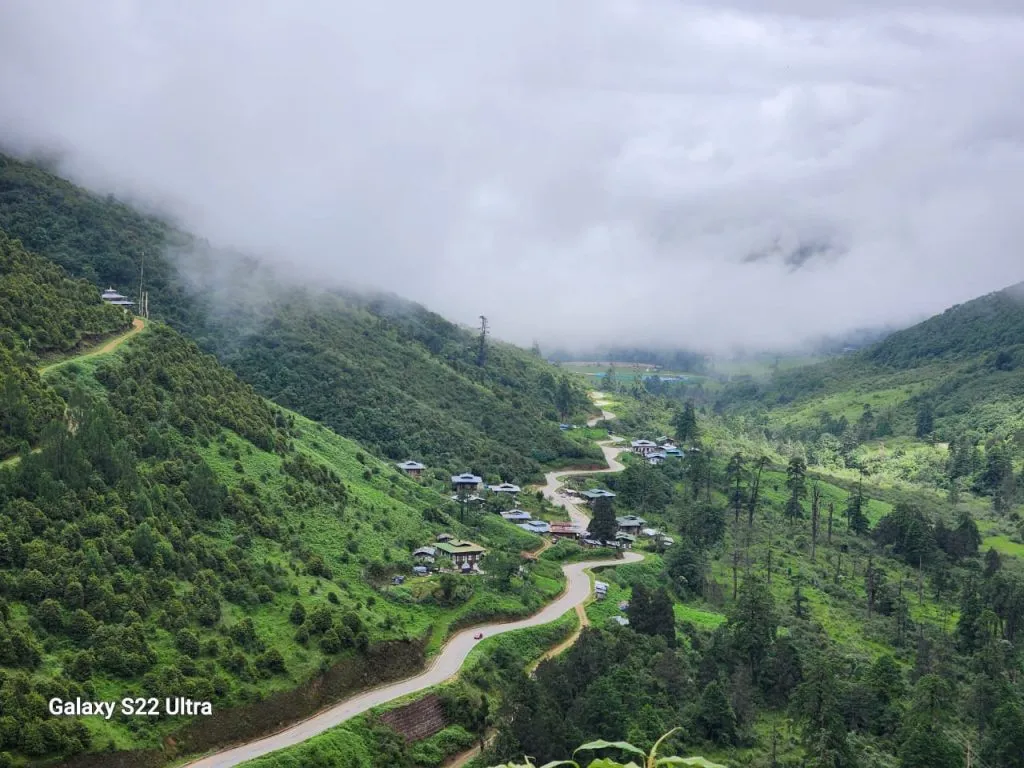
We meet you at Guwahati airport in Assam for the drive of about three hours to Samdrup Jongkhar on the Bhutan border. Your guide handles the entry formalities at the border office. In the late afternoon, the edge of town has open scrub and forest where bulbuls, drongos and barbets are easy to find.
- Overnight: Samdrup Jongkhar
- Drive: about 3 hours
- Entry: Samdrup Jongkhar border
Day 2
Foothill forest to Trashigang
The road north climbs steadily through broadleaf forest. We stop at the forest near Deothang and on the slopes below Narphung, where mixed flocks move through the canopy in the morning. Look for sultan tit, long-tailed broadbill and several species of minivet. We reach Trashigang in the evening.
- Overnight: Trashigang
- Drive: about 6 to 7 hours with birding stops
- Meals: breakfast, packed lunch and dinner
Day 3
North to Trashi Yangtse
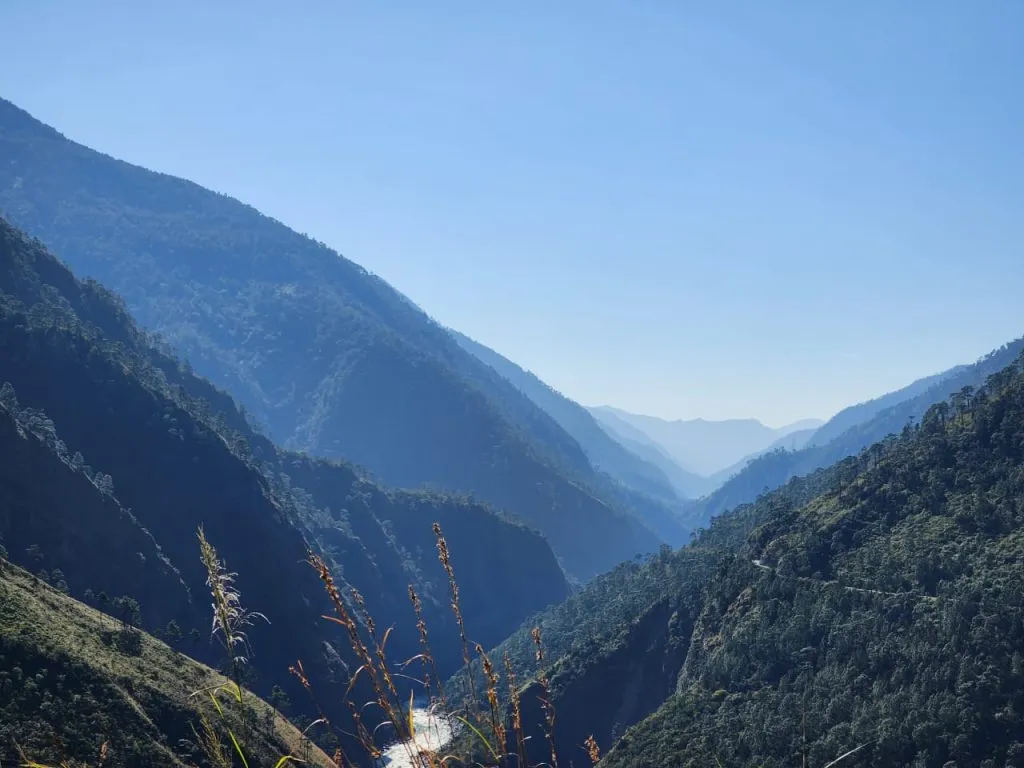
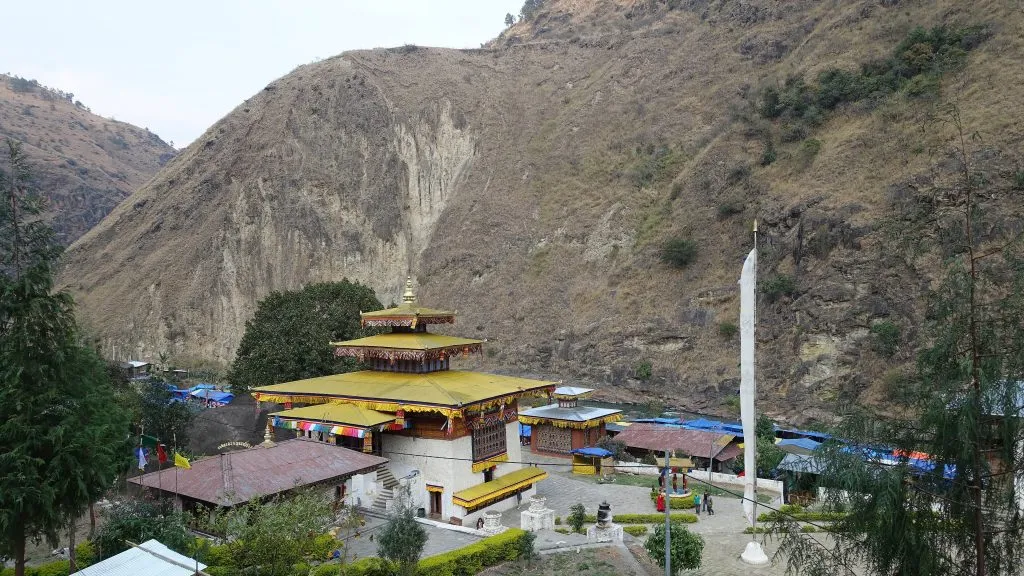
We drive north along the Drangme Chhu, stopping at Gom Kora, a temple beside the river where Guru Rinpoche is said to have meditated. Riverside birds such as the crested kingfisher and wallcreeper are possible here in winter. In Trashi Yangtse we photograph Chorten Kora, then continue into the Bumdeling valley for the evening.
- Overnight: Trashi Yangtse
- Drive: about 3 hours with stops
- Cranes: November to February
Day 4
Bumdeling valley
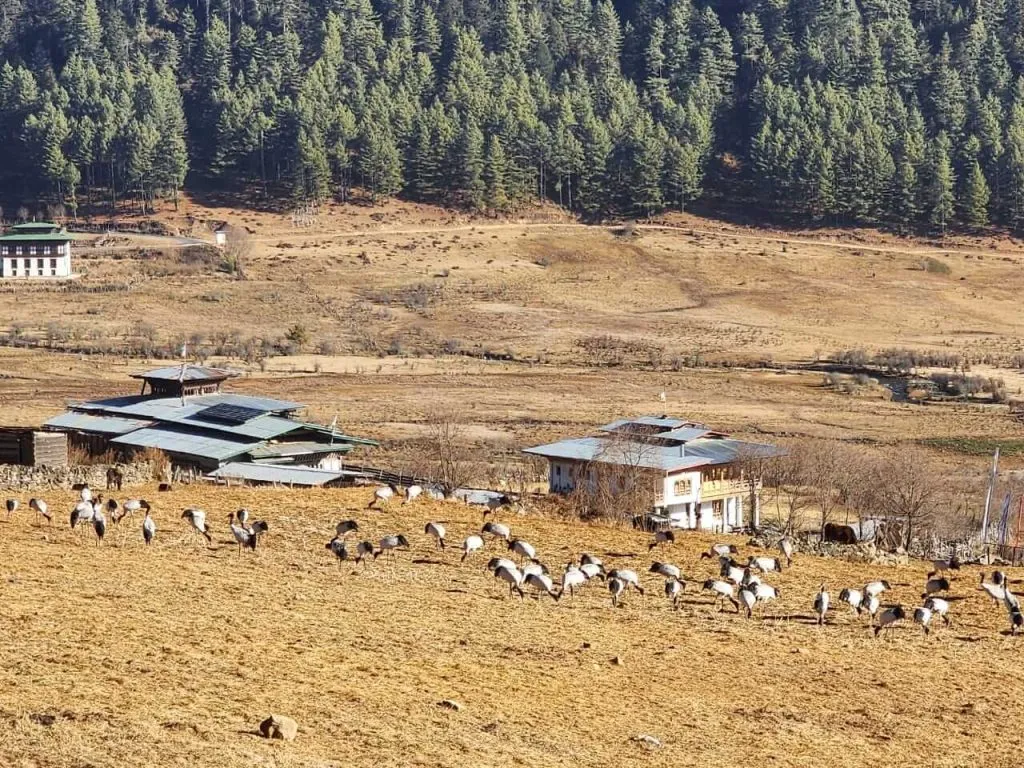
In winter we start at dawn at the paddy fields of Bumdeling, where black-necked cranes come down to feed. Please keep to the edge of the fields and use a long lens; the cranes are protected and easily disturbed. Outside crane season, the sanctuary’s forests and river edges are good for forktails, redstarts and wren-babblers.
- Overnight: Trashi Yangtse
- Lens: 400 mm or longer for cranes
- Note: keep your distance from the birds
Day 5
Over Kori La to Mongar
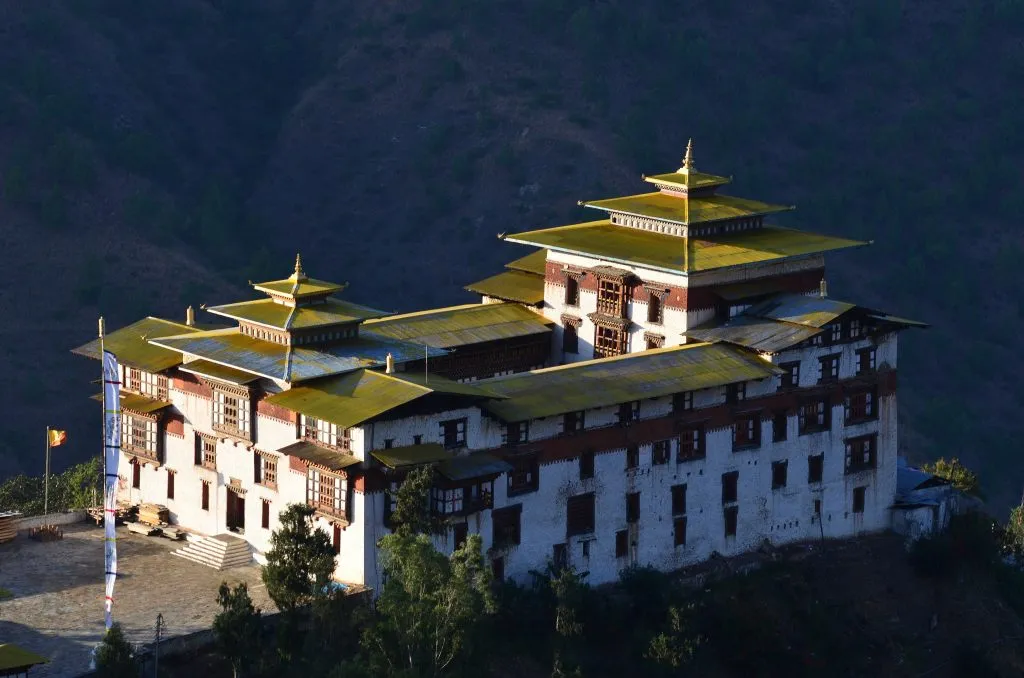
We drive back down to Trashigang and photograph the dzong on its ridge, then climb to Kori La, at about 2,400 metres. The forest around the pass holds laughingthrushes, fulvettas and, with luck, the rufous-throated wren-babbler. We drop into Mongar for the night.
- Overnight: Mongar
- Drive: about 5 hours with stops
- Meals: breakfast, lunch and dinner
Day 6
Down the road to Yongkola
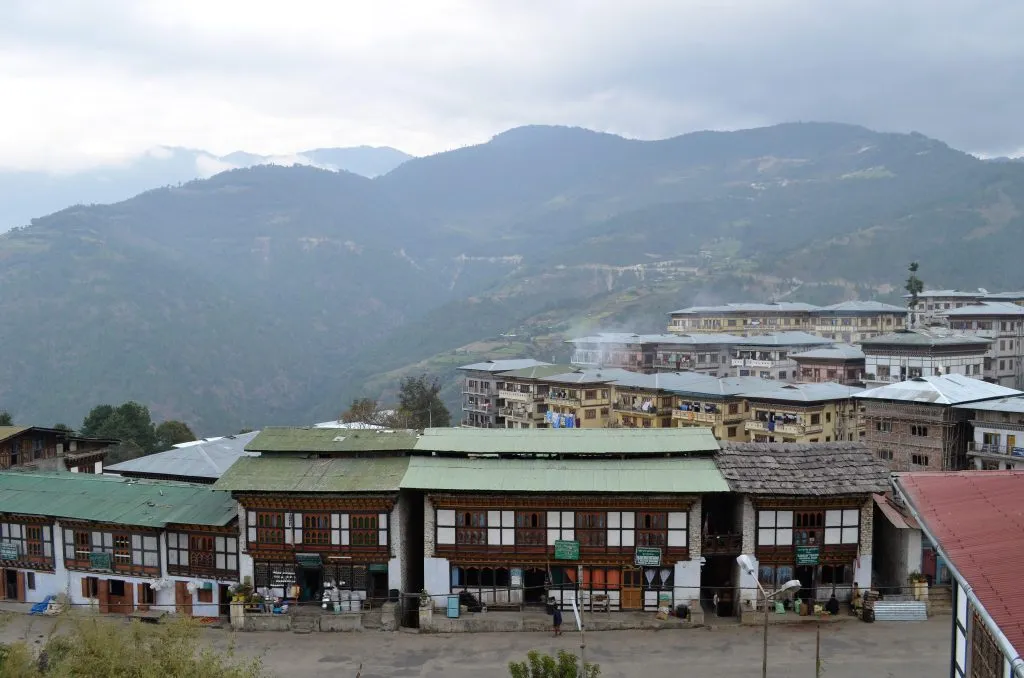
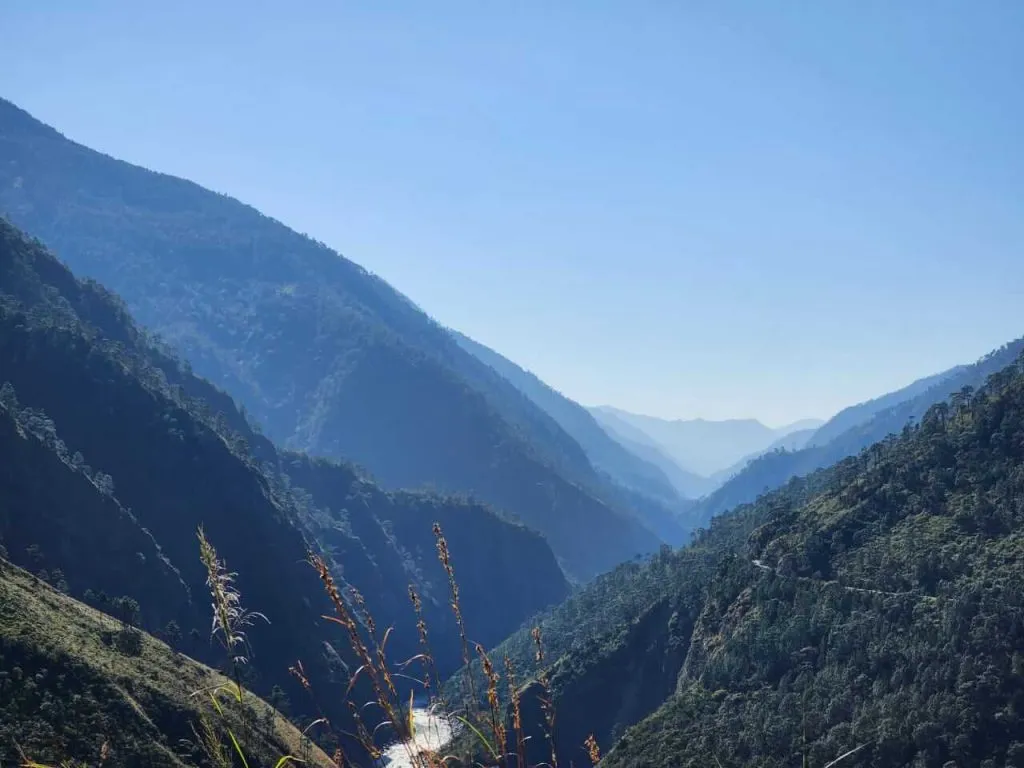
From Mongar we drive west to Lingmethang, then climb the long road towards Yongkola. This stretch, between about 1,200 and 2,800 metres, is the heart of the trip. We drive slowly, stopping wherever a flock appears. Common birds here include several laughingthrushes, minlas and yuhinas, and with patience and luck there are rarities such as Ward’s trogon and the beautiful nuthatch.
- Overnight: Yongkola
- Birding: full day along the road
- Stay: simple lodge
Day 7
A full day at Yongkola
A second full day lets your guide take you back to the spots with the best recent activity. We start on the upper road at first light and work down through the day. Bring your patience: forest birds come and go fast, and the best shots often come after a long, quiet wait.
- Overnight: Yongkola
- Birding: full day
- Tip: keep ISO high in the forest shade
Day 8
Back to Trashigang
After a last early session on the Yongkola road, we drive back east through Mongar and over Kori La to Trashigang. There are stops at any good flocks along the way.
- Overnight: Trashigang
- Drive: about 5 hours with stops
- Meals: breakfast, lunch and dinner
Day 9
South to the border
We drive south to Samdrup Jongkhar, with a final birding stop in the lower forests. In the evening you can walk around the small town, which has a busy market and a Zangdopelri temple.
- Overnight: Samdrup Jongkhar
- Drive: about 6 hours with stops
- Meals: breakfast, lunch and dinner
Day 10
Back to Guwahati
After breakfast we cross the border and drive to Guwahati airport for your flight onward. Allow about three hours for the drive.
- Drive: about 3 hours
- Meals: breakfast
Where you stay
Where you stay
Hotels in the east are simple. Clean rooms, hot water and good local food.
| Nights | Place | Where you stay | Why we chose it |
|---|---|---|---|
| 1 | Samdrup Jongkhar | 3-star hotel | Border town |
| 2 | Trashigang | 3-star hotel | Eastern hub |
| 3 and 4 | Trashi Yangtse | Simple hotel | Near Bumdeling |
| 5 | Mongar | 3-star hotel | Before Yongkola |
| 6 and 7 | Yongkola | Simple lodge | Right on the birding road |
| 8 | Trashigang | 3-star hotel | On the way south |
| 9 | Samdrup Jongkhar | 3-star hotel | Last night |
There are no luxury hotels in the far east. We choose the best available in each town.
What the price covers
Included and not included
Included
- Bhutan visa (USD 40) and the Sustainable Development Fee for every night
- Hotels as listed, 3-star as standard, with 4-star and luxury upgrades on request
- All meals: breakfast, lunch and dinner
- A licensed birding guide who knows the calls and sites
- Private car or SUV with a Bhutanese driver, and all transfers
- Entry fees to dzongs, temples and museums
- Bottled water in the car
- Transfers to and from Guwahati airport
Not included
- Flights into and out of Guwahati (we can book them for you)
- Indian visa if you need one for the Guwahati leg
- Travel insurance, which we strongly recommend
- Drinks, laundry and other personal costs
- Tips for your guide and driver
- Anything not listed under included
Price on request
Tell us your budget and we will send our best price
We don’t publish one fixed price, because hotels, season and group size change the total a lot. Tell us your dates, who is travelling and the budget you have in mind. We will reply within 24 hours with our best price for this bird photography tour.
How we price
What decides the cost of this trip
Government fees
The SDF is USD 100 per adult per night until 31 August 2027, plus a USD 40 visa. These are fixed by the Government of Bhutan and paid through us.
Hotels you choose
Small groups share the guide and car, which helps the price. Tell us how many of you will travel.
Season and dates
Spring and autumn are peak season. Winter and summer dates are often easier to price well.
Group size
Guide and car costs are shared, so the price per person drops for two, three or four travellers.
We send a written, itemised quote before you pay anything. No booking fees.
Good to know
Planning notes for bird photographers
Best seasons
November to February brings the cranes to Bumdeling and wintering birds down to the valleys. March to May is breeding season, when birds sing, show full plumage and are easier to find by call. The monsoon, from June to September, brings heavy rain and landslides to eastern roads, so we don’t run this trip then.
Entering through Samdrup Jongkhar
Samdrup Jongkhar is one of Bhutan’s land border crossings open to international visitors. Your Bhutan visa is arranged in advance, as with Paro. If you need an Indian visa for Guwahati, you apply for that yourself; we can send a letter with your itinerary to help.
Ethics around birds
The Royal Society for Protection of Nature runs long-term work for the black-necked crane. Please keep a respectful distance, never use playback near nests or cranes, and don’t leave the road or field edge to get closer. Your guide will ask you to step back if a bird looks stressed.
Lenses for forest birds
A 100 to 400 mm or 150 to 600 mm zoom is the most useful lens; many birds here are small and fast. Forest light is low, so a camera that handles high ISO well helps. A beanbag for the car window is lighter than a tripod and works well on the Lingmethang road.
Photography rules in Bhutan
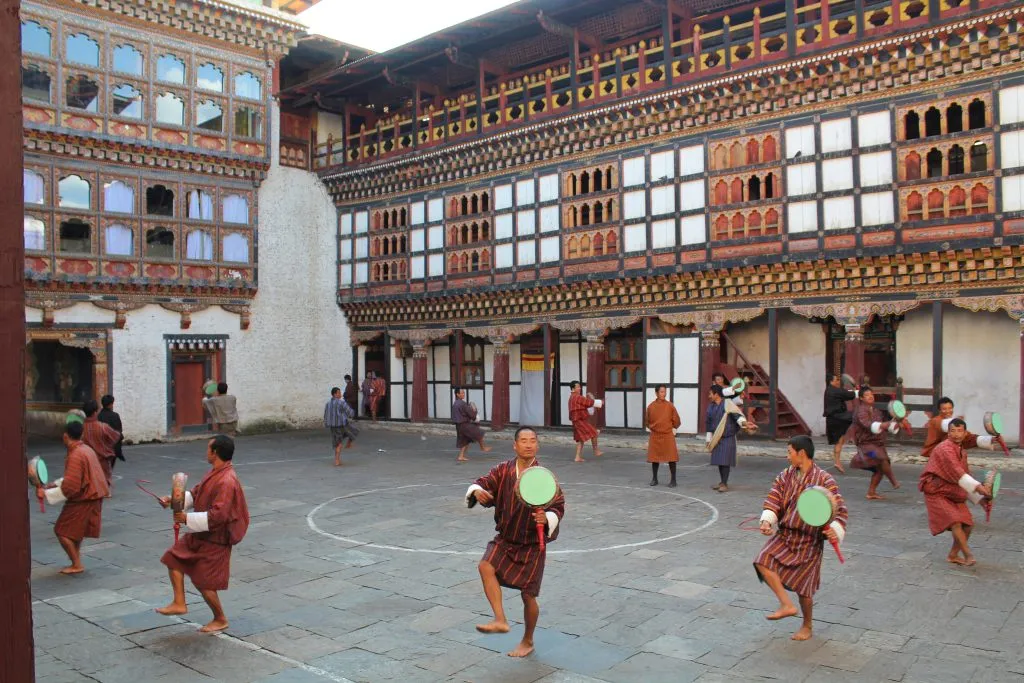
You can photograph the outside of dzongs, temples and courtyards freely, and festival dances in courtyards are open to cameras. Inside shrine rooms, photography is not allowed anywhere in the country, and your guide will tell you where each building’s line is. Ask before taking close portraits of monks, nuns and villagers; most people say yes, and a smile and a look at the back of the camera go a long way. Read our Bhutan travel rules guide before you fly.
Drones
Flying a drone in Bhutan needs prior approval from the Bhutan Civil Aviation Authority, and some sites, including dzongs, the airport area and royal buildings, are off limits. Send us the drone model and your plan at least a month before you travel and we will apply for you. Approval is not guaranteed, so please don’t plan a whole shoot around aerial shots. Never carry a drone in without approval; customs can hold it until you leave.
Roads in the east
Eastern roads are narrow and winding, and some stretches are under repair. Drive times here are estimates; birding stops make them longer. Our drivers know these roads well and travel at a safe, steady pace.
Visa, SDF and guide rules
Every visitor except Indian nationals needs a visa, which costs USD 40 and is issued online before you fly. The Sustainable Development Fee is USD 100 per adult per night until 31 August 2027, with half rates for children aged 6 to 11. A Department of Tourism notice from April 2026 confirms that visitors travel with a licensed guide. We file the visa and pay the SDF for you. Read more in our Bhutan visa guide and SDF guide.
Bird photography tour: questions
It depends on your hotels, group size and dates. Tell us your budget and we will reply within 24 hours with our best price, including the SDF, visa, hotels, meals, guide and car.
It puts you straight into eastern Bhutan and saves two long days of driving from Paro.
Yes. It is one of the best-known birding sites in the eastern Himalaya, though no species is ever guaranteed.
From about November to February.
Yes. We can continue west through Bumthang and fly or drive out from Paro, adding a few days.
A long zoom, ideally reaching 400 to 600 mm, plus a wide lens for landscapes.
They are simple but clean. The lodge at Yongkola is basic.
Three to five months ahead, especially for spring.
Price on request
Ask for your best price
Tell us your dates, your target species and your budget. We will reply within 24 hours with our best price for this bird photography tour.
- Share your budget, we shape the trip around it
- No booking fees, ever
- A reply within 24 hours
- Licensed Bhutanese tour operator
- +975 17533776
- +975 77495028
- info@deyabhutantours.com
- Thimphu, Bhutan
Let's plan your Bhutan journey
Tell us a little about your trip. Our team in Thimphu will reply with ideas, a day-by-day plan and a full price.
We’ll reply within 24 hours. No booking fees, and no obligation to book.