- Licensed Bhutanese tour operator
- Thimphu, Bhutan

Bhutan destinations · Updated October 2026
Haa Valley, Bhutan: travel guide for 2027
A quiet valley on the western border, over one of the highest roads in Bhutan. White and black temples, farmhouse homestays, buckwheat dumplings and very few other visitors.
- About 2,700 m
- Chele La about 3,990 m
- Haa Tshechu 6 to 8 November 2027
2,700 m
Altitude of the valley floor, approximately
3,990 m
Chele La pass, approximately
2 to 2.5 h
Drive from Paro over Chele La
2002
Year Haa opened to tourists
About Haa
The valley most visitors skip, and shouldn't
Haa lies west of Paro, on Bhutan’s border with Tibet. It only opened to tourists in 2002, and it still sees a small share of visitors compared with the main valleys. The road from Paro climbs to Chele La, one of the highest motorable passes in the country, then drops through forest into a long, narrow valley of farms, barley fields and old wooden houses.
Life here moves slowly. Families still keep yaks in the high pastures, and the local speciality is hoentay, buckwheat dumplings filled with turnip leaves and cheese. Haa is also where the Trans Bhutan Trail begins, and in 2025 BBC Travel named it one of its best places to visit. If you want to see rural Bhutan without leaving the west, this is the place.
- One of Bhutan's least visited western valleys
- Farmhouse homestays and local food
- Start of the Trans Bhutan Trail
Things to do
Top things to do in Haa
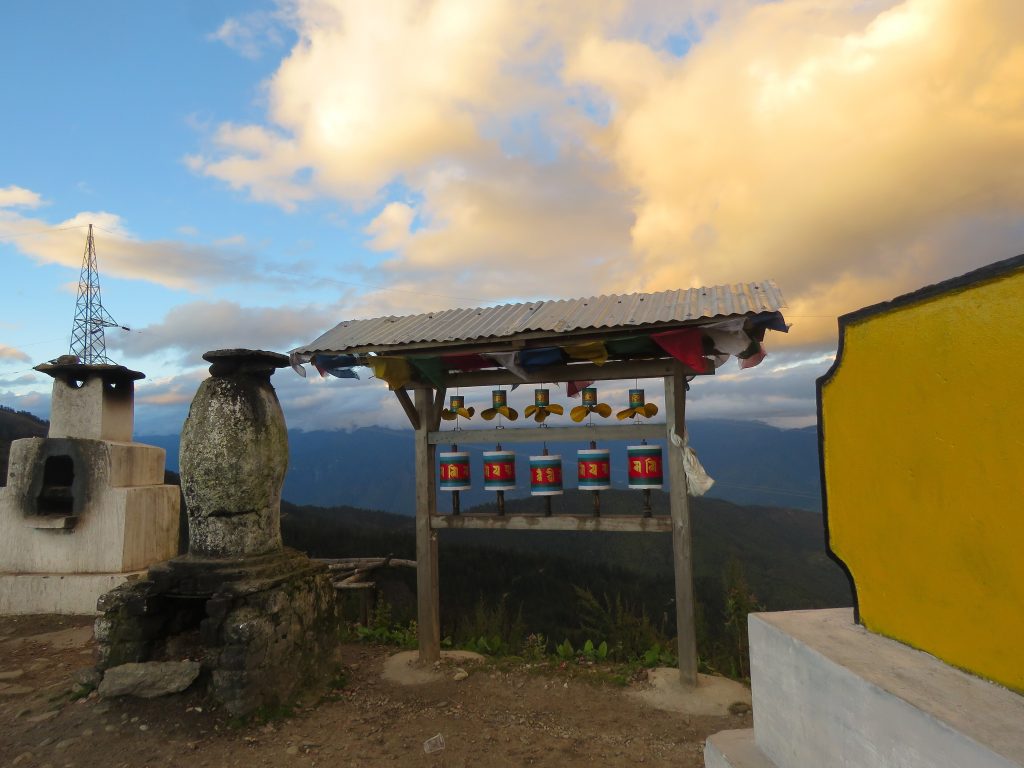
Cross Chele La
Prayer flags at about 3,990 m and, on clear days, Jomolhari on the horizon.
Lhakhang Karpo
The White Temple, home of Haa's guardian deity Ap Chundu.
Lhakhang Nagpo
The Black Temple, a short walk across the valley.
Farmhouse homestay
Sleep in a certified homestay and eat hoentay with the family.
Kila Goemba
A nunnery tucked into the cliffs below Chele La.
Juneydrak hermitage
A short forest hike to a meditation site above the valley.
Meri Puensum
The three sibling hills that watch over the valley.
Trans Bhutan Trail
Walk the first sections of the 403 km historic trail.
Festivals
The Haa Spring Festival in April and the Haa Tshechu in autumn.
The main sights
Haa in detail
Chele La
The pass between Paro and Haa is commonly given as about 3,990 metres, which makes it one of the highest roads in Bhutan. Thousands of prayer flags line the ridge. On a clear morning you can see Jomolhari, at about 7,300 metres, and the Jichu Drake peaks to the north. It is cold all year, so bring a warm layer, and in winter snow can close the road for a day or two.
Lhakhang Karpo and Lhakhang Nagpo
Legend says the 7th-century Tibetan king Songtsen Gampo released two pigeons, one white and one black, and built a temple where each landed. The White Temple, Lhakhang Karpo, stands at the foot of Meri Puensum; the Black Temple, Lhakhang Nagpo, is about 280 metres away. Lhakhang Karpo was rebuilt from its foundations between 2010 and 2017 on a royal command, and its courtyard hosts the Haa Tshechu.
Homestays and hoentay
Haa has a growing number of farmhouse homestays. Since a Department of Tourism notice on 22 October 2026, every homestay hosting tourists must be certified, so we book only approved ones. An evening by the stove with butter tea, ara and a plate of hoentay is often the highlight of the visit.
Festivals
The Haa Summer Festival began in 2010 and became a spring festival in 2024, timed for the rhododendrons. The 2026 edition ran from 7 to 9 April with yak and horse rides, local food and a staged retelling of the life of Ap Chundu. Dates for 2027 are usually announced early in the year. The Haa Tshechu is expected on 6 to 8 November 2027 at Lhakhang Karpo.
Practical facts
Haa at a glance
| Topic | What to know |
|---|---|
| Getting there | By road from Paro over Chele La, about 65 km and 2 to 2.5 hours |
| Onward | Back to Paro over Chele La, or down the Haa Chhu to Chhuzom and on to Thimphu, about 3 to 4 hours |
| Altitude | About 2,700 m in the valley; Chele La about 3,990 m |
| Best time | April to May and late September to November; winter is very cold and the pass can close with snow |
| Time needed | A long day trip from Paro, or better, 1 to 2 nights |
| Where to stay | Small hotels and certified farmhouse homestays; facilities are simpler than in Paro |
| Festivals | Haa Spring Festival in April (2027 dates to be announced); Haa Tshechu 6 to 8 November 2027 (tentative) |
| Good to know | Haa borders Tibet, and some areas near the border are restricted. Your guide plans routes within the rules |
Planning
How to fit Haa into your trip
The easiest way is to add one night between Paro and Thimphu. Drive over Chele La in the morning, visit the temples in the afternoon and stay in a homestay. The next day, follow the river down to Chhuzom and join the main road to Thimphu, so you never retrace your route. A seven-night trip with Haa is a good balance for first-time visitors who want something quieter.
Walkers can start the Trans Bhutan Trail here. The first sections climb back over the hills towards Paro on old mule paths, with nights in farmhouses.
Tours
Tours that include this destination
Every tour is private and can be changed. These are starting points.
Before you go
Travel essentials for 2027
Every visitor except Indian, Bangladeshi and Maldivian nationals needs a visa, which costs USD 40 and is arranged by your tour operator. The Sustainable Development Fee is USD 100 per adult per night until 31 August 2027; children under 6 pay nothing and children aged 6 to 12 pay half. Indian visitors pay INR 1,200 per night. You travel with a licensed guide beyond the first checkpoint and stay in certified hotels or homestays.
Read more in our guides to the visa and SDF, what a trip costs and Bhutan’s travel rules.
Haa valley: questions
About 65 km over Chele La, which takes 2 to 2.5 hours.
Yes, if you want quiet farmland, old temples and homestays away from the busier valleys.
About 3,990 metres, one of the highest motorable passes in Bhutan.
Yes, from Paro, but an overnight stay is far more rewarding.
The Haa Spring Festival is held in April; the Haa Tshechu is expected on 6 to 8 November 2027.
No separate permit is needed when you travel with a licensed guide. A few areas near the border are restricted.
Plan your time in Haa
Tell us your dates and how many nights you have. We will send a day-by-day plan with named hotels and one price that includes the SDF, visa, guide and car.
Photo credits, via Wikimedia Commons: Lhakhang Karpo, Haa (Christopher J. Fynn, CC BY-SA 3.0); Chele La (Vinayaraj, CC BY-SA 4.0); Prayer wheel house, Haa (Vinayaraj, CC BY-SA 4.0).
