- Licensed Bhutanese tour operator
- Thimphu, Bhutan
Cultural tour · 10 days, 9 nights
10 Day Bhutan Tour: From Paro to Bumthang and Back
Ten days through western and central Bhutan: Thimphu, Punakha, Trongsa, the temples of Bumthang, the Phobjikha valley and the Tiger’s Nest to finish.
- 10 days, 9 nights
- Thimphu, Punakha, Trongsa, Bumthang, Phobjikha, Paro
- Best in spring and autumn
10 days
9 nights, six valleys
3,425 m
Yotong La, highest pass
6
Valleys on the route
Private
Guide, car and driver
Trip overview
West and central Bhutan, without rushing
Ten days lets you go beyond the western valleys most visitors see. After Thimphu and Punakha, the road climbs over Pele La into central Bhutan, past Trongsa Dzong, the ancestral seat of the royal family, to Bumthang, often called the spiritual heart of the country. Bumthang’s valleys hold some of the oldest temples in Bhutan, and the pace there is slower still.
On the way back west you spend a night in the Phobjikha valley, a wide glacial valley where black-necked cranes spend the winter, before finishing in Paro with the Tiger’s Nest. There are two long driving days, and we break both with stops at chortens, passes and villages. In return you see a much fuller picture of the country, from rice terraces to yak pastures.
- Bumthang's 7th and 8th-century temples
- Trongsa Dzong and the Phobjikha valley
- Tiger's Nest on the last full day
Highlights
What you will see
Trongsa Dzong
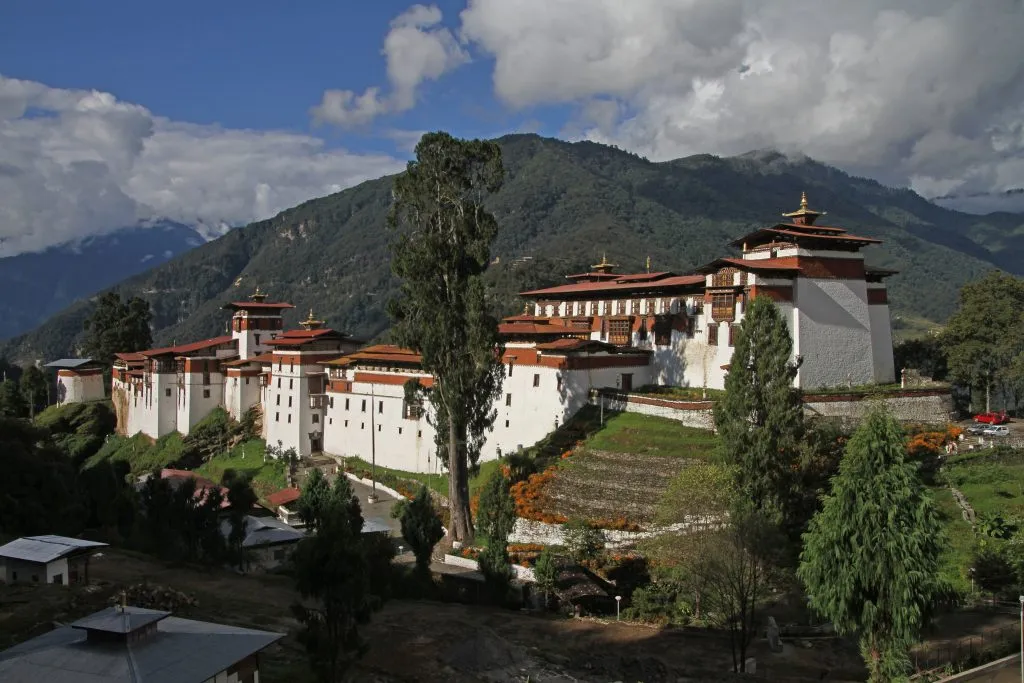
The largest dzong in Bhutan, stretched along a ridge above a gorge.
Jambay Lhakhang
One of 108 temples said to have been built in a single day in the 7th century.
Mebar Tsho
The Burning Lake in the Tang valley.
Phobjikha valley
Black-necked cranes from late October to February.
Punakha Dzong
The 1637 fortress at the meeting of two rivers.
Tiger's Nest
The cliff-top monastery of Paro Taktsang.
Itinerary at a glance
Ten days, six valleys
Two long drives, each broken with stops. Everything else is short and gentle.
Day 1: Arrive, to Thimphu
Land in Paro, drive to Thimphu, Memorial Chorten.
Day 2: Thimphu
Buddha Dordenma, takin, crafts, Tashichho Dzong.
Day 3: To Punakha
Dochula pass, Punakha Dzong, Chimi Lhakhang.
Day 4: To Trongsa
Pele La, Chendebji Chorten, Trongsa Dzong and the Tower of Trongsa museum.
Day 5: To Bumthang
Yotong La, Chumey weavers, Jakar Dzong, Jambay and Kurjey Lhakhang.
Day 6: Bumthang
Tamshing Lhakhang, the Burning Lake, Ugyen Choling or a valley walk.
Day 7: To Phobjikha
Back over Yotong La and Pele La to the Phobjikha valley.
Day 8: To Paro
Gangtey nature trail in the morning, then drive to Paro.
Day 9: Tiger's Nest
Hike to Paro Taktsang, Kyichu Lhakhang, farmhouse dinner.
Day 10: Fly out
Transfer to Paro airport.
Day 1
Arrive in Bhutan
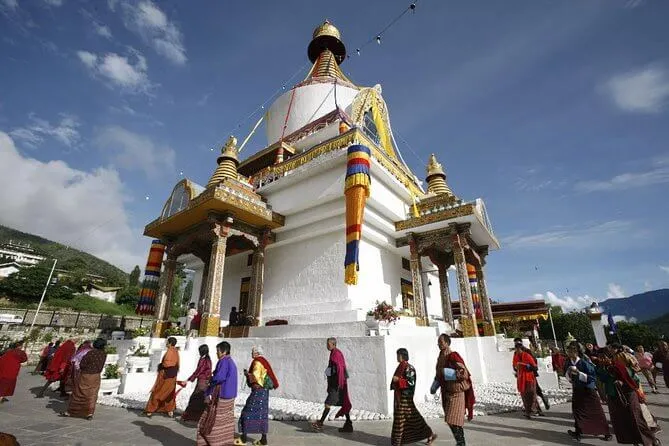
Your guide meets you at Paro airport for the hour’s drive to Thimphu. After lunch we visit the National Memorial Chorten and walk through the centre of the capital. The first afternoon is kept light so you can adjust to the altitude of about 2,300 metres.
- Overnight: Thimphu
- Drive: about 1 hour
- Meals: lunch and dinner
Day 2
A day in the capital
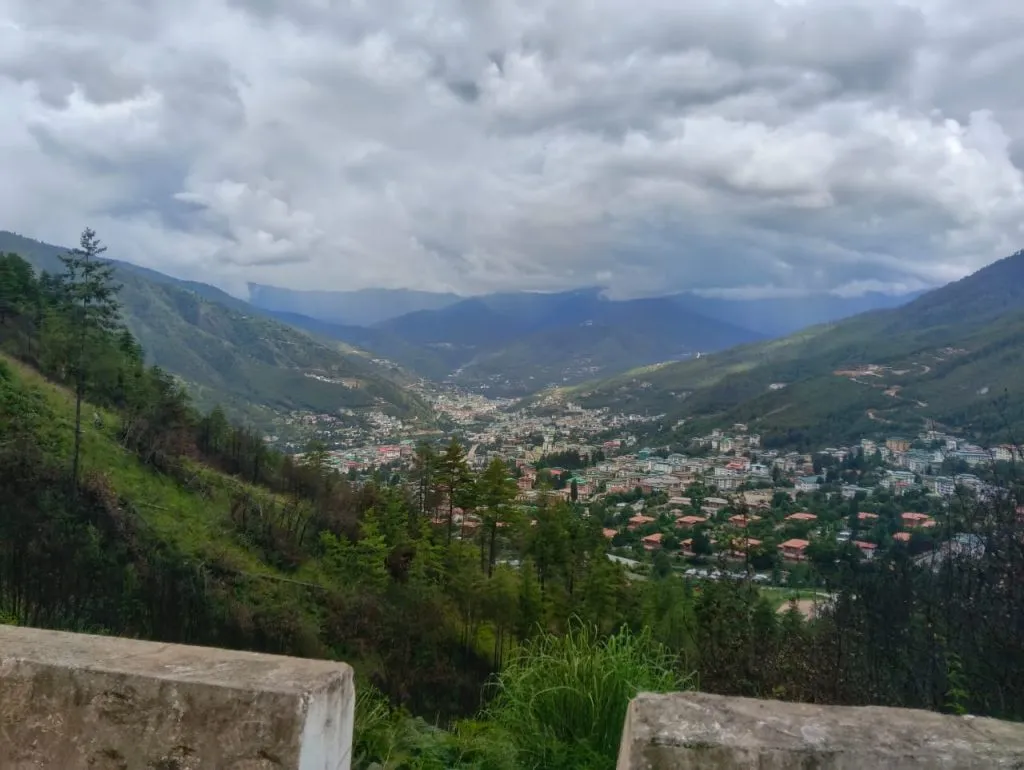
A full day in Thimphu: Buddha Dordenma on the ridge, the takin at the Motithang preserve, the painting and carving school at the Institute for Zorig Chusum, and hand-made Deh-sho paper at Jungshi. Late in the day, Tashichho Dzong opens to visitors after office hours.
Thimphu is a good place to buy a gho or kira, which many visitors like to wear when visiting temples later in the trip.
- Overnight: Thimphu
- Walking: about 2 hours, easy
- Meals: breakfast, lunch and dinner
Day 3
Over Dochula to Punakha
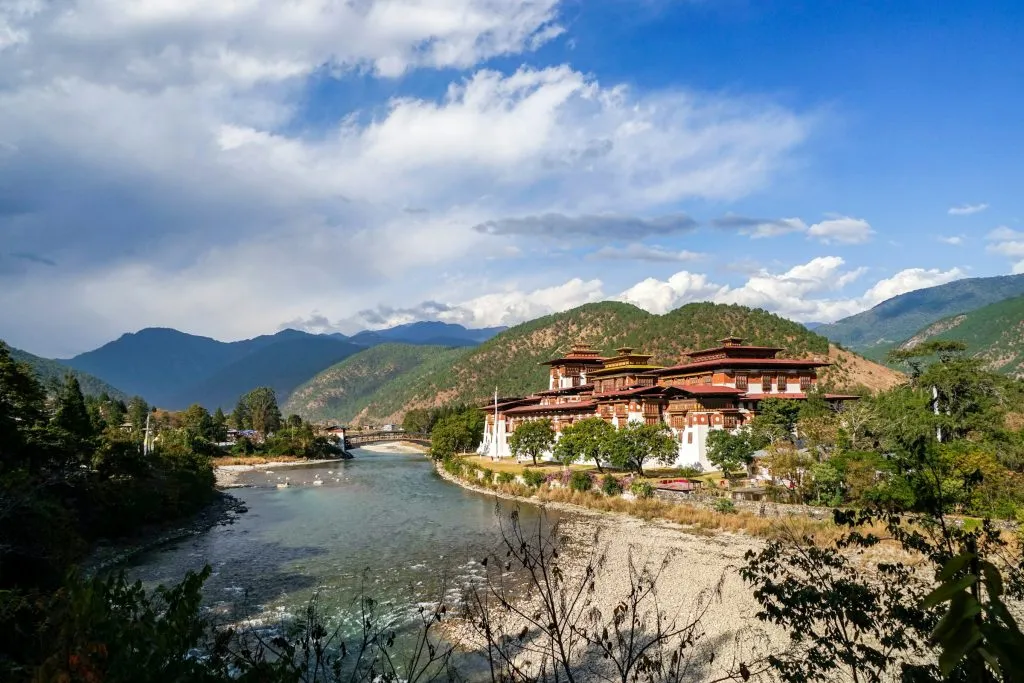
The road crosses Dochula pass at about 3,100 metres, with its 108 chortens, then drops into the Punakha valley. We visit Punakha Dzong, built in 1637 and the capital of Bhutan until 1955, and walk through rice fields to Chimi Lhakhang, the temple of the Divine Madman.
- Overnight: Punakha
- Drive: about 3 hours with stops
- Walking: about 1.5 hours, easy
Day 4
Into central Bhutan: Trongsa
The road climbs out of Punakha past Wangdue and over Pele La, at about 3,400 metres, the traditional border between western and central Bhutan. Yaks graze near the pass in winter. We stop at Chendebji Chorten, built in the style of Boudhanath in Kathmandu.
Trongsa Dzong comes into view long before you reach it, stretched along a ridge above the Mangde Chhu gorge. It is the largest dzong in Bhutan, and the first two kings ruled from here. The Tower of Trongsa museum, in the old watchtower above, tells the story of the royal family. Tonight is in Trongsa.
- Overnight: Trongsa
- Drive: about 5 to 6 hours with stops
- Highest point: Pele La, about 3,400 m
Day 5
Over Yotong La to Bumthang
The road climbs over Yotong La at about 3,425 metres and drops into the Chumey valley, known for yathra, the colourful wool cloth woven on looms in village homes. We stop to see the weavers at work.
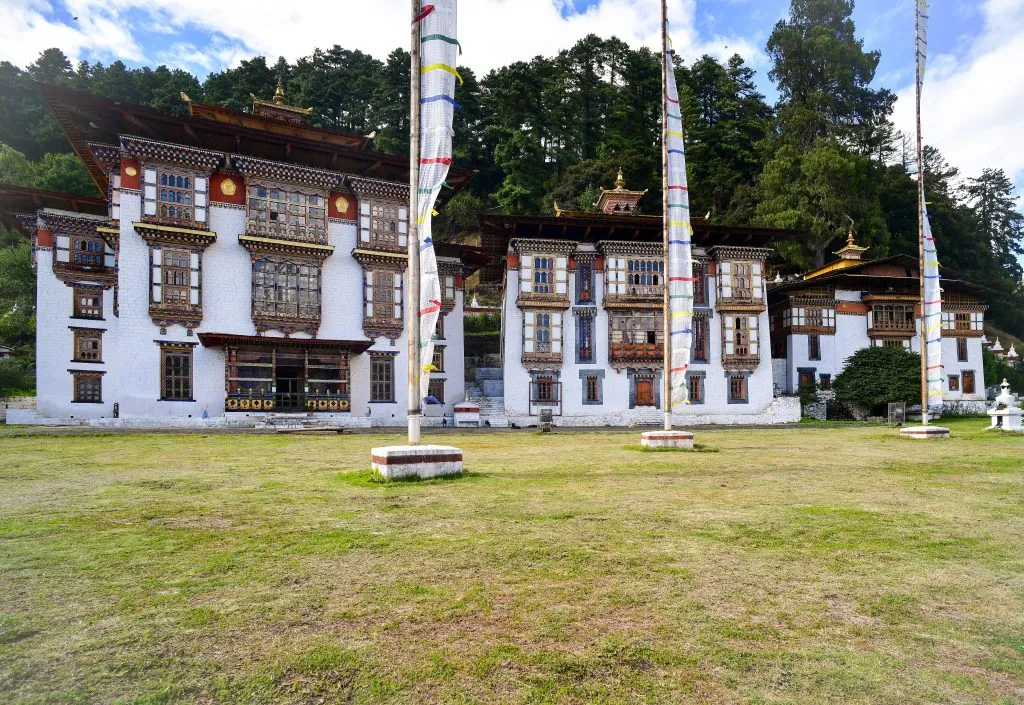
In Jakar, Bumthang’s main town, we visit Jambay Lhakhang, one of 108 temples said to have been built in a single day in the 7th century by the Tibetan king Songtsen Gampo, and Kurjey Lhakhang, where Guru Rinpoche is said to have left the imprint of his body in the rock of a meditation cave. Jakar Dzong, the castle of the white bird, stands above the valley.
- Overnight: Bumthang
- Drive: about 2.5 hours
- Walking: about 1.5 hours, easy
Day 6
The temples of Bumthang
We cross the river to Tamshing Lhakhang, founded in 1501 by Pema Lingpa, Bhutan’s most famous treasure revealer, whose old wall paintings are among the oldest in the country. In the Tang valley we visit Mebar Tsho, the Burning Lake, where Pema Lingpa is said to have dived in holding a butter lamp and come out with sacred texts, the lamp still burning.
In the afternoon you can walk between villages in the Choekhor valley, visit the Swiss farm that makes Bumthang’s cheese and beer, or try buckwheat pancakes, a Bumthang speciality. In April, the Ura Yakchoe festival is held in Ura village, an hour away.
- Overnight: Bumthang
- Drive: about 1 hour in total
- Walking: about 2 hours, easy
Day 7
West to the Phobjikha valley
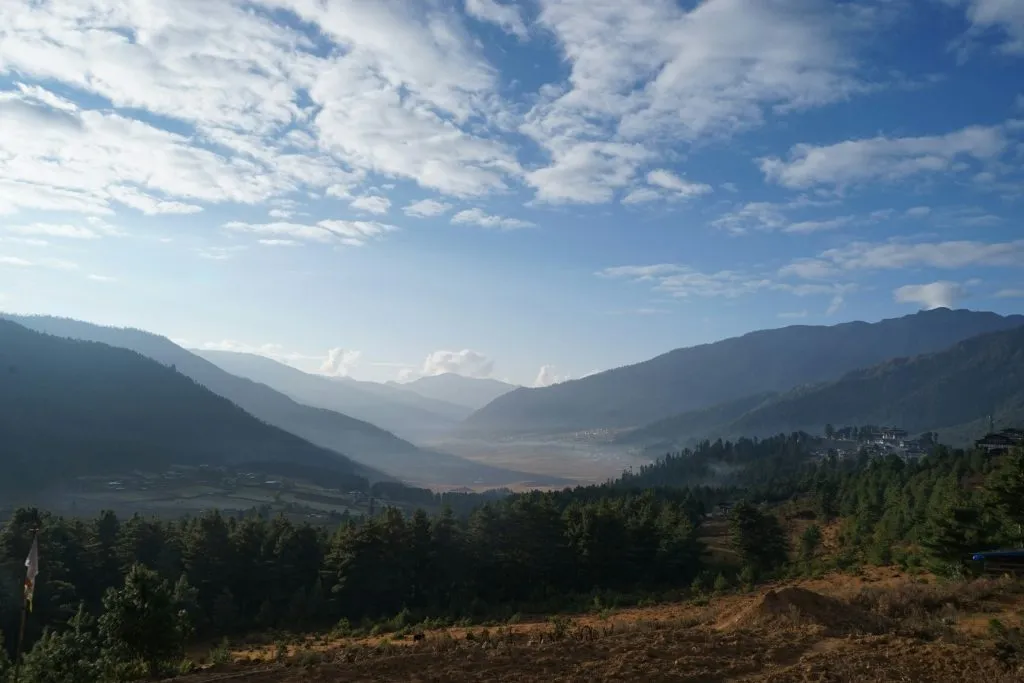
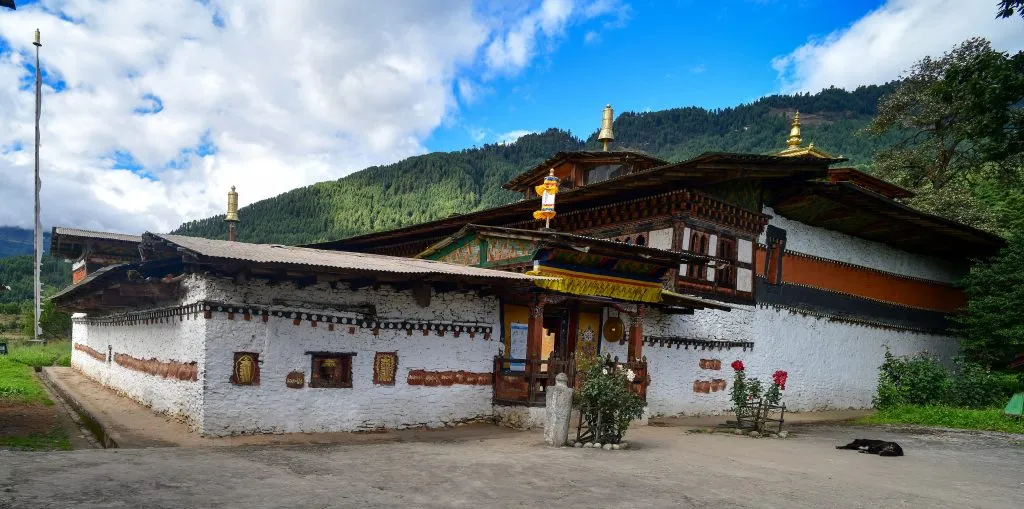
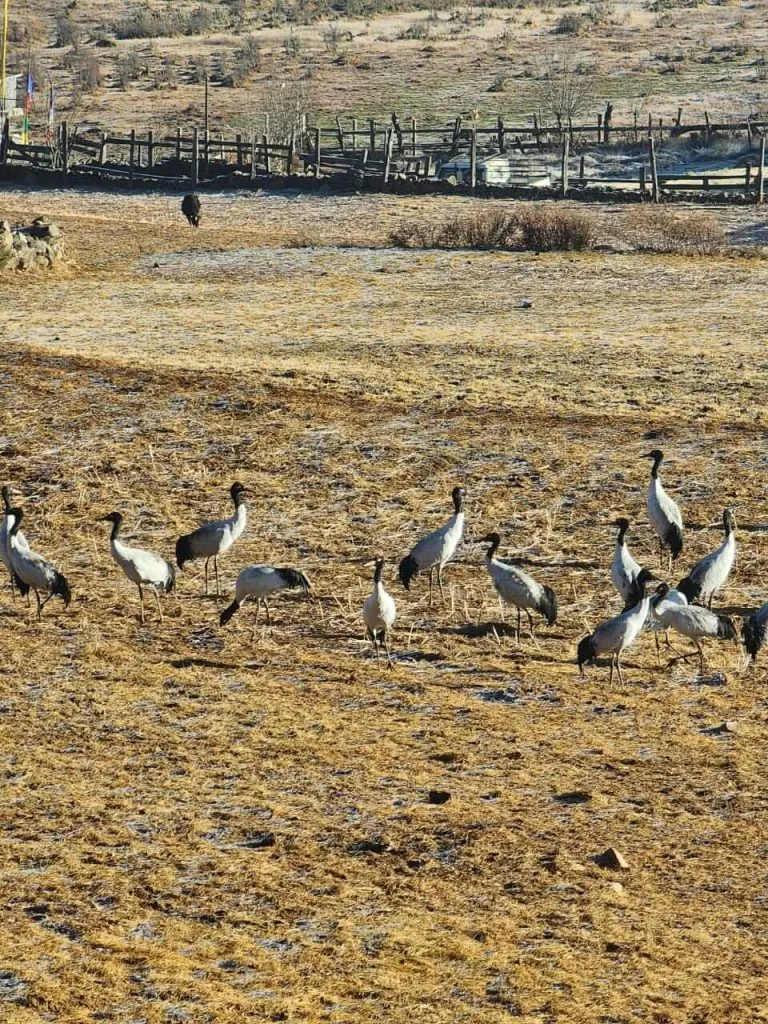
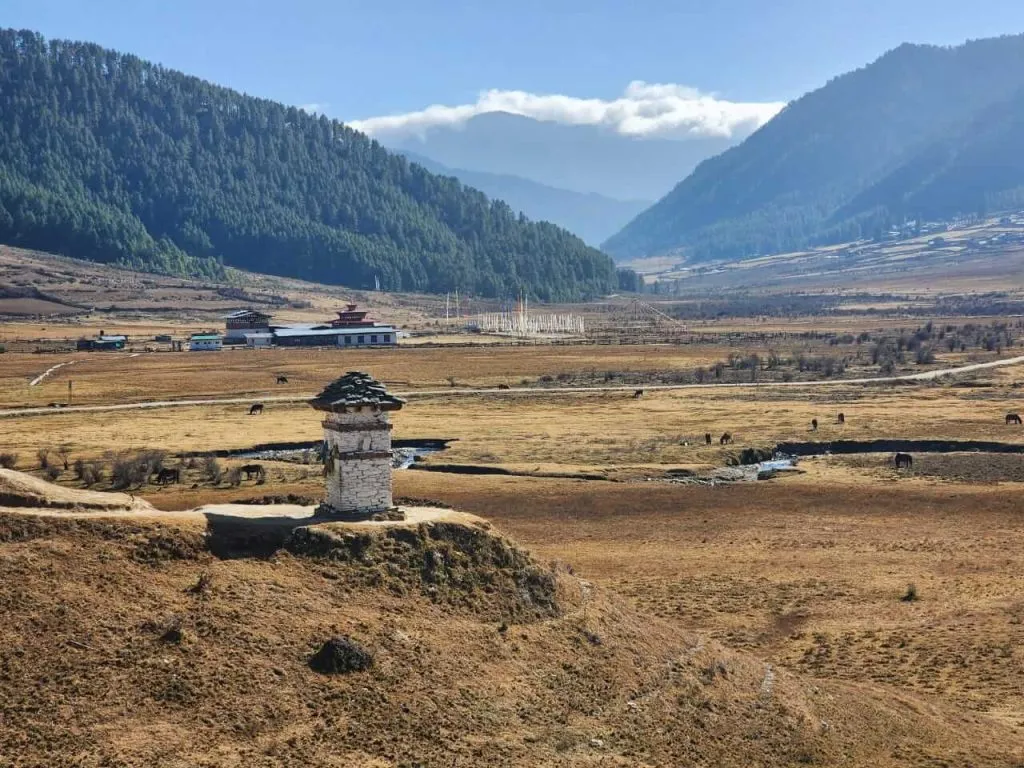
We drive back west through Trongsa and over Pele La, then turn off into the Phobjikha valley at about 3,000 metres. It is a wide, open glacial valley of marshes and potato fields, protected as a conservation area. From late October to February, black-necked cranes fly in from Tibet for the winter, and the Black-necked Crane Information Centre has telescopes for watching them.
Late in the afternoon, Gangtey Goenpa, the monastery on the ridge, is beautiful in the low light.
- Overnight: Phobjikha
- Drive: about 6 hours with stops
- Cranes: late October to February
Day 8
A valley walk, then back to Paro
The Gangtey nature trail is an easy walk of about 1.5 hours across the valley floor, through pine forest and past farmhouses. Afterwards we drive back to Paro, about six hours with a lunch stop, and visit Rinpung Dzong and its covered bridge if there is time. If you prefer a shorter day, we stop in Thimphu for the night instead.
- Overnight: Paro
- Drive: about 6 hours with stops
- Walking: about 1.5 hours, easy
Day 9
Hike to the Tiger's Nest
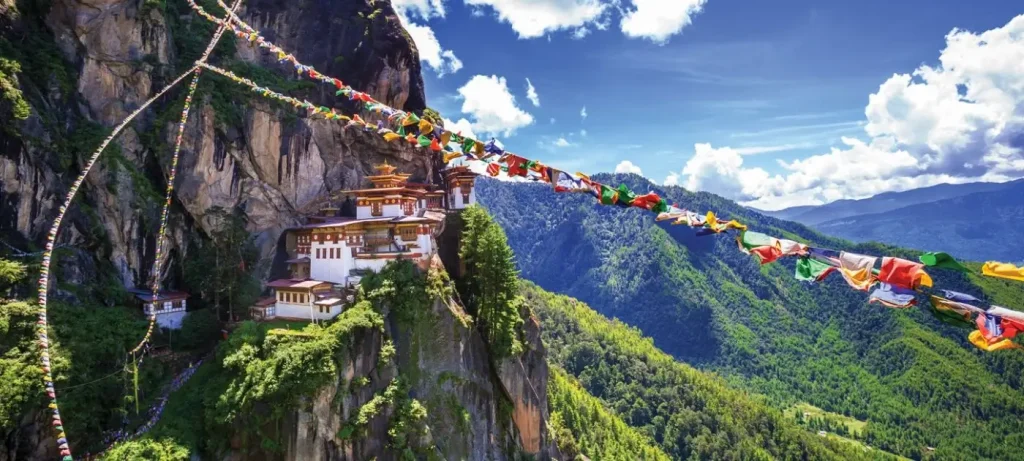
After nine days in Bhutan, the altitude will feel easy. The path to Paro Taktsang climbs to a café viewpoint in about 1.5 hours and reaches the monastery, at about 3,120 metres, after another hour. Most guests take 4 to 6 hours for the round trip. On the way back we stop at Kyichu Lhakhang, then a farmhouse dinner with an optional hot stone bath ends the trip.
- Overnight: Paro
- Hike: 4 to 6 hours return, moderate
- Evening: farmhouse dinner
Day 10
Farewell to Bhutan
Your guide and driver take you to Paro airport in time for your flight. Morning flights are the most reliable, and we leave a buffer for your onward connection.
- Transfer: about 10 minutes
- Meals: breakfast
- Extension: the Haa valley
Where you stay
Where you stay
Six hotels, chosen for location and comfort.
| Nights | Place | Where you stay | Why we chose it |
|---|---|---|---|
| 1 to 2 | Thimphu | 3-star or 4-star hotel | Central |
| 3 | Punakha | 3-star or 4-star hotel | Close to the dzong |
| 4 | Trongsa | 3-star hotel with gorge views | Breaks the drive to Bumthang |
| 5 to 6 | Bumthang | 3-star or 4-star hotel in Jakar | Close to the temples |
| 7 | Phobjikha | Farmhouse-style lodge or 4-star hotel | On the edge of the crane valley |
| 8 to 9 | Paro | 3-star or 4-star hotel | Close to the Tiger's Nest and airport |
Luxury lodges exist in every valley on this route, including Amankora and Six Senses.
What the price covers
Included and not included
Included
- Bhutan visa (USD 40) and the Sustainable Development Fee for every night
- Hotels as listed, 3-star as standard, with 4-star and luxury upgrades on request
- All meals: breakfast, lunch and dinner
- A licensed English-speaking guide for the whole trip
- Private car or SUV with a Bhutanese driver, and all transfers
- Entry fees to dzongs, temples and museums
- Bottled water in the car
Not included
- International flights into and out of Paro (we can book them for you)
- Travel insurance, which we strongly recommend
- Drinks, laundry and other personal costs
- Tips for your guide and driver
- Anything not listed under included
Price on request
Tell us your budget and we will send our best price
We don’t publish one fixed price, because hotels, season and group size change the total a lot. Tell us your dates, who is travelling and the budget you have in mind. We will reply within 24 hours with our best price for this 10 day trip.
How we price
What decides the cost of this trip
Government fees
The SDF is USD 100 per adult per night until 31 August 2027, plus a USD 40 visa. These are fixed by the Government of Bhutan and paid through us.
Hotels you choose
Hotel style and season make the biggest difference. Central Bhutan has fewer hotels, so booking early helps.
Season and dates
Spring and autumn are peak season. Winter and summer dates are often easier to price well.
Group size
Guide and car costs are shared, so the price per person drops for two, three or four travellers.
We send a written, itemised quote before you pay anything. No booking fees.
Good to know
Planning notes for central Bhutan
Long drives
Bhutan’s roads are narrow and winding, so 100 km can take three hours. Two days on this trip are long, and we break them with stops. Read our Bumthang guide and Phobjikha guide for more.
Best time to go
March to May brings rhododendrons and warm valley days. October and November have the clearest skies and the best mountain views. December to February is cold, bright and quiet, with cranes in Phobjikha. June to August is the monsoon: green and peaceful, with rain most afternoons. Our month-by-month guide has more detail.
Altitude
Paro sits at about 2,200 metres and Thimphu at about 2,300. Most people feel fine after a slow first day. Drink plenty of water, go easy on alcohol at first, and tell your guide about headaches or poor sleep. The Tiger’s Nest, at about 3,120 metres, comes later in the trip for this reason.
Temple etiquette
Cover shoulders and knees in dzongs and temples, take off hats, and walk clockwise around chortens and prayer wheels. Photography is not allowed inside shrine rooms. Your guide explains each place before you go in. Read more in our Bhutan travel rules guide.
Visa, SDF and guide rules
Every visitor except Indian nationals needs a visa, which costs USD 40 and is issued online before you fly. The Sustainable Development Fee is USD 100 per adult per night until 31 August 2027, with half rates for children aged 6 to 11. A Department of Tourism notice from April 2026 confirms that visitors travel with a licensed guide. We file the visa and pay the SDF for you. Read more in our Bhutan visa guide and SDF guide.
Flying into Paro
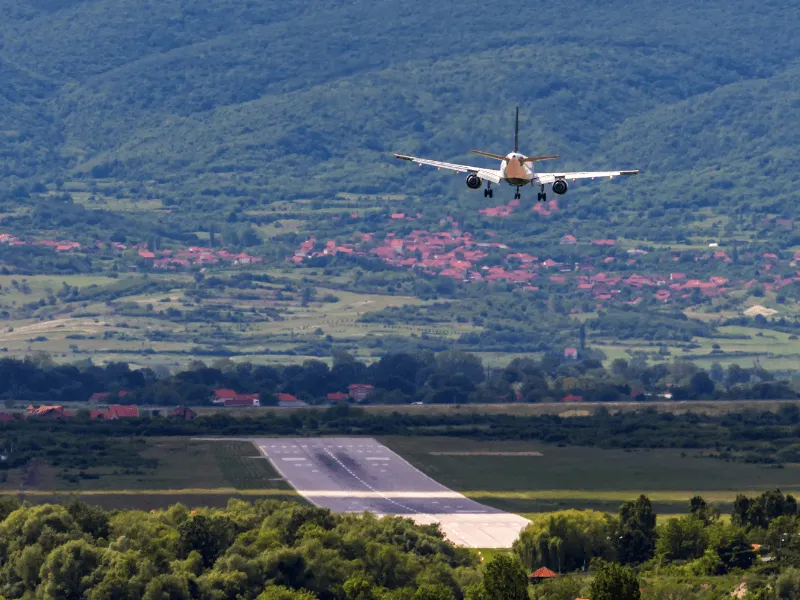
Only Drukair and Bhutan Airlines fly into Paro, mainly from Bangkok, Delhi, Kathmandu, Kolkata and Singapore. Pilots land by sight between the ridges, so morning flights are the most reliable. We suggest a night in your hub city on the way in. Our flights to Bhutan page lists every route.
10 day Bhutan tour: questions
It depends on your hotels, group size and dates. Tell us your budget and we will reply within 24 hours with our best price, including the SDF, visa, hotels, meals, guide and car.
It is ideal for a first visit if you want to see central Bhutan as well as Paro, Thimphu and Punakha.
Drukair runs domestic flights between Paro and Bumthang on some days. We can use one leg to shorten the trip.
From late October to February. Outside those months the valley is still lovely for walking.
Yes. Walks are short and optional, and we can slow the pace or break drives further.
Yes. Bumthang has festivals in spring and autumn. See our 2027 festival calendar.
Three to five months ahead for spring and autumn.
Price on request
Ask for your best price
Tell us your dates, who is travelling and your budget. We will reply within 24 hours with our best price for this 10 day trip.
- Share your budget, we shape the trip around it
- No booking fees, ever
- A reply within 24 hours
- Licensed Bhutanese tour operator
- +975 17533776
- +975 77495028
- info@deyabhutantours.com
- Thimphu, Bhutan
Let's plan your Bhutan journey
Tell us a little about your trip. Our team in Thimphu will reply with ideas, a day-by-day plan and a full price.
We’ll reply within 24 hours. No booking fees, and no obligation to book.