- Licensed Bhutanese tour operator
- Thimphu, Bhutan
Bhutan travel guide 2027
Bhutan: a travel guide from people who live here
Why Bhutan measures happiness, where to go, what to eat, how money and phones work, and the rules every visitor should know before landing in Paro.
- Written in Thimphu
- Updated for 2027
- Facts from government sources
784,043
Projected population, 2025
69.7%
Forest cover, 2024
209,376
Tourist arrivals, 2025
7,570 m
Gangkhar Puensum, highest peak
Gross National Happiness
Why Bhutan is called the happiness country
In the 1970s the Fourth King, Jigme Singye Wangchuck, said that Gross National Happiness was more important than Gross National Product. The idea stuck. Today the government runs regular GNH surveys and weighs new policies against nine areas of wellbeing, including health, education, culture, good governance and the environment.
That does not mean everyone in Bhutan is always happy, and people here will tell you so. It does explain a lot of what you will see: the forests left standing, the dress code at work, the limits on tourist numbers and the time families still give to festivals.
- Bhutan became a constitutional monarchy in 2008
- The constitution requires at least 60 per cent of the land to stay under forest
- Bhutan absorbs more carbon than it emits
Bhutan at a glance
Practical facts for visitors
Language
Dzongkha is the national language. English is widely spoken and used in schools, signs and menus.
Money
The ngultrum (BTN) is pegged one to one with the Indian rupee, and rupees are widely accepted. Carry cash for small shops and villages.
Cards and ATMs
Hotels and larger shops take cards. ATMs are found in Paro, Thimphu and other towns, but do not rely on them in rural areas.
Phones and data
B-Mobile and TashiCell have counters at Paro airport. Tourist packs start from a few hundred ngultrum for a week of data.
Time zone
Bhutan Time is UTC+6, half an hour ahead of India.
Electricity
230 V. Sockets are type D, F and G, so bring a universal adapter.
Driving
Traffic drives on the left. Mountain roads are slow, so plan on an average of 30 to 40 km an hour.
Tobacco
Smoking in public places is banned. Visitors may bring a limited amount of tobacco for personal use and must declare it.
Where to go
Places to visit in Bhutan
Most first visits focus on the western valleys. With more time, central Bhutan is where many guests fall for the country.
Paro
The airport valley. Rinpung Dzong, the National Museum, Kyichu Lhakhang and the hike to Tiger’s Nest.
Thimphu
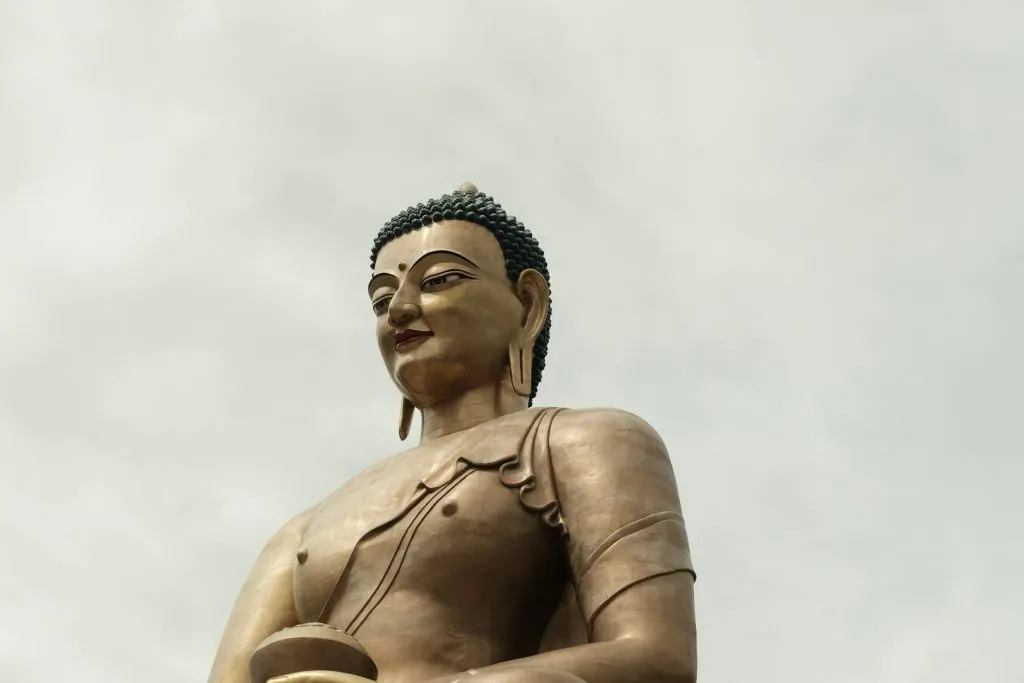
The capital, with Tashichho Dzong, the Buddha Dordenma, the weekend market and crafts schools.
Punakha
The old capital. Punakha Dzong where two rivers meet, rice terraces and Chhimi Lhakhang.
Phobjikha
A glacial valley around Gangtey Goemba, winter home of the black-necked crane.
Bumthang
Four valleys of old temples, farms and buckwheat fields. Jakar, Jambay Lhakhang and the Burning Lake.
Haa
Over the Chele La pass, one of the highest roads in Bhutan. Quiet, green and little visited.
Food and drink
What to eat in Bhutan
Ema datshi
The national dish: green or red chillies cooked in cheese. Ask for it mild the first time.
Red rice
A nutty, slightly sticky rice grown in Paro and Punakha. Served with almost every meal.
Momos
Steamed dumplings filled with cheese, vegetables or meat. A good snack between sights.
Suja
Butter tea, salty rather than sweet. You will be offered it in homes and temples.
Buckwheat
In Bumthang, try puta noodles and khuli pancakes made from buckwheat.
Ara
A home-made spirit distilled from rice, wheat or maize, often served warm with egg and butter.
Respectful travel
Customs worth knowing
Dress for dzongs
Long sleeves and long trousers or skirts in dzongs and temples. No hats inside.
Go clockwise
Walk clockwise around chortens, temples and prayer wheels.
No photos inside
Photography is not allowed inside temples and shrine rooms.
Don't point
Avoid pointing your feet or finger at altars, statues or people. Use an open hand.
Respect nature
Mountains and lakes are sacred to many Bhutanese. Do not swim in sacred lakes or leave litter.
Travel with a guide
Visitors must travel with a licensed guide beyond the first checkpoint, as confirmed by the Department of Tourism in April 2026.
Bhutan travel rules for 2027
What you pay the government, and what we arrange
These rules apply to every tour in Bhutan, whoever you book with. We checked them against Department of Tourism notices in October 2026.
SDF: USD 100 a night
The Sustainable Development Fee is USD 100 per adult per night until 31 August 2027. Children aged 6 to 11 pay USD 50 and under-6s pay nothing. The government has not yet said what the rate will be after that date.
Visa: USD 40, once
Most nationalities need an e-visa before they fly. It costs USD 40 per person and is usually issued within 5 working days. Indian visitors need only an entry permit. Bangladeshi and Maldivian visitors follow separate regional rules.
Indian visitors
Indian nationals pay an SDF of INR 1,200 per night and enter with a passport or voter ID. No visa is needed.
Licensed guide required
A Department of Tourism notice issued on 8 April 2026 confirms that guests must travel with a licensed guide beyond the first checkpoint, including on the drive from Paro airport. Treks need a licensed trekking guide.
Insurance is optional
Travel insurance has not been compulsory since 23 April 2024. We still recommend a policy that covers medical evacuation, especially for treks.
Passport validity
Your passport should be valid for at least 6 months beyond your departure date from Bhutan.
Rates can change. We confirm the current SDF and visa fee in writing before you pay anything.
Ready to go?
Start with one of our tours
Cultural tours
5 to 15 day private itineraries through Paro, Thimphu, Punakha and Bumthang.
Festival tours
Plan around a Tshechu, with the expected 2027 dates.
Trekking tours
From an overnight camp to the Snowman trek.
Questions about Bhutan
Bhutan measures its progress through Gross National Happiness, an idea introduced by the Fourth King in the 1970s. The government surveys wellbeing across health, education, culture, environment and other areas, and uses the results to guide policy.
Yes. Bhutan has low crime and visitors travel with a licensed guide. One of our solo guests wrote that Bhutan is safe for women travelling alone or in women-only groups.
March to May and September to November have the most settled weather and the big festivals. Winter is cold but clear. Summer is the monsoon, green and quiet.
The SDF of USD 100 per adult per night makes Bhutan more expensive than its neighbours. In return you get uncrowded sights and a guide, car and driver for your group. See our tour packages page for typical costs.
Yes. Buy a local SIM from B-Mobile or TashiCell at Paro airport, or use an eSIM. Coverage is good in towns and along main roads, and patchy on treks.
US dollars or Indian rupees are easy to change. The ngultrum equals the Indian rupee, and rupees are accepted in most places. Carry some cash for markets and villages.
Keep planning
More guides for first-time visitors
Talk to someone in Thimphu
Questions about Bhutan? Ask us
Our team answers on WhatsApp and email, usually within 24 hours.