- Licensed Bhutanese tour operator
- Thimphu, Bhutan

Festival tour · 9 days, 8 nights · 11 to 19 February 2027
Punakha Drubchen (Dromche) Tour 2027: 9 Days in February
The Punakha Drubchen on 13 to 15 February 2027, with its re-enactment of a 17th-century battle, the first day of the Punakha Tshechu, the cranes of Phobjikha and the Tiger’s Nest.
- 11 to 19 February 2027
- Thimphu, Punakha, Phobjikha, Paro
- Drubchen and Tshechu
13 to 15 Feb
Punakha Drubchen 2027 (expected)
16 Feb
Punakha Tshechu begins
9 days
8 nights
Feb
Cranes in Phobjikha
Trip overview
Punakha's winter festivals, back to back
Each February, Punakha Dzong hosts two festivals in a row. The Punakha Drubchen, also called the Dromche, is expected from 13 to 15 February 2027. Its highlight is a re-enactment of a 17th-century battle in which Bhutanese forces drove back an invading Tibetan army, performed by local men dressed as pazaps, the old militia, with swords, shields and war cries. The Punakha Tshechu follows, from 16 to 18 February, with masked dances in the dzong courtyard.
This trip gives you the full Drubchen and the first day of the Tshechu. February is a good time for Punakha: the valley is mild while the high country is cold, and the dzong is full because the central monk body spends the winter here. After the festivals we drive to the Phobjikha valley to see the black-necked cranes, then return to Paro for the Tiger’s Nest.
- All three days of the Drubchen
- The opening day of the Punakha Tshechu
- Black-necked cranes in Phobjikha
Highlights
What you will see
The pazap battle
Local men in old militia dress re-enact the defeat of a Tibetan army.
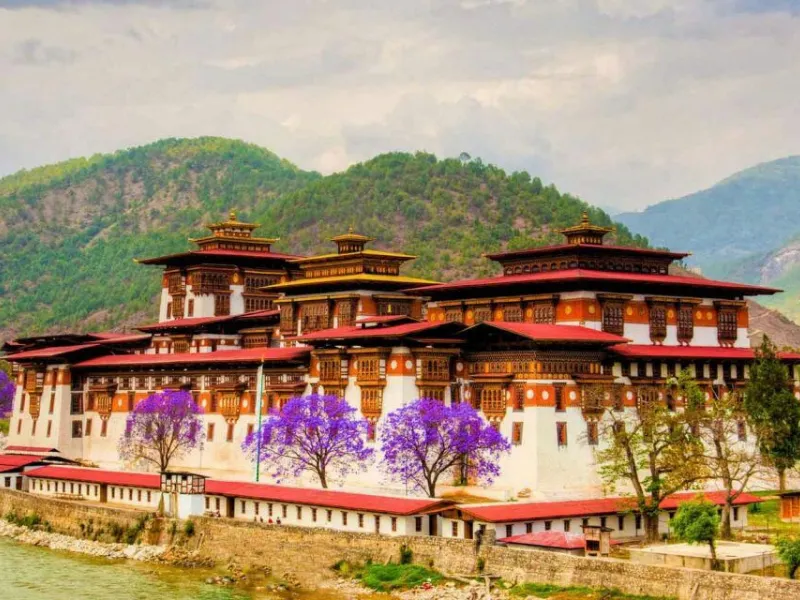
Punakha Dzong
The 1637 fortress where the central monk body spends the winter.
Punakha Tshechu
Masked dances in the dzong courtyard on its opening day.
Black-necked cranes
Endangered cranes on the marshes of the Phobjikha valley.
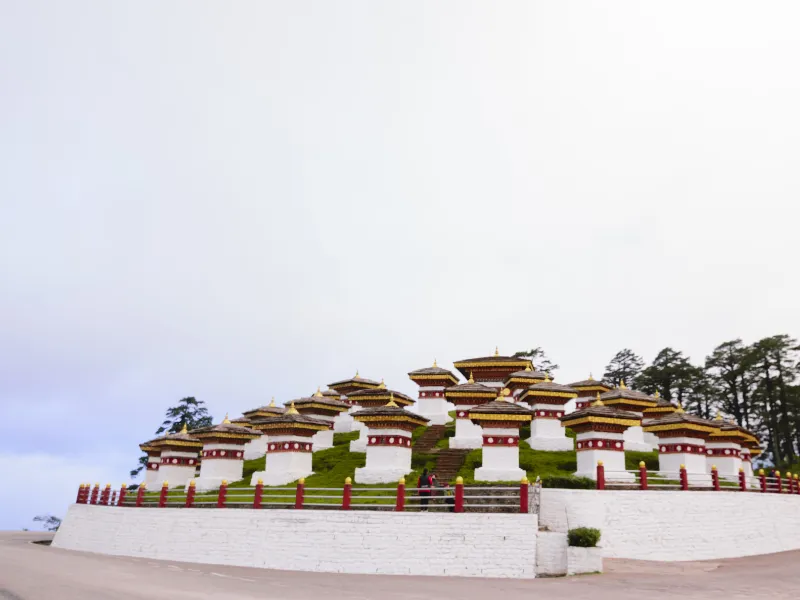
Dochula pass
108 chortens and, on clear winter mornings, the high Himalaya.
Tiger's Nest
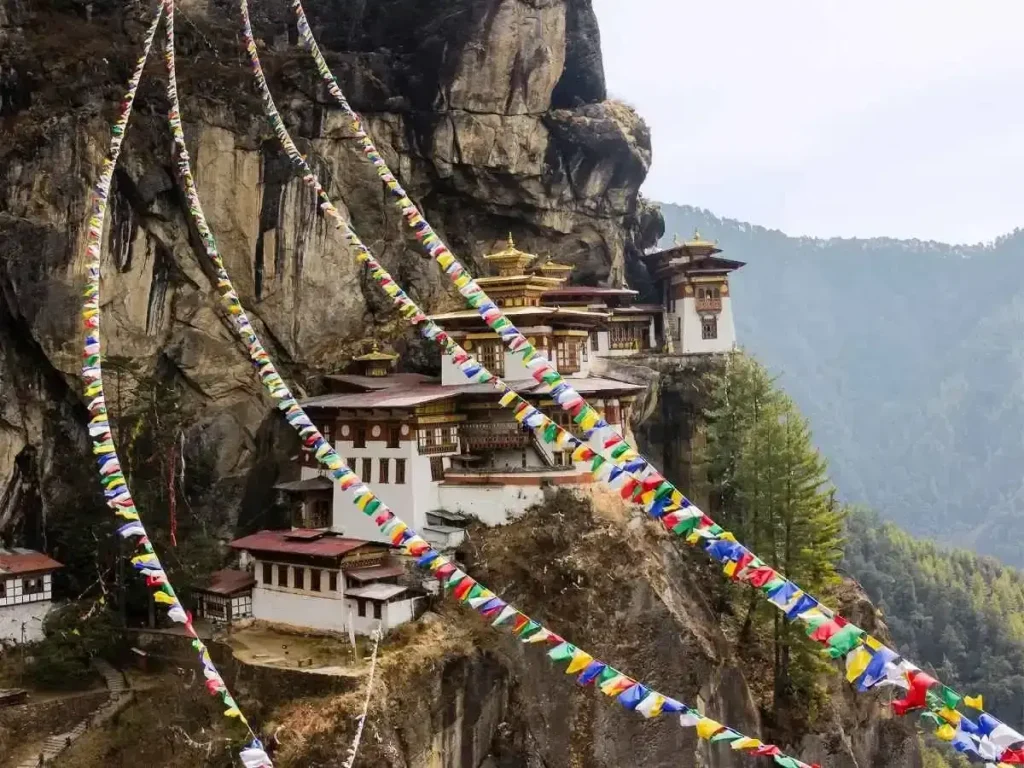
The cliff-top monastery of Paro Taktsang at the end of the trip.
Itinerary at a glance
Nine days in western Bhutan
The plan follows the expected 2027 dates. Your guide adjusts timings to the festival programme.
Day 1: 11 Feb · Arrive, to Thimphu
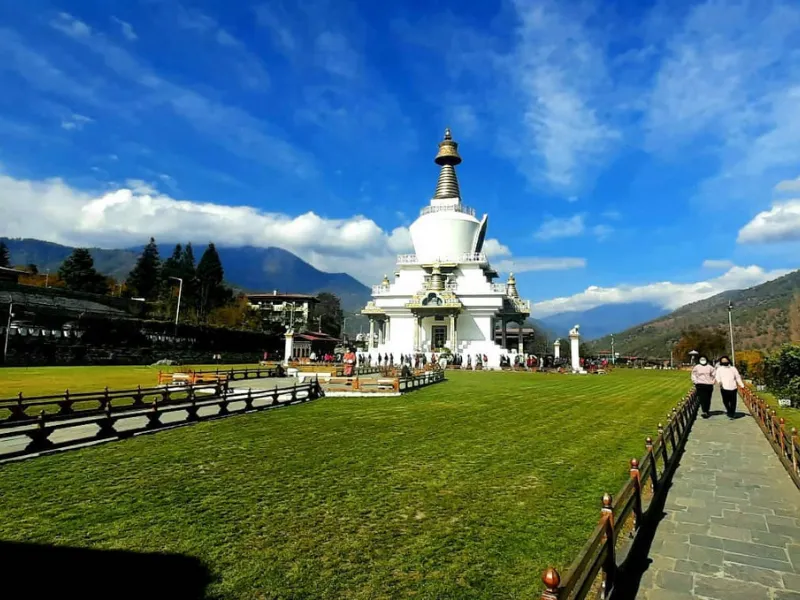
Land in Paro, drive to Thimphu, Memorial Chorten.
Day 2: 12 Feb · To Punakha
Buddha Dordenma, Dochula pass, then down to Punakha.
Day 3: 13 Feb · Drubchen day one
The opening day of the Punakha Drubchen at the dzong.
Day 4: 14 Feb · Drubchen and Khamsum
Festival morning, walk to Khamsum Yulley Namgyal Chorten.
Day 5: 15 Feb · The pazap battle
The final day of the Drubchen, with the battle re-enactment.
Day 6: 16 Feb · Tshechu, to Phobjikha
The opening of the Punakha Tshechu, then drive to Phobjikha.
Day 7: 17 Feb · Phobjikha
Cranes, Gangtey Goenpa and the Gangtey nature trail.
Day 8: 18 Feb · To Paro
Long drive back west over Dochula to Paro.
Day 9: 19 Feb · Tiger's Nest or fly out
Hike to the Tiger’s Nest with an afternoon flight, or fly out.
Day 1
Arrive in Paro and drive to Thimphu
Your guide meets you at Paro airport for the hour’s drive to Thimphu. February is cold but usually bright, and the light is clear. In the afternoon we visit the National Memorial Chorten and walk through the centre of the capital.
In the evening your guide explains the history behind the Drubchen, so the battle scenes make sense when you see them.
- Overnight: Thimphu
- Drive: about 1 hour
- Meals: lunch and dinner
Day 2
Over Dochula to Punakha
After a stop at Buddha Dordenma above Thimphu, the road climbs to Dochula pass at about 3,100 metres. Winter mornings are often the clearest of the year, and the peaks along the northern border can be seen behind the 108 chortens.
The road then drops into the Punakha valley, which is much warmer. In the afternoon we walk through rice terraces to Chimi Lhakhang, the temple of the Divine Madman, and you see the dzong being prepared for the festival.
- Overnight: Punakha
- Drive: about 3 hours with stops
- Walking: about 1 hour, easy
Day 3
The Punakha Drubchen begins
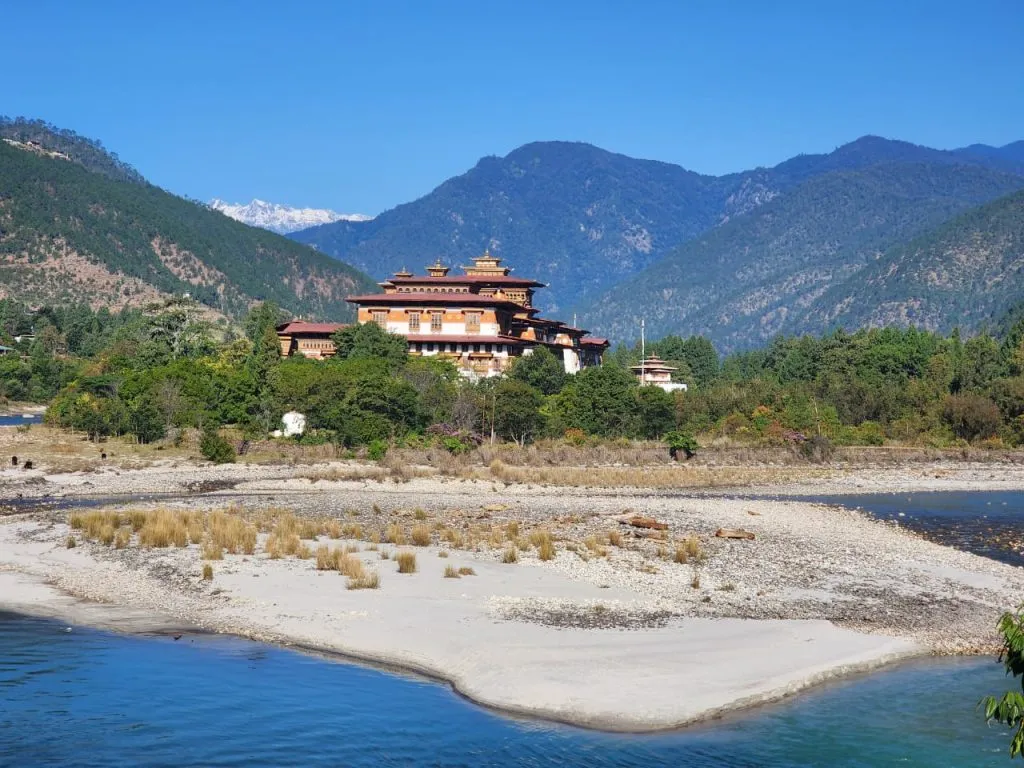
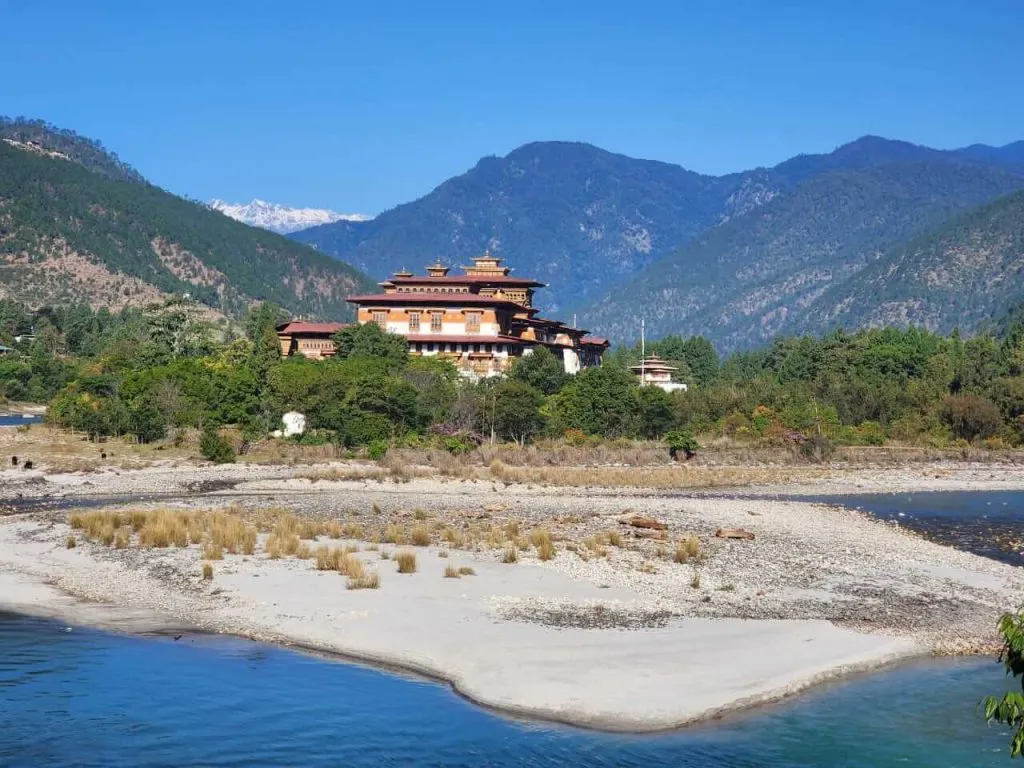
The Drubchen opens at Punakha Dzong, built in 1637 by Zhabdrung Ngawang Namgyel, who unified Bhutan. The festival commemorates the victory of his forces over a Tibetan army in the 17th century, a turning point in the country’s history.
On the first day there are prayers, dances and processions inside the dzong. Your guide helps you find a good place and explains what is happening. In the afternoon you can walk around the dzong’s courtyards and see its great prayer hall, where the monk body gathers in winter.
- Overnight: Punakha
- Festival: day one
- Tip: dress modestly and in layers
Day 4
Festival morning and a walk above the valley
We spend the morning at the festival. In the afternoon a walk through rice terraces leads up to Khamsum Yulley Namgyal Chorten, built by the Queen Mother and consecrated in 1999, with a wide view of the valley and the river.
The walk takes about an hour up and 40 minutes down. On the way back we cross the long suspension bridge over the Pho Chhu, one of the longest in Bhutan.
- Overnight: Punakha
- Festival: morning
- Walking: about 2 hours, easy to moderate
Day 5
The final day: the pazap warriors
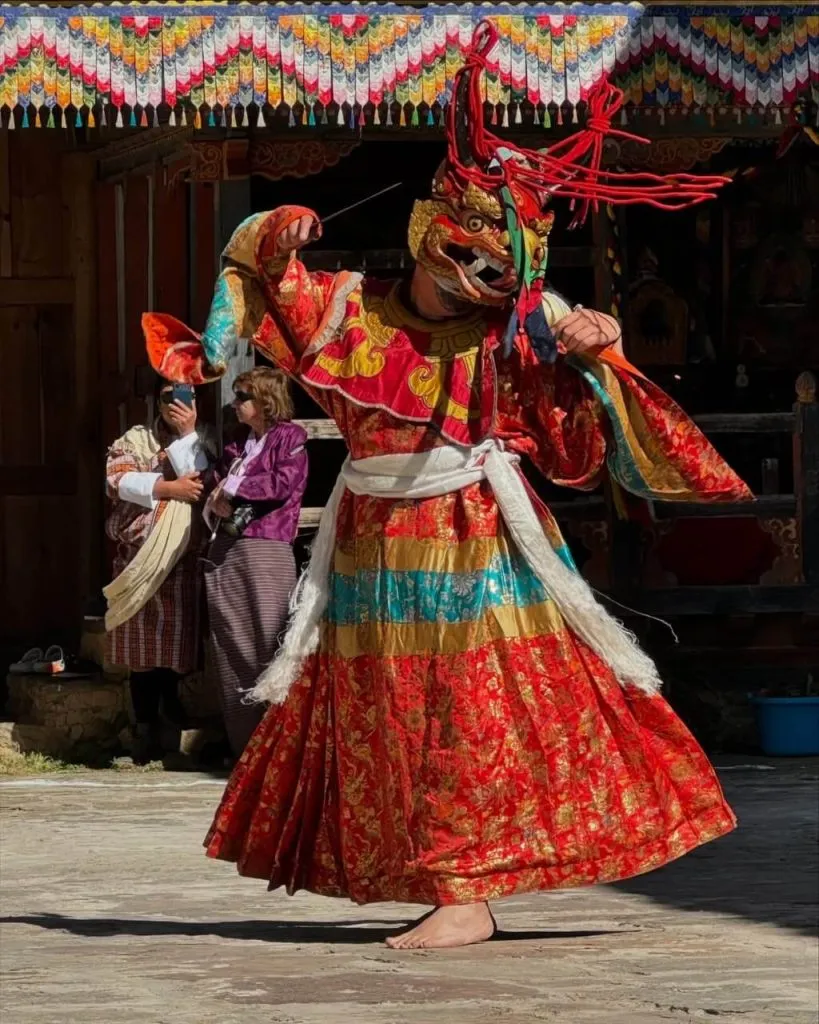
The last day of the Drubchen is the most dramatic. Local men dressed as pazaps, the militia of the 17th century, march through the dzong with swords and shields, shouting war cries and acting out the defeat of the Tibetan army. A procession then goes down to the river, where an offering is made, recalling the story of how the Tibetans were tricked into believing a sacred relic had been thrown into the water.
It is loud, colourful and unlike anything else in the Bhutanese festival year. Your guide finds you a safe place to watch the procession.
- Overnight: Punakha
- Festival: final day of the Drubchen
- Tip: stay with your guide in the crowd
Day 6
The Punakha Tshechu opens, then up to Phobjikha
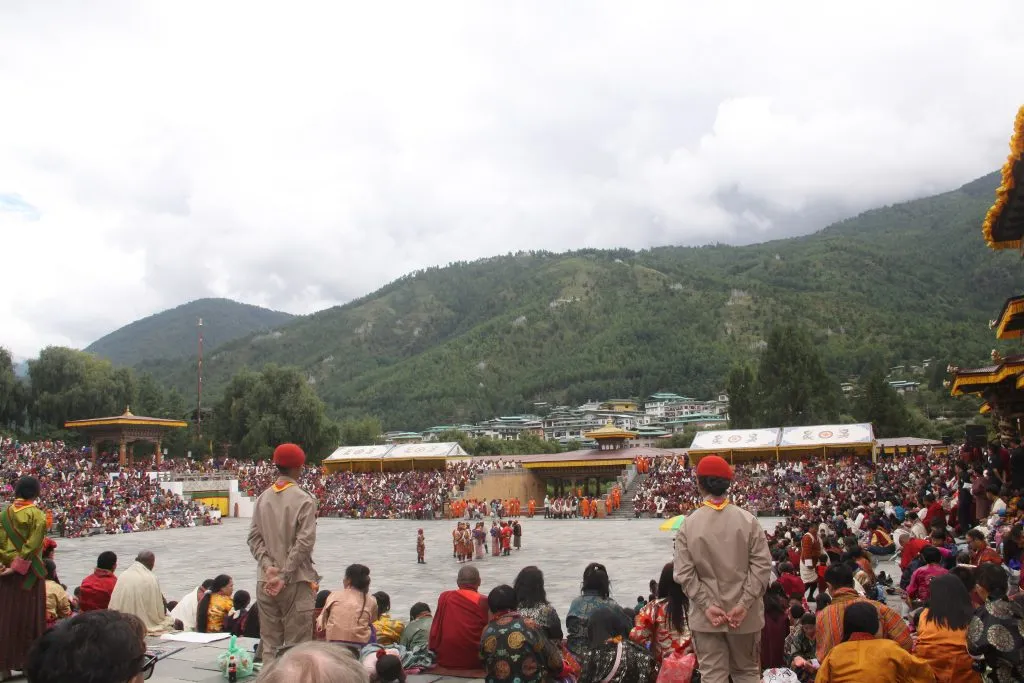
The day after the Drubchen ends, the Punakha Tshechu begins, with masked dances in the dzong courtyard. We stay for the morning dances, which include the Black Hat dance that opens most tshechus.
After lunch we drive up through forest to the Phobjikha valley, at about 3,000 metres, which takes about three hours. It is cold here in February, so your room will have a wood stove or heater.
- Overnight: Phobjikha
- Festival: Punakha Tshechu, morning
- Drive: about 3 hours
Day 7
The cranes of Phobjikha
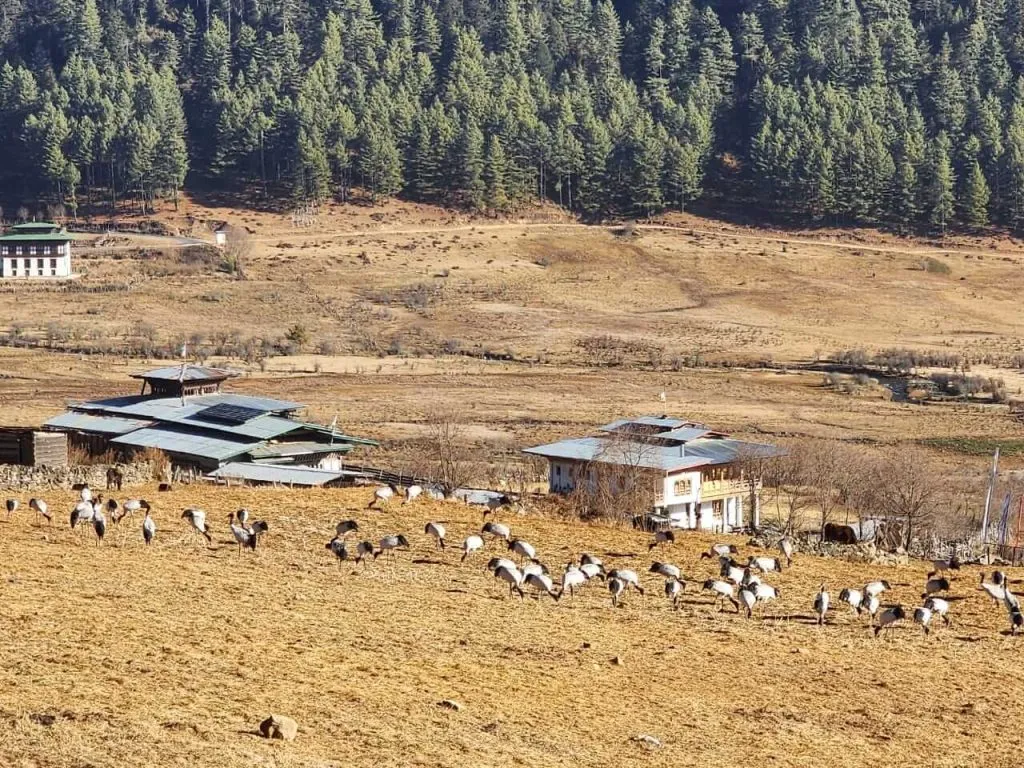
In winter, black-necked cranes from Tibet live on the marshes of the Phobjikha valley. They usually stay until late February or March, so you have a good chance of seeing them feeding in the early morning. The Black-necked Crane Information Centre has telescopes and explains their story.
We visit Gangtey Goenpa, the large monastery on the ridge, then walk the Gangtey nature trail across the valley, an easy walk of about 1.5 hours. Read more in our Phobjikha valley guide.
- Overnight: Phobjikha
- Walking: about 1.5 hours, easy
- Best time for cranes: early morning
Day 8
Back to Paro
This is a long drive, about six hours with stops, back over Dochula and through Thimphu to Paro. We break it with lunch on the way and a stop at Simtokha Dzong, built in 1629 at the entrance to the Thimphu valley.
In the late afternoon we visit Rinpung Dzong in Paro and cross the covered wooden bridge below it. If you prefer a shorter day, we can spend the night in Thimphu instead.
- Overnight: Paro
- Drive: about 6 hours with stops
- Option: overnight in Thimphu instead
Day 9
The Tiger's Nest, or farewell
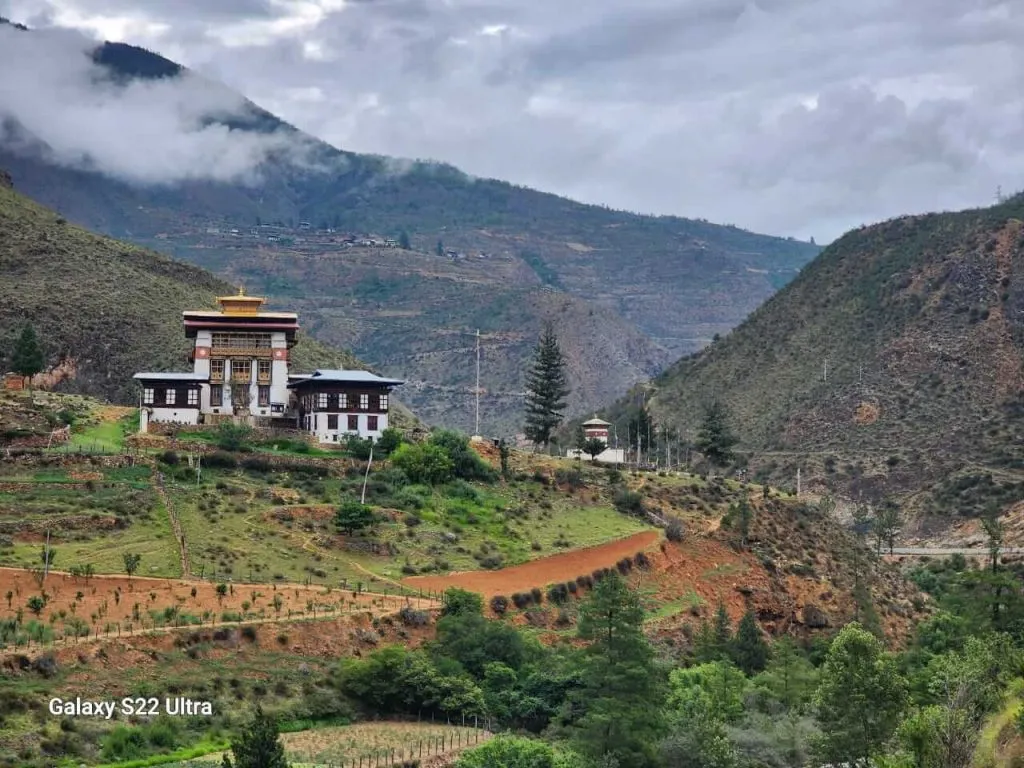
If your flight leaves on 20 February, today is for the Tiger’s Nest. The path climbs to a café viewpoint in about 1.5 hours and reaches the monastery, at about 3,120 metres, after another hour. Most people take 4 to 6 hours for the round trip.
If you fly out today, your guide takes you to Paro airport instead. We recommend adding the extra night so you don’t miss the hike; tell us when you book and we will include it in the price.
- Hike: 4 to 6 hours return, moderate
- Or: transfer to Paro airport
- Recommended: one extra night
Where you stay
Where you stay
Punakha hotels are busy during the festivals, so we book early.
| Nights | Place | Where you stay | Why we chose it |
|---|---|---|---|
| 1 | Thimphu | 3-star or 4-star hotel | Central, close to the evening walk |
| 2 to 5 | Punakha | 3-star or 4-star hotel, or a luxury lodge | Close to Punakha Dzong for early starts |
| 6 to 7 | Phobjikha | Farmhouse-style lodge or 4-star hotel | On the edge of the crane valley |
| 8 | Paro | 3-star or 4-star hotel | Close to the Tiger's Nest and the airport |
Luxury upgrades are possible, including COMO Uma Punakha, Six Senses and Amankora.
What the price covers
Included and not included
Included
- Bhutan visa (USD 40) and the Sustainable Development Fee for every night
- Hotels as listed, 3-star as standard, with 4-star and luxury upgrades on request
- All meals: breakfast, lunch and dinner
- A licensed English-speaking guide who knows the festival programme
- Private car or SUV with a Bhutanese driver, and all transfers
- Entry fees to dzongs, temples and museums
- Bottled water in the car
Not included
- International flights into and out of Paro (we can book them for you)
- Travel insurance, which we strongly recommend
- Drinks, laundry and other personal costs
- Tips for your guide and driver
- Anything not listed under included
Price on request
Tell us your budget and we will send our best price
The price depends on your hotels, group size and dates, so we don’t publish one fixed figure. Tell us how many are travelling and your budget. We will reply within 24 hours with our best price for the 2027 Punakha festivals.
How we price
What decides the cost of this trip
Government fees
The SDF is USD 100 per adult per night until 31 August 2027, plus a USD 40 visa. These are fixed by the Government of Bhutan and paid through us.
Hotels you choose
Punakha has a good range from 3-star hotels to luxury lodges. We suggest the best value for your budget.
Season and dates
Festival weeks are the busiest of the year. Booking early holds better rooms and seats.
Group size
Guide and car costs are shared, so the price per person drops for two, three or four travellers.
We send a written, itemised quote before you pay anything. No booking fees.
Good to know
Planning notes for the Punakha festivals
Festival dates and changes
Festival dates follow the Bhutanese lunar calendar, and the dates given here are the expected 2027 dates. They are occasionally adjusted, so we check them again with the dzong and the Department of Tourism before your trip and confirm with you in writing. See every date in our 2027 festival calendar.
Festival etiquette
A tshechu is a religious event first, so dress as you would for a temple: long sleeves and trousers or a long skirt. Many visitors wear a gho or kira, and your guide can help you buy or borrow one. Don’t walk across the dance ground, keep your voice low during the dances, and never use flash. Ask before photographing people up close. Our guide to Bhutan’s festivals explains the dances and the atsara clowns.
Weather in February
Punakha is mild in February, often around 15 to 18 °C in the day, while Thimphu and Phobjikha are much colder and can drop below freezing at night. Pack warm layers, a down jacket and a hat. Read our Punakha travel guide for more.
Combine with another festival
The 2027 festival calendar lists other winter and spring festivals. For a shorter trip built around the Tshechu alone, see our 6 day Punakha Tshechu tour.
Visa, SDF and guide rules
Every visitor except Indian nationals needs a visa, which costs USD 40 and is issued online before you fly. The Sustainable Development Fee is USD 100 per adult per night until 31 August 2027, with half rates for children aged 6 to 11. A Department of Tourism notice from April 2026 confirms that visitors travel with a licensed guide. We file the visa and pay the SDF for you. Read more in our Bhutan visa guide and SDF guide.
Flying into Paro
Only Drukair and Bhutan Airlines fly into Paro, mainly from Bangkok, Delhi, Kathmandu, Kolkata and Singapore. Pilots land by sight between the ridges, so morning flights are the most reliable. We suggest a night in your hub city on the way in. Our flights to Bhutan page lists every route.
Punakha Drubchen tour: questions
It is expected from 13 to 15 February 2027, followed by the Punakha Tshechu from 16 to 18 February. We confirm the dates before your trip.
They are two names for the same festival. It commemorates the 17th-century victory over a Tibetan army.
It depends on your hotels, group size and dates. Tell us your budget and we will reply within 24 hours with our best price, including the SDF, visa, hotels, meals, guide and car.
The militia of old Bhutan. On the last day of the Drubchen, local men dressed as pazaps re-enact the battle.
Very likely. They usually stay in Phobjikha until late February or March.
Punakha is mild, but Thimphu, Phobjikha and Paro are cold, especially at night. Bring warm layers.
Three to five months ahead. Punakha hotels fill for festival week.
Price on request
Ask for your best price
Tell us how many are travelling and your budget. We will reply within 24 hours with our best price for the 2027 Punakha Drubchen.
- Share your budget, we shape the trip around it
- No booking fees, ever
- A reply within 24 hours
- Licensed Bhutanese tour operator
- +975 17533776
- +975 77495028
- info@deyabhutantours.com
- Thimphu, Bhutan
Let's plan your Bhutan journey
Tell us a little about your trip. Our team in Thimphu will reply with ideas, a day-by-day plan and a full price.
We’ll reply within 24 hours. No booking fees, and no obligation to book.