- Licensed Bhutanese tour operator
- Thimphu, Bhutan

Bhutan festivals · 2027 guide
Chhorten Kora festival 2027: two days of pilgrimage around the great stupa
Pilgrims from Bhutan and from Arunachal Pradesh walk around Chorten Kora in Trashi Yangtse. Expected on 20 February (Dakpa Kora) and 8 March 2027 (Drukpa Kora).
- 20 February and 8 March 2027
- Trashi Yangtse, eastern Bhutan
- Built 1740
20 Feb
Dakpa Kora, first day
8 Mar
Drukpa Kora, second day
1740
Year the stupa was completed
2
Festival days in 2027
About the festival
A stupa modelled on Boudhanath
Chorten Kora is a large white stupa on the riverbank below Trashi Yangtse town, in the far east of Bhutan. It was completed in 1740 by Lama Ngawang Lodro, a nephew of Zhabdrung Ngawang Namgyel, and it is modelled on the Boudhanath stupa in Kathmandu. A legend says a young princess from what is now Arunachal Pradesh entombed herself inside it for the benefit of all beings.
Each spring the stupa hosts two days of kora, or circumambulation. The first is the Dakpa Kora, when the Dakpa people from across the border in Arunachal Pradesh come to honour the princess. The second, two weeks later, is the Drukpa Kora for Bhutanese pilgrims. There are masked dances, but the heart of the festival is thousands of people walking clockwise around the stupa, praying and catching up with friends.
- Two separate festival days
- Pilgrims from Bhutan and Arunachal Pradesh
- One of the great sights of eastern Bhutan
Festival facts
Chhorten Kora 2027 at a glance
| Topic | Details |
|---|---|
| Dates in 2027 | 20 February and 8 March 2027 |
| Venue | Chorten Kora, Trashi Yangtse |
| District | Trashi Yangtse (eastern Bhutan) |
| Festival days | Dakpa Kora on 20 February; Drukpa Kora on 8 March 2027 |
| Altitude | About 1,800 m |
| Getting there | About 1.5 to 2 hours' drive from Trashigang; Yonphula domestic airport is near Trashigang |
| Nearby | Gomphu Kora (16 to 18 March) is on the road between Trashigang and Trashi Yangtse |
| Entry | Free and open to visitors with a licensed guide; the SDF and visa rules apply as on any day |
Dates follow the Department of Tourism’s tentative festival list for 2027 and the lunar calendar. They can shift by a day or two, so we confirm them before you book flights.
What you will see
Highlights of Chhorten Kora
The stupa
A white chorten modelled on Boudhanath in Kathmandu.
Circumambulation
Crowds walking clockwise around the stupa all day.
Dakpa pilgrims
Visitors from Arunachal Pradesh on the first day.
Masked dances
Cham performed in the stupa grounds.
Fair stalls
Food, crafts and the famous wooden bowls of Yangtse.
Prayer and offerings
Butter lamps and prayers for the year ahead.
History and meaning
The legend of Chorten Kora
Who built the stupa
Lama Ngawang Lodro built Chorten Kora over about twelve years and completed it in 1740, in memory of his uncle and to subdue a demon said to live at the site. Tradition says he sent a mission to Nepal to copy the Boudhanath stupa, and the design is clearly related.
The Dakpa princess
To consecrate the stupa, a young woman from the Dakpa community, in what is now Arunachal Pradesh, is said to have offered herself and been entombed inside. That is why the Dakpa people still walk across the border each year for the first kora. Local stories differ in their details, and your guide will tell you the version told in Yangtse.
Trashi Yangtse today
Yangtse is known for its woodturners, who make lacquered wooden bowls called dappa, and for the Institute for Zorig Chusum, a traditional arts school. Bumdeling, a winter roost for black-necked cranes, is further up the valley.
Planning
How to plan your visit
Planning an eastern trip
Trashi Yangtse is a long way from Paro by road, so most visitors fly to Yonphula near Trashigang, or drive east over several days through Bumthang and Mongar. A two-week trip can take in both days of Chhorten Kora and the Gomphu Kora festival in between.
Where to stay
Hotels in Trashi Yangtse are simple and few; Trashigang has a slightly wider choice. Book early, because rooms fill with pilgrims during the festival.
Etiquette
How to behave at a Bhutanese festival
Festivals are religious events first, so dress as you would for a temple: long sleeves and long trousers or a long skirt, and no hats inside the dzong or temple. Never walk across the dance ground, even when it looks empty between dances. Photography is usually allowed from the edges without flash, but some rituals and inner temples are off limits; your guide will tell you when to put the camera away. Ask before taking close-up portraits.
Arrive early for a good spot, bring water, a hat and a cushion or mat, and expect to be teased by the atsaras, the masked clowns who keep the crowd in order. If someone offers you food or a cup of tea, it is polite to accept. Our guide to Bhutanese festivals explains the dances in more detail.
Trips
Build a trip around Chhorten Kora
Every trip is private, so we can time it to the festival dates and add the places nearby.
Before you go
Travel rules for 2027
Every visitor except Indian, Bangladeshi and Maldivian nationals needs a visa, which costs USD 40 and is arranged by your tour operator. The Sustainable Development Fee is USD 100 per adult per night until 31 August 2027; children under 6 pay nothing and children aged 6 to 12 pay half. Indian visitors pay INR 1,200 per night. Tourists travel with a licensed guide beyond the first checkpoint and stay in certified hotels or homestays.
The SDF does not change during festival weeks, but hotel rooms near popular festivals fill early. See our visa and SDF guide and Bhutan travel rules.
Chhorten Kora: questions
Dakpa Kora, on the first day, is mainly for the Dakpa people from Arunachal Pradesh. Drukpa Kora, on the second day, is for Bhutanese pilgrims.
The first day is expected on 20 February and the second on 8 March 2027.
Fly to Yonphula or drive east to Trashigang, then continue about 1.5 to 2 hours to Trashi Yangtse.
No. Bhutanese festivals are free. You attend with your licensed guide, who also explains the dances.
The Department of Tourism lists 20 February and 8 March 2027 as the tentative 2027 dates. Lunar dates are occasionally adjusted, so we reconfirm before you book flights.
More festivals
Other festivals around the same time
See Chhorten Kora in 2027
Tell us your dates and who is travelling. We will check the festival date, hold hotels nearby and send a day-by-day plan with one price that includes the SDF, visa, guide and car.
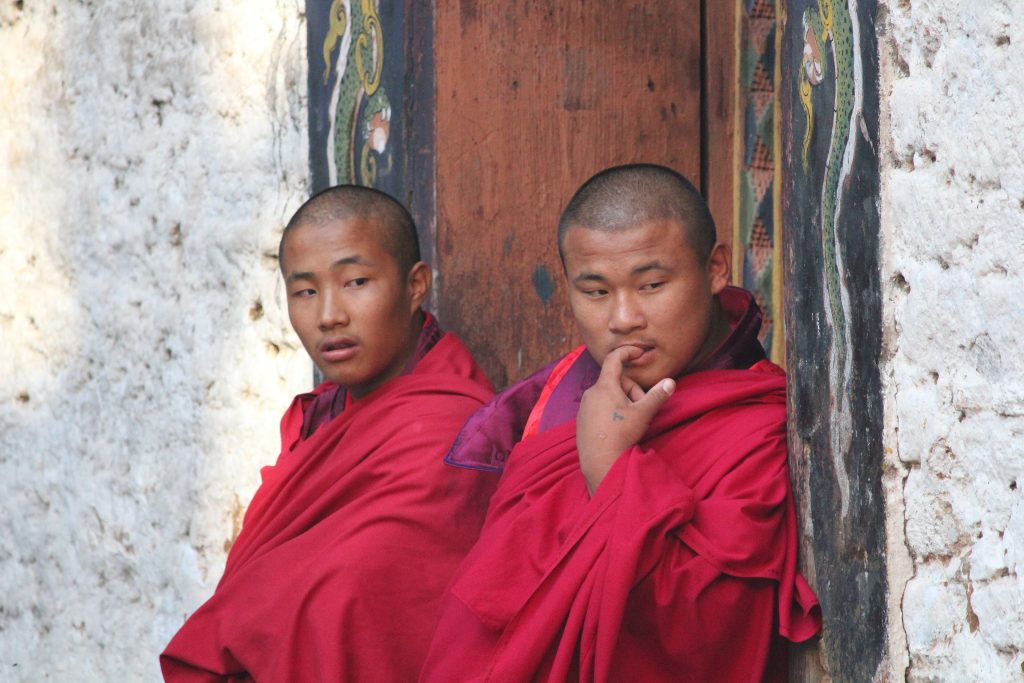
Photo credits, via Wikimedia Commons: Chorten Kora stupa in Trashi Yangtse (Vikramjit Kakati, CC BY-SA 4.0); Monks at Trashigang Dzong watching festival rehearsals (Arian Zwegers from Brussels, Belgium, CC BY 2.0); Trashigang Dzong above the river (Christopher J. Fynn, CC BY-SA 3.0); Gom Kora temple beside the Drangme Chhu (Franzfoto, CC BY-SA 3.0); Tharpaling monastery above the Chhume valley (Christopher J. Fynn, CC BY-SA 4.0); Rhododendron flowers in bloom (Bernard Spragg. NZ from Christchurch, New Zealand, CC0).
