- Licensed Bhutanese tour operator
- Thimphu, Bhutan

Bhutan festivals · 2027 guide
Black-necked Crane Festival 2027: welcoming the cranes to Phobjikha
A one-day festival at Gangtey Goemba celebrating the black-necked cranes, with children dancing in crane costumes. Held every year on 11 November.
- 11 November 2027
- Gangtey Goemba, Phobjikha
- Family-friendly
11 Nov
Date every year
609
Cranes counted in Phobjikha in the 2023 to 2024 winter
676
Cranes counted in Bhutan that winter
3 h
Drive from Punakha
About the festival
A festival for a vulnerable bird
The black-necked crane breeds on the Tibetan plateau and spends the winter in a few high valleys, including Phobjikha in Bhutan. The birds arrive from late October and leave around February or March. In Bhutan they are seen as heavenly birds, and local belief says they circle Gangtey Goemba three times when they arrive and again when they leave.
The Black-necked Crane Festival is held every year on 11 November in the courtyard of Gangtey Goemba. Local schoolchildren perform crane dances in costume, there are folk songs and masked dances, and the Royal Society for Protection of Nature shares the story of crane conservation. It is cheerful, easy to follow and especially good for families.
- Fixed date every year: 11 November
- Children's crane dances
- Celebrates conservation
Festival facts
Black-necked Crane Festival 2027 at a glance
| Topic | Details |
|---|---|
| Dates in 2027 | 11 November 2027 |
| Venue | Gangtey Goemba courtyard, Phobjikha |
| District | Wangdue Phodrang (western Bhutan) |
| Altitude | About 2,900 to 3,000 m |
| Getting there | About 3 hours from Punakha; 5 to 6 hours from Thimphu |
| Crane season | Late October to February |
| Accommodation | Farmhouses and lodges in Phobjikha; book well ahead for this date |
| Entry | Free and open to visitors with a licensed guide; the SDF and visa rules apply as on any day |
Dates follow the Department of Tourism’s tentative festival list for 2027 and the lunar calendar. They can shift by a day or two, so we confirm them before you book flights.
What you will see
Highlights of Black-necked Crane Festival
Crane dances
Children in crane costumes perform for the crowd.
Crane watching
Cranes feeding in the marshes below.
Folk songs
Songs and dances by local communities.
Masked dances
Cham in the monastery courtyard.
Conservation
RSPN's work to protect the wetland.
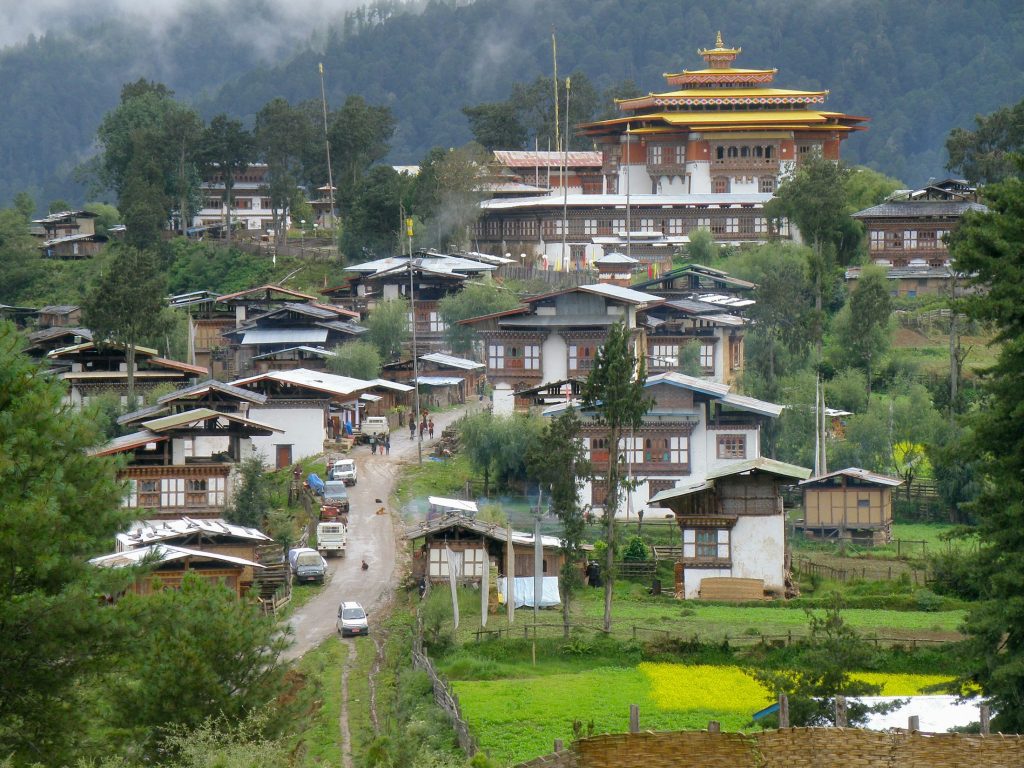
Gangtey Goemba
The 17th-century monastery above the valley.
History and meaning
About the cranes and the festival
The numbers
The Royal Society for Protection of Nature counted 676 black-necked cranes in Bhutan in the 2023 to 2024 winter, up 12 per cent on the year before, and 609 were in Phobjikha. The valley is protected as the Gangtey-Phobji Ramsar site, about 975 hectares of wetland.
Why the festival matters
The festival was created to raise awareness of the cranes and to involve local people in protecting them. Conservation in Phobjikha includes running the valley’s power lines underground so the birds do not collide with them.
Planning
How to plan your visit
Planning
Book lodges in Phobjikha early, because the festival day is busy. Stay two nights so you can watch the cranes at dawn and dusk. Our Phobjikha guide covers lodges and the nature trail. The Jambay Lhakhang Drup in Bumthang follows on 14 to 17 November.
Etiquette
How to behave at a Bhutanese festival
Festivals are religious events first, so dress as you would for a temple: long sleeves and long trousers or a long skirt, and no hats inside the dzong or temple. Never walk across the dance ground, even when it looks empty between dances. Photography is usually allowed from the edges without flash, but some rituals and inner temples are off limits; your guide will tell you when to put the camera away. Ask before taking close-up portraits.
Arrive early for a good spot, bring water, a hat and a cushion or mat, and expect to be teased by the atsaras, the masked clowns who keep the crowd in order. If someone offers you food or a cup of tea, it is polite to accept. Our guide to Bhutanese festivals explains the dances in more detail.
Trips
Build a trip around Black-necked Crane Festival
Every trip is private, so we can time it to the festival dates and add the places nearby.
Before you go
Travel rules for 2027
Every visitor except Indian, Bangladeshi and Maldivian nationals needs a visa, which costs USD 40 and is arranged by your tour operator. The Sustainable Development Fee is USD 100 per adult per night until 31 August 2027; children under 6 pay nothing and children aged 6 to 12 pay half. Indian visitors pay INR 1,200 per night. Tourists travel with a licensed guide beyond the first checkpoint and stay in certified hotels or homestays.
The SDF does not change during festival weeks, but hotel rooms near popular festivals fill early. See our visa and SDF guide and Bhutan travel rules.
Black-necked Crane Festival: questions
Every year on 11 November at Gangtey Goemba in Phobjikha.
Usually yes; by mid-November many cranes have arrived.
Yes. The crane dances by local schoolchildren are a highlight.
No. Bhutanese festivals are free. You attend with your licensed guide, who also explains the dances.
The Department of Tourism lists 11 November 2027 as the tentative 2027 dates. Lunar dates are occasionally adjusted, so we reconfirm before you book flights.
More festivals
Other festivals around the same time
See Black-necked Crane Festival in 2027
Tell us your dates and who is travelling. We will check the festival date, hold hotels nearby and send a day-by-day plan with one price that includes the SDF, visa, guide and car.
Photo credits, via Wikimedia Commons: Jakar Dzong above the Chamkhar valley in Bumthang (Gerd Eichmann, CC BY-SA 4.0); Jambay Lhakhang, one of the oldest temples in Bhutan (Arian Zwegers, CC BY 2.0).
