- Licensed Bhutanese tour operator
- Thimphu, Bhutan

Bhutan festivals · 2027 guide
Pemagatshel Tshechu 2027: a festival in Bhutan's quiet south-east
Four days of masked dances at Pemagatshel Dzong, ending with a thongdrol on the final morning. Expected on 6 to 9 November 2027.
- 6 to 9 November 2027
- Pemagatshel Dzong
- Thongdrol on the last day
6 to 9 Nov
Expected dates in 2027
4
Days of the festival
Last day
Thongdrol shown at dawn
Few
Foreign visitors each year
About the festival
A festival few visitors see
Pemagatshel is a small, hilly district in south-eastern Bhutan, between Mongar and Samdrup Jongkhar. Its name is often translated as the land of the blissful lotus. Farming villages are scattered over steep slopes, and the district is known for its handwoven textiles and for Yongla Goemba, an old monastery on a ridge with views towards the plains of India.
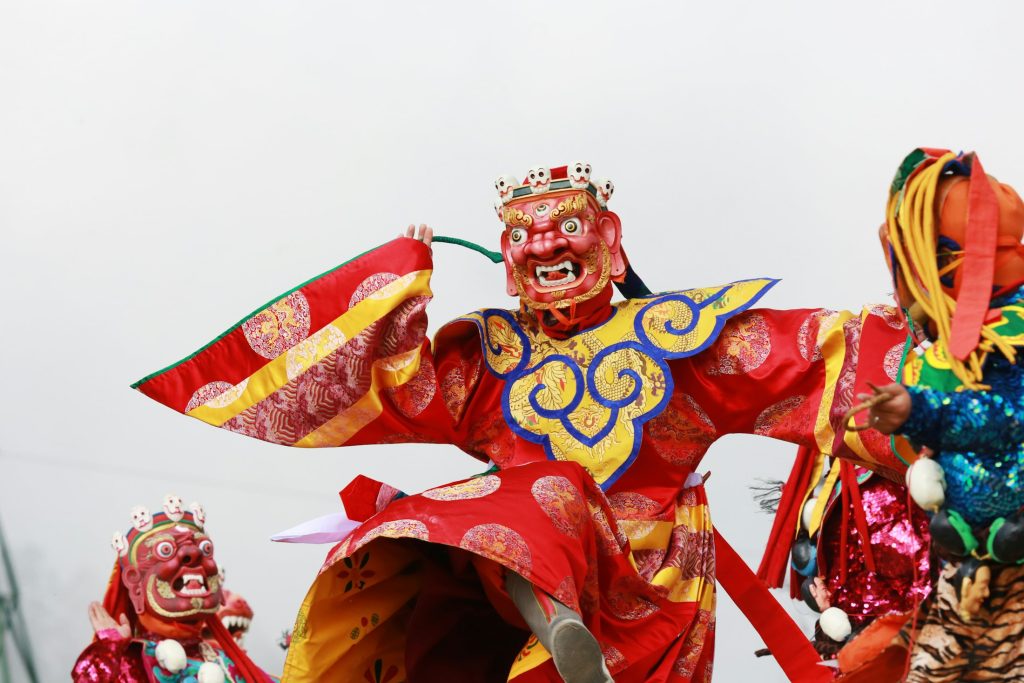
The Pemagatshel Tshechu fills the dzong courtyard for four days each November, with masked dances, atsaras and a thongdrol displayed on the final morning. Hardly any foreign travellers make it here, so the festival is a chance to see eastern Bhutanese life without crowds. It works best as part of a longer journey through the east, entering or leaving Bhutan by road at Samdrup Jongkhar.
- A four-day dzong festival
- Thongdrol on the final morning
- Almost no other visitors
Festival facts
Pemagatshel Tshechu 2027 at a glance
| Topic | Details |
|---|---|
| Dates in 2027 | 6 to 9 November 2027 |
| Venue | Pemagatshel Dzong |
| District | Pemagatshel (south-eastern Bhutan) |
| Getting there | By road from Mongar or Samdrup Jongkhar; long drives on winding roads |
| Border link | Samdrup Jongkhar is a land border with Assam, India, for road travellers |
| Thongdrol | Shown at dawn on the last day |
| Accommodation | Simple local hotels; book through your operator |
| Entry | Free and open to visitors with a licensed guide; the SDF and visa rules apply as on any day |
Dates follow the Department of Tourism’s tentative festival list for 2027 and the lunar calendar. They can shift by a day or two, so we confirm them before you book flights.
What you will see
Highlights of Pemagatshel Tshechu
Masked dances
Cham in the dzong courtyard over four days.
Thongdrol
A great thangka at dawn on the final day.
Eastern families
Local communities in festival dress.
Textiles
Handwoven cloth from Pemagatshel villages.
Yongla Goemba
An old ridge-top monastery nearby.
Atsaras
Masked jesters entertaining the crowd.
History and meaning
About Pemagatshel
The district
Pemagatshel is one of the smallest districts in Bhutan. Its people speak mainly Tshangla, the language of much of eastern Bhutan. Villages depend on farming, and weaving is an important source of income for many families.
The tshechu
Like tshechus across Bhutan, the festival honours Guru Rinpoche, with dances that teach Buddhist ideas through story and symbol. The thongdrol on the final morning draws the biggest crowd.
Planning
How to plan your visit
Planning an eastern route
Combine Pemagatshel with a road trip across eastern Bhutan, using Samdrup Jongkhar to enter from or exit to Guwahati in India. The Jambay Lhakhang Drup in Bumthang follows a week later, on 14 to 17 November.
Etiquette
How to behave at a Bhutanese festival
Festivals are religious events first, so dress as you would for a temple: long sleeves and long trousers or a long skirt, and no hats inside the dzong or temple. Never walk across the dance ground, even when it looks empty between dances. Photography is usually allowed from the edges without flash, but some rituals and inner temples are off limits; your guide will tell you when to put the camera away. Ask before taking close-up portraits.
Arrive early for a good spot, bring water, a hat and a cushion or mat, and expect to be teased by the atsaras, the masked clowns who keep the crowd in order. If someone offers you food or a cup of tea, it is polite to accept. Our guide to Bhutanese festivals explains the dances in more detail.
Trips
Build a trip around Pemagatshel Tshechu
Every trip is private, so we can time it to the festival dates and add the places nearby.
Before you go
Travel rules for 2027
Every visitor except Indian, Bangladeshi and Maldivian nationals needs a visa, which costs USD 40 and is arranged by your tour operator. The Sustainable Development Fee is USD 100 per adult per night until 31 August 2027; children under 6 pay nothing and children aged 6 to 12 pay half. Indian visitors pay INR 1,200 per night. Tourists travel with a licensed guide beyond the first checkpoint and stay in certified hotels or homestays.
The SDF does not change during festival weeks, but hotel rooms near popular festivals fill early. See our visa and SDF guide and Bhutan travel rules.
Pemagatshel Tshechu: questions
Expected on 6 to 9 November 2027 at Pemagatshel Dzong.
By road from Mongar or from Samdrup Jongkhar on the Indian border.
Yes, shown on the final morning.
No. Bhutanese festivals are free. You attend with your licensed guide, who also explains the dances.
The Department of Tourism lists 6 to 9 November 2027 as the tentative 2027 dates. Lunar dates are occasionally adjusted, so we reconfirm before you book flights.
See Pemagatshel Tshechu in 2027
Tell us your dates and who is travelling. We will check the festival date, hold hotels nearby and send a day-by-day plan with one price that includes the SDF, visa, guide and car.
Photo credits, via Wikimedia Commons: Trashigang Dzong above the river (Christopher J. Fynn, CC BY-SA 3.0); Chhukha Dzong (C. J. Fynn, CC BY-SA 4.0); Lhakhang Karpo, the White Temple of Haa (Christopher J. Fynn, CC BY-SA 3.0); A chorten in Mongar town (Christopher J. Fynn, CC BY-SA 3.0).
