- Licensed Bhutanese tour operator
- Thimphu, Bhutan

Bhutan festivals · 2027 guide
Ura Yakchoe 2027: Bumthang's sacred relic festival
Five days of dances and blessings in Ura village, where a sacred statue is brought out for the community each spring. Expected on 18 to 22 April 2027.
- 18 to 22 April 2027
- Ura Lhakhang, Bumthang
- About 3,100 m
18 to 22 Apr
Expected dates in 2027
5
Days of the festival
3,100 m
Approximate altitude of Ura
1.5 h
Drive from Jakar
About the festival
A village saved by a statue
Ura is the highest of Bumthang’s four valleys, a cluster of stone-walled houses with cobbled lanes around Ura Lhakhang. Its great festival, the Yakchoe, is built around a small metal statue that the village believes saved it from a deadly epidemic long ago. Each year a lama brings the statue from Gaden (Gathan) Lhakhang above the village, and it stays three nights in the house of the family who first received it.
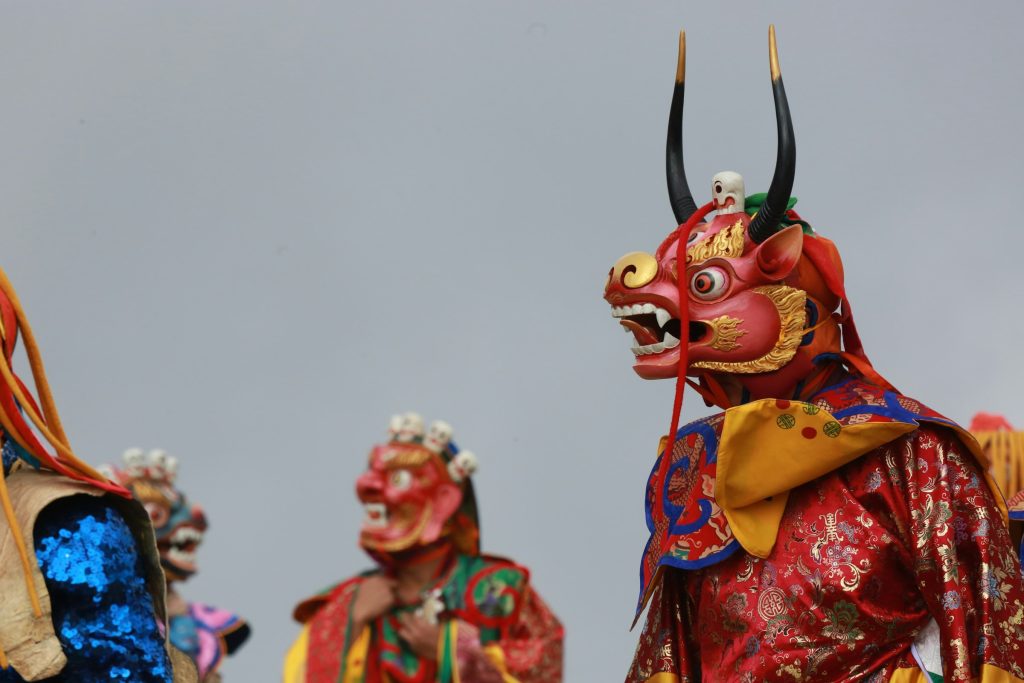
Over five days the festival moves from purification rituals to masked dances, protector rituals and finally a procession that carries the relic around the village. A thongdrol is shown on the last day. Ura Yakchoe is busier than most village festivals, but it is still very much Ura’s own event.
- A sacred relic shown once a year
- Five days of rituals and dances
- Thongdrol on the final day
Festival facts
Ura Yakchoe 2027 at a glance
| Topic | Details |
|---|---|
| Dates in 2027 | 18 to 22 April 2027 |
| Venue | Ura Lhakhang, Ura |
| District | Bumthang (central Bhutan) |
| Altitude | About 3,100 m |
| Getting there | About 1.5 hours east of Jakar over the Shertang La |
| Thongdrol | Shown on the final day, followed by a procession with the relic |
| Accommodation | Most visitors stay in Jakar and drive to Ura each day; a few farmhouse stays exist in Ura |
| Entry | Free and open to visitors with a licensed guide; the SDF and visa rules apply as on any day |
Dates follow the Department of Tourism’s tentative festival list for 2027 and the lunar calendar. They can shift by a day or two, so we confirm them before you book flights.
What you will see
Highlights of Ura Yakchoe
The sacred relic
A small statue brought out for blessings once a year.
Masked dances
Dances of wrathful deities, the Black Hats and the stag.
Thongdrol
A giant thangka unrolled on the final morning.
Village procession
The relic carried around Ura on the last day.
Drametse drum dance
A UNESCO-listed dance from eastern Bhutan.
Evening folk dances
Villagers dance together after the rituals.
History and meaning
The legend of Ura Yakchoe
The stranger and the statue
Long ago, the story goes, a terrible disease struck Ura and the villagers prayed to Guru Rinpoche. A wandering mendicant came to the village and was invited for a meal by a woman at the northern edge of Ura. When she returned with food, he had vanished, and she found a small metal statue in her wool basket. The villagers believe the statue ended the epidemic, and it has been honoured ever since.
What happens each day
The first day brings the relic from the temple with purification and long-life rituals. The second and third days are given to masked dances, including the Black Hat dance and the dance of the Ten Wrathful Deities, along with protector rituals and the Drametse drum dance. The fourth day has the stag dance and other mangcham, and on the fifth the thongdrol is shown and the relic is carried round the village before the lama returns.
Where the name comes from
One explanation links the name to ancient offerings for yaks and cattle, older than Buddhism in Ura. Today the festival is a thanksgiving to Guru Rinpoche and a prayer for the village’s health in the year ahead.
Planning
How to plan your visit
Planning
Base yourself in Jakar and drive to Ura each morning, or stay one night in a farmhouse in Ura. Combine it with Domkhar Tshechu, which ends on 18 April, and the rhododendron-covered passes on the way east.
Tips
Ura is noticeably colder than Jakar, so bring warm layers. The relic procession on the last day is the moment most people want to see, so plan to stay to the end.
Etiquette
How to behave at a Bhutanese festival
Festivals are religious events first, so dress as you would for a temple: long sleeves and long trousers or a long skirt, and no hats inside the dzong or temple. Never walk across the dance ground, even when it looks empty between dances. Photography is usually allowed from the edges without flash, but some rituals and inner temples are off limits; your guide will tell you when to put the camera away. Ask before taking close-up portraits.
Arrive early for a good spot, bring water, a hat and a cushion or mat, and expect to be teased by the atsaras, the masked clowns who keep the crowd in order. If someone offers you food or a cup of tea, it is polite to accept. Our guide to Bhutanese festivals explains the dances in more detail.
Trips
Build a trip around Ura Yakchoe
Every trip is private, so we can time it to the festival dates and add the places nearby.
Before you go
Travel rules for 2027
Every visitor except Indian, Bangladeshi and Maldivian nationals needs a visa, which costs USD 40 and is arranged by your tour operator. The Sustainable Development Fee is USD 100 per adult per night until 31 August 2027; children under 6 pay nothing and children aged 6 to 12 pay half. Indian visitors pay INR 1,200 per night. Tourists travel with a licensed guide beyond the first checkpoint and stay in certified hotels or homestays.
The SDF does not change during festival weeks, but hotel rooms near popular festivals fill early. See our visa and SDF guide and Bhutan travel rules.
Ura Yakchoe: questions
Expected on 18 to 22 April 2027 at Ura Lhakhang.
A sacred statue, believed to have saved the village from an epidemic, is shown to the public once a year.
About 1.5 hours by road over the Shertang La.
No. Bhutanese festivals are free. You attend with your licensed guide, who also explains the dances.
The Department of Tourism lists 18 to 22 April 2027 as the tentative 2027 dates. Lunar dates are occasionally adjusted, so we reconfirm before you book flights.
More festivals
Other festivals around the same time
See Ura Yakchoe in 2027
Tell us your dates and who is travelling. We will check the festival date, hold hotels nearby and send a day-by-day plan with one price that includes the SDF, visa, guide and car.
Photo credits, via Wikimedia Commons: Ura village in Bumthang (Christopher J. Fynn, CC BY 3.0); Jambay Lhakhang, one of the oldest temples in Bhutan (Arian Zwegers, CC BY 2.0); Jakar Dzong above the Chamkhar valley in Bumthang (Gerd Eichmann, CC BY-SA 4.0).
