- Licensed Bhutanese tour operator
- Thimphu, Bhutan

Bhutan destinations · Updated October 2026
Paro, Bhutan: travel guide for 2027
The valley where almost every trip to Bhutan begins and ends. Tiger’s Nest, Rinpung Dzong, the National Museum and one of the oldest temples in the country, plus drive times, festival dates and where to stay.
- About 2,200 m
- Stay 2 to 3 nights
- Paro Tshechu 18 to 22 March 2027
2,200 m
Altitude of the Paro valley, approximately
3,120 m
Altitude of Tiger’s Nest, approximately
2 to 3
Nights we suggest in Paro
1 hour
Drive from Paro to Thimphu
About Paro
Bhutan's front door, and often the favourite
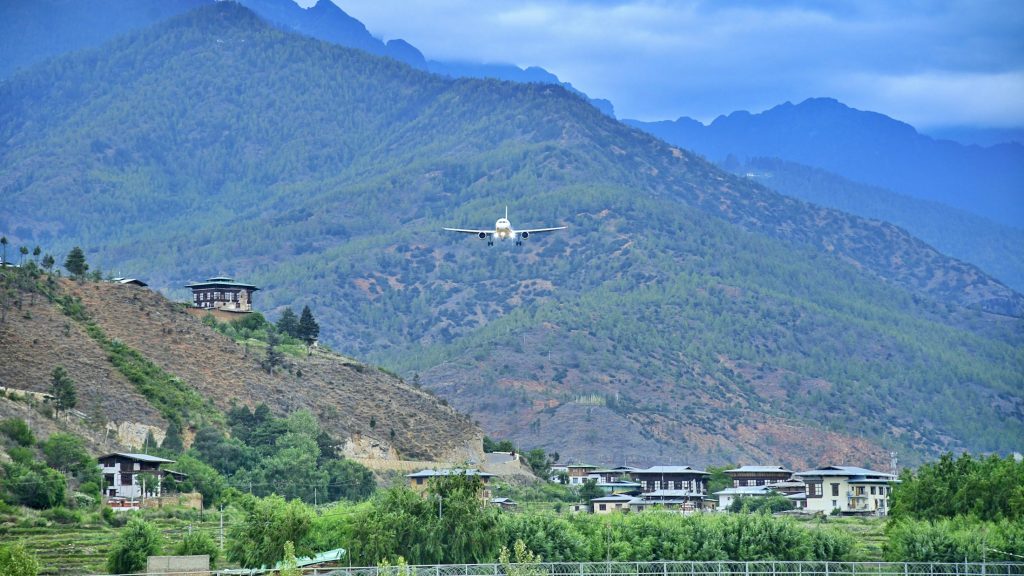
Paro is home to Bhutan’s only international airport, so it is the first valley most visitors see. The plane drops between forested ridges and lands on a runway beside the river, and only specially trained pilots are cleared to fly in. Walk out of the terminal and you are among red rice fields, white farmhouses with painted windows and a river lined with willows.
The town is small: one main street of wooden shopfronts, a few cafés and craft shops. Hotels are spread along the valley, many with views of Rinpung Dzong or the mountains. Paro holds the country’s best-known sight, Tiger’s Nest, and some of its oldest temples, which is why we usually book guests here at both the start and the end of a trip.
- The only international airport in Bhutan
- Home to Tiger's Nest and Rinpung Dzong
- Best saved for your last two nights
Things to do
Top things to do in Paro
Hike to Tiger's Nest
The cliffside monastery of Paro Taktsang, about 4 to 6 hours return.
Rinpung Dzong
A 17th-century fortress-monastery reached by a covered wooden bridge.
National Museum
Masks, thangkas and natural history in the old Ta Dzong watchtower.
Kyichu Lhakhang
Traditionally dated to 659, one of the oldest temples in Bhutan.
Drukgyel Dzong
The fortress at the head of the valley, restored under a royal command.
Farmhouse and hot stone bath
Dinner with a farming family and a tub heated by river stones.
Chele La pass
A high road pass with prayer flags and views towards Jomolhari.
Dungtse Lhakhang
A chorten-shaped temple built in 1433 by the iron-bridge builder Thangtong Gyalpo.
Archery
Watch a match at the town ground, often at weekends.
The main sights
Paro's main sights in detail
Paro Taktsang (Tiger's Nest)
The monastery clings to a cliff about 900 metres above the valley floor, at roughly 3,120 metres. It was built in 1692 around a cave where Guru Rinpoche is said to have meditated after flying there on a tigress. A fire in 1998 destroyed much of it, and it was rebuilt to the old design. The trail climbs about 500 metres through pine forest, with a cafeteria halfway. You leave phones and cameras at the gate. Our Tiger’s Nest hike guide covers timings, horses and what to wear.
Rinpung Dzong
The name means “fortress on a heap of jewels”. Zhabdrung Ngawang Namgyel completed it in the 1640s on the foundations of an older fort, and it still houses the district administration and the monk body. You walk up from the Nyamai Zam, a traditional covered cantilever bridge over the Paro Chhu. The Paro Tshechu is held in and below the dzong each spring, and on the final morning a huge thongdrel is unrolled on its wall before sunrise.
National Museum of Bhutan
The museum sits in the Ta Dzong, a round watchtower built in 1649 to guard Rinpung Dzong. It opened to the public in 1968. The 2011 earthquake damaged the tower, and it was restored using traditional masonry before reopening. Inside are festival masks, thangka paintings, weapons, stamps and a natural history gallery. It opens daily, and the view of the dzong from the terrace is one of the best in the valley.
Kyichu Lhakhang
Tradition says the Tibetan king Songtsen Gampo built Kyichu in 659, as one of 108 temples raised in a single day to pin down a demoness. A second temple was added in 1968 by Queen Ashi Kesang Choden Wangchuck. Elderly pilgrims spin the prayer wheels outside from dawn, and it is one of the calmest places in Paro.
Drukgyel Dzong and Dungtse Lhakhang
Drukgyel Dzong, at the top of the valley, was built to mark a 17th-century victory over Tibetan forces. It burned in 1951 and stood as a ruin for decades until restoration began in 2016 under a royal command. Dungtse Lhakhang, near the river, was built in 1433 by Thangtong Gyalpo, the saint famous for his iron-chain bridges. Its three floors are painted with some of the finest murals in western Bhutan.
Practical facts
Paro at a glance
| Topic | What to know |
|---|---|
| Getting there | Fly into Paro International Airport on Drukair or Bhutan Airlines from Delhi, Kolkata, Kathmandu, Bangkok, Singapore and other regional hubs |
| Drive times | About 1 hour to Thimphu, 2 to 2.5 hours to Haa over Chele La, around 4 hours to Punakha |
| Altitude | About 2,200 m in the valley; Tiger's Nest about 3,120 m; Chele La about 3,990 m |
| Best time | March to May and late September to November; winter days are sunny but nights fall below freezing |
| Time needed | 2 to 3 nights, ideally one at the start and two at the end of your trip |
| Where to stay | From comfortable 3-star hotels near town to luxury lodges such as COMO Uma Paro, Amankora Paro and Six Senses Paro |
| Festivals 2027 | Paro Tshechu, 18 to 22 March, with the thongdrel on the last morning (dates tentative) |
| Entry fees | Tiger's Nest about Nu 1,000; small fees at the museum and dzong. All included in our tours |
Drive times are approximate and depend on weather and roadworks.
Planning
How to plan your days in Paro
Arrival day
Flights land in the morning, so there is time for a gentle first afternoon. Visit Kyichu Lhakhang, then the National Museum, and walk down through Rinpung Dzong to the Nyamai Zam bridge. Keep it slow while your body adjusts to the altitude.
Tiger's Nest day
Do the hike near the end of the trip, after a few days in Thimphu and Punakha. Start by 8am, take lunch at the cafeteria on the way down, and finish with a farmhouse dinner and a hot stone bath. It is the day most guests remember best.
With an extra day
Drive over Chele La to the Haa valley, or visit Drukgyel Dzong and Dungtse Lhakhang and watch an archery match. Spending your last night in Paro also means no early drive to the airport on the day you fly out.
Tours
Tours that include this destination
Every tour is private and can be changed. These are starting points.
Before you go
Travel essentials for 2027
Every visitor except Indian, Bangladeshi and Maldivian nationals needs a visa, which costs USD 40 and is arranged by your tour operator. The Sustainable Development Fee is USD 100 per adult per night until 31 August 2027; children under 6 pay nothing and children aged 6 to 12 pay half. Indian visitors pay INR 1,200 per night. You travel with a licensed guide beyond the first checkpoint and stay in certified hotels or homestays.
Read more in our guides to the visa and SDF, what a trip costs and Bhutan’s travel rules.
Paro: questions
Two to three nights. That gives you an arrival afternoon, a full day for Tiger’s Nest and time for the dzong, museum and Kyichu Lhakhang.
Yes. The trailhead is about 20 minutes’ drive from Paro town, and the monastery sits about 900 metres above the valley.
Paro Tshechu is expected on 18 to 22 March 2027 at Rinpung Dzong. Festival dates follow the lunar calendar and are confirmed closer to the time.
The runway lies in a narrow valley among high ridges, and landings are flown visually in daylight. Only specially trained pilots are certified to fly in.
Both if you can. Paro is quieter and better for your last nights; Thimphu has more restaurants and city sights.
Some people feel slightly breathless at first at about 2,200 metres. Take the first day easy, drink water and leave Tiger’s Nest until later in the trip.
Plan your time in Paro
Tell us your dates and how many nights you have. We will send a day-by-day plan with named hotels and one price that includes the SDF, visa, guide and car.
Photo credits, via Wikimedia Commons: Lhakhang Karpo, Haa (Christopher J. Fynn, CC BY-SA 3.0).
