- Licensed Bhutanese tour operator
- Thimphu, Bhutan

Bhutan destinations · Updated October 2026
Punakha, Bhutan: travel guide for 2027
The old capital, warmer and greener than Paro or Thimphu. Punakha Dzong, the temple of the Divine Madman, rice terraces and river rafting, with festival dates and practical tips.
- About 1,200 m
- Stay 2 nights
- Punakha Drubchen 13 to 15 February 2027
1,200 m
Altitude of Punakha Dzong, approximately
2.5 to 3 h
Drive from Thimphu over Dochula
1637
Year Punakha Dzong was begun
2
Nights we suggest in Punakha
About Punakha
The warm valley where Bhutan crowns its kings
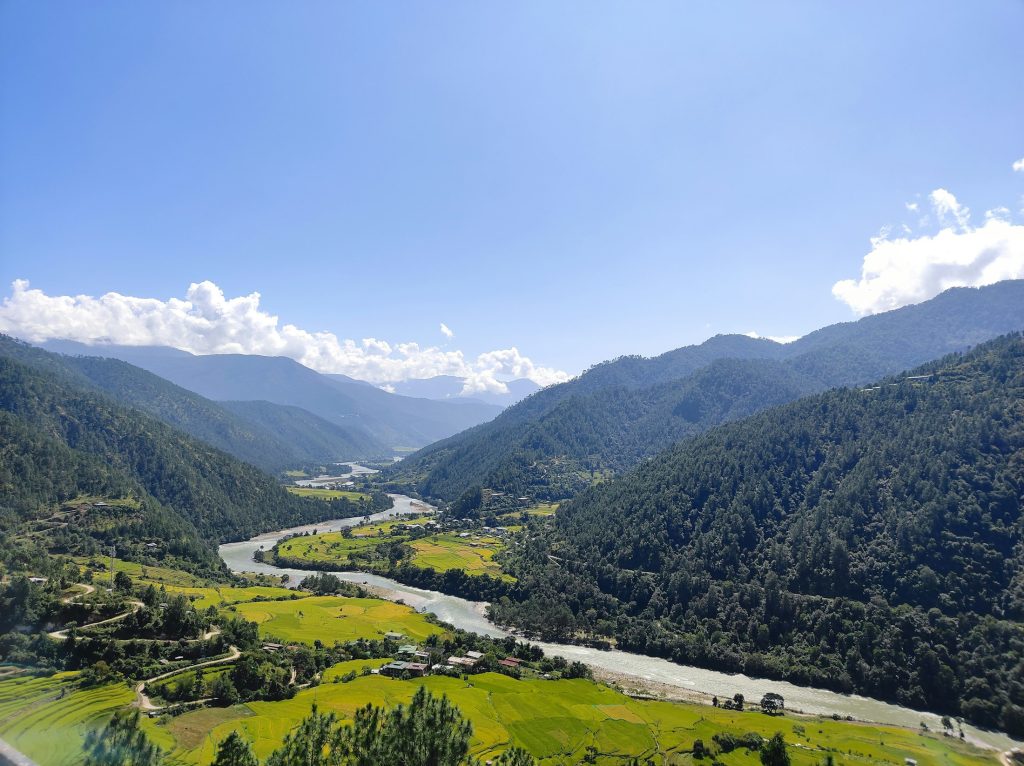
Punakha was the capital of Bhutan until 1955, and it still has a special place in the country’s life. Every king since 1907 has been crowned at Punakha Dzong, and the central monk body moves here for the winter. At about 1,200 metres, the valley is far warmer than Paro or Thimphu. Rice terraces step down to the rivers, and banana and orange trees grow beside the farmhouses.
The drive from Thimphu crosses Dochula pass and drops through forest into the valley, so you feel the change in air and temperature as you descend. Punakha is a good place to slow down. The sights are close together, the walks are gentle, and many lodges sit above the river with long views.
- Capital of Bhutan until 1955
- Warm in winter, hot in summer
- Jacaranda around the dzong in spring
Things to do
Top things to do in Punakha
Punakha Dzong
Where the Pho Chhu and Mo Chhu meet; many call it the most beautiful dzong in Bhutan.
Chimi Lhakhang
The temple of the Divine Madman, reached on foot through rice fields.
Khamsum Yulley Namgyal Chorten
A ridge-top temple with views up the valley, about an hour's walk up.
River rafting
Gentle rafting on the Mo Chhu, ending below the dzong.
Punakha suspension bridge
One of the longest suspension bridges in Bhutan, hung with prayer flags.
Sangchhen Dorji Lhuendrup Nunnery
A hilltop nunnery with a large bronze statue of Avalokiteshvara.
Village walks
Farm paths through rice terraces to Talo or Limbukha.
Winter festivals
The Drubchen battle re-enactment and Tshechu each February or March.
Cycling
Quiet valley roads, best in the cooler months.
The main sights
Punakha's main sights in detail
Punakha Dzong
Zhabdrung Ngawang Namgyel began the dzong in 1637, and it was completed the following year. Its full name, Pungthang Dewa Chhenbi Phodrang, means “palace of great happiness”. It sits on a spit of land where the Pho Chhu (male river) and Mo Chhu (female river) meet. Ugyen Wangchuck was crowned the first King here in 1907, and the present King married Queen Jetsun Pema here on 13 October 2011. The dzong holds the embalmed body of the Zhabdrung, which only a few senior figures may see. You enter over a covered wooden cantilever bridge rebuilt in 2008.
Chimi Lhakhang
This small temple was built in 1499 by Ngawang Chogyel, a cousin of Drukpa Kunley, the “Divine Madman” whose unconventional teaching is still loved in Bhutan. Couples come from across the country to pray for children, and many leave with a name for the baby given by the monks. The walk from the road takes about 20 minutes through rice fields. Expect painted phalluses on the village houses, which are symbols of protection.
Khamsum Yulley Namgyal Chorten
Built under the patronage of Queen Mother Ashi Tshering Yangdon Wangchuck and consecrated in 1999, this chorten-temple sits on a ridge north of the dzong. You cross the river by footbridge and climb through rice terraces for about 45 minutes to an hour. The view from the roof covers the whole upper valley.
The Punakha Drubchen and Tshechu
The Drubchen re-enacts a 17th-century battle against Tibetan forces, with local men dressed as militia, and is followed by the Punakha Tshechu with masked dances. In 2027 the Drubchen is expected on 13 to 15 February and the Tshechu on 16 to 18 February. Book early, because hotels in the valley are limited.
Practical facts
Punakha at a glance
| Topic | What to know |
|---|---|
| Getting there | By road from Thimphu over Dochula, about 2.5 to 3 hours; from Paro about 4 hours |
| Drive times | About 30 minutes to Wangdue Phodrang; about 3 hours to the Phobjikha valley |
| Altitude | About 1,200 to 1,300 m |
| Best time | October to April for warm, dry days; March and April for jacaranda; summer is hot and wet |
| Time needed | 2 nights |
| Where to stay | Valley hotels near Lobesa and Khuruthang, and luxury lodges such as COMO Uma Punakha, Amankora Punakha and Six Senses Punakha |
| Festivals 2027 | Punakha Drubchen 13 to 15 February; Punakha Tshechu 16 to 18 February; Talo Tshechu 16 to 18 March (tentative) |
| Rafting | Best outside the monsoon; we book licensed operators with safety kayakers |
Planning
How to spend two days in Punakha
Day one
Drive from Thimphu over Dochula, stopping at the chortens. Lunch in the valley, then walk to Chimi Lhakhang through the rice fields. Spend the late afternoon at Punakha Dzong, when the light on the walls is softest.
Day two
Hike to Khamsum Yulley Namgyal Chorten in the cool of the morning. In the afternoon, raft down the Mo Chhu or walk across the suspension bridge. With more time, continue to Wangdue Phodrang and the Phobjikha valley.
Tours
Tours that include this destination
Every tour is private and can be changed. These are starting points.
Before you go
Travel essentials for 2027
Every visitor except Indian, Bangladeshi and Maldivian nationals needs a visa, which costs USD 40 and is arranged by your tour operator. The Sustainable Development Fee is USD 100 per adult per night until 31 August 2027; children under 6 pay nothing and children aged 6 to 12 pay half. Indian visitors pay INR 1,200 per night. You travel with a licensed guide beyond the first checkpoint and stay in certified hotels or homestays.
Read more in our guides to the visa and SDF, what a trip costs and Bhutan’s travel rules.
Punakha: questions
About 75 km, which takes 2.5 to 3 hours over Dochula pass.
Yes. Punakha Dzong is one of the finest buildings in Bhutan and the valley is warm and relaxed.
Two nights let you see the dzong, Chimi Lhakhang and the ridge-top chorten without rushing.
The Drubchen is expected on 13 to 15 February and the Tshechu on 16 to 18 February 2027. Dates are tentative until confirmed.
Yes. At about 1,200 metres it is much warmer, especially in winter.
Yes, on the Mo Chhu or Pho Chhu with a licensed operator, outside the monsoon.
Plan your time in Punakha
Tell us your dates and how many nights you have. We will send a day-by-day plan with named hotels and one price that includes the SDF, visa, guide and car.
Photo credits, via Wikimedia Commons: Wangdue Phodrang countryside (Gerd Eichmann, CC BY-SA 4.0).
