- Licensed Bhutanese tour operator
- Thimphu, Bhutan

Bhutan destinations · Updated October 2026
Wangdue Phodrang, Bhutan: travel guide for 2027
The district between Punakha and central Bhutan. A 17th-century dzong rebuilt after a devastating fire, a village of stone houses and the road to the crane valley.
- About 1,300 m
- Dzong reconsecrated 2022
- Wangdue Tshechu 8 to 10 October 2027
1638
Year Wangdue Phodrang Dzong was founded
2012
Year fire destroyed the dzong
11 Nov 2022
Rebuilt dzong consecrated
30 min
Drive from Punakha
About Wangdue
A crossroads with a fortress back on its ridge
Wangdue Phodrang is one of Bhutan’s largest districts. It runs from warm river valleys at around 1,300 metres up to the high pastures of Phobjikha and Gangtey. Its town sits at a junction of roads: west to Punakha and Thimphu, east over Pele La to central Bhutan, and south towards Tsirang. For most visitors it is the place you pass through on the way to the crane valley, and it deserves a stop.
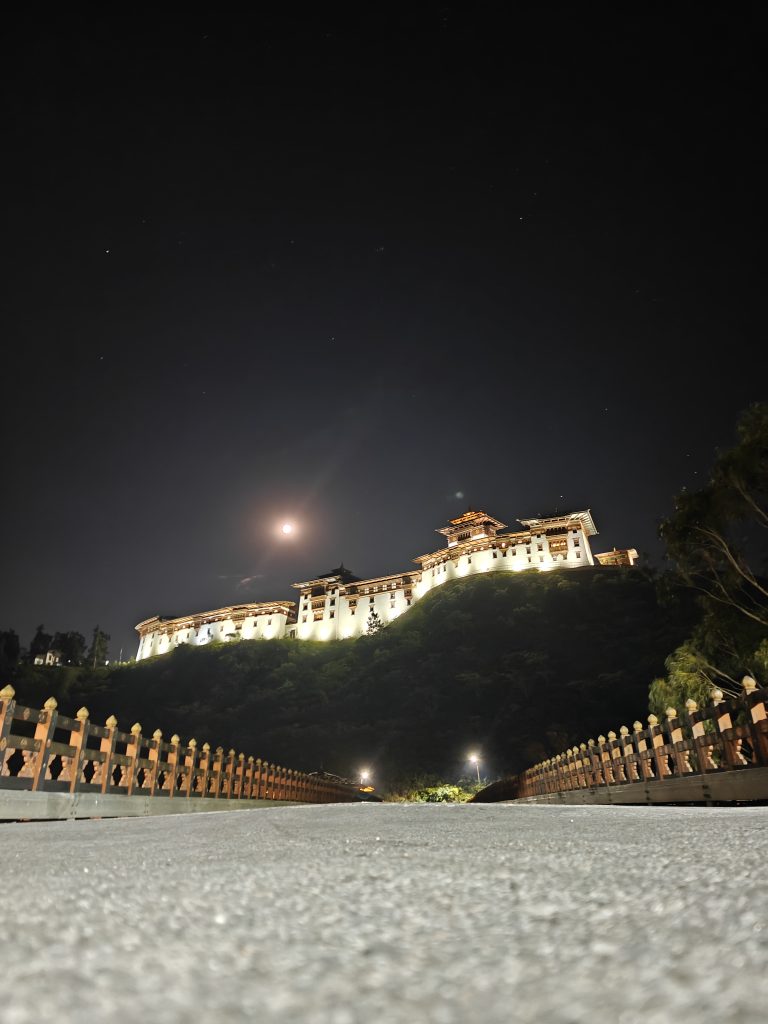
The dzong was founded by Zhabdrung Ngawang Namgyel in 1638 on a ridge above the confluence of the Punatsang Chhu and Dang Chhu. In June 2012 a fire destroyed it, though the sacred relics were saved. A decade of rebuilding followed, with India contributing Nu 1,000 million, and the new dzong was consecrated on 11 November 2022.
- Gateway to Phobjikha and central Bhutan
- A rebuilt 17th-century dzong
- Easy to combine with Punakha
Things to do
Top things to do in Wangdue Phodrang
Wangdue Phodrang Dzong
The rebuilt fortress on its ridge, open to visitors with a guide.
Rinchengang village
Tight-packed stone houses on the hillside opposite the dzong.
Phobjikha and Gangtey
The crane valley, about 2.5 hours' drive up the hill.
Pele La
The pass to central Bhutan, at about 3,400 m, with yaks in summer.
Wangdue Tshechu
Masked dances in the new dzong courtyard each autumn.
Farm villages
Walks through rice terraces and villages around Lobesa and Nobding.
In detail
Wangdue Phodrang in detail
The dzong and its rebuilding
Wangdue Phodrang means roughly “palace of victory” or “glorious unification”, a reference to its role in bringing the valleys of western and central Bhutan together. For centuries it controlled the road east. After the 2012 fire, the district’s offices and monks moved out, and the annual Tshechu was held on a school football ground at Bajo. Craftsmen rebuilt the dzong using traditional methods, and since its consecration in 2022 the festival has returned to its courtyard.
Rinchengang
Across the river from the dzong, Rinchengang is a cluster of stone houses built close together on a steep slope. Local tradition says its people were skilled masons who helped build the dzong. A short walk up from the road gives you a fine view back across the valley.
Wangdue Tshechu and Gangtey
The Wangdue Tshechu is expected on 8 to 10 October 2027, and the Gangtey Tshechu in Phobjikha follows on 13 to 15 October. Both are smaller and more local than the big festivals in Paro and Thimphu, which many guests prefer.
Khotokha
Off the road towards Phobjikha, the high valley of Khotokha is a protected Ramsar wetland where a few black-necked cranes also winter. It is quiet and rarely visited, so ask us if you would like to include it.
Practical facts
Wangdue Phodrang at a glance
| Topic | What to know |
|---|---|
| Getting there | About 30 minutes from Punakha; about 3 hours from Thimphu |
| Drive times | About 2.5 hours to Phobjikha; around 5 hours to Trongsa over Pele La |
| Altitude | About 1,300 m in the town; the district rises above 3,000 m at Phobjikha and Pele La |
| Best time | October to April for the lower valleys; October to February for the cranes higher up |
| Time needed | A half-day stop between Punakha and Phobjikha |
| Where to stay | Most visitors stay in Punakha or Lobesa nearby, or continue to Phobjikha |
| Festivals 2027 | Wangdue Tshechu 8 to 10 October; Gangtey Tshechu 13 to 15 October; Black-necked Crane Festival 11 November (tentative) |
Planning
How to include Wangdue in your route
On a 9 or 10-day trip, we usually visit the dzong on the morning you leave Punakha, then climb to the Phobjikha valley for a night or two. From there the road continues over Pele La to Trongsa and Bumthang. On a shorter trip, Wangdue is an easy half-day from Punakha.
Tours
Tours that include this destination
Every tour is private and can be changed. These are starting points.
10 Day Discover Bhutan
West and central Bhutan, including Phobjikha and Bumthang.
11 Day Cultural Tour
A slower journey through the temples of central Bhutan.
15 Day East to West
Fly east to Yonphula and drive the whole country back to Paro.
Before you go
Travel essentials for 2027
Every visitor except Indian, Bangladeshi and Maldivian nationals needs a visa, which costs USD 40 and is arranged by your tour operator. The Sustainable Development Fee is USD 100 per adult per night until 31 August 2027; children under 6 pay nothing and children aged 6 to 12 pay half. Indian visitors pay INR 1,200 per night. You travel with a licensed guide beyond the first checkpoint and stay in certified hotels or homestays.
Read more in our guides to the visa and SDF, what a trip costs and Bhutan’s travel rules.
Wangdue Phodrang: questions
A fire destroyed it in June 2012. It was rebuilt using traditional methods and consecrated on 11 November 2022.
Yes, with a licensed guide, outside of restricted ceremonies.
About 30 minutes by road.
Expected on 8 to 10 October 2027. Dates are tentative until confirmed.
Yes. The Phobjikha valley and Gangtey are in Wangdue Phodrang district, about 2.5 hours from the town.
Plan your time in Wangdue Phodrang
Tell us your dates and how many nights you have. We will send a day-by-day plan with named hotels and one price that includes the SDF, visa, guide and car.
Photo credits, via Wikimedia Commons: Wangdue Phodrang countryside (Gerd Eichmann, CC BY-SA 4.0); Wangdue Phodrang Dzong (Tashidor, CC BY-SA 4.0); Trongsa Dzong (Gerd Eichmann, CC BY-SA 4.0); Wangdue Phodrang village (Gerd Eichmann, CC BY-SA 4.0).
