- Licensed Bhutanese tour operator
- Thimphu, Bhutan
Festival tour · 9 days, 8 nights
9 Day Matsutake Mushroom Festival Tour: Foraging and Feasting in Ura, Bumthang
Join villagers in the pine forests of Ura for the Matsutake Mushroom Festival in late August, with the Tiger’s Nest, Punakha and Trongsa on the way.
- 9 days, 8 nights
- Ura festival: late August
- Forage with local mushroom pickers
Aug
Matsutake season peaks
3,100 m
Ura valley, about
2 days
Length of the Ura festival
2
Matsutake festivals: Ura and Genekha
Trip overview
A festival for Bhutan's most valuable mushroom
Matsutake is a wild mushroom that grows under pine and oak in the high forests of Bhutan in late summer. In Japan it is one of the most prized foods of autumn, and good specimens sell for very high prices. In Bhutan it is called sangay shamu, and in villages such as Ura in Bumthang and Genekha near Thimphu, picking it is an important part of household income.
The Ura Matsutake Festival began around 2009 to celebrate the harvest and to draw visitors to the valley. Over two days, villagers sell fresh mushrooms and dishes made with them, and there are songs, dances and stalls run by the community. Visitors can walk into the forest with local pickers early in the morning to learn how they find the mushrooms without damaging the ground. In 2026 the Ura festival was held on 23 and 24 August, and the Genekha festival on 15 and 16 August. The 2027 dates are set by the communities and announced closer to the season; we confirm them as soon as they are published.
August is the middle of the monsoon, which is exactly why the mushrooms grow. You get green valleys, rice fields at their best in Punakha, cool high meadows in Bumthang and very few other visitors. This trip hikes the Tiger’s Nest first, crosses the country by road to Ura for the festival, and flies back from Bumthang to Paro.
- Two days at the Ura Matsutake Festival
- Forest foraging with local pickers
- Tiger's Nest, Punakha, Trongsa and Bumthang
Highlights
Highlights of the trip
Matsutake Festival
Two days of food, stalls and songs in Ura.
Foraging walk
Into the pine forest with local pickers.
Mushroom dishes
Matsutake cooked the Bhutanese way, with cheese and chilli.
Ura village
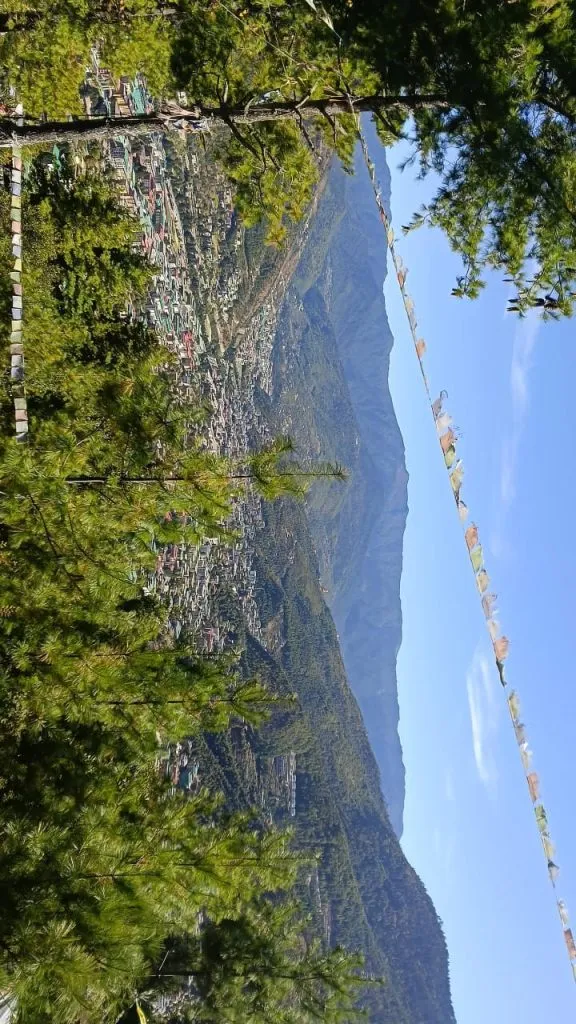
Stone houses and lanes at over 3,000 metres.
Punakha Dzong
The fortress where two rivers meet.
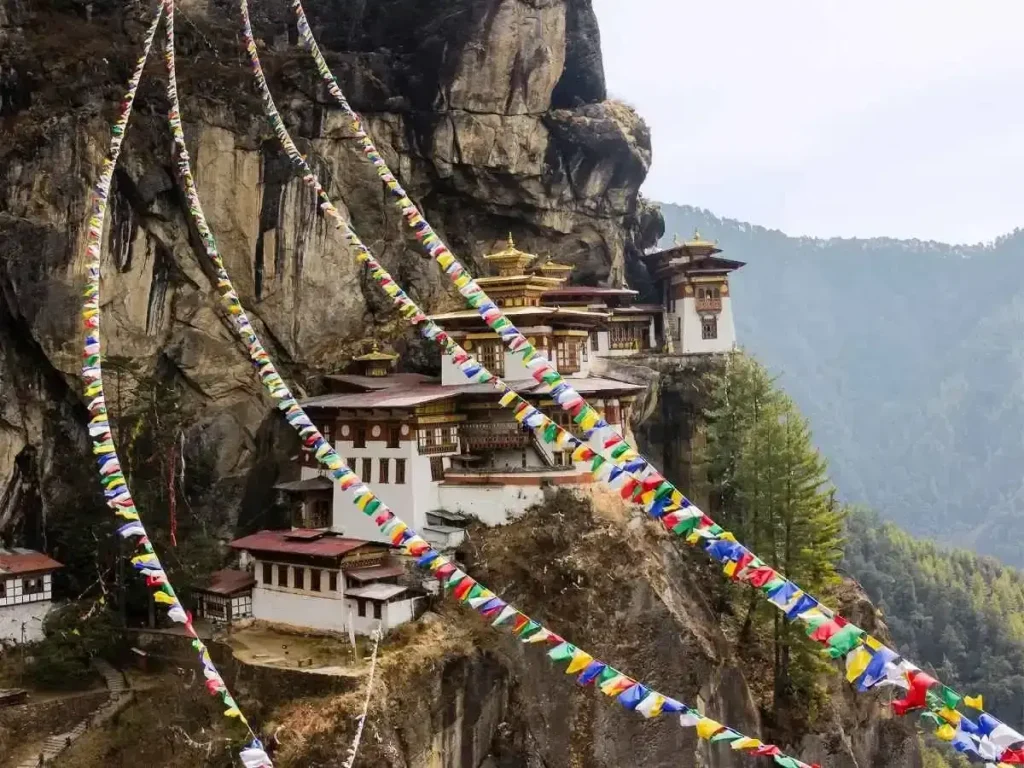
Tiger's Nest
The cliff monastery above Paro.
Itinerary at a glance
Nine days at a glance
We fix the exact dates once the Ura community announces the festival.
Day 1: Arrive in Paro
Land in Paro, short walk in town.
Day 2: Tiger's Nest
Hike to Paro Taktsang.
Day 3: To Thimphu
Drive to the capital, sightseeing.
Day 4: To Punakha
Over Dochula to Punakha Dzong.
Day 5: To Trongsa
Over Pele La to Trongsa.
Day 6: To Ura, festival day one
Through Bumthang to Ura for the festival.
Day 7: Foraging and festival day two
An early forest walk, then the festival.
Day 8: Bumthang, fly to Paro
Jambay Lhakhang, then fly to Paro.
Day 9: Depart
Transfer to Paro airport.
Day 1
Arrive in Paro
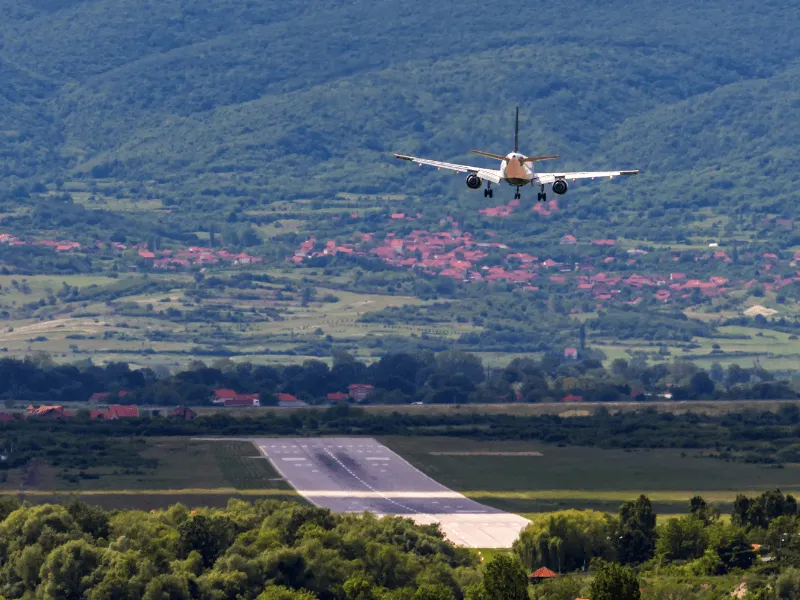
Your guide meets you at Paro airport. After lunch you visit Rinpung Dzong and the old cantilever bridge, then walk through Paro town. The monsoon gives the valley a deep green colour, and the rice fields are high.
- Overnight: Paro
- Altitude: about 2,200 metres
- Meals: lunch and dinner
Day 2
Hike to the Tiger's Nest
The hike to the Tiger’s Nest takes five to six hours return. In August, start early: mornings are usually clear and the clouds build in the afternoon. The forest is lush, and you may see wild strawberries along the path.
- Overnight: Paro
- Hike: 5 to 6 hours return
- Altitude: about 3,120 metres
Day 3
A day in Thimphu
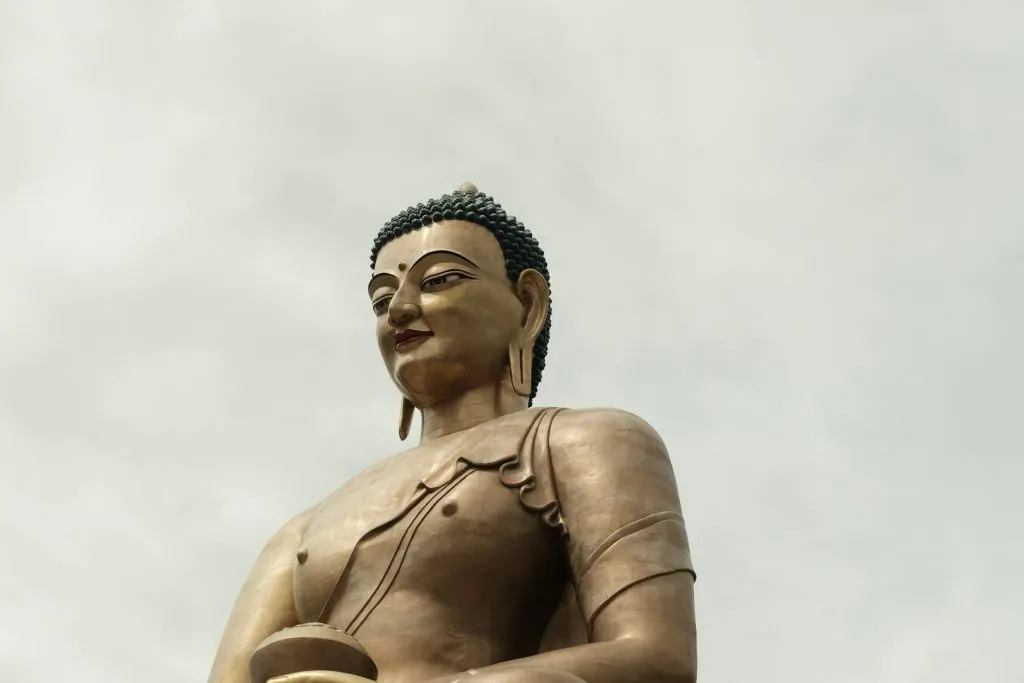
You visit the Memorial Chorten, the Buddha Dordenma, the National Institute for Zorig Chusum and the vegetable market, where you may see the first wild mushrooms of the season on sale. If the Genekha matsutake festival falls during your trip, we can visit it from Thimphu.
- Overnight: Thimphu
- Drive: about 1.5 hours
- Meals: breakfast, lunch and dinner
Day 4
Dochula and Punakha
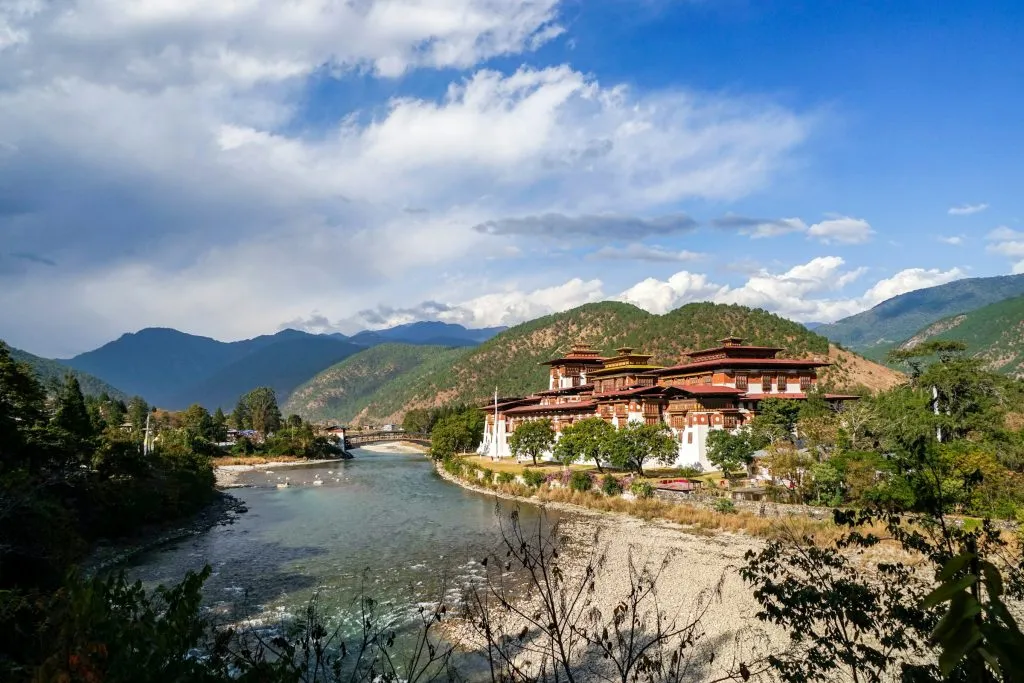
You cross Dochula and drop into the Punakha valley, where the rice terraces are a bright green in August. You visit Punakha Dzong and walk through the fields to Chimi Lhakhang.
- Overnight: Punakha
- Drive: about 3 hours
- Walk: about 1 hour
Day 5
Over Pele La to Trongsa
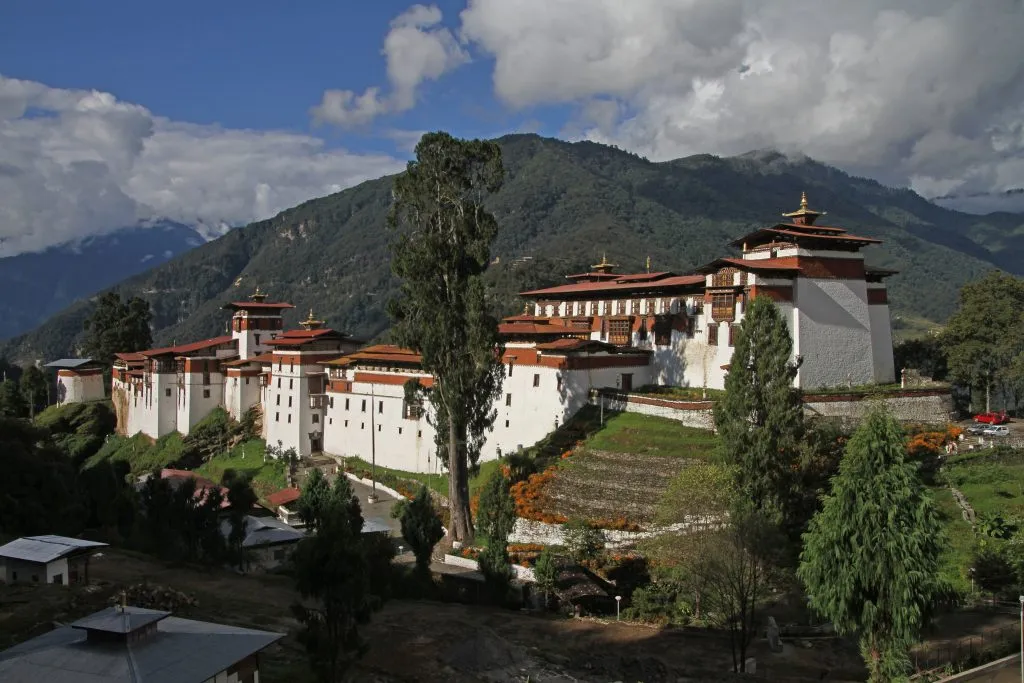
You drive over Pele La, through forests of dwarf bamboo and rhododendron, to Trongsa. In the afternoon you visit Trongsa Dzong and the Ta Dzong museum.
- Overnight: Trongsa
- Drive: about 5 to 6 hours
- Highest point: Pele La, about 3,400 metres
Day 6
Into Ura for the festival
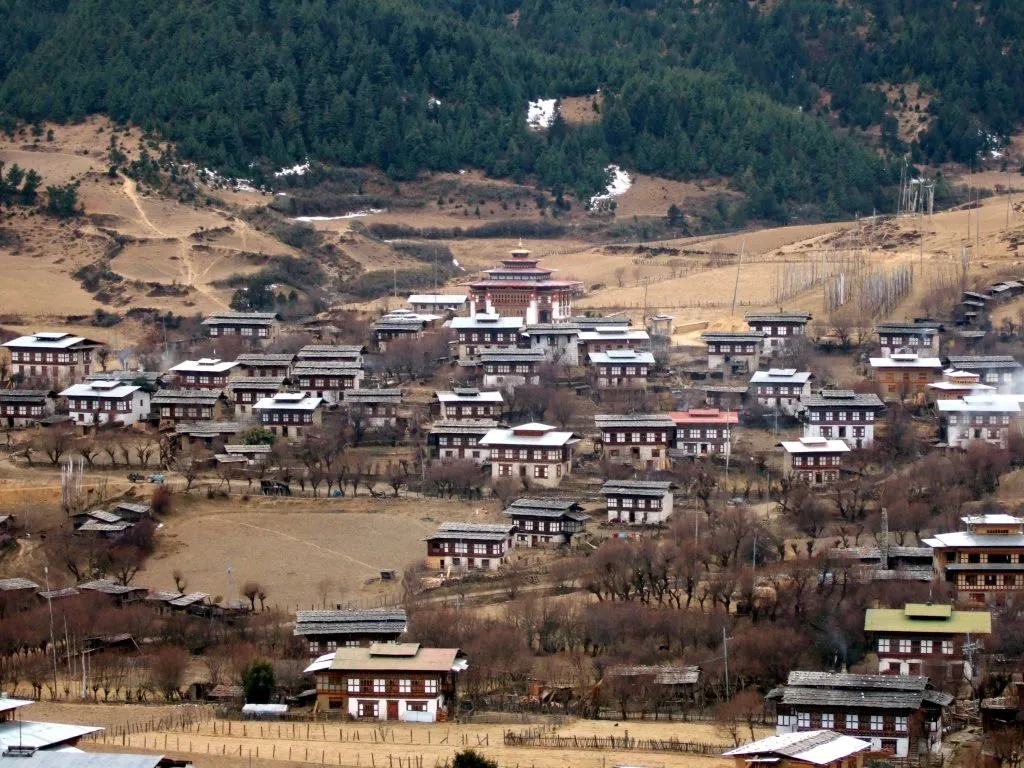
You drive over Yotong La into Bumthang and on to Ura, about four hours in total. The festival opens with prayers and speeches, and the stalls fill with baskets of fresh matsutake. You try the mushroom cooked in local style, usually with butter, cheese and a little chilli, and walk through Ura village to see Ura Lhakhang.
- Overnight: Ura farmhouse or Bumthang hotel
- Drive: about 4 hours
- Meals: breakfast, festival lunch and dinner
Day 7
Into the forest with the pickers
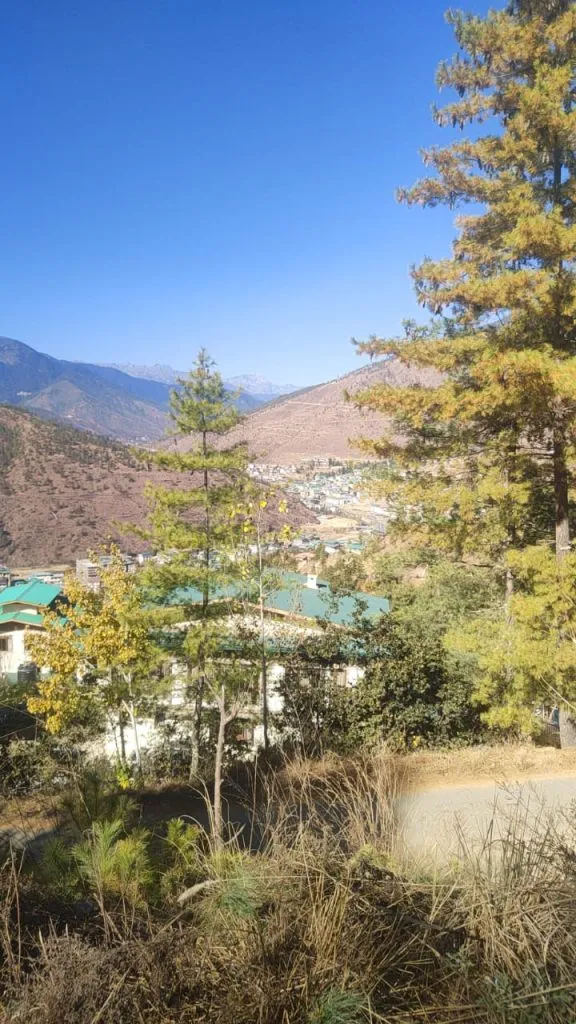
Early in the morning you walk into the pine forest above Ura with a local picker. The guide and picker show you where matsutake grow, how to spot the small bumps in the forest floor, and how to lift the mushroom without damaging the roots. You then return to the festival for the second day of songs, dances and cooking.
- Overnight: Ura farmhouse or Bumthang hotel
- Walk: 2 to 3 hours
- Meals: breakfast, lunch and dinner
Day 8
Bumthang and the flight back
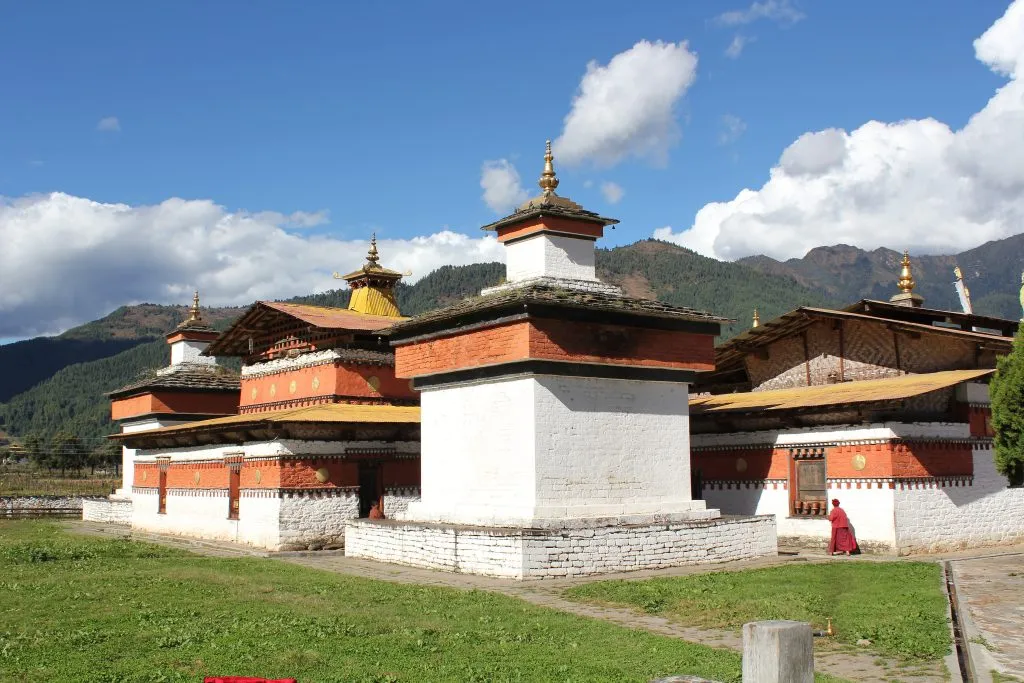
You drive back to the Choekhor valley to visit Jambay Lhakhang and Kurjey Lhakhang, then fly from Bumthang to Paro, about 30 minutes. If the flight does not run, we drive back with a night in Punakha.
- Overnight: Paro
- Flight: about 30 minutes, on set days
- Meals: breakfast, lunch and dinner
Day 9
Fly home
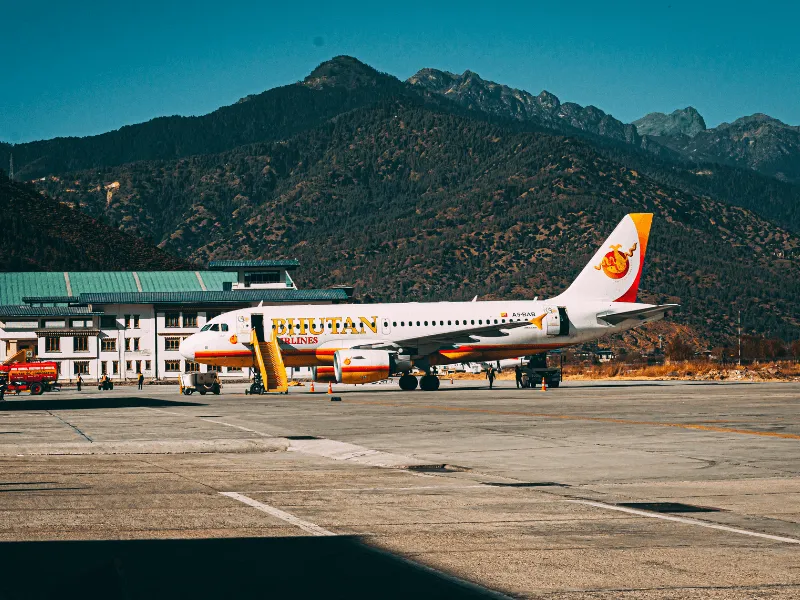
After breakfast your guide drives you to Paro airport for your flight home.
- Transfer: about 15 minutes
- Meals: breakfast
Where you stay
Where you stay
3-star hotels, with a farmhouse stay in Ura during the festival.
| Nights | Place | Where you stay | Why we chose it |
|---|---|---|---|
| 1, 2 and 8 | Paro | 3-star or 4-star hotel | Upgrades available |
| 3 | Thimphu | 3-star or 4-star hotel | Central |
| 4 | Punakha | 3-star or 4-star hotel | Valley views |
| 5 | Trongsa | 3-star hotel | View of the dzong |
| 6 and 7 | Ura or Bumthang | Farmhouse or hotel | Close to the festival |
Farmhouses in Ura are simple and warm, with home-cooked food.
What the price covers
Included and not included
Included
- Bhutan visa (USD 40) and the Sustainable Development Fee for every night
- Hotels as listed, 3-star as standard, with 4-star and luxury upgrades on request
- All meals: breakfast, lunch and dinner
- A licensed English-speaking guide for the whole trip
- Domestic flight from Bumthang to Paro
- Foraging walk with a local picker
- Private car or SUV with a Bhutanese driver, and all transfers
- Entry fees to dzongs, temples and museums
- Bottled water in the car
Not included
- International flights into and out of Paro (we can book them for you)
- Travel insurance, which we strongly recommend
- Drinks, laundry and other personal costs
- Tips for your guide and driver
- Anything not listed under included
Price on request
Tell us your budget and we will send our best price
We don’t publish one fixed price, because hotels, season and group size change the total a lot. Tell us your dates, who is travelling and the budget you have in mind. We will reply within 24 hours with our best price for this Matsutake festival tour.
How we price
What decides the cost of this trip
Government fees
The SDF is USD 100 per adult per night until 31 August 2027, plus a USD 40 visa. These are fixed by the Government of Bhutan and paid through us.
Hotels you choose
Hotel style, group size and the domestic flight change the total most. August is low season.
Season and dates
Festival weeks are the busiest of the year. Booking early holds better rooms and seats.
Group size
Guide and car costs are shared, so the price per person drops for two, three or four travellers.
We send a written, itemised quote before you pay anything. No booking fees.
Good to know
Planning your matsutake trip
About matsutake
Matsutake, Tricholoma matsutake, grows in a close partnership with the roots of certain trees, which is why it cannot be farmed. In Bhutan it fruits from about July to September, depending on the rain. It has a strong, spicy, pine-like smell, and in Japan it is often grilled, steamed in rice or cooked in a clear soup. Bhutan exports much of its harvest, and local pickers sell to buyers who come to the villages during the season.
About the Ura festival
The festival has been run by the Ura community for more than fifteen years, at first with support from the national park and the tourism authorities and now mostly by the gewog. It is small and local. Along with mushroom stalls, you will see cultural performances and stands selling clothes and household goods. The harvest varies with the rain, so some years have more mushrooms on sale than others.
Respecting the forest
Matsutake grounds are a shared resource and an important income for Ura families, so visitors do not pick for themselves. On the foraging walk you watch and learn from your guide, take photos and, if the picker agrees, hold the mushrooms they find. Stay on the paths they use and leave no litter.
Travelling in the monsoon
June to early September is the monsoon in Bhutan. Rain usually falls in the afternoon and at night, and mornings are often bright. The valleys are deep green, rice is growing, and you will see far fewer visitors than in spring or autumn. Roads can be slowed by landslides, so we keep the plan flexible and carry a spare half day. Bring a light rain jacket, quick-drying clothes and shoes with a good grip; leeches appear on forest paths, so long socks help.
Getting to Bumthang
Bumthang is about 270 km from Thimphu, but the road crosses three passes and the drive takes most of two days. We break it with a night in Punakha or Trongsa. Drukair also flies between Paro and Bumthang on set days of the week, in about 30 minutes, and on most of our central Bhutan trips we fly back to save a day on the road. The schedule changes by season, so we confirm the flight when you book.
Village festivals and big tshechus
The big tshechus in Paro and Thimphu draw thousands of people, including many visitors. Village and temple festivals are different. The courtyard is smaller, the crowd is mostly local farmers in their best clothes, and the dancers are often villagers or monks from the nearest lhakhang. You stand closer, you see more of the ritual, and you will probably be offered butter tea or a cup of ara. The trade-off is fewer facilities: there may be no seats, no shade and only basic toilets nearby, so bring a cushion, a hat and patience.
Temple etiquette
Cover shoulders and knees in dzongs and temples, take off hats, and walk clockwise around chortens and prayer wheels. Photography is not allowed inside shrine rooms. Your guide explains each place before you go in. Read more in our Bhutan travel rules guide.
Visa, SDF and guide rules
Every visitor except Indian nationals needs a visa, which costs USD 40 and is issued online before you fly. The Sustainable Development Fee is USD 100 per adult per night until 31 August 2027, with half rates for children aged 6 to 11. A Department of Tourism notice from April 2026 confirms that visitors travel with a licensed guide. We file the visa and pay the SDF for you. Read more in our Bhutan visa guide and SDF guide.
Flying into Paro
Only Drukair and Bhutan Airlines fly into Paro, mainly from Bangkok, Delhi, Kathmandu, Kolkata and Singapore. Pilots land by sight between the ridges, so morning flights are the most reliable. We suggest a night in your hub city on the way in. Our flights to Bhutan page lists every route.
Matsutake festival tour: questions
It depends on your hotels, group size and dates. Tell us your budget and we will reply within 24 hours with our best price, including the SDF, visa, hotels, meals, guide and car.
Usually in the second half of August. In 2026 the Ura festival was on 23 and 24 August. The community announces the 2027 dates closer to the season.
Yes. Genekha near Thimphu also holds one, usually in mid-August. In 2026 it was on 15 and 16 August.
No. You walk with local pickers and learn from them, but the harvest belongs to the community.
Probably, as August is the monsoon. Mornings are often clear.
Yes. Stalls sell fresh mushrooms and cooked dishes.
Yes. Bhutanese food has plenty of vegetarian dishes, and matsutake is the star.
Two to four months ahead, mainly for the domestic flight.
Price on request
Ask for your best price
Tell us when you would like to travel and your budget. We will reply within 24 hours with our best price for this matsutake festival tour.
- Share your budget, we shape the trip around it
- No booking fees, ever
- A reply within 24 hours
- Licensed Bhutanese tour operator
- +975 17533776
- +975 77495028
- info@deyabhutantours.com
- Thimphu, Bhutan
Let's plan your Bhutan journey
Tell us a little about your trip. Our team in Thimphu will reply with ideas, a day-by-day plan and a full price.
We’ll reply within 24 hours. No booking fees, and no obligation to book.