- Licensed Bhutanese tour operator
- Thimphu, Bhutan
Cultural tour · 14 days, 13 nights (12 to 16 day options)
14 Day Merak and Sakteng Nomadic Culture Tour: The Brokpa Highlands of Eastern Bhutan
Cross Bhutan from west to east to reach the yak-herding Brokpa people of Merak and Sakteng, known for their felt hats, red yak-hair clothes and festivals, staying in their villages and leaving by road to India.
- 14 days, 13 nights
- 12 and 16 day options
- Village stays in Merak and Sakteng
2010
Year Merak and Sakteng opened to visitors
3,500 m
Altitude of Merak, about
740 km²
Sakteng Wildlife Sanctuary, about
Moderate
Grade
Trip overview
Bhutan's highland herders
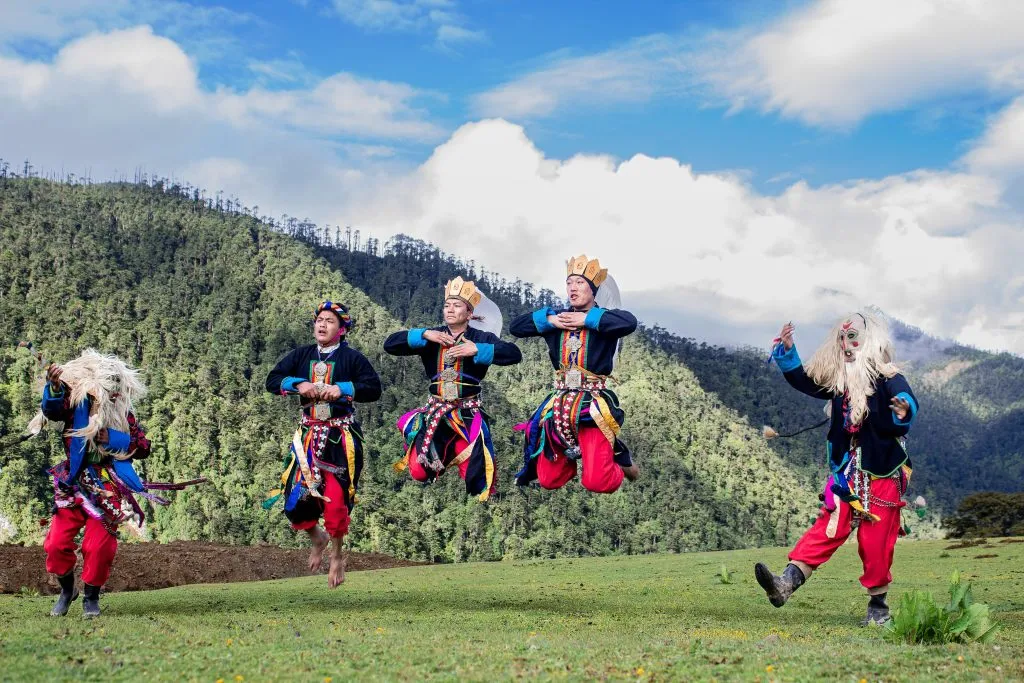
High in the far east of Bhutan, near the border with India’s Arunachal Pradesh, two valleys are home to the Brokpa, a semi-nomadic people who have herded yaks and sheep here for centuries. Their oral history says their ancestors came from Tshona in Tibet, led by a lama called Jarepa. They speak their own language, Brokpa, and dress unlike anyone else in Bhutan: red and white woven tunics and jackets, animal-skin waistcoats, and black felt hats made from yak hair, with long tassels that let the rain drip off.
Merak and Sakteng were closed to visitors until 2010. Today farm roads reach both villages, so you no longer have to trek to see them, although the roads are rough and slow. This 14 day tour crosses Bhutan by road from Paro, through Punakha, Trongsa, Bumthang and Mongar to Trashigang, then spends four nights with the Brokpa. You stay in simple village guesthouses or homestays, watch herders at work, see yak-hair weaving and butter and cheese making, and visit the temples of both villages.
Sakteng sits inside the Sakteng Wildlife Sanctuary, home to red pandas, Himalayan black bears and many birds. The sanctuary is also said, in local belief, to protect the migoi, the Bhutanese yeti. From Trashigang you leave Bhutan through Samdrup Jongkhar to Guwahati in India, so you do not have to drive back west. The 12 day version flies one way between Paro and Yonphula or Bumthang; the 16 day version adds Trashi Yangtse and Lhuentse.
- Four nights with the Brokpa in Merak and Sakteng
- West to east across Bhutan by road
- Exit by road to Guwahati, India
Highlights
Highlights of the journey
Brokpa villages
Life with Bhutan's semi-nomadic yak herders.
Felt hats and yak hair
Bhutan's most distinctive clothing.
Sakteng sanctuary
Red pandas, bears and the legend of the migoi.
Trashigang Dzong
The fortress above the Gamri Chhu.
Across Bhutan
Every major pass from Dochula to Kori La.
Bumthang temples
The spiritual heart of central Bhutan.
Itinerary at a glance
Fourteen days at a glance
Road conditions to Merak and Sakteng change with the weather. We plan with a spare day in mind.
Day 1: Arrive in Paro
Land in Paro.
Day 2: To Punakha
Over Dochula to Punakha.
Day 3: To Trongsa
Over Pele La to Trongsa.
Day 4: To Bumthang
To Jakar, temples of Bumthang.
Day 5: To Mongar
Over Thrumshing La to Mongar.
Day 6: To Trashigang
Over Kori La to Trashigang.
Day 7: To Merak
Drive up to Merak.
Day 8: Merak
A day with the herders.
Day 9: To Sakteng
Drive or walk to Sakteng.
Day 10: Sakteng
A day in Sakteng and the sanctuary.
Day 11: Back to Trashigang
Drive back to Trashigang.
Day 12: To Samdrup Jongkhar
Down to the southern border.
Day 13: Exit to Guwahati
Cross to India and drive to Guwahati.
Day 14: Depart Guwahati
Fly from Guwahati.
Day 1
Arrive in Paro
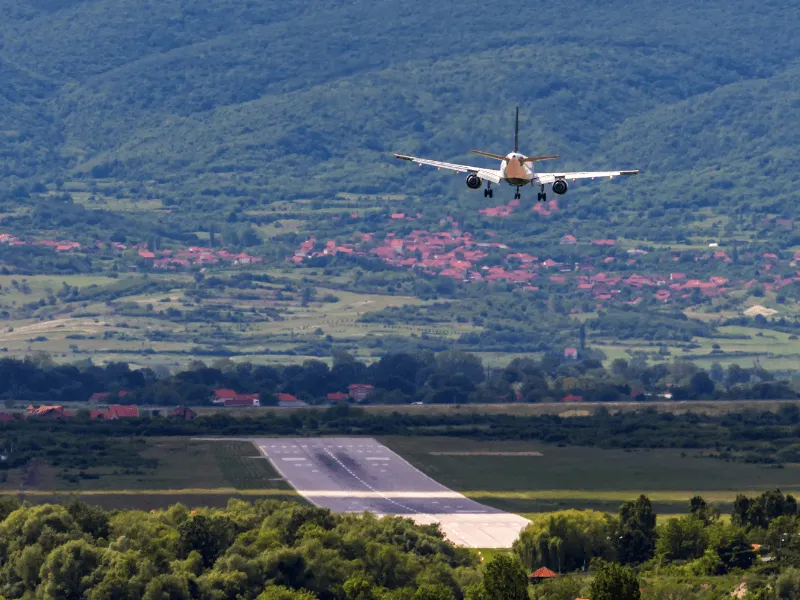
Your guide meets you at Paro airport. After lunch you drive to Thimphu, about an hour and a half, and visit the Memorial Chorten and Tashichho Dzong.
- Overnight: Paro
- Altitude: about 2,200 metres
- Meals: lunch and dinner
Day 2
Dochula and Punakha
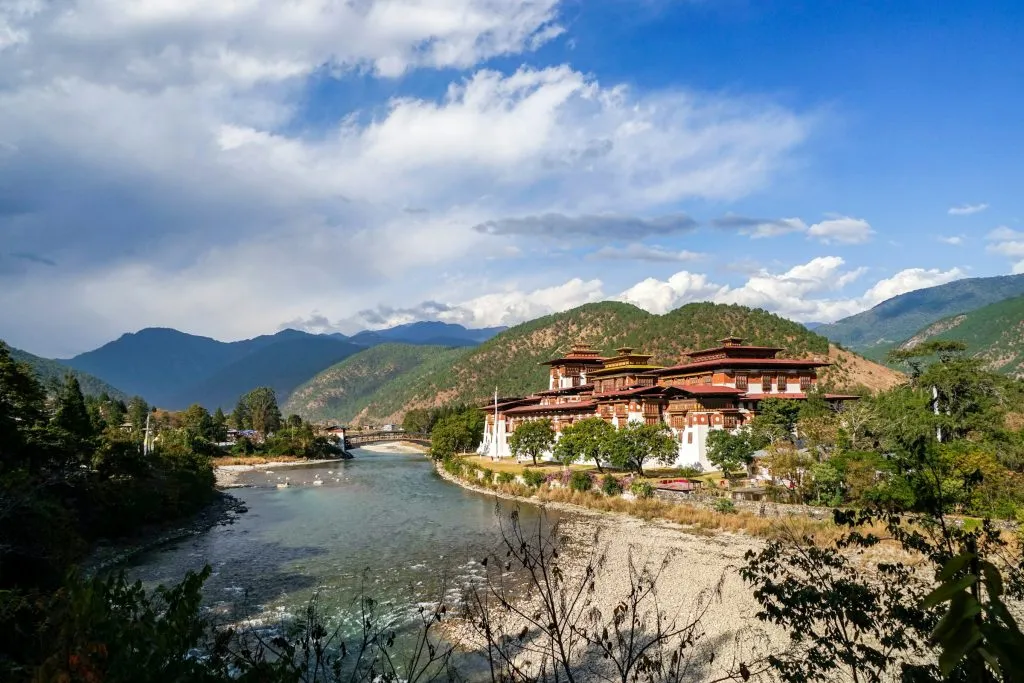
You cross Dochula, at about 3,100 metres, and come down into the Punakha valley to visit Punakha Dzong, built in 1637, and walk to Chimi Lhakhang through rice fields.
- Overnight: Punakha
- Drive: about 3 hours
- Walk: about 1 hour
Day 3
Over Pele La to Trongsa
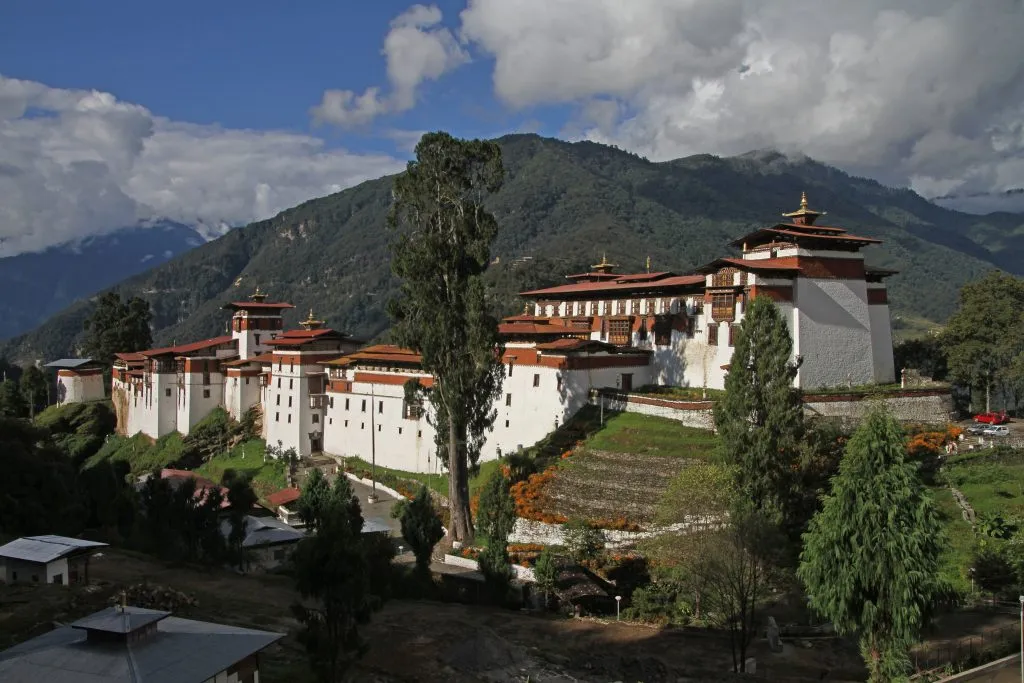
You drive over Pele La, through yak pastures and dwarf bamboo, stopping at Chendebji Chorten, to Trongsa. You visit Trongsa Dzong, the largest in Bhutan, and the Ta Dzong museum.
- Overnight: Trongsa
- Drive: about 5 to 6 hours
- Meals: breakfast, lunch and dinner
Day 4
The temples of Bumthang
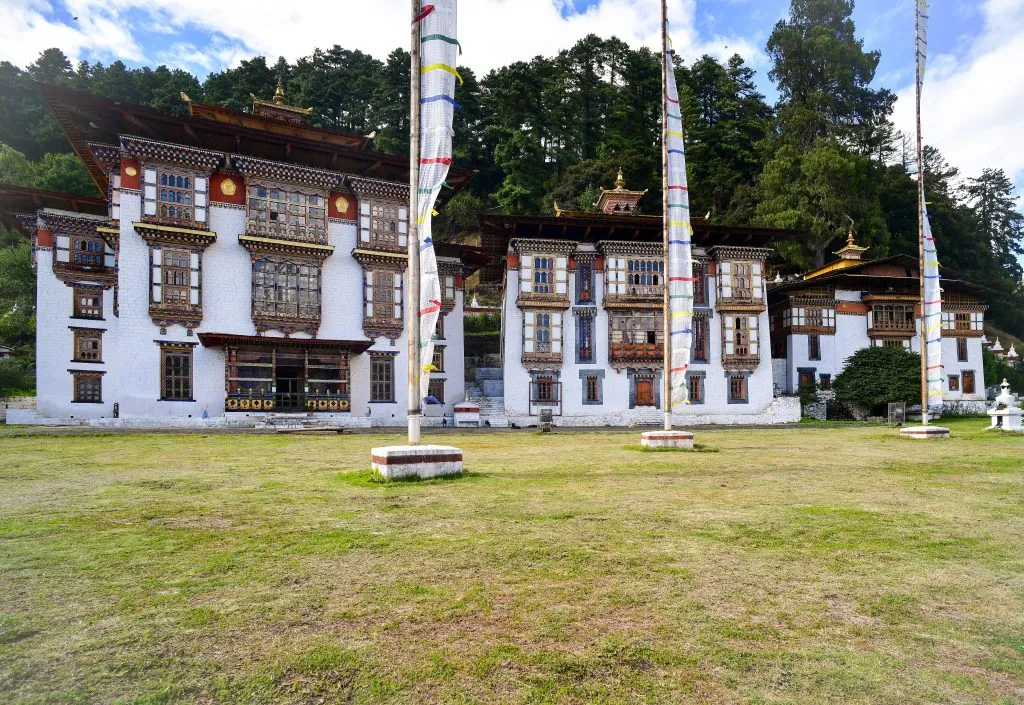
You cross Yotong La to Bumthang and visit Jambay Lhakhang, Kurjey Lhakhang and Jakar Dzong. In the evening you can try Bumthang cheese and the local beer.
- Overnight: Bumthang
- Drive: about 3 hours
- Meals: breakfast, lunch and dinner
Day 5
Over Thrumshing La
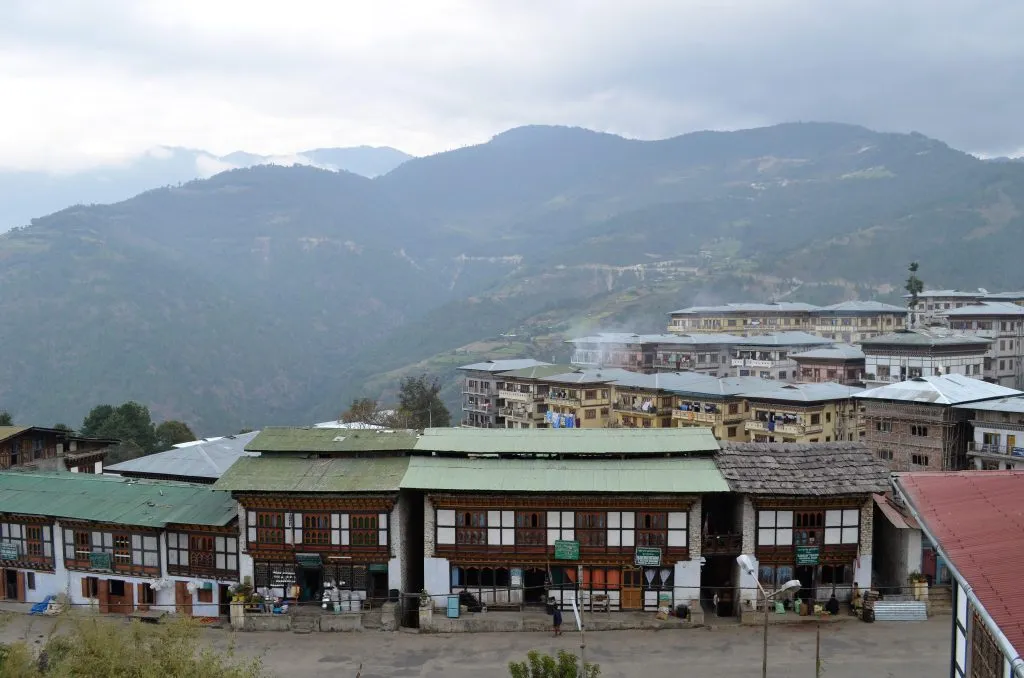
This is one of the great drives in Bhutan. You climb to Thrumshing La, at about 3,750 metres, the highest point on the east-west highway, then drop nearly 3,000 metres through forest to the Kuri Chhu and climb again to Mongar. Thrumshing La National Park is known for its rhododendrons and birds.
- Overnight: Mongar
- Drive: about 7 to 8 hours
- Highest point: about 3,750 metres
Day 6
To Trashigang
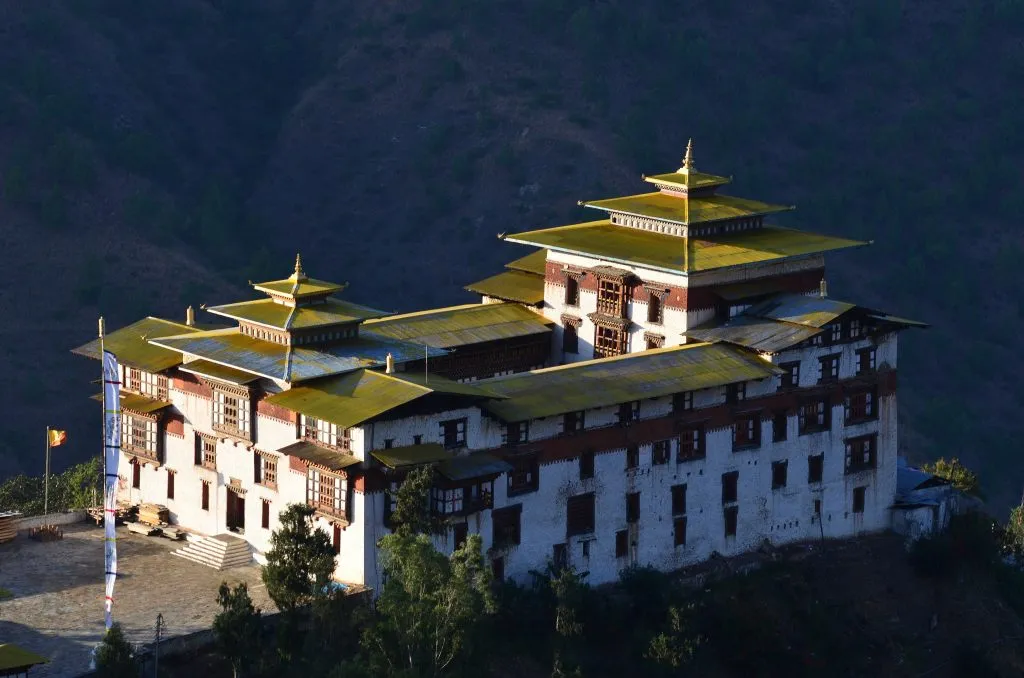
You cross Kori La and drive down to Trashigang, eastern Bhutan’s largest town. You visit Trashigang Dzong, built in 1659 on a spur above the Gamri Chhu, and walk around the town, where you may already see Brokpa in their felt hats, down from the hills to shop.
- Overnight: Trashigang
- Drive: about 3 hours
- Meals: breakfast, lunch and dinner
Day 7
Up to Merak
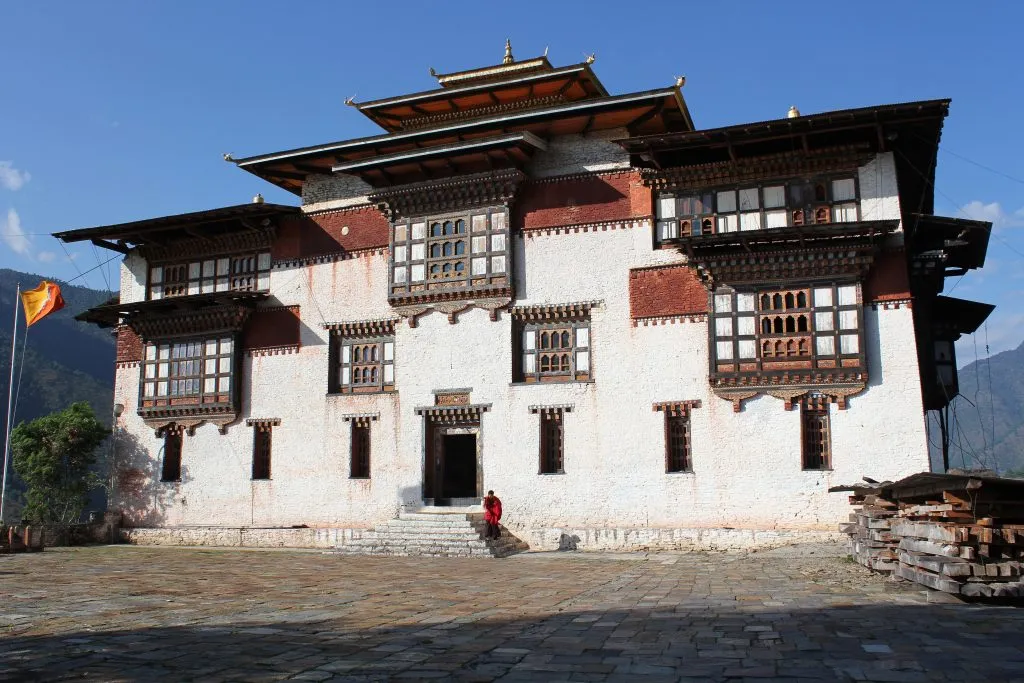
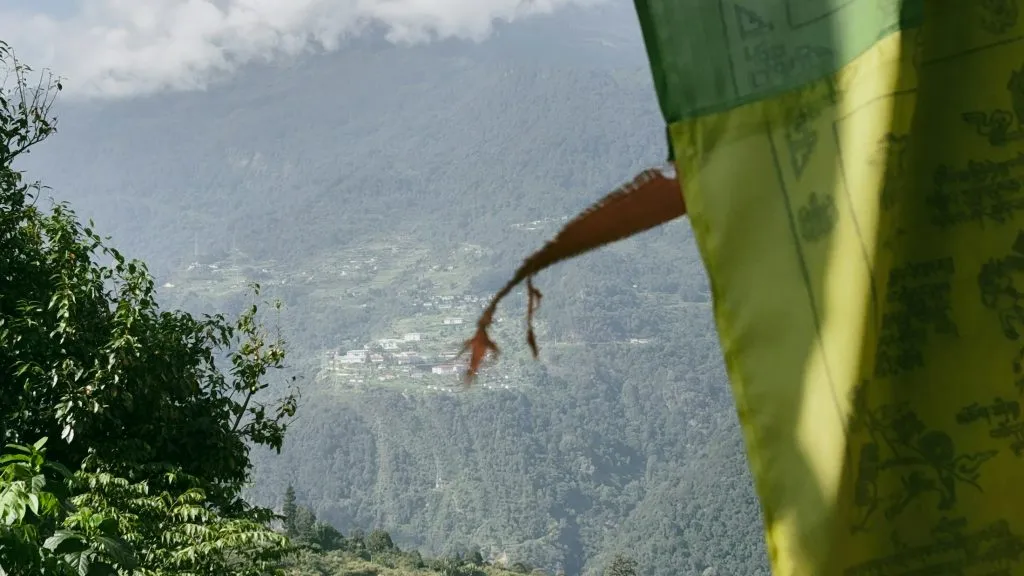
You drive up the Gamri Chhu valley past Radhi, known for its raw silk weaving, and Phongmey, then climb on a rough farm road to Merak, at about 3,500 metres. The drive takes most of the day. You are welcomed in the village and settle into a guesthouse or homestay.
- Overnight: Merak homestay
- Drive: about 5 to 6 hours
- Altitude: about 3,500 metres
Day 8
A day in Merak
You spend the day in Merak, walking through the village, visiting the temple and the herders’ pastures above. You can watch women weaving yak hair and wool, see butter and cheese being made, and try ara and yak cheese. In the evening, with notice, the villagers may perform the ache lhamo dance, the Brokpa’s best-known dance.
- Overnight: Merak homestay
- Walks: 2 to 4 hours
- Meals: home-cooked
Day 9
On to Sakteng
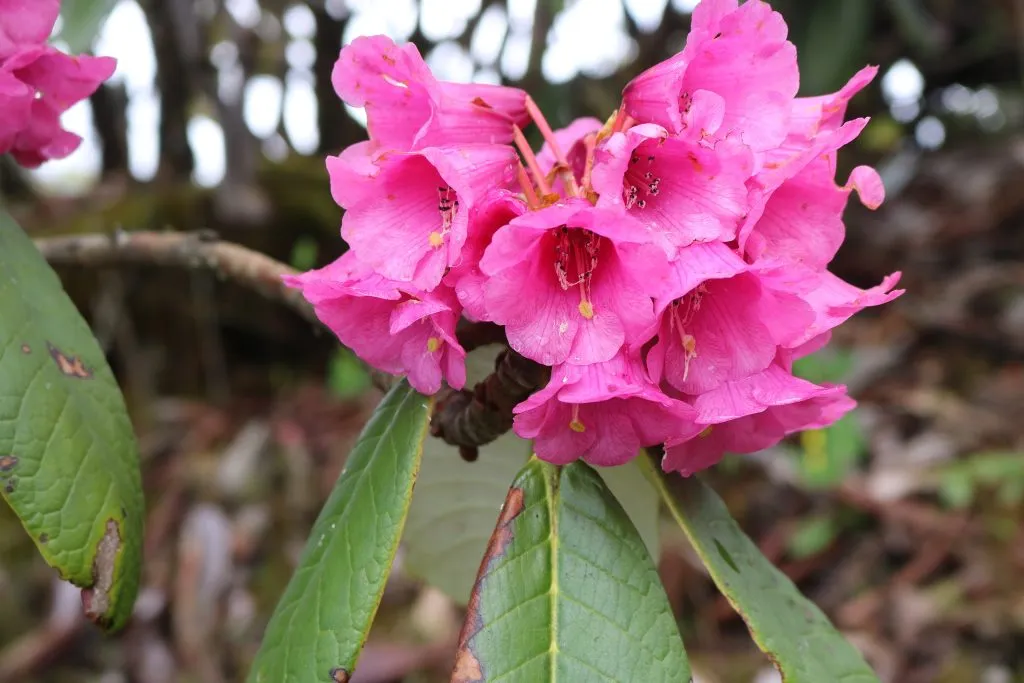
You travel to Sakteng, at about 3,000 metres. Depending on the road, you drive round by a long farm road, or walk the old trail over the Nachung La pass, at about 4,150 metres, for about 7 to 8 hours, with the car carrying your bags. The trail passes through rhododendron forest and high pastures. In spring the rhododendrons bloom in May and June.
- Overnight: Sakteng homestay
- Drive or walk: most of the day
- Highest point if walking: about 4,150 metres
Day 10
Sakteng and the sanctuary
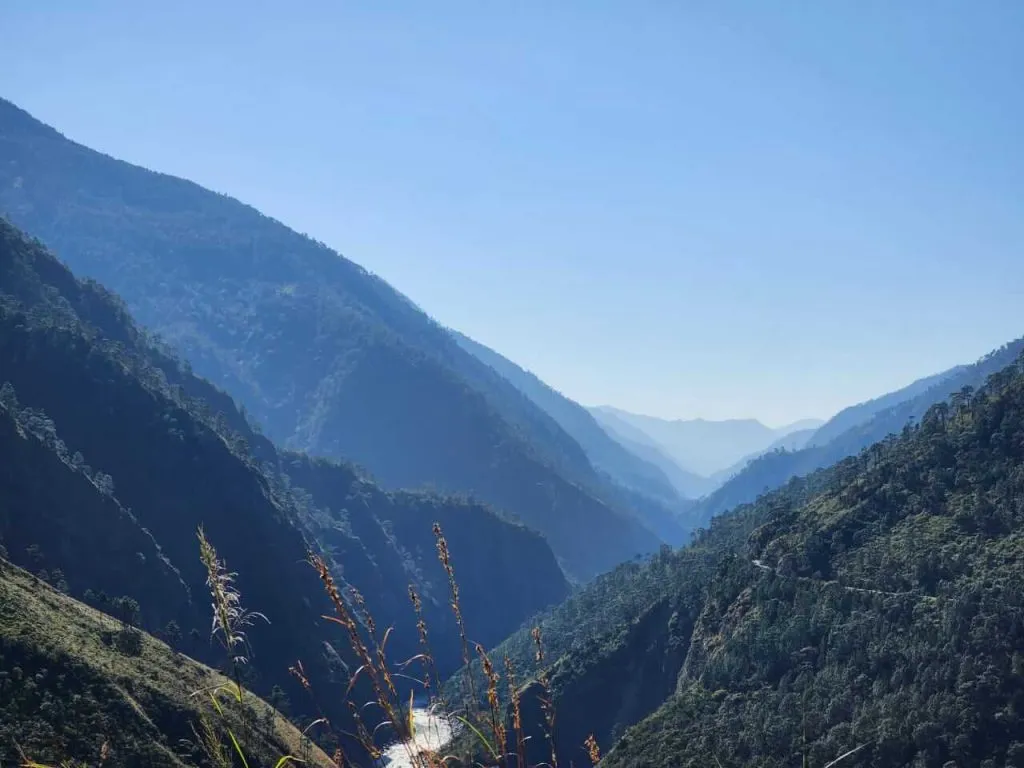
You spend the day in Sakteng, visiting the old temple, the village school and families in their homes. With a local guide you walk into the Sakteng Wildlife Sanctuary, where you may see birds and, with luck, signs of red pandas. Villagers will tell you about the migoi, the yeti that is said to live in the forests.
- Overnight: Sakteng homestay
- Walk: 2 to 4 hours
- Meals: home-cooked
Day 11
Back to Trashigang
You drive back down to Trashigang, a long but beautiful day. In the evening you can rest and enjoy a hot shower.
- Overnight: Trashigang
- Drive: about 6 hours
- Meals: breakfast, lunch and dinner
Day 12
Down to Samdrup Jongkhar
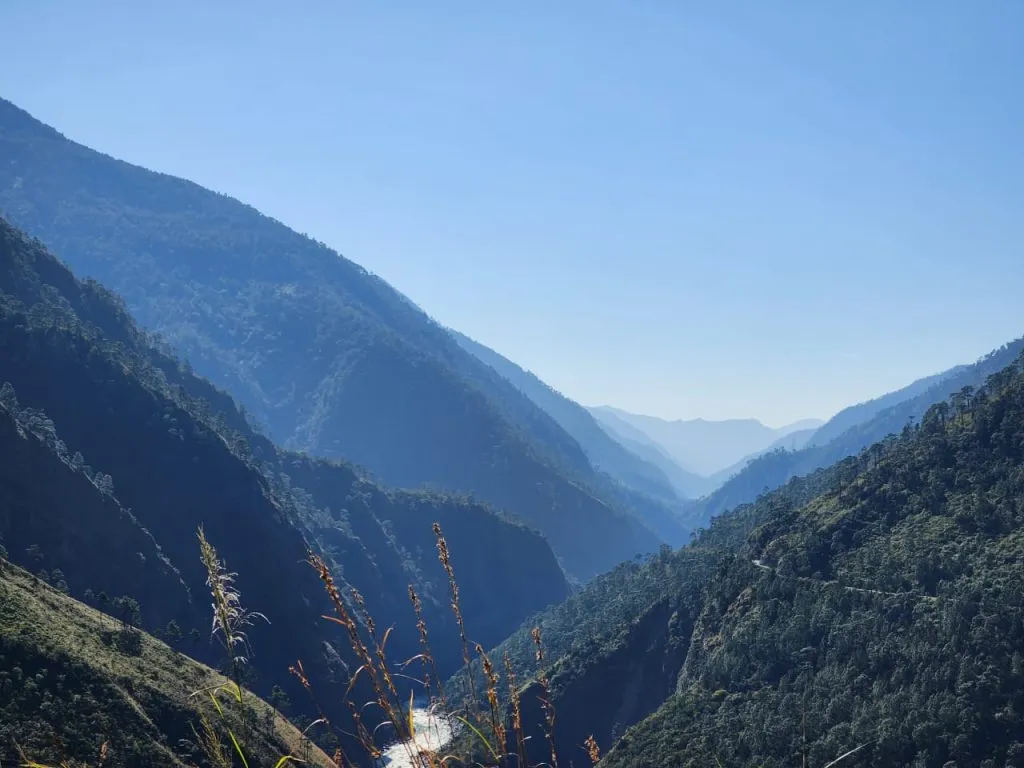
You drive south from Trashigang through Khaling, home of the National Handloom Development Project, and Wamrong, then down through subtropical forest to Samdrup Jongkhar on the Indian border. The road drops from the hills to the plains in a single day.
- Overnight: Samdrup Jongkhar
- Drive: about 6 to 7 hours
- Meals: breakfast, lunch and dinner
Day 13
Cross into India
After breakfast your guide takes you to the border, where you complete exit formalities. On the Indian side, a car drives you to Guwahati in Assam, about three hours, for your onward flight or an overnight stay. On the 14 day trip, your flight from Guwahati is usually the next day.
- Drive: about 3 hours to Guwahati
- Indian visa needed
- Meals: breakfast
Day 14
Fly home from Guwahati
You take your onward flight from Guwahati. If you would rather fly from Paro, the 16 day version drives back west instead, and the 12 day version uses a domestic flight to save time.
- Overnight: none
- Flight from Guwahati
- Meals: breakfast
Where you stay
Where you stay
Hotels in the west and simple homestays in Merak and Sakteng.
| Nights | Place | Where you stay | Why we chose it |
|---|---|---|---|
| 1 | Thimphu | 3-star or 4-star hotel | Central |
| 2 | Punakha | 3-star or 4-star hotel | Valley views |
| 3 | Trongsa | 3-star hotel | View of the dzong |
| 4 | Bumthang | 3-star or 4-star hotel | Chamkhar valley |
| 5 | Mongar | Simple hotel | Best available |
| 6 and 11 | Trashigang | Simple hotel | Best available |
| 7 to 10 | Merak and Sakteng | Homestay or guesthouse | Very simple, warm bedding |
| 12 | Samdrup Jongkhar | Simple hotel | Near the border |
| 13 | Guwahati | Hotel in India | Optional, booked on request |
Homestays in Merak and Sakteng have basic toilets and limited hot water. Bring a warm sleeping bag liner.
What the price covers
Included and not included
Included
- Bhutan visa (USD 40) and the Sustainable Development Fee for every night
- Hotels as listed, 3-star as standard, with 4-star and luxury upgrades on request
- All meals: breakfast, lunch and dinner
- A licensed English-speaking guide for the whole trip
- Private car or SUV with a Bhutanese driver, and all transfers
- Entry fees to dzongs, temples and museums
- Bottled water in the car
- Homestays in Merak and Sakteng
- Transfer from Samdrup Jongkhar to Guwahati
Not included
- International flights into and out of Paro (we can book them for you)
- Travel insurance, which we strongly recommend
- Drinks, laundry and other personal costs
- Tips for your guide and driver
- Anything not listed under included
- Indian visa
- Hotel in Guwahati unless booked
Price on request
Tell us your budget and we will send our best price
We don’t publish one fixed price, because hotels, season and group size change the total a lot. Tell us your dates, who is travelling and the budget you have in mind. We will reply within 24 hours with our best price for this Merak and Sakteng nomadic culture tour.
How we price
What decides the cost of this trip
Government fees
The SDF is USD 100 per adult per night until 31 August 2027, plus a USD 40 visa. These are fixed by the Government of Bhutan and paid through us.
Hotels you choose
Trip length (12, 14 or 16 days), hotel style and the way you leave Bhutan change the total most.
Season and dates
Spring and autumn are peak season. Winter and summer dates are often easier to price well.
Group size
Guide and car costs are shared, so the price per person drops for two, three or four travellers.
We send a written, itemised quote before you pay anything. No booking fees.
Good to know
Planning your trip to Merak and Sakteng
Who are the Brokpa?
The Brokpa are a semi-nomadic people who live mainly in Merak and Sakteng in Trashigang district. They raise yaks, sheep and cattle, moving between summer and winter pastures, and trade butter, cheese and meat with the villages below. Their clothing is woven from yak hair and sheep’s wool, dyed red with lac. Their best-known dance, the ache lhamo, tells the story of how their ancestors came to these valleys.
Roads and comfort
Farm roads now reach Merak and Sakteng, but they are rough, steep and can be closed after heavy rain. Travel is slow and bumpy. Accommodation is simple, food is basic and the nights are cold. This trip suits travellers who are happy to trade comfort for one of the most remote cultural experiences in Bhutan.
Choosing 12, 14 or 16 days
The 12 day trip uses a domestic flight to cut out some of the long drives. The 14 day trip drives across Bhutan and leaves by road to Guwahati. The 16 day trip adds Trashi Yangtse, with Chorten Kora and the College of Zorig Chusum, and gives an extra spare day for the weather.
Best time to visit
March to May and October to November are the best months. Spring brings rhododendrons, and in May there is a rhododendron celebration in Merak; see our Rhododendron Week Merak page. Winter is very cold, and in summer the roads are often muddy or blocked.
Travelling in eastern Bhutan
The east sees only a small share of Bhutan’s visitors, and that is part of its appeal. Roads are narrower, drives are long and hotels are simpler than in Paro or Thimphu, usually clean family-run places rather than resorts. In return you get quiet dzongs, villages that rarely see tourists and some of Bhutan’s best weaving. We use a comfortable SUV, keep driving days to a sensible length and build in rest stops. Our 14 day Eastern Bhutan tour covers the region in more depth.
Leaving through Samdrup Jongkhar
Samdrup Jongkhar, on the border with Assam, is an official entry and exit point for international visitors. Ending your trip there saves you the two or three day drive back to Paro. From the border it is about three hours by road to Guwahati, which has flights to Delhi, Kolkata, Bangkok and other cities. Your guide stays with you through Bhutanese immigration, and we can arrange an Indian car and hotel in Guwahati. Non-Indian visitors need a valid Indian visa for this route.
Altitude
Paro sits at about 2,200 metres and Thimphu at about 2,300. Most people feel fine after a slow first day. Drink plenty of water, go easy on alcohol at first, and tell your guide about headaches or poor sleep. The Tiger’s Nest, at about 3,120 metres, comes later in the trip for this reason.
Visa, SDF and guide rules
Every visitor except Indian nationals needs a visa, which costs USD 40 and is issued online before you fly. The Sustainable Development Fee is USD 100 per adult per night until 31 August 2027, with half rates for children aged 6 to 11. A Department of Tourism notice from April 2026 confirms that visitors travel with a licensed guide. We file the visa and pay the SDF for you. Read more in our Bhutan visa guide and SDF guide.
Flying into Paro
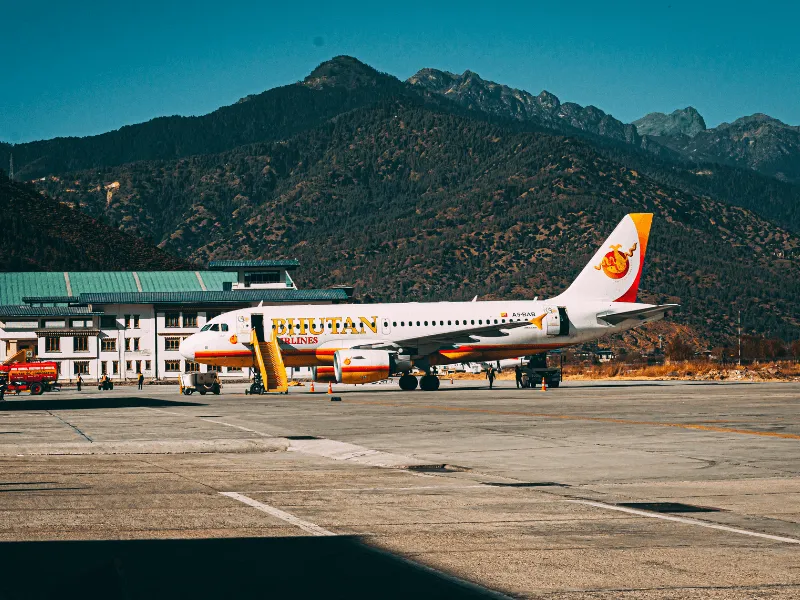
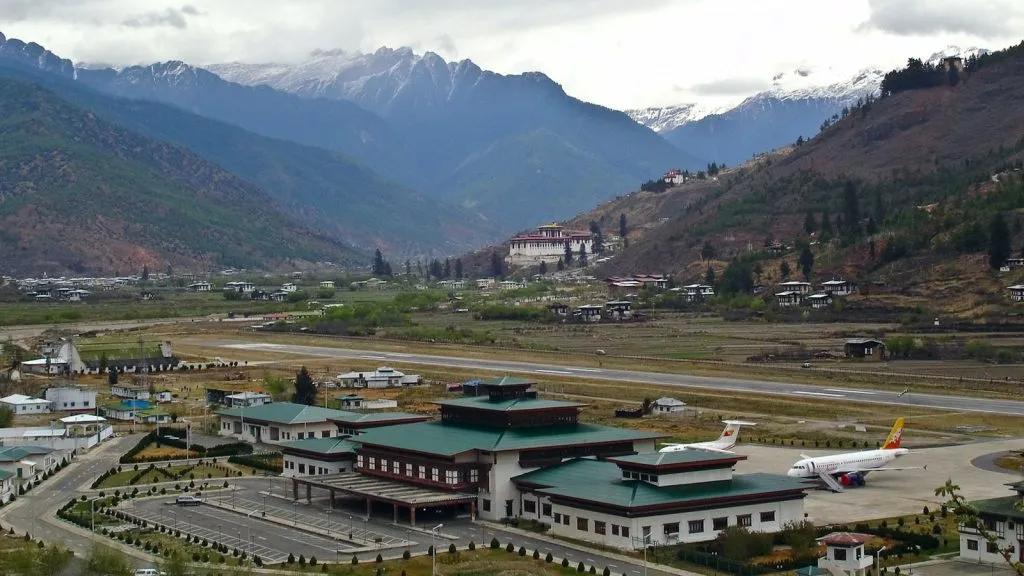
Only Drukair and Bhutan Airlines fly into Paro, mainly from Bangkok, Delhi, Kathmandu, Kolkata and Singapore. Pilots land by sight between the ridges, so morning flights are the most reliable. We suggest a night in your hub city on the way in. Our flights to Bhutan page lists every route.
Merak and Sakteng tour: questions
It depends on your hotels, group size and dates. Tell us your budget and we will reply within 24 hours with our best price, including the SDF, visa, hotels, meals, guide and car.
Yes. Farm roads now reach both villages, but they are rough and slow.
Yes. We arrange the permits needed for travel in Trashigang district and the sanctuary.
In simple homestays or guesthouses with village families.
By road through Samdrup Jongkhar to Guwahati in India. You need an Indian visa.
No. It is a road tour, with an optional walk over the Nachung La. We also run a full trek.
March to May and October to November.
Three to five months ahead.
Price on request
Ask for your best price
Tell us which version you want, your dates and your budget. We will reply within 24 hours with our best price for this Merak and Sakteng tour.
- Share your budget, we shape the trip around it
- No booking fees, ever
- A reply within 24 hours
- Licensed Bhutanese tour operator
- +975 17533776
- +975 77495028
- info@deyabhutantours.com
- Thimphu, Bhutan
Let's plan your Bhutan journey
Tell us a little about your trip. Our team in Thimphu will reply with ideas, a day-by-day plan and a full price.
We’ll reply within 24 hours. No booking fees, and no obligation to book.