- Licensed Bhutanese tour operator
- Thimphu, Bhutan
Cultural tour · 10 days, 9 nights
10 Day Bhutan Contemporary Art and Culture Tour: Studios, Galleries and Living Traditions
Meet the painters, filmmakers, musicians and craftspeople shaping modern Bhutan, from Thimphu’s artist studios to the temple workshops of Punakha and Bumthang, and see how old and new sit side by side.
- 10 days, 9 nights
- Studio visits and artist meetings
- Thimphu, Punakha, Bumthang and Paro
13
Traditional arts still taught
2022
Oscar nomination for a Bhutanese film
4
Valleys visited
Easy
Grade
Trip overview
Where Bhutan's art is going
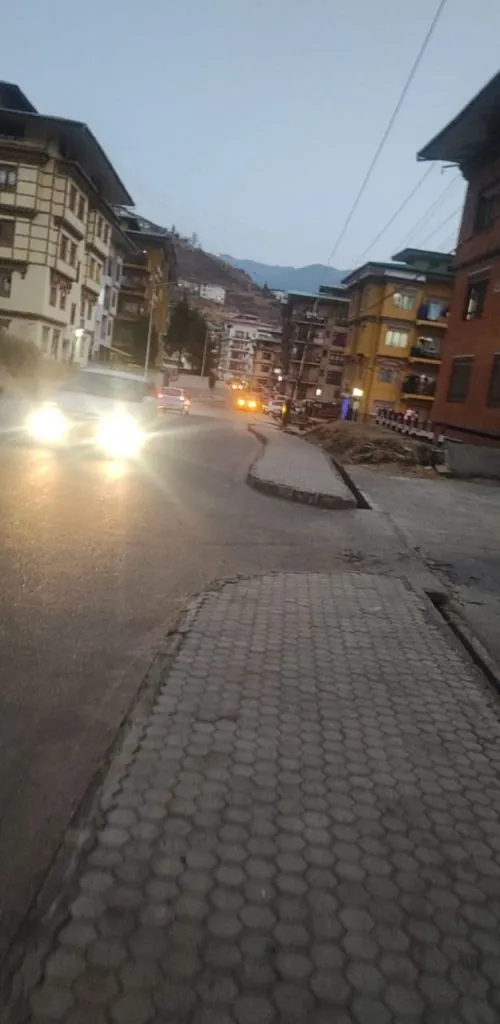
For centuries almost all art in Bhutan was religious. Painters made thangkas and temple murals, carvers made masks and altars, and every line followed rules handed down from master to student. That tradition is still strong, and you will see it in every dzong. But over the last thirty years a new generation of Bhutanese artists has started to paint, photograph, film and write about their own lives: the changes in Thimphu, the pull between village and city, the arrival of television and the internet, and what it means to be Bhutanese today.
This 10 day tour introduces you to both worlds. In Thimphu you visit artist-run studios and small galleries, where young painters mix Buddhist imagery with modern styles, and you meet working artists to talk about their ideas. You visit the National Institute for Zorig Chusum, where students learn the traditional rules, and see how some graduates later break them. You learn about Bhutan’s film industry, which drew world attention in 2022 when Pawo Choyning Dorji’s Lunana: A Yak in the Classroom was nominated for an Academy Award, and about rigsar, the pop music you will hear in every taxi.
Outside the capital you see the older art in its own setting: the murals of Punakha Dzong, the 7th and 8th century temples of Bumthang, and the painted houses of the villages. You end in Paro with the National Museum and the Tiger’s Nest. We arrange the artist meetings in advance, so tell us what interests you most: painting, photography, film, music, design or writing.
- Artist studios, small galleries and meetings with working artists
- Traditional arts at the zorig chusum institute
- Bumthang's ancient temples and the Tiger's Nest
Highlights
Highlights of the tour
Artist studios
Meet Thimphu's painters, photographers and designers.
Zorig chusum
Students learning the thirteen traditional arts.
Film and music
Bhutan's young film industry and rigsar music.
Punakha Dzong murals
Some of the finest temple painting in Bhutan.
Bumthang temples
Jambay, Kurjey and Tamshing Lhakhang.
Tiger's Nest
The cliff monastery above Paro.
Itinerary at a glance
Ten days at a glance
Artist meetings depend on who is in town. We confirm them before you travel.
Day 1: Arrive in Paro
Land in Paro.
Day 2: To Thimphu
Drive to the capital, an evening in town.
Day 3: Traditional and modern
Zorig Chusum institute, galleries and a studio visit.
Day 4: Film, music and books
Bhutan’s film and music scene, papermaking.
Day 5: To Punakha
Over Dochula to Punakha Dzong.
Day 6: To Trongsa and Bumthang
Over Pele La to Bumthang.
Day 7: Bumthang's old temples
Jambay, Kurjey and Tamshing Lhakhang.
Day 8: Fly to Paro
Domestic flight back to Paro.
Day 9: Tiger's Nest
Hike to Paro Taktsang.
Day 10: Depart
Transfer to Paro airport.
Day 1
Arrive in Paro
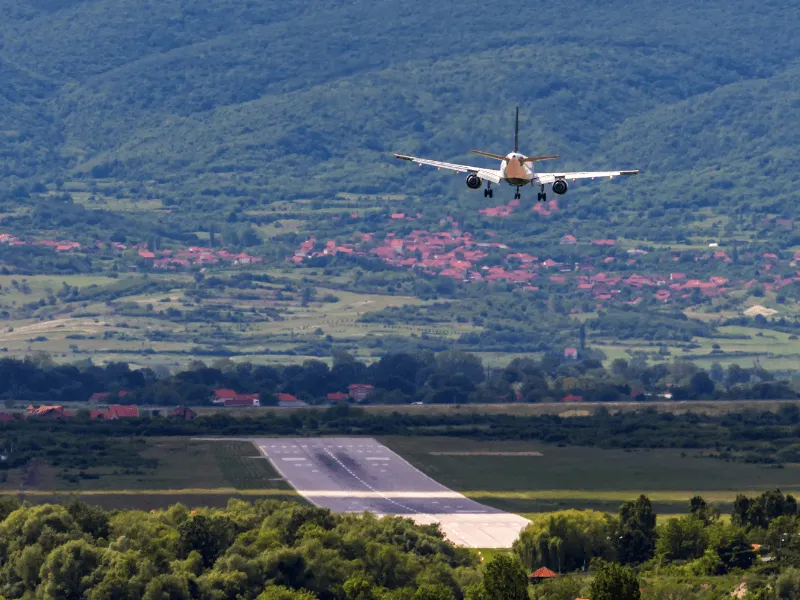
Your guide meets you at Paro airport. After lunch you visit the National Museum in the Ta Dzong above Paro, which traces Bhutanese art from ancient bronzes to painted thangkas, then walk down to Rinpung Dzong and its painted galleries. The museum gives you a grounding in the traditional styles you will see changed and reworked later in the trip.
- Overnight: Paro
- Altitude: about 2,200 metres
- Meals: lunch and dinner
Day 2
Thimphu: the city and its artists
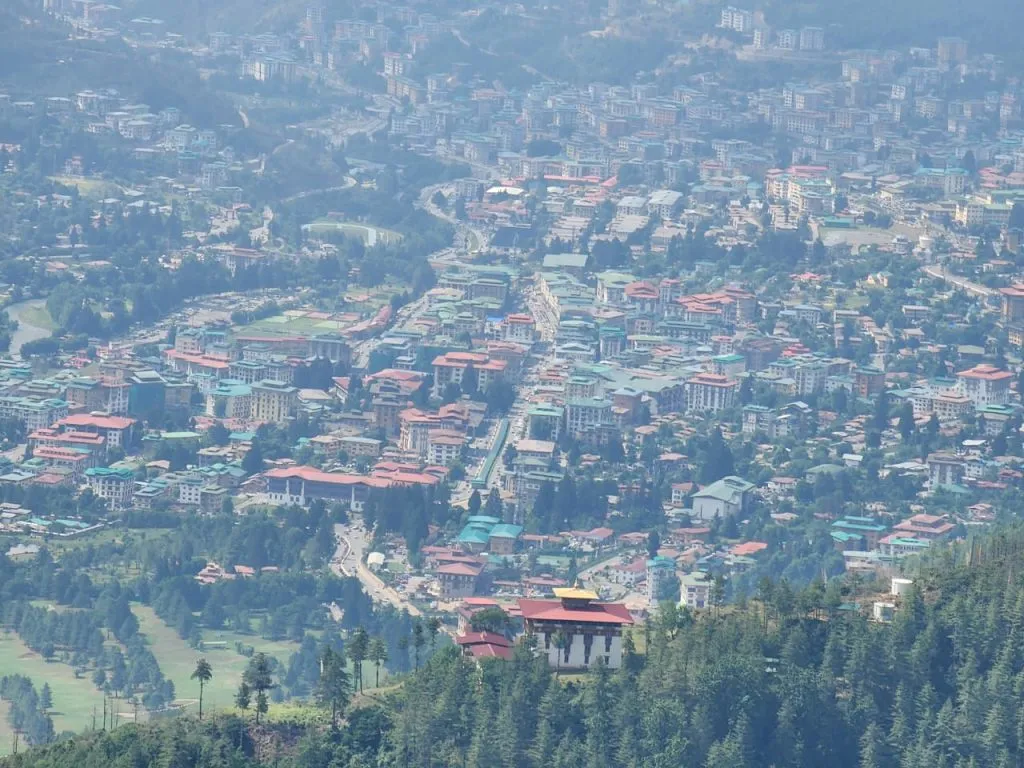
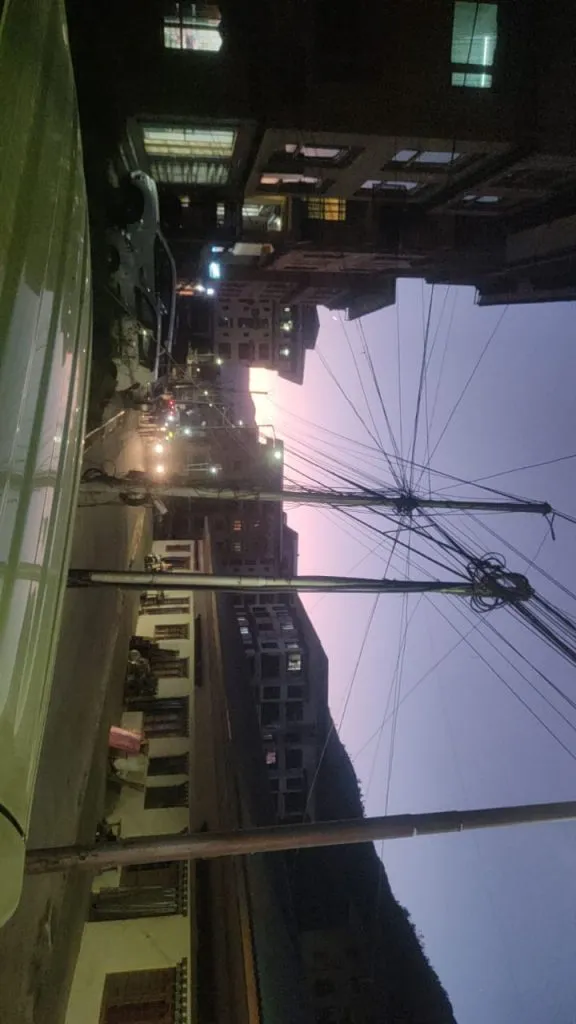
You drive to Thimphu, about an hour and a half. In the afternoon you visit an artist-run studio in the city, where painters share space, run classes for young people and hold small exhibitions. In the evening you walk around Norzin Lam, the main street, and stop at one of Thimphu’s cafes, where artists, students and civil servants mix.
- Overnight: Thimphu
- Drive: about 1.5 hours
- Meals: breakfast, lunch and dinner
Day 3
From the rules to breaking them
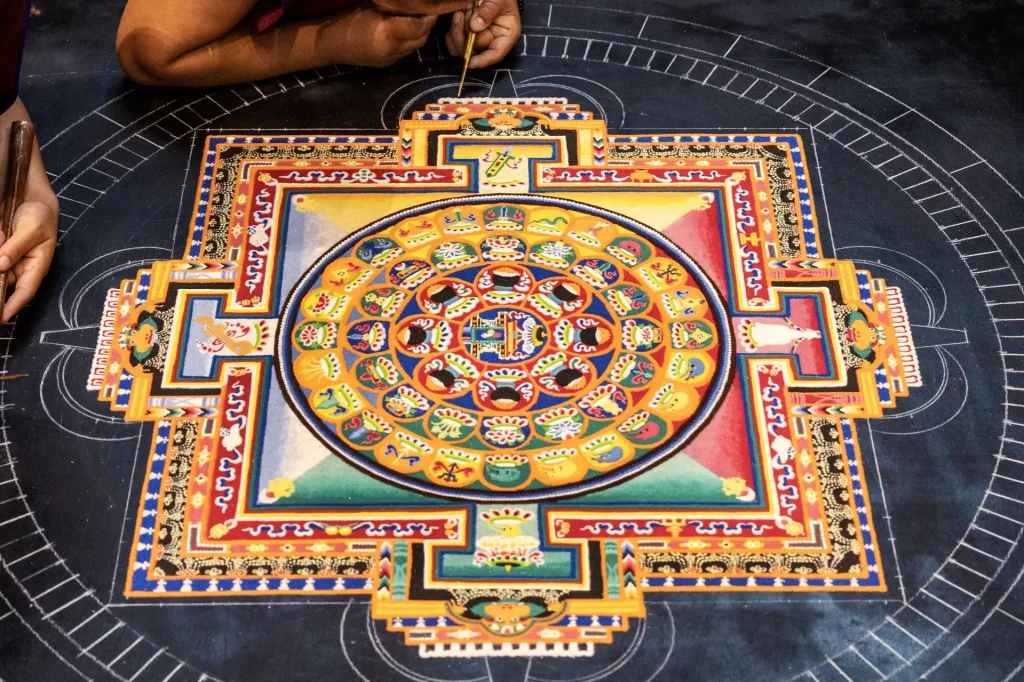
In the morning you visit the National Institute for Zorig Chusum, where students spend years learning to paint, carve, sculpt and embroider by strict traditional rules of proportion and colour. In the afternoon you visit two or three contemporary artists in their studios or homes to see how they use, question or move away from that training. Your guide translates where needed.
- Overnight: Thimphu
- Visits: institute and two or three artists
- Meals: breakfast, lunch and dinner
Day 4
Thimphu's creative industries
You meet someone from Bhutan’s film or music industry, which works on small budgets but has a loyal local audience, and learn how films are made and shown in Bhutan. You visit the traditional paper factory, where deh-sho paper is still made by hand from daphne bark, and the National Library, which holds old Buddhist texts. In the evening you can see a live music session if one is on.
- Overnight: Thimphu
- Visits: film or music meeting, paper factory, library
- Optional: live music in the evening
Day 5
Dochula and the murals of Punakha
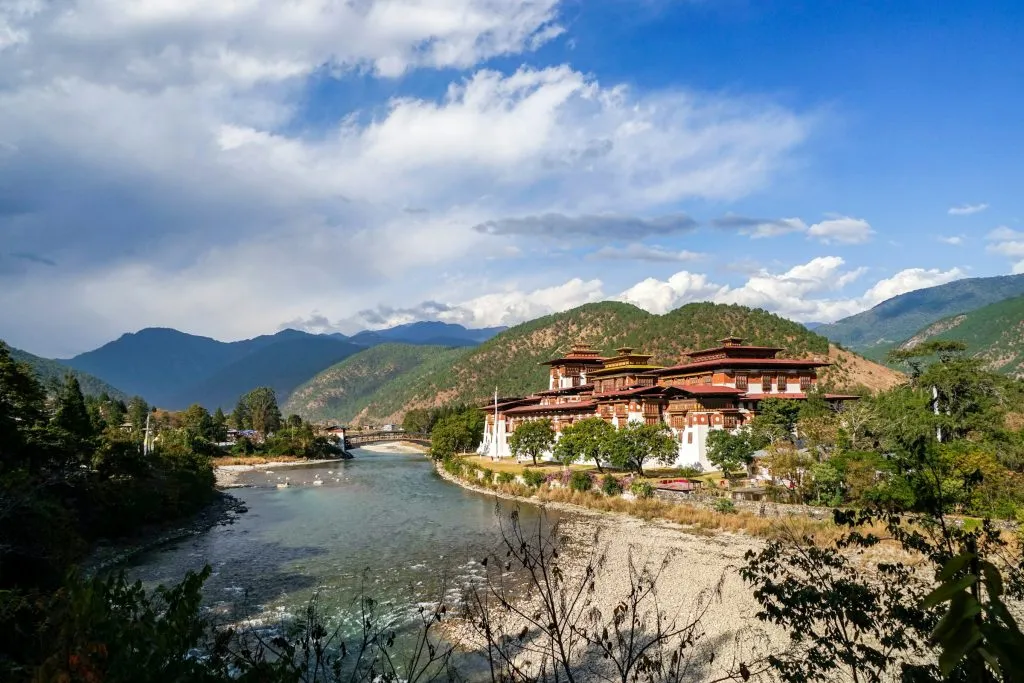
You cross Dochula, where the Druk Wangyal Lhakhang, built in 2008, has murals that mix traditional subjects with figures from modern Bhutanese history. In Punakha you visit the dzong, built in 1637, whose temples hold some of the finest wall painting in the country, and walk to Chimi Lhakhang, famous for its bold phallic paintings on village houses.
- Overnight: Punakha
- Drive: about 3 hours
- Walk: about 1 hour
Day 6
Into central Bhutan
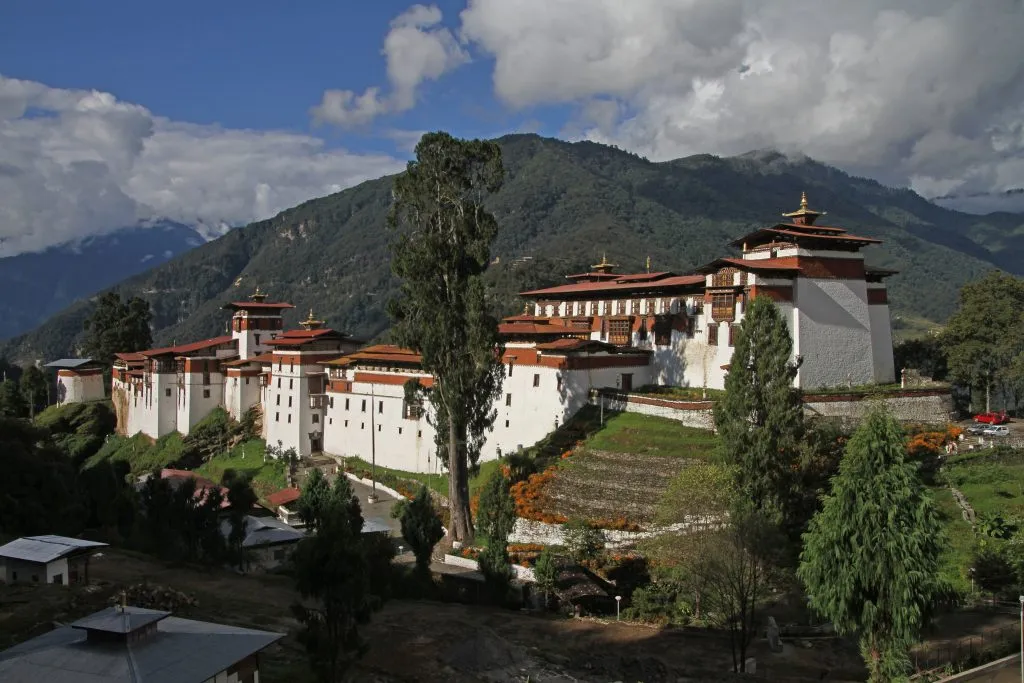
You drive over Pele La, stopping at Chendebji Chorten, to Trongsa, where you visit the Ta Dzong museum of royal history. Then you continue over Yotong La to Bumthang, stopping at Chhume to see yathra weaving. It is a long day but one of the most scenic drives in Bhutan.
- Overnight: Bumthang
- Drive: about 7 to 8 hours with stops
- Meals: breakfast, lunch and dinner
Day 7
The oldest art in Bhutan
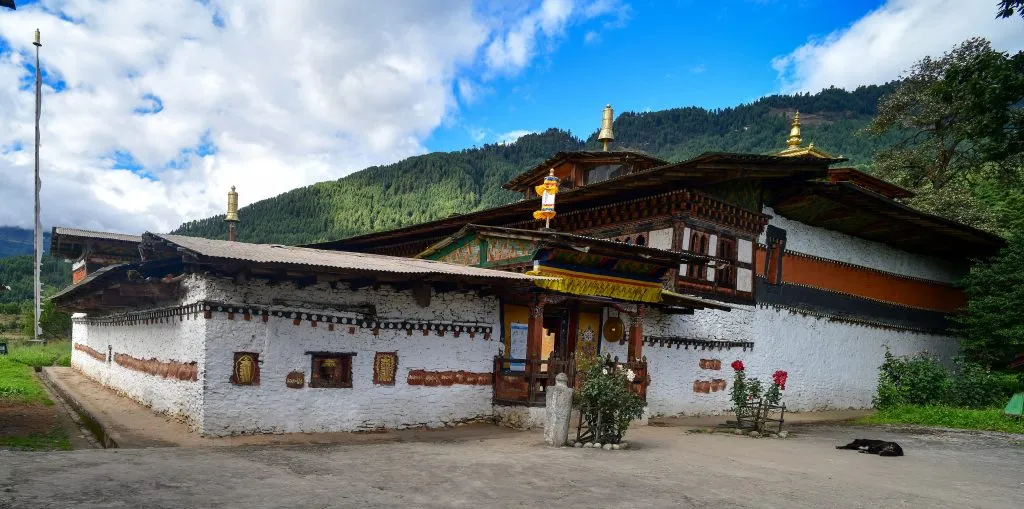
You visit Jambay Lhakhang, one of Bhutan’s oldest temples, said to date from the 7th century; Kurjey Lhakhang, where Guru Rinpoche left his body print in a rock; and Tamshing Lhakhang, founded in 1501 by Pema Lingpa, whose ancient wall paintings were painted by the saint and his students. In the afternoon you can visit the Bumthang Brewery or the cheese house.
- Overnight: Bumthang
- Visits: three temples
- Meals: breakfast, lunch and dinner
Day 8
Back to Paro
You fly from Bumthang to Paro, about 30 minutes, on the days that flights run. In the afternoon you visit Kyichu Lhakhang and a Paro studio or craft workshop. If the flight is not running, you drive back to Punakha and on to Paro over two days, and we adjust the plan.
- Overnight: Paro
- Flight: about 30 minutes
- Meals: breakfast, lunch and dinner
Day 9
Hike to the Tiger's Nest
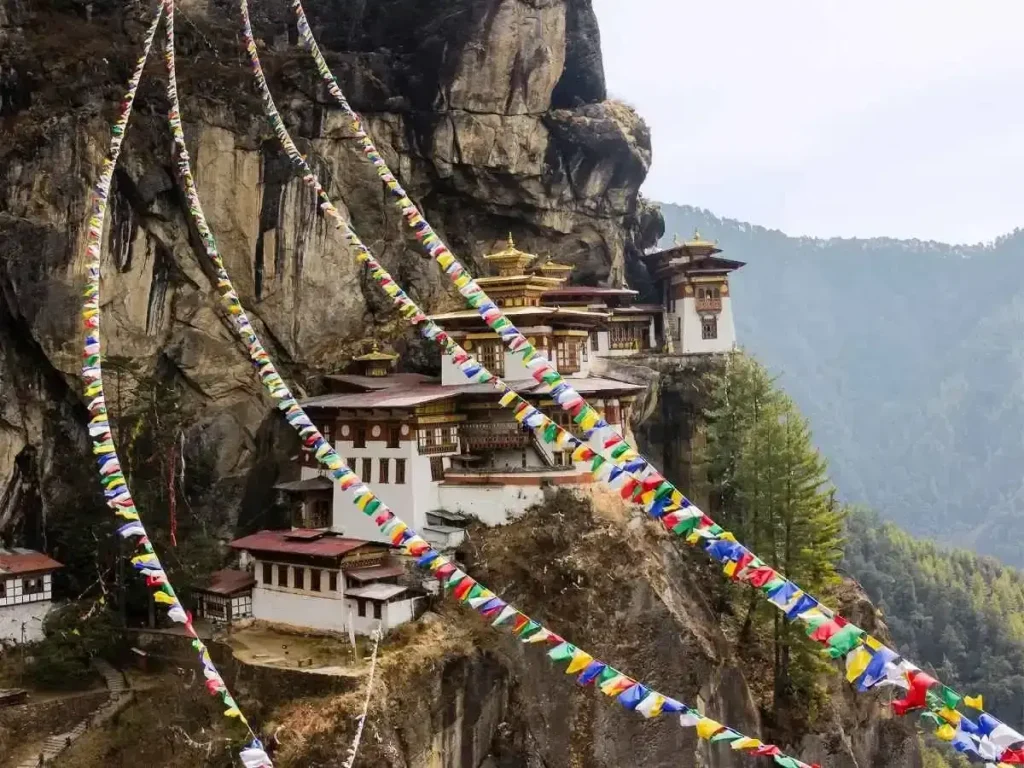
The hike to Paro Taktsang, the Tiger’s Nest, takes five to six hours return. The path climbs through blue pine forest to a cafeteria with a clear view of the monastery, then on to the cliff itself at about 3,120 metres, where Guru Rinpoche is said to have meditated in the 8th century. Many visitors say the paintings inside, and the setting itself, are the best art of the whole trip.
- Overnight: Paro
- Hike: 5 to 6 hours return
- Altitude: about 3,120 metres
Day 10
Fly home
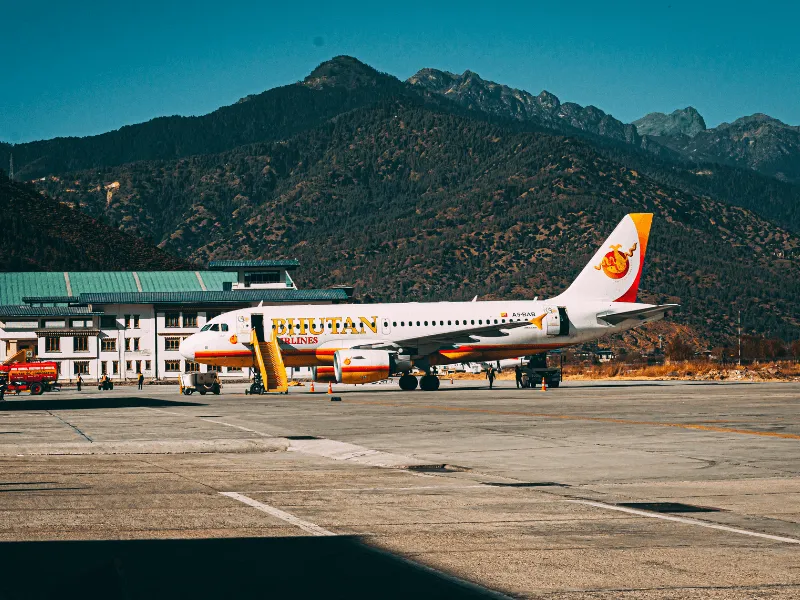
After breakfast your guide drives you to Paro airport for your flight home.
- Transfer: about 15 minutes
- Meals: breakfast
Where you stay
Where you stay
Comfortable hotels, with design-led and luxury options on request.
| Nights | Place | Where you stay | Why we chose it |
|---|---|---|---|
| 1, 8 and 9 | Paro | 3-star or 4-star hotel | Luxury upgrades available |
| 2, 3 and 4 | Thimphu | 3-star or 4-star hotel | Central, near cafes and galleries |
| 5 | Punakha | 3-star or 4-star hotel | Valley views |
| 6 and 7 | Bumthang | 3-star or 4-star hotel | Chamkhar valley |
We can book boutique and luxury hotels in Paro, Thimphu and Punakha.
What the price covers
Included and not included
Included
- Bhutan visa (USD 40) and the Sustainable Development Fee for every night
- Hotels as listed, 3-star as standard, with 4-star and luxury upgrades on request
- All meals: breakfast, lunch and dinner
- A licensed English-speaking guide for the whole trip
- Domestic flight from Bumthang to Paro
- Arranged meetings with artists
- Private car or SUV with a Bhutanese driver, and all transfers
- Entry fees to dzongs, temples and museums
- Bottled water in the car
Not included
- International flights into and out of Paro (we can book them for you)
- Travel insurance, which we strongly recommend
- Drinks, laundry and other personal costs
- Tips for your guide and driver
- Anything not listed under included
- Artworks and purchases
Price on request
Tell us your budget and we will send our best price
We don’t publish one fixed price, because hotels, season and group size change the total a lot. Tell us your dates, who is travelling and the budget you have in mind. We will reply within 24 hours with our best price for this contemporary art and culture tour.
How we price
What decides the cost of this trip
Government fees
The SDF is USD 100 per adult per night until 31 August 2027, plus a USD 40 visa. These are fixed by the Government of Bhutan and paid through us.
Hotels you choose
Hotel style, group size and the domestic flight change the total most.
Season and dates
Spring and autumn are peak season. Winter and summer dates are often easier to price well.
Group size
Guide and car costs are shared, so the price per person drops for two, three or four travellers.
We send a written, itemised quote before you pay anything. No booking fees.
Good to know
Planning your art tour
Contemporary art in Bhutan
Bhutan’s contemporary art scene is small and young, and much of it is centred in Thimphu. Many artists trained first in traditional painting and then began to work on their own subjects in the 1990s and 2000s, often with support from artist groups that run studios, classes and exhibitions. Their work deals with everyday Bhutan: city life, the environment, faith and change. You can buy directly from many of them, and some sell prints and smaller pieces.
Film and music
Bhutan’s film industry began in the late 1980s and now makes a number of feature films each year, mostly in Dzongkha, shown in Thimphu’s cinemas and on television. Lunana: A Yak in the Classroom, filmed in one of the most remote villages in the country, was nominated for Best International Feature Film at the 2022 Academy Awards. Rigsar, a mix of Bhutanese folk tunes with keyboards and pop beats, is the country’s most popular music.
Photographing art and temples
Photography is not allowed inside dzong temples and lhakhangs, so you will see the most important traditional painting only with your eyes. You can photograph courtyards, exteriors and, with permission, artists and their work in studios. Ask before photographing people.
The thirteen traditional arts
Bhutan groups its traditional crafts as zorig chusum, the thirteen arts. They are painting, sculpture, wood carving, calligraphy, papermaking, bronze casting, woodturning, blacksmithing, ornament making, bamboo and cane work, weaving, embroidery and tailoring, and masonry and carpentry. The government supports them through the National Institute for Zorig Chusum in Thimphu and the College of Zorig Chusum in Trashi Yangtse, where young people train for four to six years.
Buying crafts and taking them home
Buy from cooperatives, craft bazaars and the artisans themselves where you can, so more of the money stays with the maker. Prices in government-run shops are fixed; in markets a little friendly bargaining is fine. Bhutan does not allow the export of antiques or old religious objects, so be wary of anything sold as old. New thangkas, textiles, masks and wooden bowls can be taken home freely. Keep your receipts in case customs ask.
Getting to Bumthang
Bumthang is about 270 km from Thimphu, but the road crosses three passes and the drive takes most of two days. We break it with a night in Punakha or Trongsa. Drukair also flies between Paro and Bumthang on set days of the week, in about 30 minutes, and on most of our central Bhutan trips we fly back to save a day on the road. The schedule changes by season, so we confirm the flight when you book.
Visa, SDF and guide rules
Every visitor except Indian nationals needs a visa, which costs USD 40 and is issued online before you fly. The Sustainable Development Fee is USD 100 per adult per night until 31 August 2027, with half rates for children aged 6 to 11. A Department of Tourism notice from April 2026 confirms that visitors travel with a licensed guide. We file the visa and pay the SDF for you. Read more in our Bhutan visa guide and SDF guide.
Flying into Paro
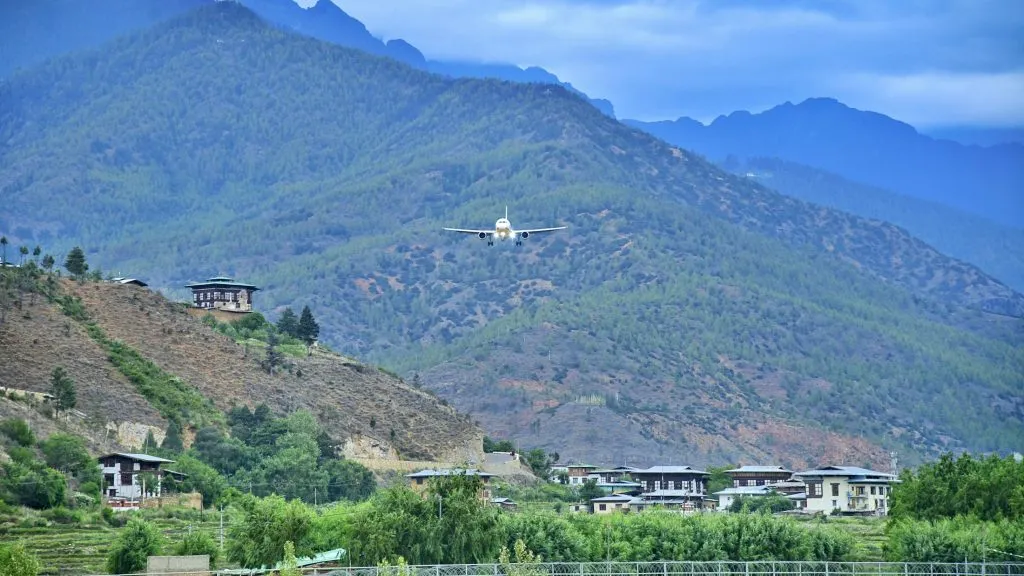
Only Drukair and Bhutan Airlines fly into Paro, mainly from Bangkok, Delhi, Kathmandu, Kolkata and Singapore. Pilots land by sight between the ridges, so morning flights are the most reliable. We suggest a night in your hub city on the way in. Our flights to Bhutan page lists every route.
Contemporary art tour: questions
It depends on your hotels, group size and dates. Tell us your budget and we will reply within 24 hours with our best price, including the SDF, visa, hotels, meals, guide and car.
Yes. We arrange studio visits and meetings with working painters, photographers, musicians or filmmakers in Thimphu.
Not a large one. Contemporary art is shown in small galleries, studios and occasional exhibitions, mostly in Thimphu.
Yes, directly from artists and galleries. New works can be exported freely.
No. Photography is not allowed inside temples and dzong shrine rooms.
No. The tour suits anyone curious about modern Bhutan.
Yes. A painting or photography workshop with a local artist can be added in Thimphu.
Two to four months ahead, so we can arrange artist meetings.
Price on request
Ask for your best price
Tell us which arts interest you most, your dates and your budget. We will reply within 24 hours with our best price for this contemporary art and culture tour.
- Share your budget, we shape the trip around it
- No booking fees, ever
- A reply within 24 hours
- Licensed Bhutanese tour operator
- +975 17533776
- +975 77495028
- info@deyabhutantours.com
- Thimphu, Bhutan
Let's plan your Bhutan journey
Tell us a little about your trip. Our team in Thimphu will reply with ideas, a day-by-day plan and a full price.
We’ll reply within 24 hours. No booking fees, and no obligation to book.