- Licensed Bhutanese tour operator
- Thimphu, Bhutan
Trekking tour · 10 days, 9 nights
10 Day Soi Yaksa Trek: Jomolhari Base Camp and the Hidden Yaksa Valley
A six-day loop from Paro to Jangothang, the base camp below Mount Jomolhari, over Bonte La to the quiet Soi Yaksa valley and back over Thombu La.
- 10 days, 9 nights
- 6 trekking days
- Highest point about 4,890 metres
7,326 m
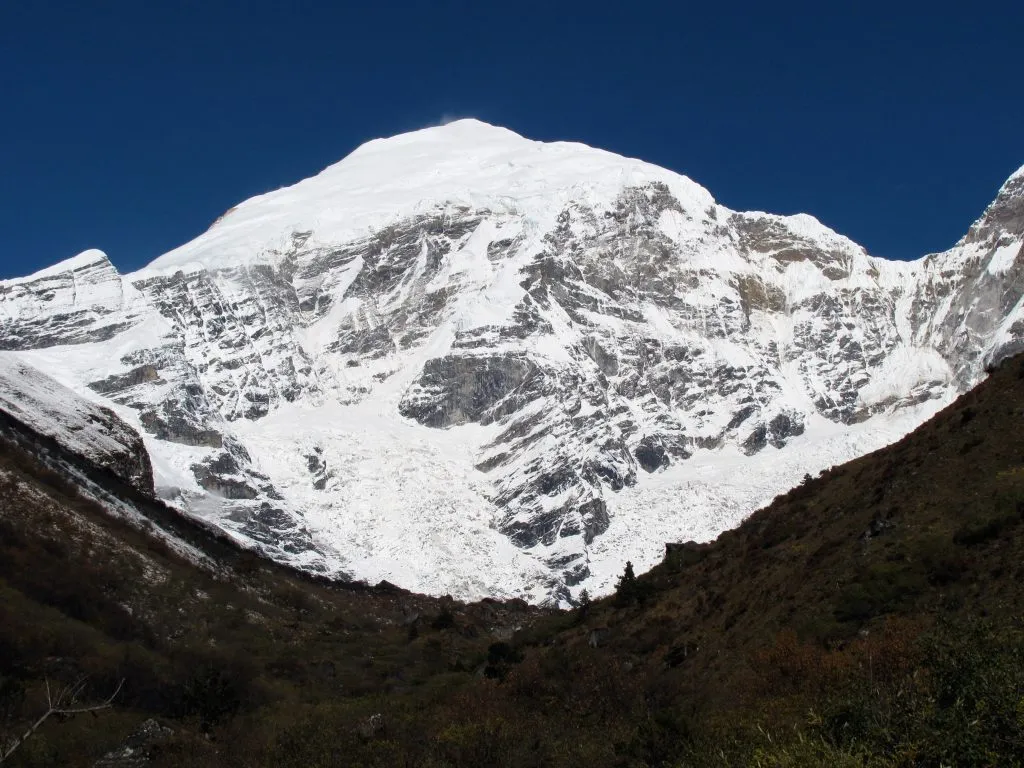
Mount Jomolhari, about
4,890 m
Bonte La, about
4,040 m
Jangothang camp, about
Moderate to hard
Grade
Trip overview
Jomolhari without the long walk out
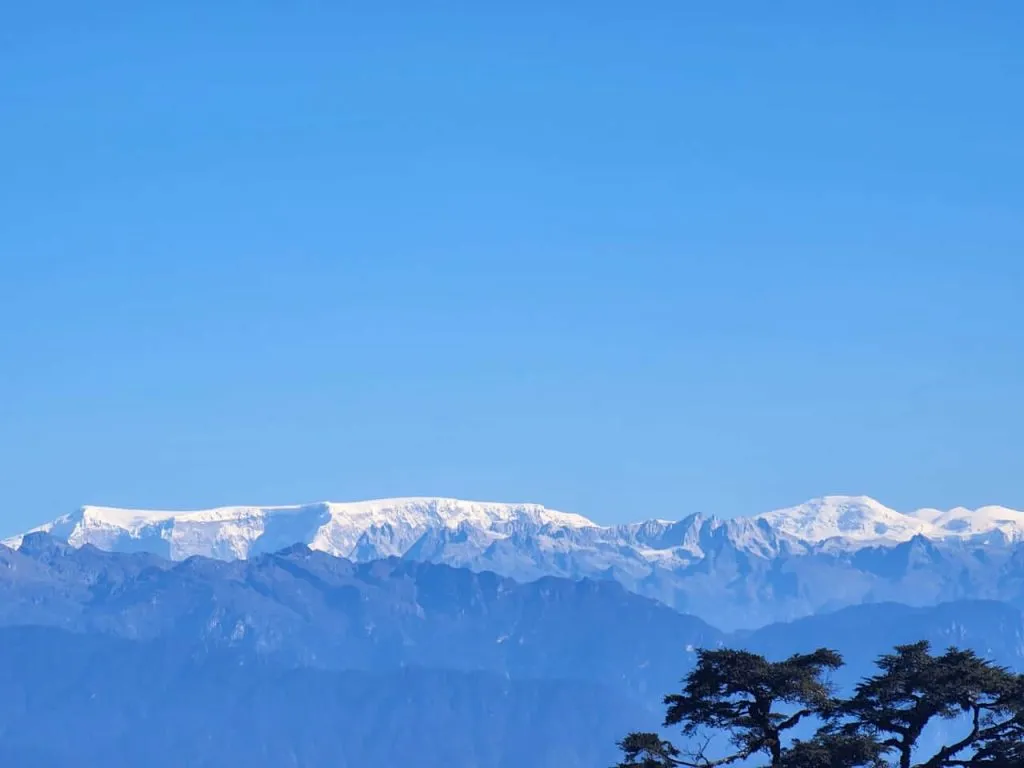
Mount Jomolhari, at about 7,326 metres, rises on the border between Bhutan and Tibet and is one of the most sacred mountains in the Himalaya. Its base camp at Jangothang, at about 4,040 metres, is the goal of the classic Jomolhari Trek. The Soi Yaksa trek reaches the same base camp, then loops back to Paro by a different and much quieter route, so you see Jomolhari up close in fewer days.
The trek starts at Shana, at the end of the road up the Paro valley, and follows the Paro Chhu through forest to Soi Thangthangkha and then to Jangothang. After a rest day below the mountain, you cross Bonte La, at about 4,890 metres, the highest point of the trek, and drop into the Soi Yaksa valley, a wide, green bowl of pastures, waterfalls and herders’ houses below rocky peaks. From there you cross Thombu La and descend back to the Paro valley.
It is a good choice if you want the big mountain views of the Jomolhari region but have only ten days, or if you would like to avoid the busier sections of the main route. You need good fitness and acclimatisation: the trek crosses one very high pass and spends several nights around 4,000 metres. We hike the Tiger’s Nest first to help your body adjust.
- Two nights at Jangothang, below Mount Jomolhari
- Bonte La, about 4,890 metres
- The quiet Soi Yaksa valley
Highlights
Highlights of the trek
Mount Jomolhari
Close views from the base camp at Jangothang.
Bonte La
The high pass at about 4,890 metres.
Soi Yaksa valley
Pastures, waterfalls and herders' houses.
Tsophu lakes
High lakes above Jangothang on the rest day.
Wildlife
Blue sheep, marmots and yaks.
Tiger's Nest
An acclimatisation hike before the trek.
Itinerary at a glance
Ten days at a glance
Walking times are approximate and depend on weather and pace.
Day 1: Arrive in Paro
Land in Paro, easy afternoon.
Day 2: Tiger's Nest
Acclimatisation hike to Paro Taktsang.
Day 3: Shana to Soi Thangthangkha
Start the trek up the Paro Chhu.
Day 4: To Jangothang
Up the valley to Jomolhari base camp.
Day 5: Rest day at Jangothang
Acclimatise, hike to the Tsophu lakes.
Day 6: Over Bonte La to Soi Yaksa
Cross the highest pass.
Day 7: Soi Yaksa to Thombu Shong
Over a ridge to the herders’ camp.
Day 8: Over Thombu La to Shana
The last pass and down to Paro.
Day 9: Thimphu
A day trip to the capital.
Day 10: Spare day
A buffer day for weather.
Day 11: Depart
Transfer to Paro airport.
Day 1
Arrive in Paro
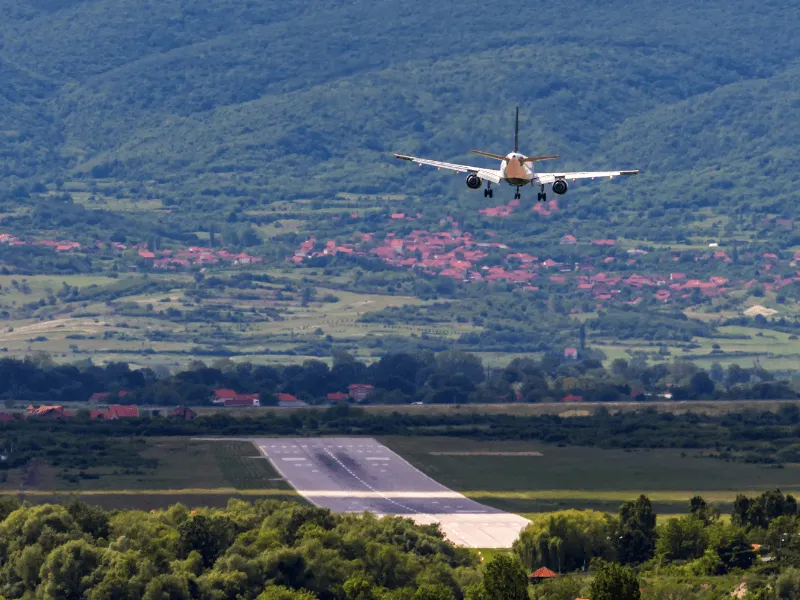
Your trekking guide meets you at Paro airport and drives you to your hotel. After lunch you visit Rinpung Dzong and walk across the cantilever bridge below it. In the evening your guide goes through the trek plan with you and checks your gear. Keep the first day light so your body can adjust to the altitude of about 2,200 metres.
- Overnight: Paro
- Altitude: about 2,200 metres
- Meals: lunch and dinner
Day 2
Acclimatise on the Tiger's Nest trail
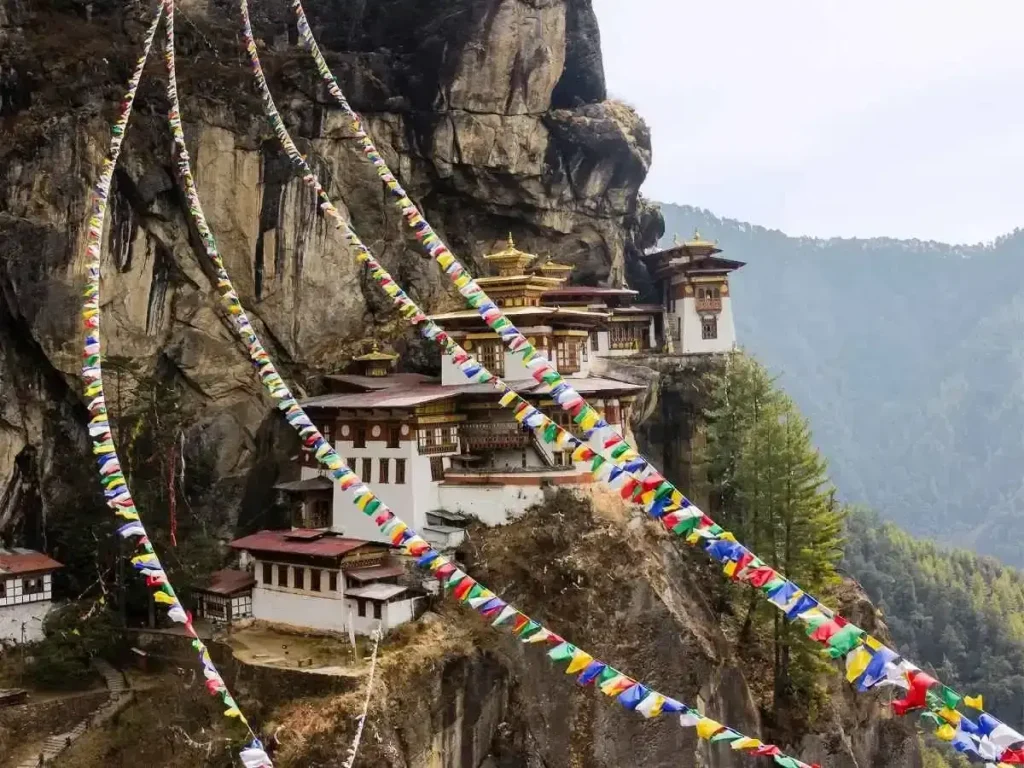
The hike to the Tiger’s Nest, at about 3,120 metres, is the best warm-up for any trek in western Bhutan. It takes five to six hours return through blue pine forest, and gaining height slowly today helps your body cope with the higher camps later. Your guide watches how you walk and adjusts the pace for the trek.
- Overnight: Paro
- Hike: 5 to 6 hours return
- Altitude: about 3,120 metres
Day 3
Trek day 1: Shana to Soi Thangthangkha
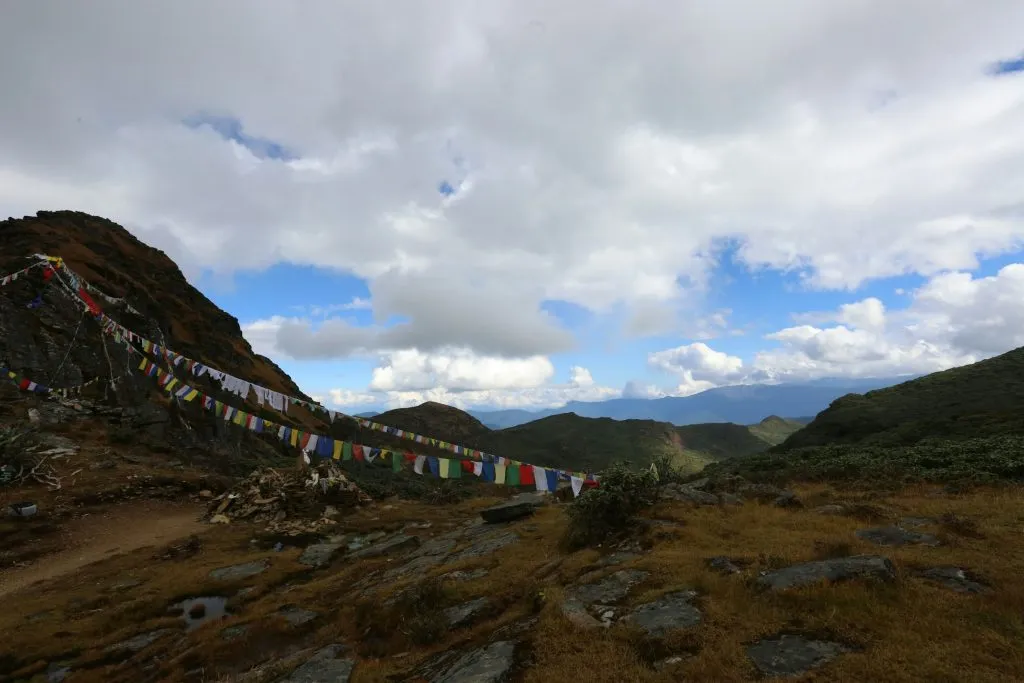
You drive up the Paro valley past Drukgyel Dzong to Shana, at about 2,850 metres, where the horses are loaded. The trail follows the Paro Chhu upstream through forest of oak, pine and rhododendron, with many small climbs and descents, to camp in a meadow at Soi Thangthangkha, at about 3,750 metres.
- Camp: Soi Thangthangkha, about 3,750 metres
- Walk: 6 to 7 hours
- Distance: about 17 km
Day 4
Trek day 2: to Jangothang
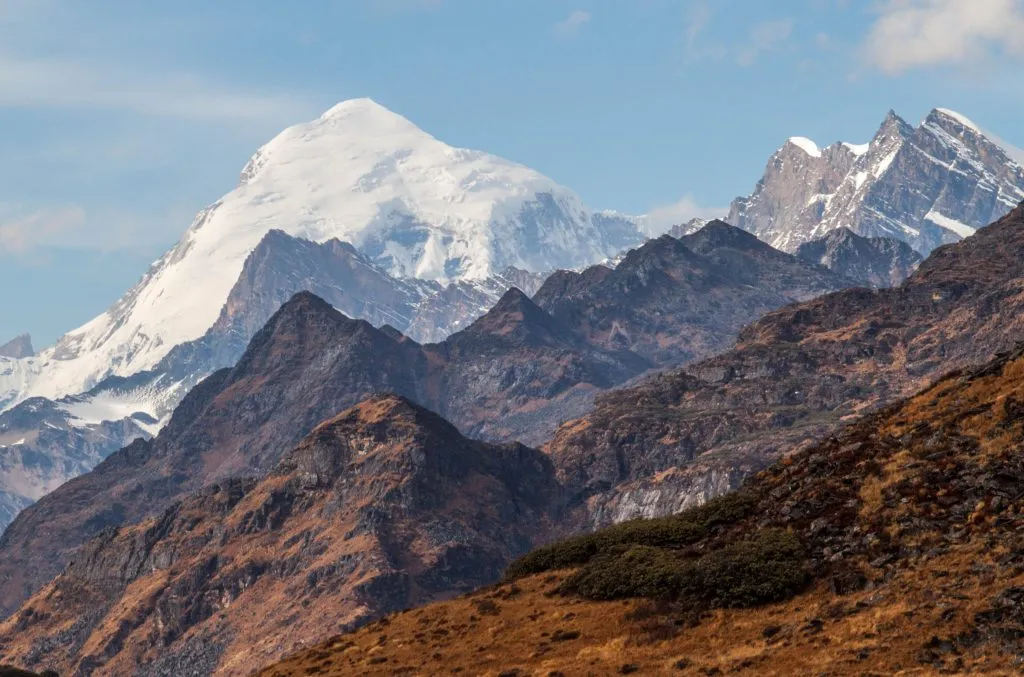
The valley opens out above the tree line, and you pass an army camp and the scattered houses of yak herders. In the afternoon you reach Jangothang, at about 4,040 metres, where the east face of Jomolhari rises straight above the camp.
- Camp: Jangothang, about 4,040 metres
- Walk: 7 to 8 hours
- Distance: about 19 km
Day 5
Trek day 3: below Jomolhari
A rest and acclimatisation day. You can hike up to the Tsophu lakes, where blue sheep often graze on the slopes, or climb the ridge behind camp for views of Jomolhari, Jichu Drake and Tserim Gang. In the evening the mountain often glows pink at sunset.
- Camp: Jangothang, about 4,040 metres
- Walk: optional, 3 to 4 hours
- Meals: breakfast, lunch and dinner
Day 6
Trek day 4: over Bonte La
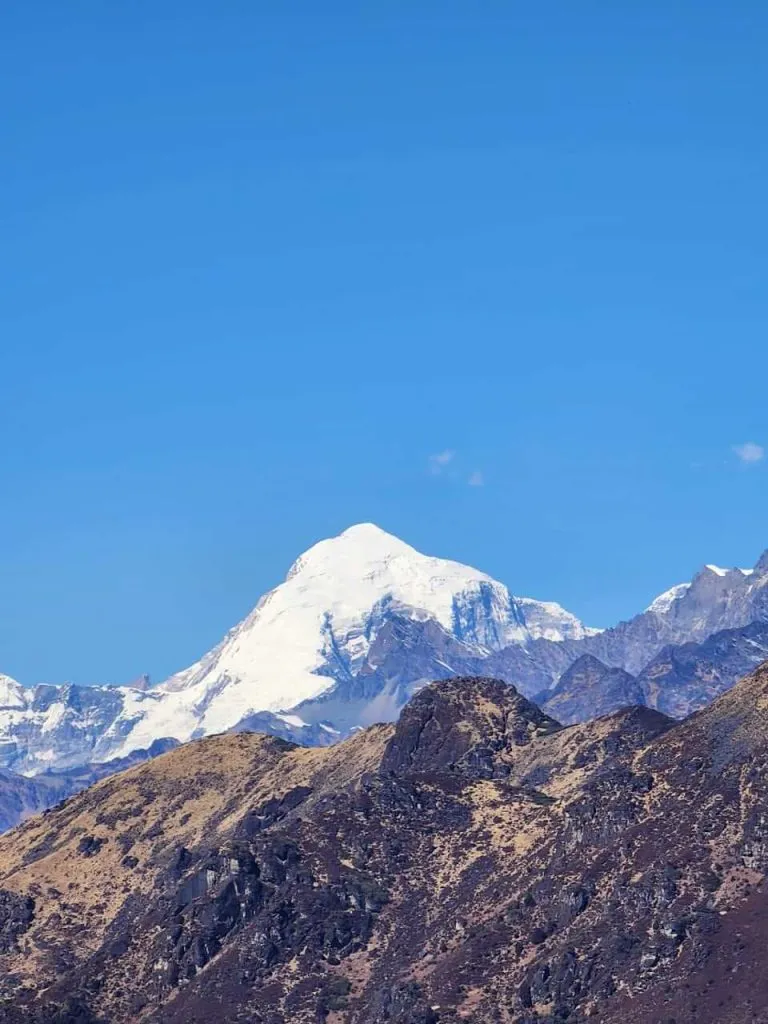
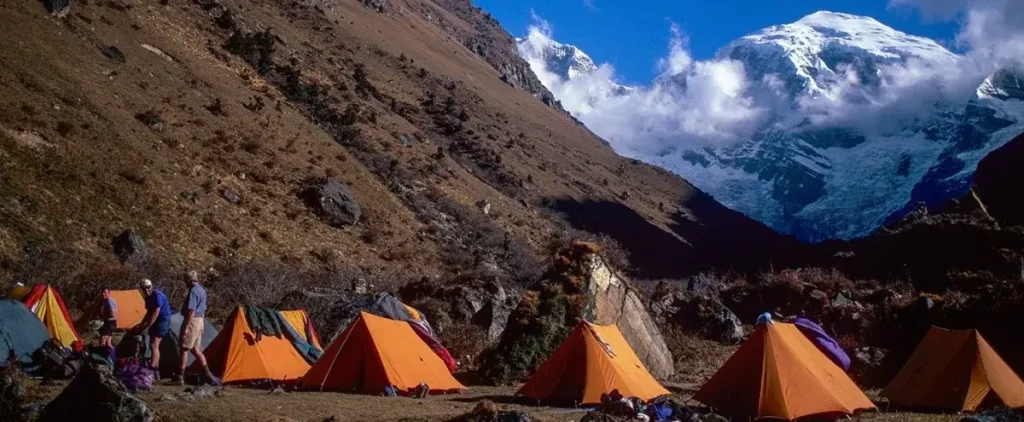
You climb steadily to Bonte La, at about 4,890 metres, the highest point of the trek, with wide views back to Jomolhari. The trail then drops steeply into the Soi Yaksa valley, where you camp beside a river among herders’ houses, at about 3,800 metres.
- Camp: Soi Yaksa, about 3,800 metres
- Walk: 6 to 7 hours
- Highest point: about 4,890 metres
Day 7
Trek day 5: to Thombu Shong
You climb out of the valley through rhododendron and juniper to Thombu Shong, a high pasture with a few herders’ huts at about 4,180 metres.
- Camp: Thombu Shong, about 4,180 metres
- Walk: 4 to 5 hours
- Distance: about 11 km
Day 8
Trek day 6: over Thombu La
You cross Thombu La, at about 4,380 metres, for a last view of the mountains, then descend more than 1,000 metres through forest to the road near Shana. The car takes you back to your hotel in Paro.
- Overnight: Paro
- Walk: 4 to 5 hours
- Distance: about 13 km
Day 9
A day in Thimphu
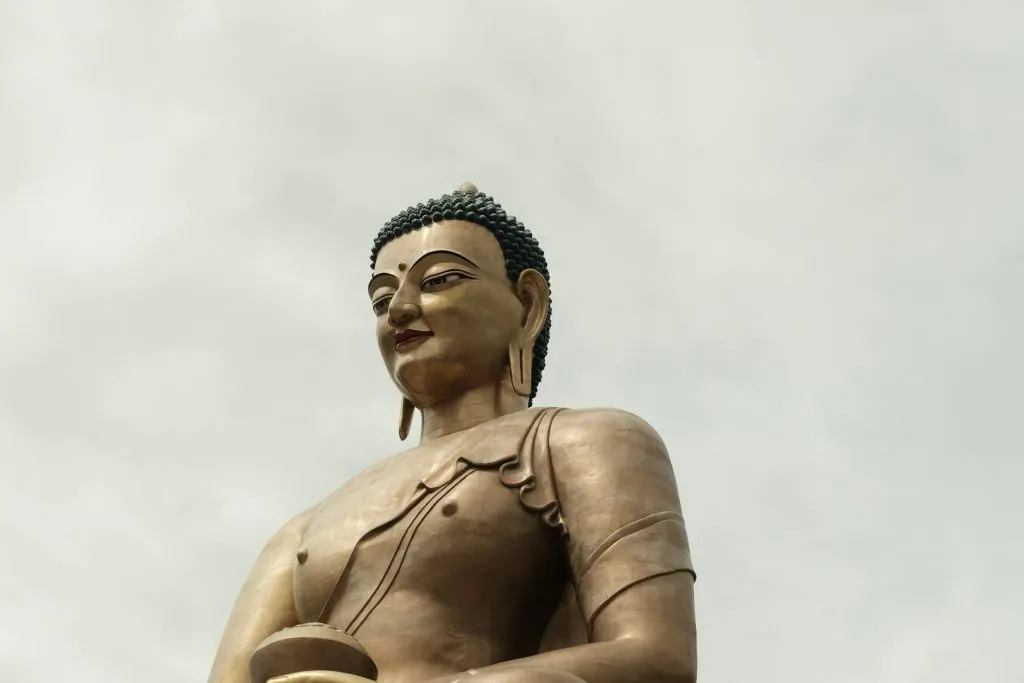
You drive to Thimphu for the Memorial Chorten, the Buddha Dordenma, the craft bazaar and Tashichho Dzong, then return to Paro. If you would rather rest, you can stay in Paro and book a hot stone bath.
- Overnight: Paro
- Drive: about 1.5 hours each way
- Optional: hot stone bath
Day 10
A spare day in Paro
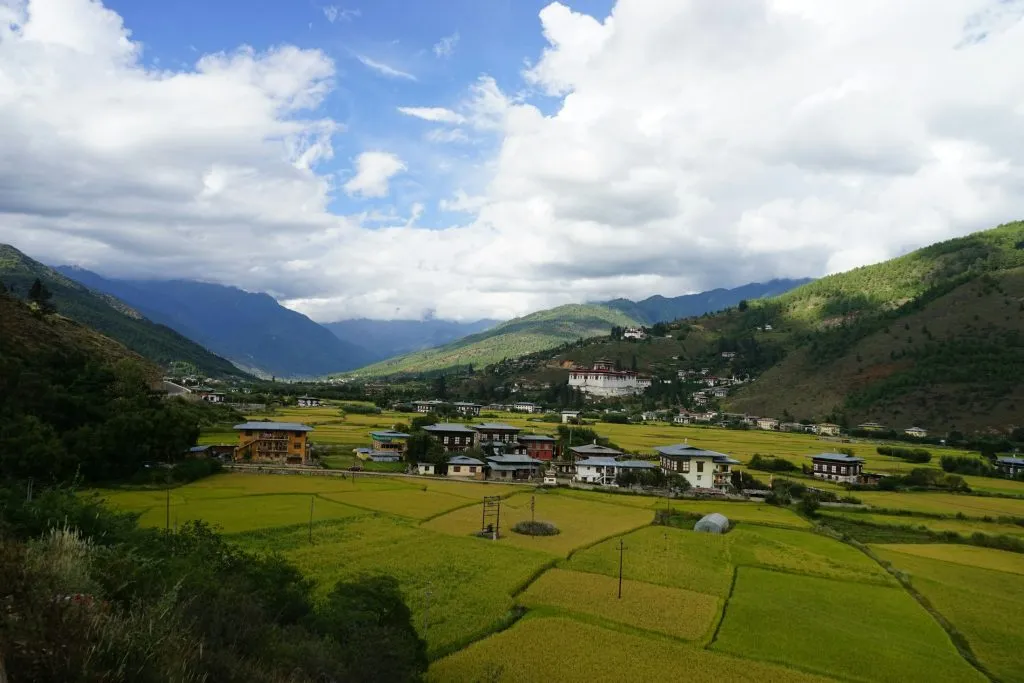
We keep this day free in case weather delays the trek. If it is not needed, you can visit Kyichu Lhakhang and Paro’s farm villages.
- Overnight: Paro
- Meals: breakfast, lunch and dinner
- Optional: Paro sightseeing
Day 11
Fly home
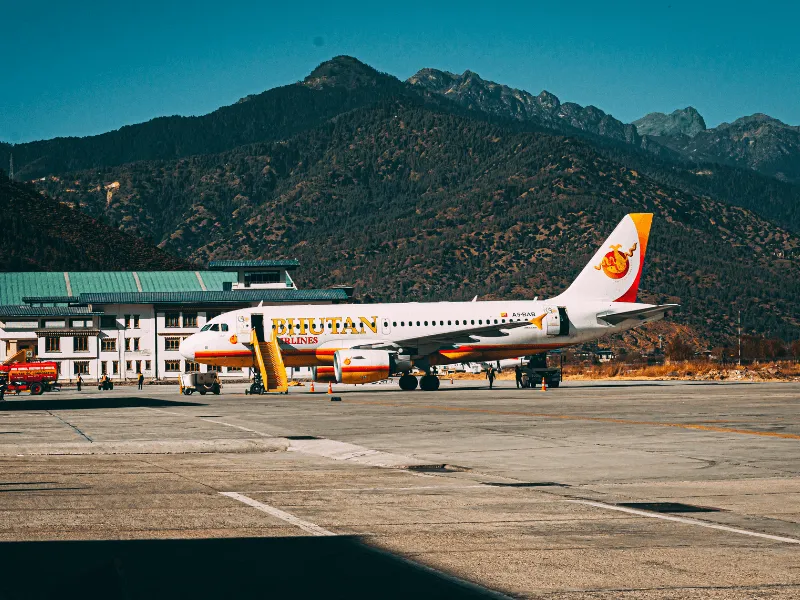
After breakfast your guide drives you to Paro airport for your flight home.
- Transfer: about 15 minutes
- Meals: breakfast
Where you stay
Where you stay
Hotels in Paro and tented camps on the trek.
| Nights | Place | Where you stay | Why we chose it |
|---|---|---|---|
| 1, 2, 8 and 9 | Paro | 3-star or 4-star hotel | Near the trailhead |
| 3 | Soi Thangthangkha | Tented camp | River meadow |
| 4 and 5 | Jangothang | Tented camp | Below Jomolhari |
| 6 | Soi Yaksa | Tented camp | Valley floor |
| 7 | Thombu Shong | Tented camp | High pasture |
We supply tents, mattresses, a dining tent and a toilet tent. Horses carry the loads.
What the price covers
Included and not included
Included
- Bhutan visa (USD 40) and the Sustainable Development Fee for every night
- Hotels as listed, 3-star as standard, with 4-star and luxury upgrades on request
- All meals in hotels and on the trek, cooked by our trek cook
- A licensed trekking guide, plus a cook and camp crew
- Pack animals for the luggage, tents, mattresses, dining and toilet tents
- Trekking and park permits
- Private car with driver for the road sections
Not included
- International flights into and out of Paro (we can book them for you)
- Travel insurance, which we strongly recommend
- Sleeping bag and personal trekking gear (we can rent a sleeping bag)
- Emergency evacuation costs, which your insurance should cover
- Tips for the trek crew, guide and driver
Price on request
Tell us your budget and we will send our best price
We don’t publish one fixed price, because hotels, season and group size change the total a lot. Tell us your dates, who is travelling and the budget you have in mind. We will reply within 24 hours with our best price for this Soi Yaksa trek.
How we price
What decides the cost of this trip
Government fees
The SDF is USD 100 per adult per night until 31 August 2027, plus a USD 40 visa. These are fixed by the Government of Bhutan and paid through us.
Hotels you choose
Group size and hotel style change the total most. Trek crew and permits are included.
Season and dates
Spring and autumn are peak season. Winter and summer dates are often easier to price well.
Group size
Guide and car costs are shared, so the price per person drops for two, three or four travellers.
We send a written, itemised quote before you pay anything. No booking fees.
Good to know
Planning your Soi Yaksa trek
How hard is it?
Soi Yaksa is a moderate to hard trek. The first two days are long, 17 to 19 km, and Bonte La, at about 4,890 metres, is higher than any pass on the Druk Path or Dagala treks. You spend four nights at or above 3,750 metres. You don’t need technical skills, but you should be fit and ideally have trekked at altitude before.
Soi Yaksa or the Jomolhari Trek?
Both reach Jangothang and the base of Jomolhari. The full Jomolhari Trek continues north and east over higher passes to Lingshi and on to Thimphu, taking several more days. Soi Yaksa loops back to Paro, so it is shorter and finishes where it started. If you have more time, compare it with our Jomolhari trek.
Best time to go
The best months are April to May and late September to October. Autumn gives the clearest views of Jomolhari. In spring the lower forest flowers with rhododendrons. Snow can close Bonte La from December to March, and the monsoon brings cloud and mud.
Permits, guides and the trek crew
All visitors to Bhutan travel with a licensed guide, and on a trek you also need a licensed trekking guide and the route and park permits, which we arrange. Your crew includes a cook, camp staff and horsemen with pack ponies or yaks, depending on the altitude. They set up the tents before you arrive, serve hot drinks in the morning and cook three meals a day. Trekking fees and permits are included in our price, along with the SDF for every night.
Food and water on trek
Our trek cook prepares fresh meals every day: porridge or eggs and toast for breakfast, a hot packed lunch, and soup, rice, curries, vegetables and often a dessert for dinner. We can cook vegetarian, gluten-free or other diets if you tell us in advance. Drinking water is boiled and filtered at camp. Bring a refillable bottle and a few snacks you like from home.
Fitness and safety on trek
You walk six to eight hours on most trek days, often above 4,000 metres. Regular hiking in the months before makes a real difference. Your guide carries a first aid kit and watches for altitude sickness; the only cure for serious symptoms is to go down, and we always plan an escape route. Tell us about any heart, lung or knee problems when you book, and make sure your insurance covers trekking at altitude and evacuation.
What to bring on trek
Broken-in waterproof boots, a down jacket, thermal layers, a waterproof shell, a warm hat and gloves, sunglasses, sunscreen, trekking poles and a four-season sleeping bag (we can rent one). Our crew carries tents, mattresses, the kitchen and all food. See our packing list for the basics.
Visa, SDF and guide rules
Every visitor except Indian nationals needs a visa, which costs USD 40 and is issued online before you fly. The Sustainable Development Fee is USD 100 per adult per night until 31 August 2027, with half rates for children aged 6 to 11. A Department of Tourism notice from April 2026 confirms that visitors travel with a licensed guide. We file the visa and pay the SDF for you. Read more in our Bhutan visa guide and SDF guide.
Flying into Paro
Only Drukair and Bhutan Airlines fly into Paro, mainly from Bangkok, Delhi, Kathmandu, Kolkata and Singapore. Pilots land by sight between the ridges, so morning flights are the most reliable. We suggest a night in your hub city on the way in. Our flights to Bhutan page lists every route.
Soi Yaksa trek: questions
It depends on your hotels, group size and dates. Tell us your budget and we will reply within 24 hours with our best price, including the SDF, visa, hotels, meals, guide and car.
Six trekking days, from Shana to Jangothang and back via Soi Yaksa.
Bonte La, at about 4,890 metres.
Yes, from Jangothang, where you spend two nights, if the weather is clear.
Yes. It is higher and longer, with bigger days.
April to May and late September to October.
Horses carry the tents, food and your bags.
Three to five months ahead.
Price on request
Ask for your best price
Tell us your dates, your trekking experience and your budget. We will reply within 24 hours with our best price for this Soi Yaksa trek.
- Share your budget, we shape the trip around it
- No booking fees, ever
- A reply within 24 hours
- Licensed Bhutanese tour operator
- +975 17533776
- +975 77495028
- info@deyabhutantours.com
- Thimphu, Bhutan
Let's plan your Bhutan journey
Tell us a little about your trip. Our team in Thimphu will reply with ideas, a day-by-day plan and a full price.
We’ll reply within 24 hours. No booking fees, and no obligation to book.