- Licensed Bhutanese tour operator
- Thimphu, Bhutan
Special interest tour · 7 days, 6 nights
7 Day Live Like a Bhutanese Tour: Farm Life, Home Cooking and Everyday Bhutan
Spend a week living the way Bhutanese families do: farmhouse nights in Paro and Punakha, cooking with the family, wearing the gho and kira, joining morning prayers and playing archery with the village.
- 7 days, 6 nights
- 4 nights with families
- Hands-on every day
4
Nights with farm families
3
Rooms at most per licensed homestay
2
Valleys: Paro and Punakha
Easy
Grade
Trip overview
A week inside daily life
Most visitors see Bhutan through the window of a car, between one dzong and the next. This trip does the opposite. You spend most of your nights in licensed farmhouses, eat what the family eats, and fill your days with the ordinary things that make up life in a Bhutanese village: milking the cow, picking vegetables, cooking on a clay stove, lighting butter lamps, and sitting around the fire with butter tea and stories.
On the first morning your hosts dress you in the national dress, the gho for men and the kira for women, which you can wear for temple visits all week. You learn to make momos and ema datshi, try archery and khuru with the village, and join the old people walking circuits at the Memorial Chorten in Thimphu. In Punakha you stay with a rice-growing family and help in the fields in season. You still see the Tiger’s Nest and Punakha Dzong, but they become part of the story rather than the whole of it.
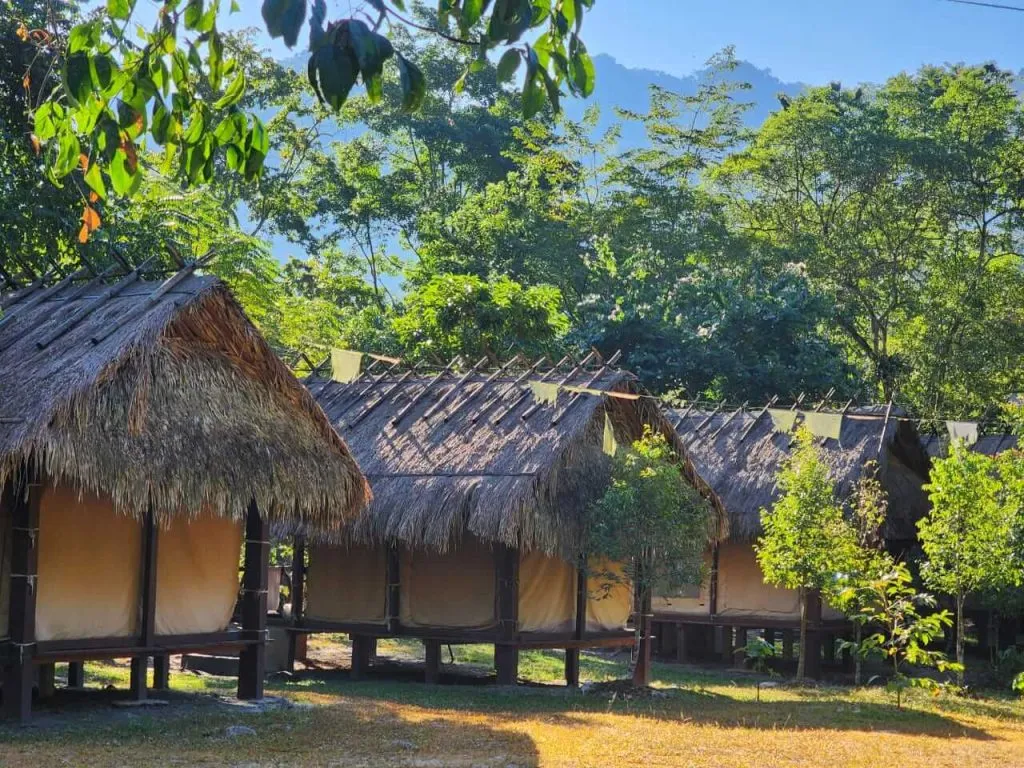
The farmhouses we use are licensed under the Department of Tourism’s homestay guidelines, which allow a family to let out no more than three rooms, so you are a guest in a real home, not a hotel. Rooms are simple and clean, with warm quilts and a shared or attached bathroom. Your guide stays nearby and translates when you need it.
- Four nights in licensed farmhouses in Paro and Punakha
- Cooking, farm work, archery and national dress
- Tiger's Nest, Punakha Dzong and Thimphu too
Highlights
What you will do
Farmhouse life
Four nights with Bhutanese families.
Home cooking
Momos, ema datshi and red rice on a clay stove.
National dress
Wear the gho or kira, tied by your hosts.
Village games
Archery and khuru with the neighbours.
Morning prayers
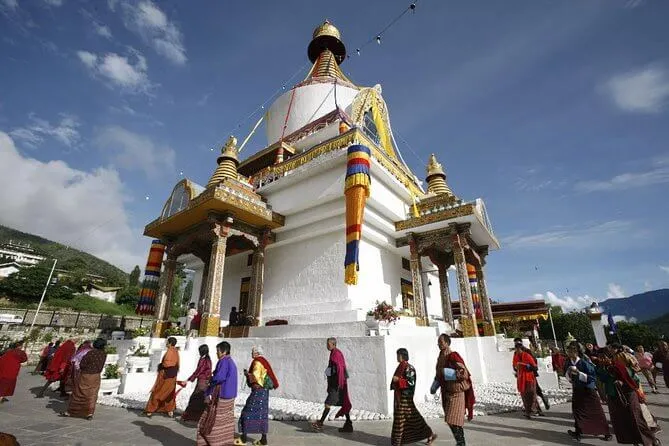
Circling the Memorial Chorten with Thimphu's elders.
Tiger's Nest
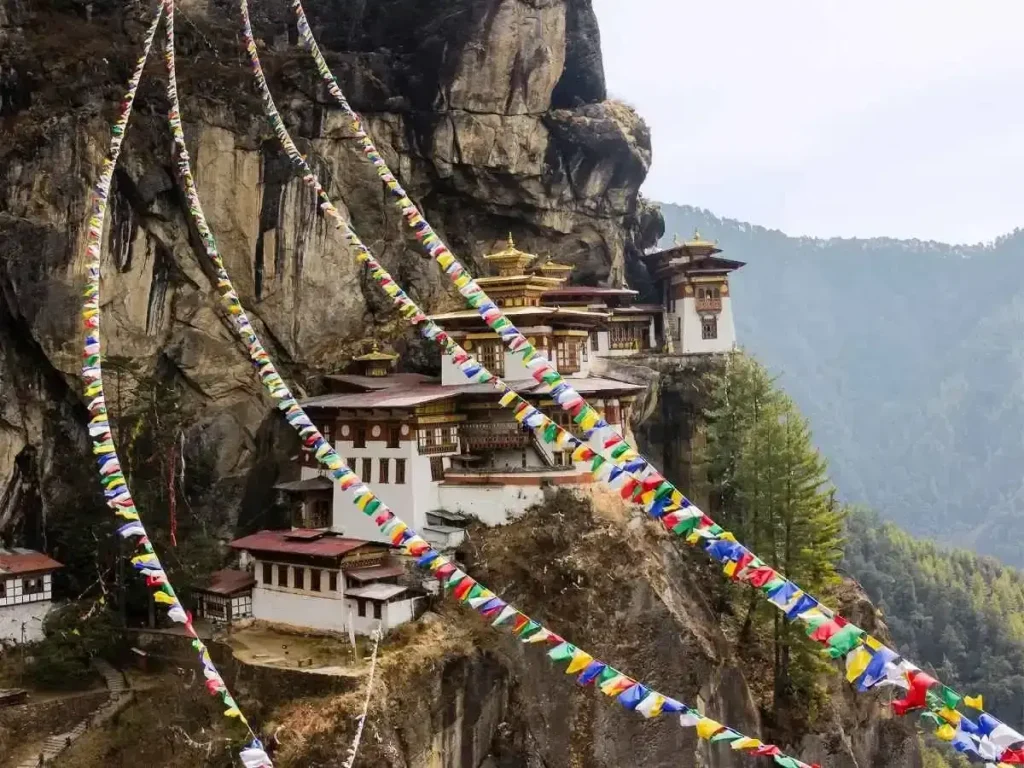
The cliff monastery above Paro.
Itinerary at a glance
Seven days at a glance
Farm activities change with the season.
Day 1: Arrive in Paro
Land in Paro, move into a farmhouse.
Day 2: A day on the farm
National dress, farm work, archery.
Day 3: Tiger's Nest
Hike to Paro Taktsang.
Day 4: Thimphu like a local
Morning at the Memorial Chorten, market, cooking class.
Day 5: To a Punakha farmhouse
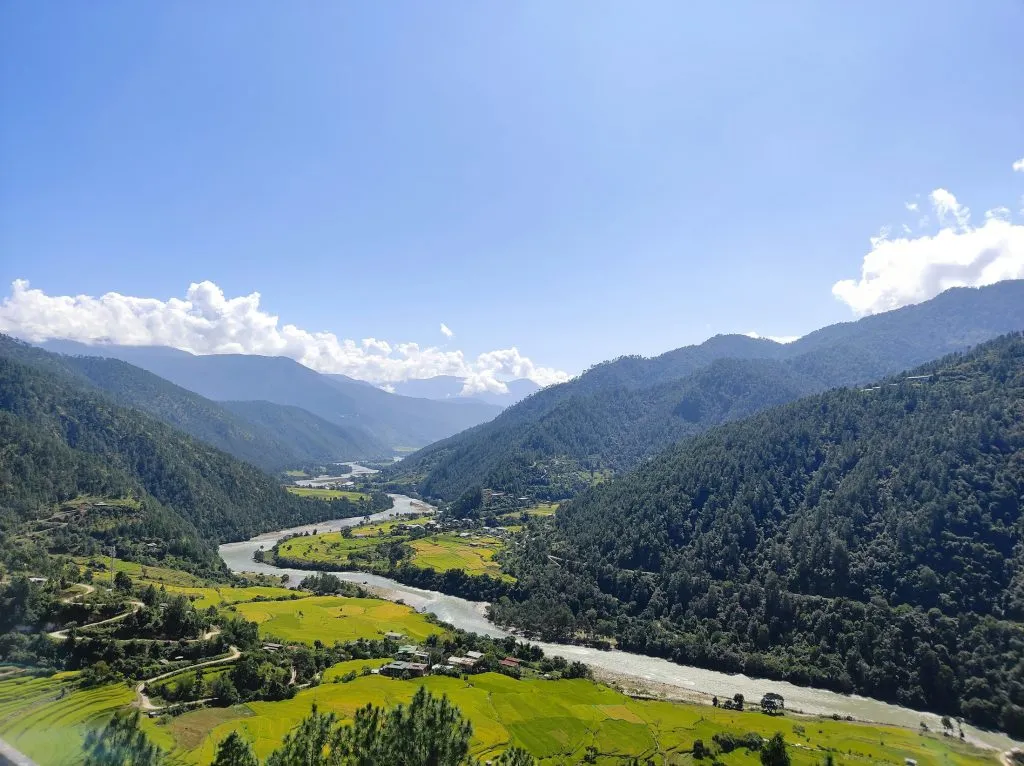
Over Dochula to a rice farm in Punakha.
Day 6: Punakha village day
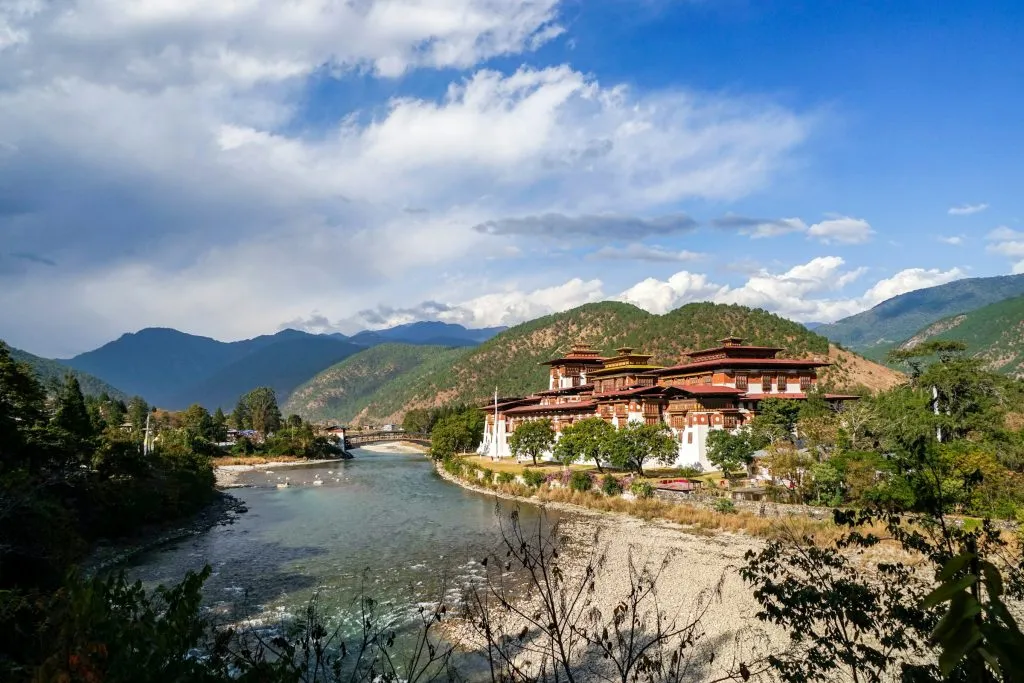
Chimi Lhakhang, Punakha Dzong, back to Paro.
Day 7: Depart
Transfer to Paro airport.
Day 1
Welcome to the farmhouse
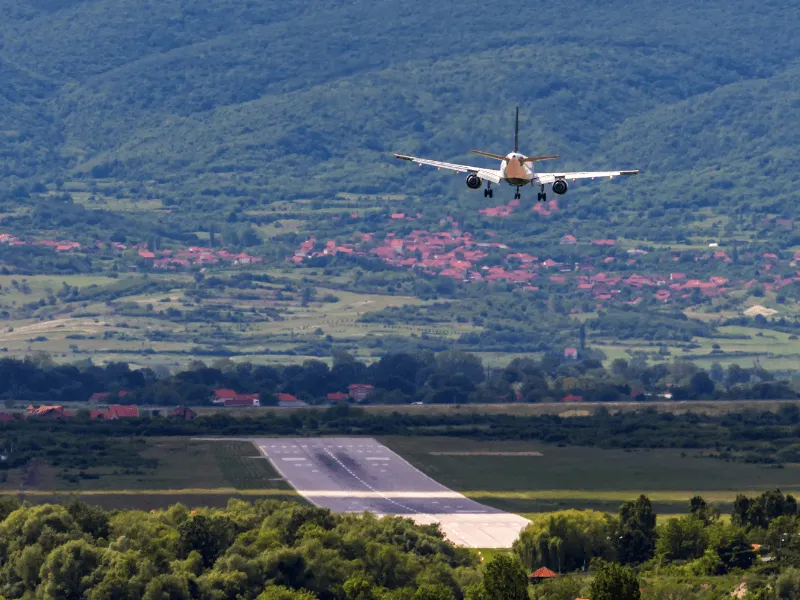
Your guide meets you at Paro airport and drives you to a farmhouse in the Paro valley. The family welcomes you with suja, butter tea, and zaw, roasted rice. They show you the house: the altar room on the top floor, the kitchen, the store rooms and the farm. In the evening you help prepare dinner and eat together on cushions on the floor.
- Overnight: Paro farmhouse
- Drive: about 20 minutes
- Meals: lunch and home-cooked dinner
Day 2
Living the farm day
The day starts early with the family lighting butter lamps and offering water at the altar. After breakfast your hosts help you put on a gho or kira. Then you join the work of the day, which might be milking, weeding, harvesting chillies or drying them on the roof. In the afternoon the neighbours gather for archery or khuru, and in the evening you can soak in a hot stone bath.
- Overnight: Paro farmhouse
- Activities: farm work and village games
- Optional: hot stone bath
Day 3
Hike to the Tiger's Nest
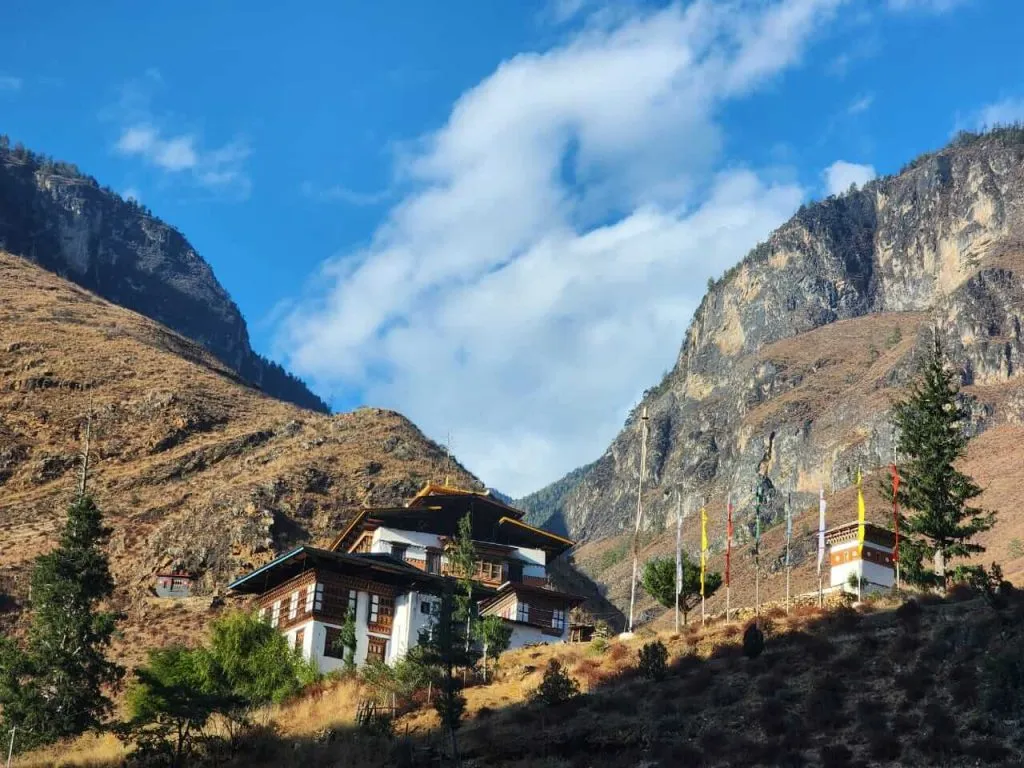
The hike to Paro Taktsang, the Tiger’s Nest, takes five to six hours return. The path climbs through blue pine forest to a cafeteria with a clear view of the monastery, then on to the cliff itself at about 3,120 metres, where Guru Rinpoche is said to have meditated in the 8th century. You wear your gho or kira for the visit, as Bhutanese pilgrims do, and light a butter lamp inside. In the evening you move to a Paro hotel for a night.
- Overnight: Paro
- Hike: 5 to 6 hours return
- Altitude: about 3,120 metres
Day 4
Everyday Thimphu
You drive to Thimphu early and join the older people who walk circuits of the Memorial Chorten every morning, spinning the prayer wheels. Then you walk through the Centenary Farmers’ Market, where families from across the country sell vegetables, cheese, dried fish and chillies, and buy ingredients for a cooking class with a Thimphu family. In the afternoon you visit the National Institute for Zorig Chusum and Tashichho Dzong.
- Overnight: Thimphu
- Drive: about 1.5 hours
- Activity: cooking class with a family
Day 5
Life on a rice farm
You cross Dochula and come down into the Punakha valley, where you stay with a rice-growing family. Depending on the season, you help plant rice seedlings in the flooded fields in June, cut and thresh the harvest in October, or prepare the fields in spring. In the evening the family may make ara, the local spirit, or ezay, a fiery chilli relish.
- Overnight: Punakha farmhouse
- Drive: about 3 hours
- Meals: breakfast, lunch and home-cooked dinner
Day 6
Temples, fields and the road home
You walk with your host to Chimi Lhakhang through the rice fields, then visit Punakha Dzong, built in 1637 where two rivers meet. After lunch you say goodbye to the family and drive back over Dochula to Paro for your last night.
- Overnight: Paro
- Drive: about 4.5 hours
- Walk: about 1 hour
Day 7
Fly home
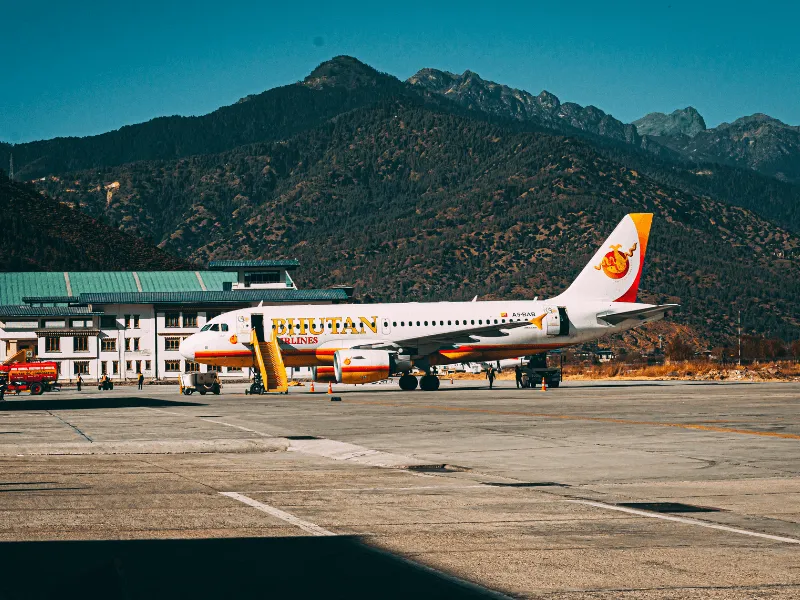
After breakfast your guide drives you to Paro airport for your flight home.
- Transfer: about 15 minutes
- Meals: breakfast
Where you stay
Where you stay
Four nights in licensed farmhouses and two in hotels.
| Nights | Place | Where you stay | Why we chose it |
|---|---|---|---|
| 1 and 2 | Paro | Licensed farmhouse | With a farming family |
| 3 and 6 | Paro | 3-star or 4-star hotel | A rest from farm life |
| 4 | Thimphu | 3-star or 4-star hotel | Central |
| 5 | Punakha | Licensed farmhouse | With a rice-growing family |
Farmhouses are simple but clean. We can swap a farmhouse night for a hotel if you need to.
What the price covers
Included and not included
Included
- Bhutan visa (USD 40) and the Sustainable Development Fee for every night
- Hotels as listed, 3-star as standard, with 4-star and luxury upgrades on request
- All meals: breakfast, lunch and dinner
- A licensed English-speaking guide for the whole trip
- Private car or SUV with a Bhutanese driver, and all transfers
- Entry fees to dzongs, temples and museums
- Bottled water in the car
- Gho or kira to wear during the trip
- Cooking class with a Thimphu family
- Hot stone bath at the Paro farmhouse
Not included
- International flights into and out of Paro (we can book them for you)
- Travel insurance, which we strongly recommend
- Drinks, laundry and other personal costs
- Tips for your guide and driver
- Anything not listed under included
Price on request
Tell us your budget and we will send our best price
We don’t publish one fixed price, because hotels, season and group size change the total a lot. Tell us your dates, who is travelling and the budget you have in mind. We will reply within 24 hours with our best price for this Live Like a Bhutanese tour.
How we price
What decides the cost of this trip
Government fees
The SDF is USD 100 per adult per night until 31 August 2027, plus a USD 40 visa. These are fixed by the Government of Bhutan and paid through us.
Hotels you choose
Group size and hotel style change the total most. Farmhouse nights cost less than hotels.
Season and dates
Spring and autumn are peak season. Winter and summer dates are often easier to price well.
Group size
Guide and car costs are shared, so the price per person drops for two, three or four travellers.
We send a written, itemised quote before you pay anything. No booking fees.
Good to know
Planning your week of Bhutanese life
What farm work involves
Nobody expects you to work like a farmer. You join in for an hour or two at a time, at whatever pace suits you, and the family decides what is useful and safe. In spring you might plant potatoes or prepare rice nurseries, in summer weed and plant rice, in autumn harvest rice and chillies, and in winter dry and store food. Wear clothes you do not mind getting dirty.
Wearing the gho and kira
The gho, worn by men, is a knee-length robe tied with a belt called a kera. The kira, worn by women, is an ankle-length wrap with a short jacket called a tego. Bhutanese wear them to work, school and every official place, and it is common for visitors to wear them to temples and festivals. Your hosts will help you put them on, which takes practice. You can buy your own in Thimphu.
Being a good guest
Take off your shoes before entering the house, accept tea with both hands, and try a little of everything you are offered, saying a polite ‘meshu meshu’ if you do not want more. Ask before photographing family members or the altar room. A small gift from home, such as a book of photos of your country, is welcome. Your guide will help with language and customs.
About Bhutanese farmhouse stays
Farmhouse stays in Bhutan are licensed. Under the Department of Tourism’s homestay guidelines, a family may let out no more than three rooms, and the house must meet basic standards for cleanliness, bedding and toilets. Rooms are simple: wooden floors, warm quilts, a shared or attached bathroom and often a bukhari stove. You eat with the family, usually sitting on cushions on the floor, and the food is what they grow. Our farmhouse homestay tour has more on what to expect.
What Bhutanese people eat
Rice is at the centre of every meal, often the red rice of Paro and Punakha. Around it come dishes of vegetables, cheese and chilli: ema datshi, chillies in cheese, is the national dish, and kewa datshi (potatoes) and shamu datshi (mushrooms) are milder. In the highlands people eat buckwheat noodles and pancakes, and in the east, maize. Suja, salty butter tea, is served everywhere. If you do not eat much chilli, tell your guide on day one and the cooks will adjust. Our Bhutan food guide lists the dishes to try.
The hot stone bath
A menchu, or hot stone bath, is a wooden tub of river water heated with stones that have been roasted in a fire, often with artemisia leaves added. Bhutan’s Department of Tourism lists it among the country’s traditional wellness experiences, and Bhutanese people use it to ease sore joints and tired muscles. Many farmhouses in Paro and Punakha offer one in the evening. Tell your guide if you have heart problems or high blood pressure before you book.
Visa, SDF and guide rules
Every visitor except Indian nationals needs a visa, which costs USD 40 and is issued online before you fly. The Sustainable Development Fee is USD 100 per adult per night until 31 August 2027, with half rates for children aged 6 to 11. A Department of Tourism notice from April 2026 confirms that visitors travel with a licensed guide. We file the visa and pay the SDF for you. Read more in our Bhutan visa guide and SDF guide.
Flying into Paro
Only Drukair and Bhutan Airlines fly into Paro, mainly from Bangkok, Delhi, Kathmandu, Kolkata and Singapore. Pilots land by sight between the ridges, so morning flights are the most reliable. We suggest a night in your hub city on the way in. Our flights to Bhutan page lists every route.
Live Like a Bhutanese: questions
It depends on your hotels, group size and dates. Tell us your budget and we will reply within 24 hours with our best price, including the SDF, visa, hotels, meals, guide and car.
They are simple and clean, with warm bedding and a shared or attached bathroom.
Some do, especially younger family members. Your guide translates when needed.
Only as much as you like. It is part of the experience, not a requirement.
Yes. We provide one for the week, and your hosts help you put it on.
It can be. Ask your hosts to cook with less chilli; they are used to it.
Yes. We can add Phobjikha, Haa or Bumthang with more farmhouse nights.
Two to four months ahead.
Price on request
Ask for your best price
Tell us when you would like to travel and your budget. We will reply within 24 hours with our best price for this Live Like a Bhutanese tour.
- Share your budget, we shape the trip around it
- No booking fees, ever
- A reply within 24 hours
- Licensed Bhutanese tour operator
- +975 17533776
- +975 77495028
- info@deyabhutantours.com
- Thimphu, Bhutan
Let's plan your Bhutan journey
Tell us a little about your trip. Our team in Thimphu will reply with ideas, a day-by-day plan and a full price.
We’ll reply within 24 hours. No booking fees, and no obligation to book.