- Licensed Bhutanese tour operator
- Thimphu, Bhutan
Wellness retreat · 8 days, 7 nights
8 Day Bhutan Meditation and Wellness Retreat: Monasteries, Hot Stone Baths and Mindful Hikes
A week to slow down: guided meditation with teachers in Thimphu, Punakha and Gangtey, a Sowa Rigpa consultation, sunrise yoga, forest walks, hot stone baths and a mindful hike to the Tiger’s Nest.
- 8 days, 7 nights
- Daily meditation and yoga
- Beginners welcome
5
Wellness experiences promoted by Bhutan’s Department of Tourism
Daily
Guided meditation
2
Hot stone baths
Private
Guide, car and teacher
Trip overview
Why Bhutan for a retreat
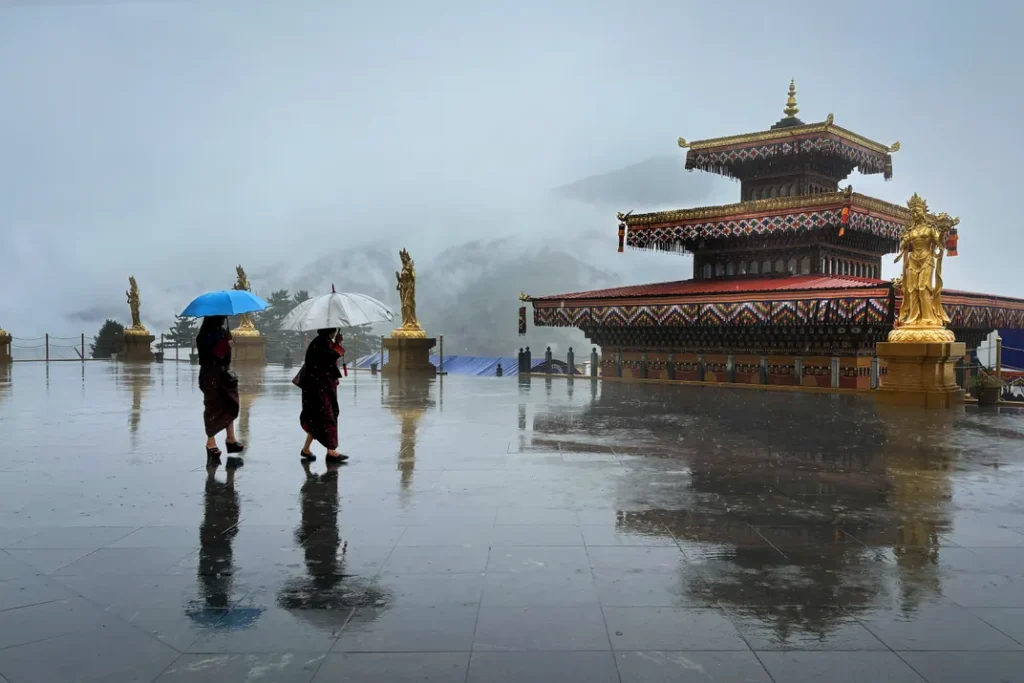
Bhutan measures its progress by Gross National Happiness, and that idea shows in daily life. Monasteries are working places of practice, not museums. Prayer wheels turn in every village. Most of the country is forest, the air is clean, and visitor numbers are kept low. It is a natural place to sit still for a while.
Bhutan’s Department of Tourism promotes five wellness experiences: sunrise yoga, meditation at monasteries, the traditional hot stone bath, high-altitude walking and Sowa Rigpa, the traditional medicine taught at the National Institute of Traditional Medicine in Thimphu. This retreat brings them all together in one gentle week.
Each day has a morning meditation or yoga session, a visit to a sacred place, time in nature, and free time to rest or write. Meditation is guided by a teacher, often a former monk or a lay practitioner who speaks English, and is suitable for complete beginners. You don’t need to be Buddhist; the practices focus on breath, attention and kindness.
- Daily guided meditation and gentle yoga
- Sowa Rigpa consultation in Thimphu
- Hot stone baths, forest walks and quiet lodges
Highlights
The wellness week
Meditation
Guided sessions with a teacher in Thimphu, Punakha and Gangtey.
Sunrise yoga
Gentle yoga on a ridge or in a garden at dawn.
Sowa Rigpa
A consultation at the National Institute of Traditional Medicine.
Hot stone bath
The traditional menchu, twice in the week.
Forest walks
Silent walks in the Phobjikha valley.
Mindful hike
A slow, mindful walk to the Tiger's Nest.
Itinerary at a glance
Eight days, one practice a day
The pace is slow, with free time every afternoon.
Day 1: Arrive, to Thimphu
Land in Paro, drive to Thimphu, welcome session.
Day 2: Thimphu
Morning meditation, Sowa Rigpa consultation, Changangkha Lhakhang.
Day 3: Thimphu valley
Hike to Cheri or Tango monastery, meditation with your teacher.
Day 4: To Punakha
Sunrise at Dochula, yoga, Punakha Dzong, meditation.
Day 5: To Phobjikha
Drive to the Phobjikha valley, Gangtey Goenpa, silent walk.
Day 6: Phobjikha to Paro
Morning meditation, drive to Paro, hot stone bath.
Day 7: Tiger's Nest
Mindful hike to Paro Taktsang, Kyichu Lhakhang, closing session.
Day 8: Depart
Transfer to Paro airport.
Day 1
Arrive and settle
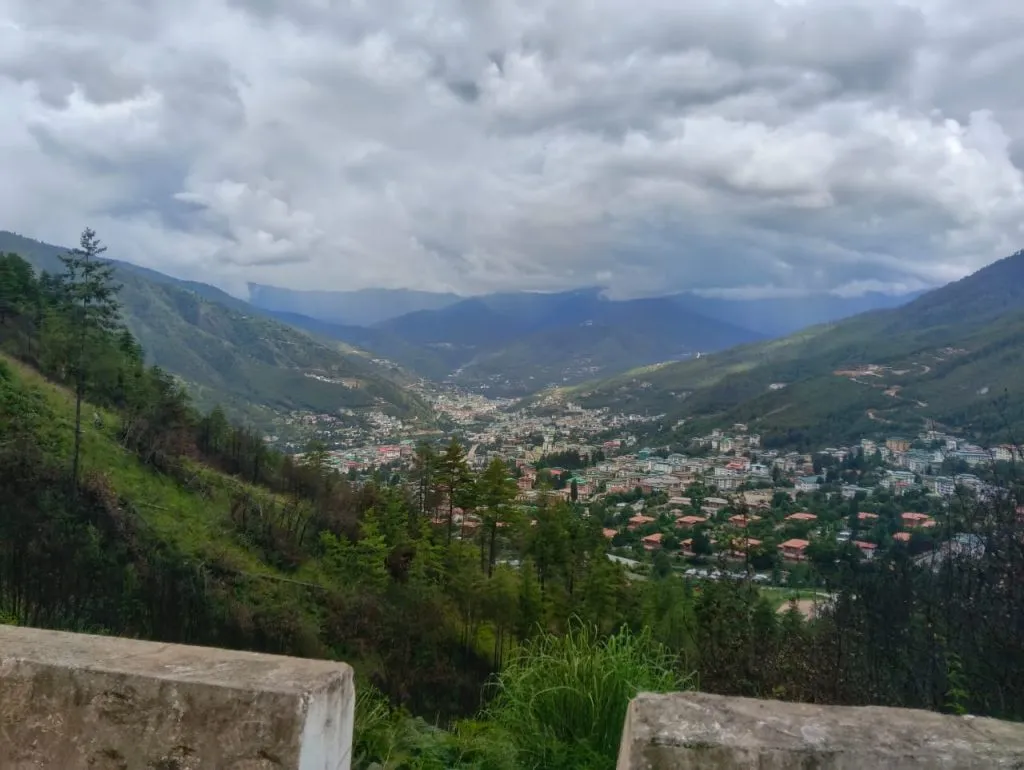
Your guide meets you at Paro airport and drives you to Thimphu. After a rest, your meditation teacher joins you for a short welcome session: an introduction to breathing practice and what the week will hold.
- Overnight: Thimphu
- Session: welcome meditation, about 45 minutes
- Meals: lunch and dinner
Day 2
Traditional medicine and temple practice
The day starts with a morning meditation. Then you visit the National Institute of Traditional Medicine, where Sowa Rigpa practitioners use pulse reading and herbal medicine based on the balance of the body’s three humours. A consultation can be arranged. In the afternoon you visit Changangkha Lhakhang, where parents bring newborns for blessings, and the Memorial Chorten, where you can join locals walking around it.
- Overnight: Thimphu
- Session: morning meditation
- Note: the institute is closed on weekends and holidays
Day 3
A monastery above the valley
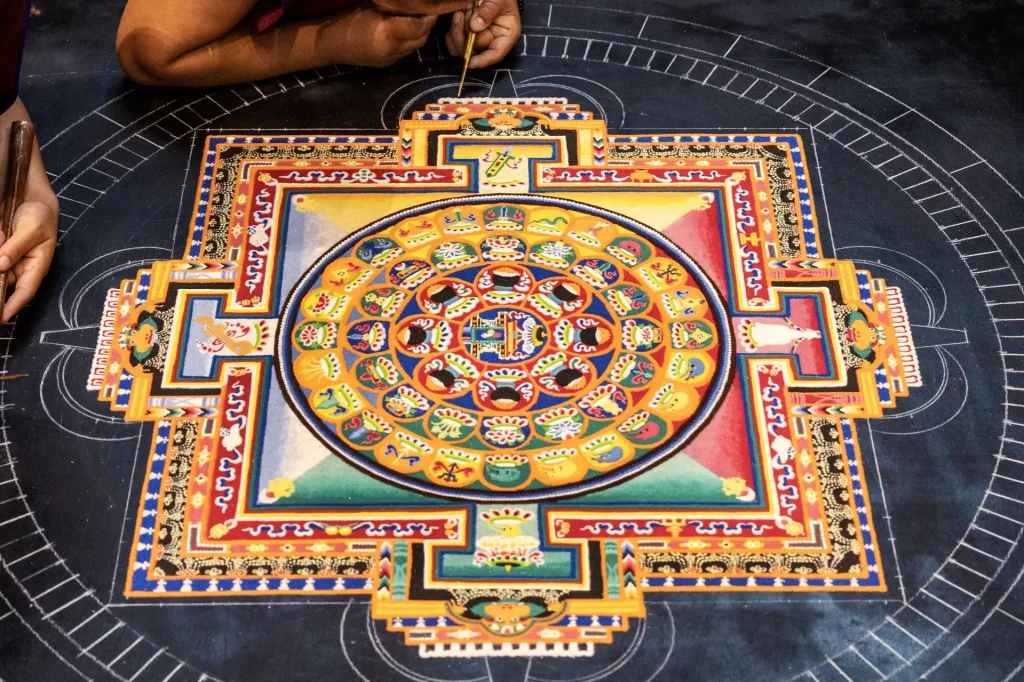
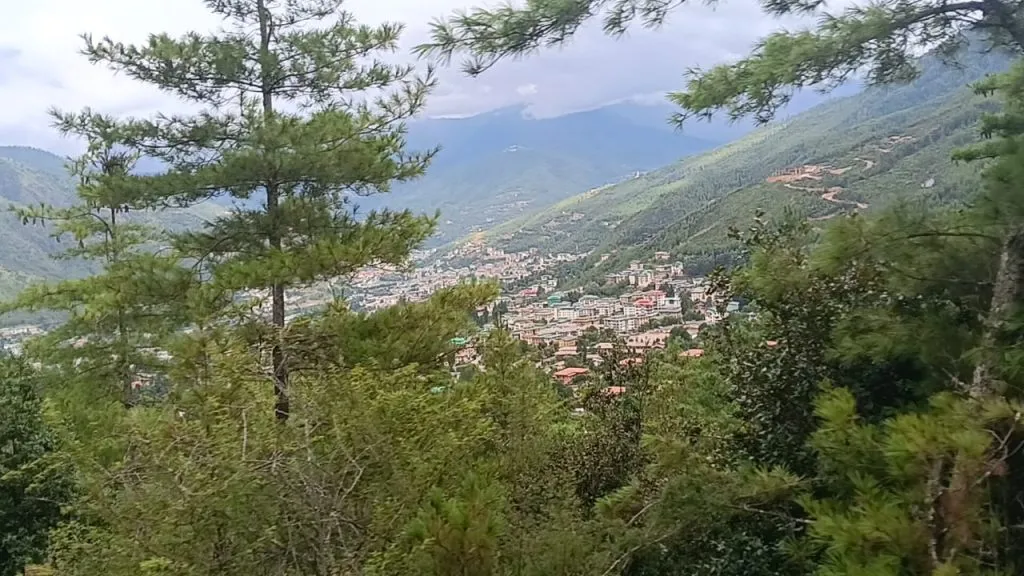
You drive to the north end of the Thimphu valley and hike up to Cheri or Tango monastery, about an hour through forest. Cheri was founded in 1620 by the Zhabdrung, and both are active monasteries where monks study and retreat. After the visit, your teacher leads a meditation session in a quiet spot nearby.
- Overnight: Thimphu
- Hike: 2 to 3 hours return
- Session: meditation in nature
Day 4
Dawn on Dochula, then Punakha
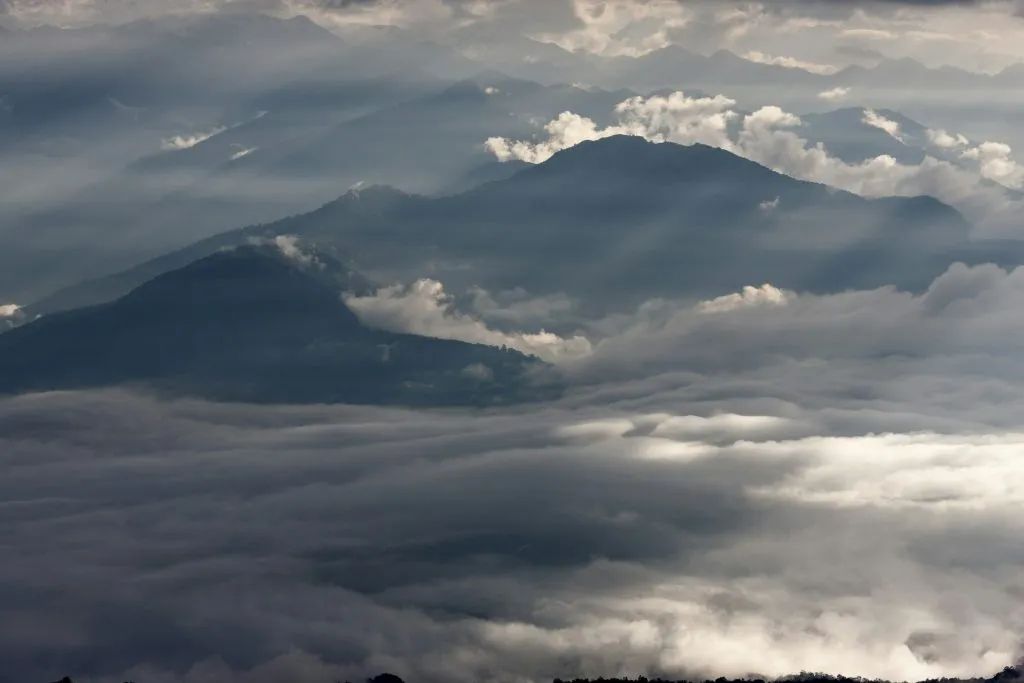
An early start brings you to Dochula for sunrise, often above a sea of cloud, with gentle yoga among the 108 chortens. Then you drive down to the warm Punakha valley. In the afternoon you visit Punakha Dzong, which Bhutan’s Department of Tourism names as a place for guided meditation, and sit in its courtyard as the light fades.
- Overnight: Punakha
- Session: sunrise yoga, evening meditation
- Drive: about 3 hours
Day 5
Into the quiet of Phobjikha
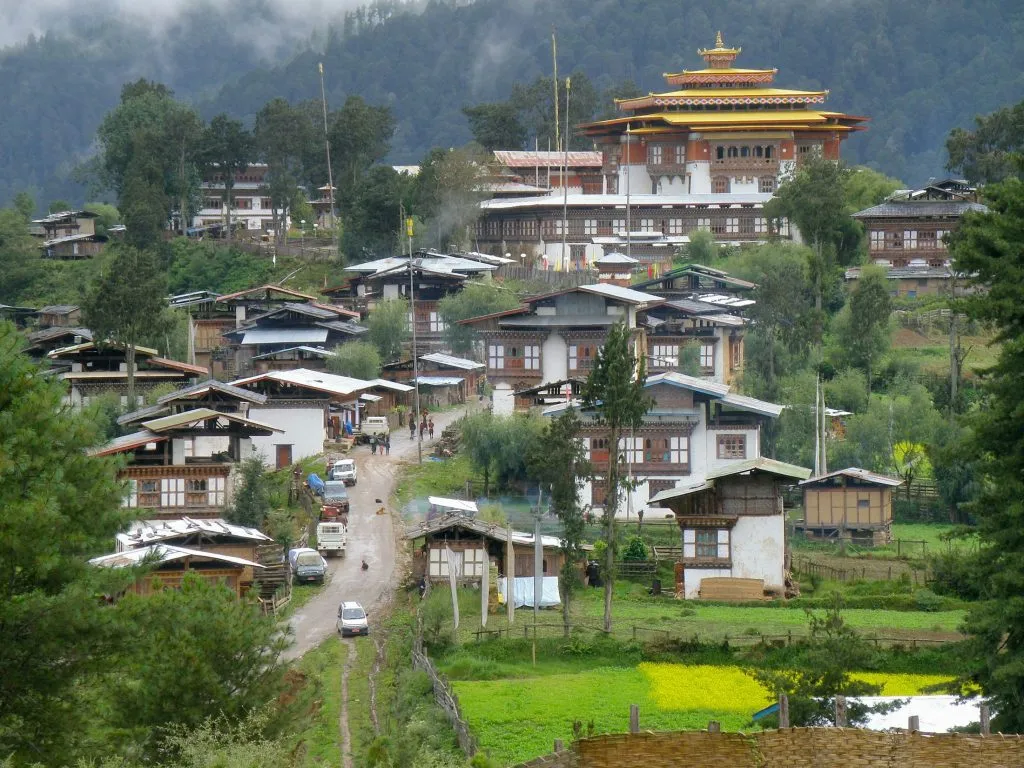
You drive up to the Phobjikha valley, a wide glacial valley at about 3,000 metres and one of the most peaceful places in Bhutan. In the afternoon you visit Gangtey Goenpa, another site named for meditation, and then walk the Gangtey nature trail in silence, through pine forest and across the valley floor.
- Overnight: Phobjikha
- Drive: about 3 hours
- Walking: about 1.5 hours, easy
Day 6
West to Paro
After a morning meditation in the valley, you drive west to Paro, about six hours with stops. In the evening a farmhouse prepares a hot stone bath for you: river water heated with fire-roasted stones and herbs, the best cure for a long drive.
- Overnight: Paro
- Drive: about 6 hours
- Evening: hot stone bath
Day 7
A mindful walk to the Tiger's Nest
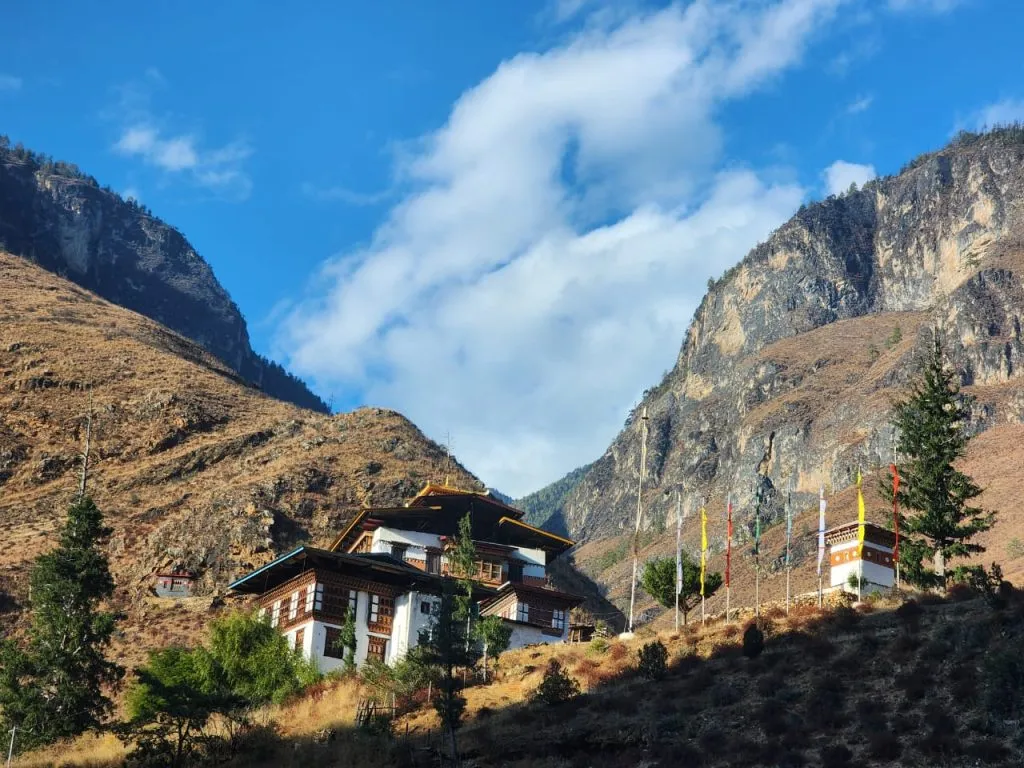
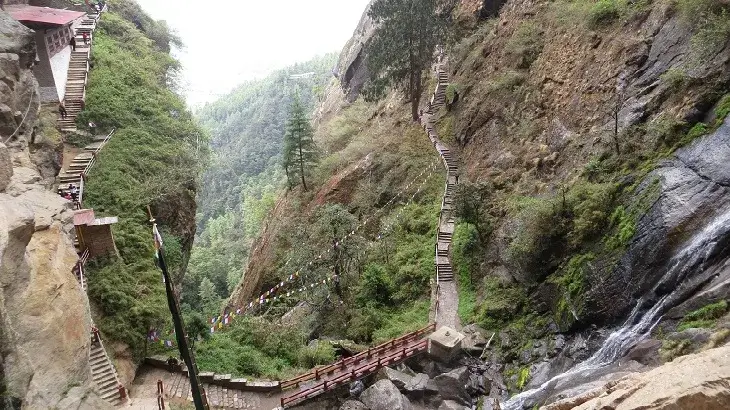
Today’s hike to the Tiger’s Nest is done slowly and mindfully, with pauses to breathe and listen. The monastery is built around a cave where Guru Rinpoche is said to have meditated, and it is still a place of retreat. On the way back you visit Kyichu Lhakhang, then share a closing session with your teacher and a second hot stone bath.
- Overnight: Paro
- Hike: 5 to 6 hours return
- Session: closing meditation
Day 8
Fly home
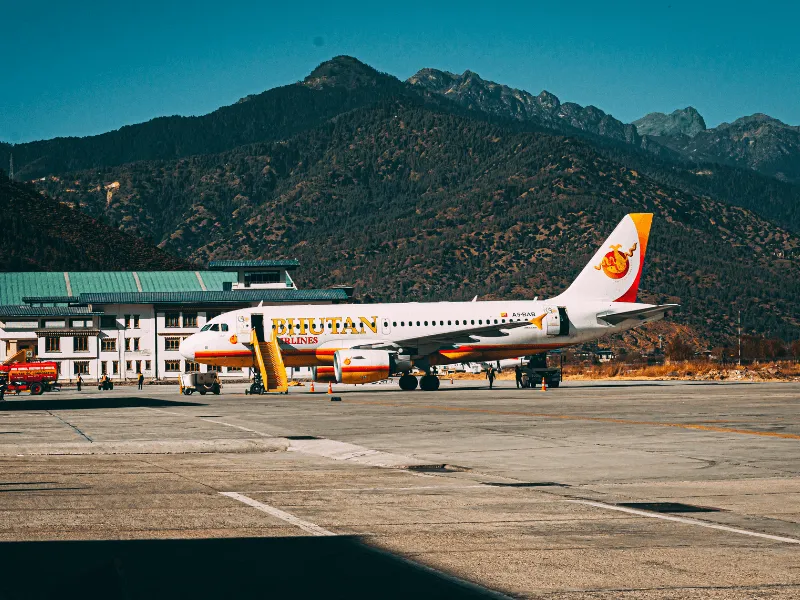
After a last quiet breakfast your guide drives you to Paro airport.
- Transfer: about 15 minutes
- Meals: breakfast
Where you stay
Where you stay
Quiet hotels and lodges with gardens and views.
| Nights | Place | Where you stay | Why we chose it |
|---|---|---|---|
| 1 to 3 | Thimphu | 4-star hotel | Quiet location |
| 4 | Punakha | 4-star lodge | Valley views |
| 5 | Phobjikha | Lodge | In the valley |
| 6 and 7 | Paro | 4-star hotel | Near the Tiger's Nest trailhead |
Wellness resorts such as COMO Uma, Six Senses and Amankora, with spas and yoga studios, are available on request.
What the price covers
Included and not included
Included
- Bhutan visa (USD 40) and the Sustainable Development Fee for every night
- Hotels as listed, 3-star as standard, with 4-star and luxury upgrades on request
- All meals: breakfast, lunch and dinner
- A licensed English-speaking guide for the whole trip
- A meditation teacher for daily sessions
- Two hot stone baths
- Sowa Rigpa consultation fee
- Private car or SUV with a Bhutanese driver, and all transfers
- Entry fees to dzongs, temples and museums
- Bottled water in the car
Not included
- International flights into and out of Paro (we can book them for you)
- Travel insurance, which we strongly recommend
- Drinks, laundry and other personal costs
- Tips for your guide and driver
- Anything not listed under included
- Spa treatments and herbal medicines
Price on request
Tell us your budget and we will send our best price
We don’t publish one fixed price, because hotels, season and group size change the total a lot. Tell us your dates, who is travelling and the budget you have in mind. We will reply within 24 hours with our best price for this wellness retreat.
How we price
What decides the cost of this trip
Government fees
The SDF is USD 100 per adult per night until 31 August 2027, plus a USD 40 visa. These are fixed by the Government of Bhutan and paid through us.
Hotels you choose
Choosing a wellness resort with its own spa changes the total most. We can quote both options.
Season and dates
Spring and autumn are peak season. Winter and summer dates are often easier to price well.
Group size
Guide and car costs are shared, so the price per person drops for two, three or four travellers.
We send a written, itemised quote before you pay anything. No booking fees.
Good to know
Planning your wellness retreat
Who this retreat is for
Anyone who wants to rest and reset. Complete beginners are welcome; the meditation focuses on breath and attention, not on religious belief. Experienced meditators can ask for longer sessions or time alone in a monastery setting. The hikes are gentle, apart from the Tiger’s Nest, which can be shortened.
What is Sowa Rigpa?
Sowa Rigpa is the traditional medicine of Bhutan and Tibet. Practitioners read the pulse, look at the tongue and ask about diet and sleep, then suggest herbal medicines and changes in habits based on the balance of three humours: wind, bile and phlegm. It is taught and practised at the National Institute of Traditional Medicine in Thimphu, alongside modern medicine in Bhutan’s health system.
The hot stone bath
A menchu, or hot stone bath, is a wooden tub of river water heated with stones that have been roasted in a fire, often with artemisia leaves added. Bhutan’s Department of Tourism lists it among the country’s traditional wellness experiences, and Bhutanese people use it to ease sore joints and tired muscles. Many farmhouses in Paro and Punakha offer one in the evening. Tell your guide if you have heart problems or high blood pressure before you book.
Etiquette at monasteries
Monasteries are places of practice. Dress modestly, remove hats and shoes where asked, keep your voice low and walk clockwise. Photography is not allowed inside shrine rooms. You can offer a small donation or butter lamp; your guide will show you how.
Best season for a retreat
Spring, from March to May, and autumn, from September to November, are the most comfortable. Winter is cold but very quiet and clear. The monsoon, June to August, brings rain most afternoons, but the green valleys and empty temples suit a retreat well.
Altitude
Paro sits at about 2,200 metres and Thimphu at about 2,300. Most people feel fine after a slow first day. Drink plenty of water, go easy on alcohol at first, and tell your guide about headaches or poor sleep. The Tiger’s Nest, at about 3,120 metres, comes later in the trip for this reason.
Visa, SDF and guide rules
Every visitor except Indian nationals needs a visa, which costs USD 40 and is issued online before you fly. The Sustainable Development Fee is USD 100 per adult per night until 31 August 2027, with half rates for children aged 6 to 11. A Department of Tourism notice from April 2026 confirms that visitors travel with a licensed guide. We file the visa and pay the SDF for you. Read more in our Bhutan visa guide and SDF guide.
Flying into Paro
Only Drukair and Bhutan Airlines fly into Paro, mainly from Bangkok, Delhi, Kathmandu, Kolkata and Singapore. Pilots land by sight between the ridges, so morning flights are the most reliable. We suggest a night in your hub city on the way in. Our flights to Bhutan page lists every route.
Bhutan meditation retreat: questions
It depends on your hotels, group size and dates. Tell us your budget and we will reply within 24 hours with our best price, including the SDF, visa, hotels, meals, guide and car.
No. The practices are open to everyone and focus on breath and attention.
Yes. Your teacher starts with the basics and adjusts to you.
Overnight stays inside monasteries are rare. We arrange sessions at monasteries and quiet lodges nearby.
An English-speaking teacher, often a former monk or lay practitioner.
Yes. COMO Uma, Six Senses and Amankora have spas and yoga studios.
No. You can walk part of the way or spend the day in quiet practice.
Three to four months ahead.
Price on request
Ask for your best price
Tell us your dates, your experience with meditation and your budget. We will reply within 24 hours with our best price for this retreat.
- Share your budget, we shape the trip around it
- No booking fees, ever
- A reply within 24 hours
- Licensed Bhutanese tour operator
- +975 17533776
- +975 77495028
- info@deyabhutantours.com
- Thimphu, Bhutan
Let's plan your Bhutan journey
Tell us a little about your trip. Our team in Thimphu will reply with ideas, a day-by-day plan and a full price.
We’ll reply within 24 hours. No booking fees, and no obligation to book.