- Licensed Bhutanese tour operator
- Thimphu, Bhutan
Cultural tour · 12 days, 11 nights (10 to 17 day options)
12 Day Bhutan Traditional Music and Cultural Arts Tour: Zhungdra, Dramnyen and Masked Dance
Learn about the songs, instruments and masked dances of Bhutan from the people who keep them alive, with visits to the Royal Academy of Performing Arts, instrument makers, monastery musicians and the dance traditions of Bumthang.
- 12 days, 11 nights
- 10 to 17 day options
- Lessons, rehearsals and performances
1954
Royal Academy of Performing Arts founded
2008
Drametse drum dance on UNESCO’s list
4
Traditional instruments to try
Easy
Grade
Trip overview
The sound of Bhutan
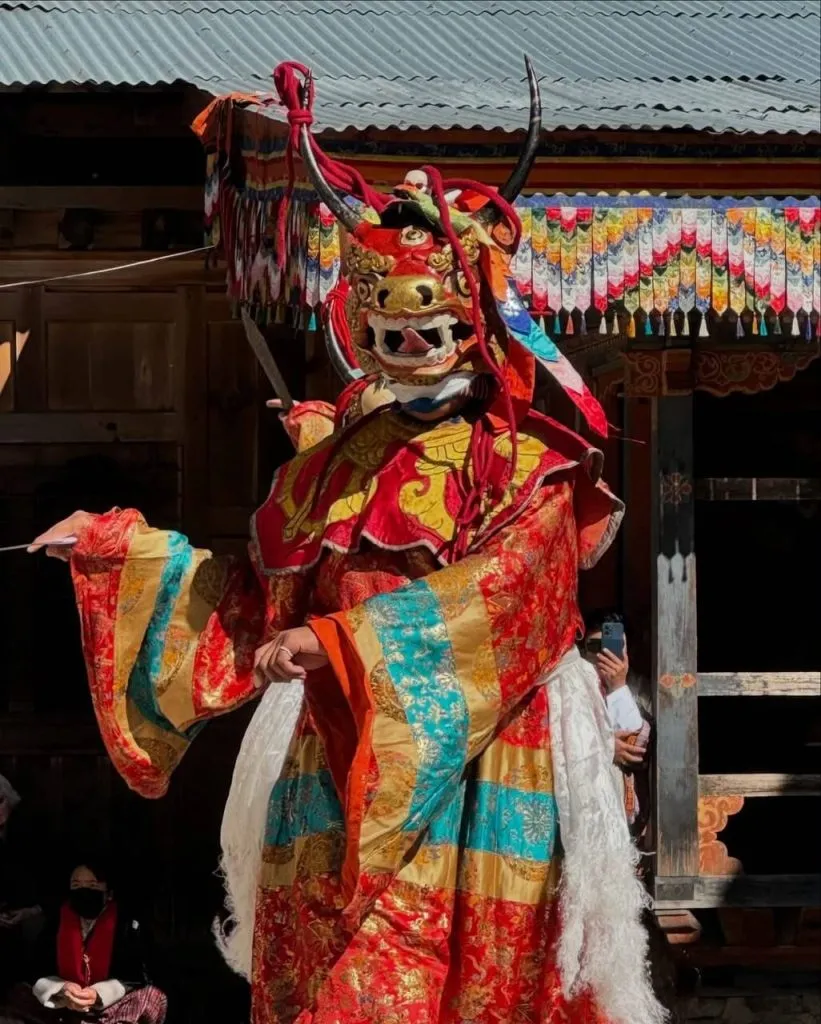
Music is everywhere in Bhutan. Monks chant and play long horns, drums and cymbals in the dzongs every day. Villagers sing as they plant rice and build houses, and archery teams sing to tease their rivals. At every tshechu, masked dancers move to the sound of monastery orchestras, and in the evenings people dance in circles, singing songs that may be centuries old. Alongside this, young Bhutanese listen to rigsar, a modern pop style, and to the music of Bhutanese films.
This tour introduces you to Bhutan’s main musical traditions. Zhungdra is the classical folk song, said to date from the 17th century, sung slowly with long ornamented notes. Boedra is a lighter style with roots in the court music of Tibet. The main instruments are the dramnyen, a long-necked lute, the piwang, a two-stringed fiddle, the lingm, a bamboo flute, and the yangchen, a hammered dulcimer. Masked dances, or cham, are religious performances taught in monasteries and dzongs. One of them, the Drametse Ngacham, the dance of the drums from Drametse, was added to UNESCO’s list of intangible cultural heritage in 2008.
In Thimphu you visit the Royal Academy of Performing Arts, founded in 1954 on the initiative of the Third King and formally established in 1967, which trains dancers and musicians and preserves Bhutan’s songs and masked dances. You meet an instrument maker, take a short lesson on the dramnyen or in zhungdra singing, and hear monastery music. In Bumthang you learn about the dances revealed by the saint Pema Lingpa, whose traditions are still performed today. The 10 day version stays in the west, and the 17 day version continues east to Mongar and Drametse.
- Royal Academy of Performing Arts and its dancers
- Instrument makers and a lesson in dramnyen or song
- Pema Lingpa's dance traditions in Bumthang
Highlights
Highlights of the tour
RAPA rehearsals
Watch dancers train at the Royal Academy of Performing Arts.
Dramnyen lesson
Try the long-necked lute with a teacher.
Zhungdra singing
Bhutan's classical song form.
Monastery music
Long horns, drums and chanting in a dzong.
Mask makers
Watch carvers shape and paint cham masks.
Pema Lingpa's Bumthang
Where some of Bhutan's dances were revealed.
Itinerary at a glance
Twelve days at a glance
Rehearsals and performances depend on schedules. We confirm them before you travel.
Day 1: Arrive in Paro
Land in Paro.
Day 2: To Thimphu
Drive to Thimphu, Folk Heritage Museum.
Day 3: Royal Academy of Performing Arts
Rehearsals and a talk at RAPA.
Day 4: Instruments and song
An instrument maker and a lesson.
Day 5: To Punakha
Over Dochula to Punakha.
Day 6: Village songs
Farm songs and a village evening.
Day 7: To Trongsa
Over Pele La to Trongsa.
Day 8: To Bumthang
Into Bumthang, Pema Lingpa’s temples.
Day 9: Bumthang dances
Masks, dances and Kurjey Lhakhang.
Day 10: Fly to Paro
Domestic flight to Paro.
Day 11: Tiger's Nest
Hike to Paro Taktsang.
Day 12: Depart
Transfer to Paro airport.
Day 1
Arrive in Paro
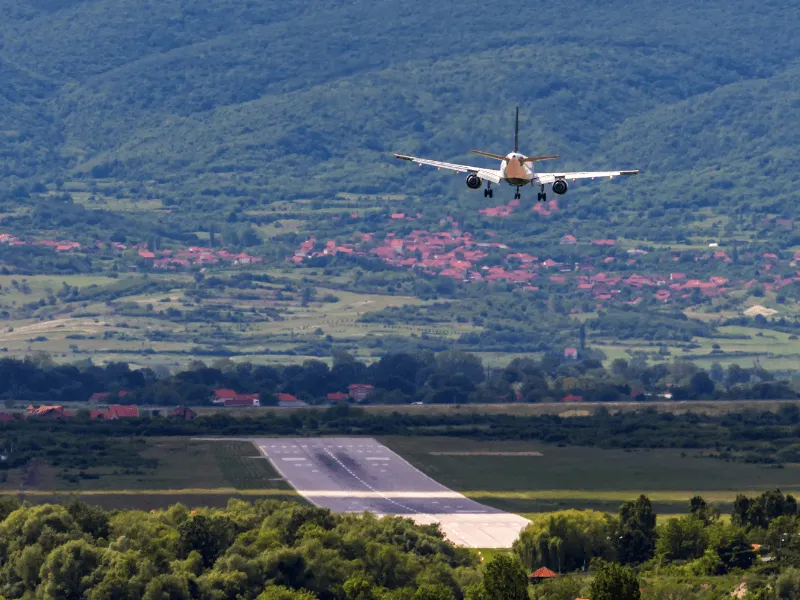
Your guide meets you at Paro airport. After lunch you visit Rinpung Dzong, where the monks’ orchestra may be practising, and the National Museum, which has a collection of masks and old instruments.
- Overnight: Paro
- Altitude: about 2,200 metres
- Meals: lunch and dinner
Day 2
Thimphu
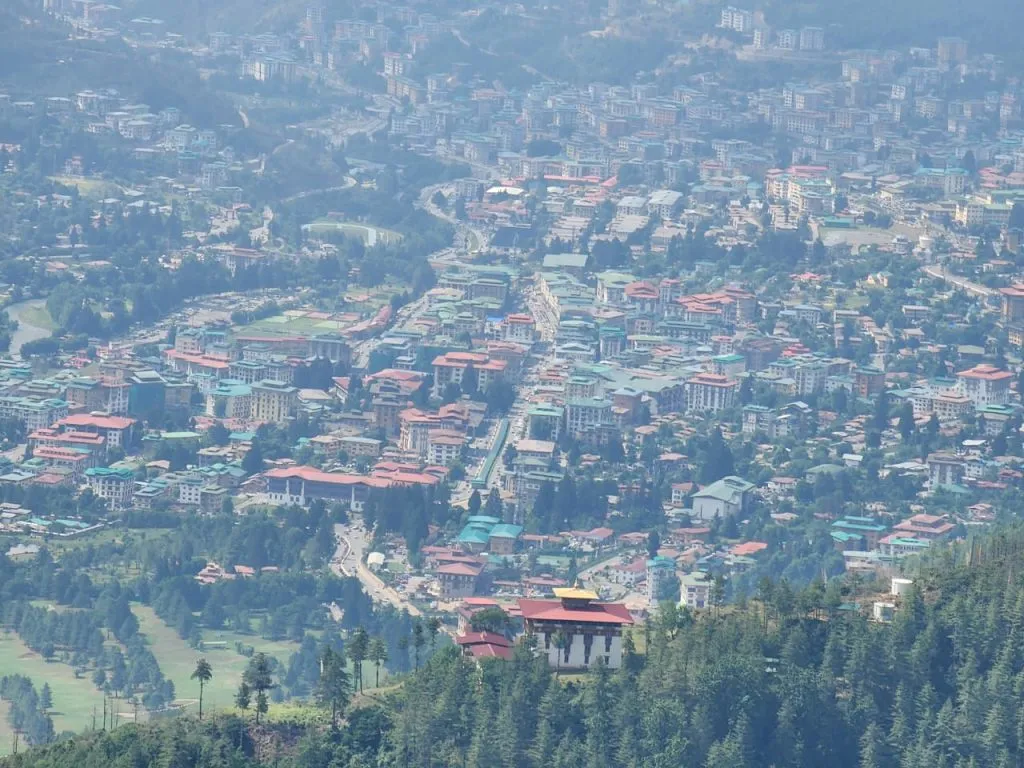
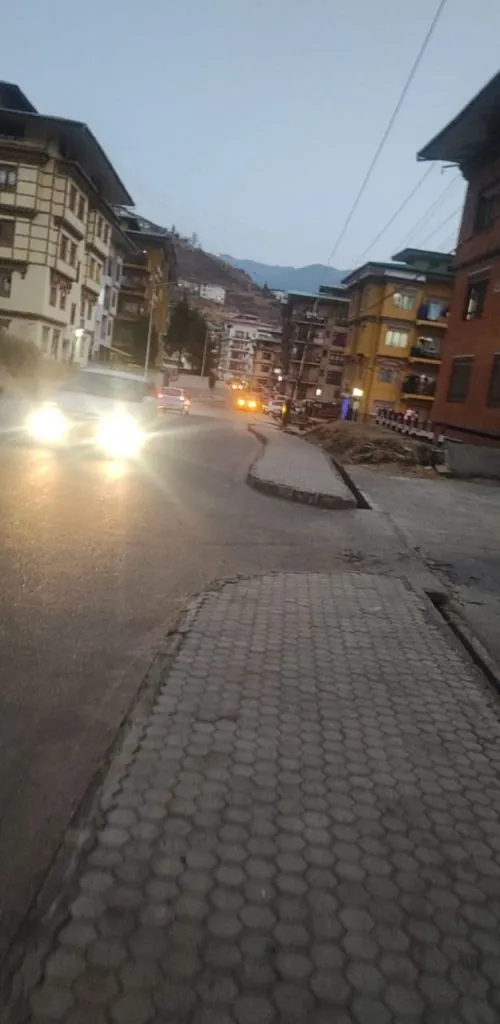
You drive to Thimphu and visit the Memorial Chorten, where older people chant and spin prayer wheels all day, and the Folk Heritage Museum. In the evening you may hear a folk music performance at a local venue.
- Overnight: Thimphu
- Drive: about 1.5 hours
- Meals: breakfast, lunch and dinner
Day 3
The Royal Academy of Performing Arts
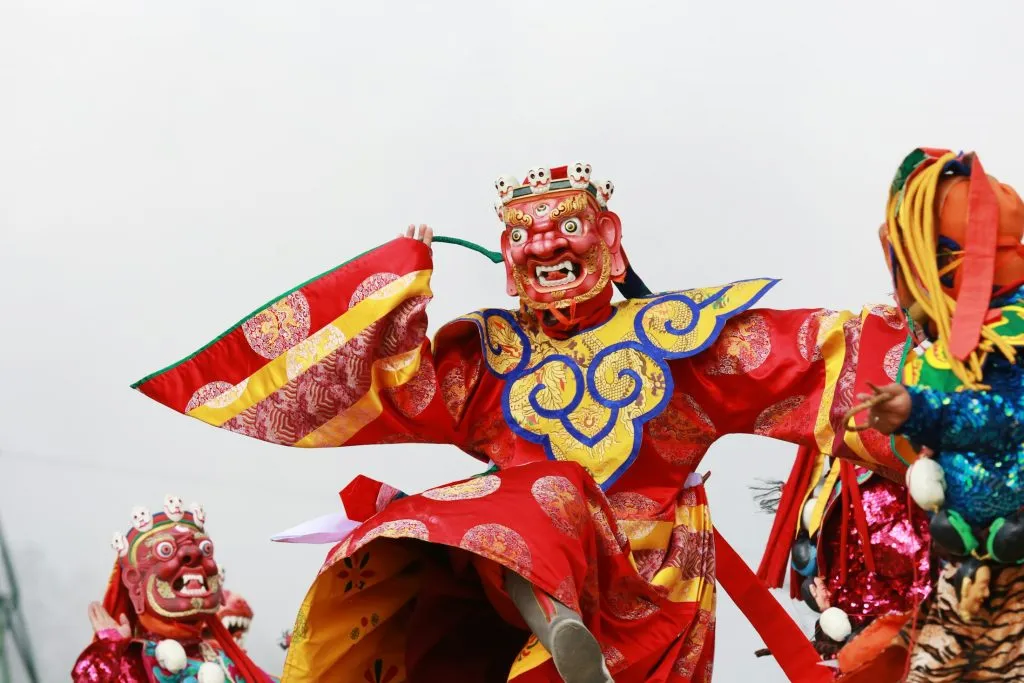
You spend the morning at the Royal Academy of Performing Arts, watching students and performers rehearse folk dances and masked dances, and talking to a teacher about how the academy records and teaches Bhutan’s dances. In the afternoon you visit the National Institute for Zorig Chusum to see mask carving and painting.
- Overnight: Thimphu
- Visit: RAPA, by arrangement
- Meals: breakfast, lunch and dinner
Day 4
Making and playing music
You visit a craftsman who makes the dramnyen, carving the body from a single piece of wood and decorating it with a sea monster’s head. Then you take a short lesson: either on the dramnyen or in zhungdra singing, with a local musician. In the evening there may be a chance to hear rigsar or folk music live.
- Overnight: Thimphu
- Lesson: about 2 hours
- Meals: breakfast, lunch and dinner
Day 5
Punakha and its monks
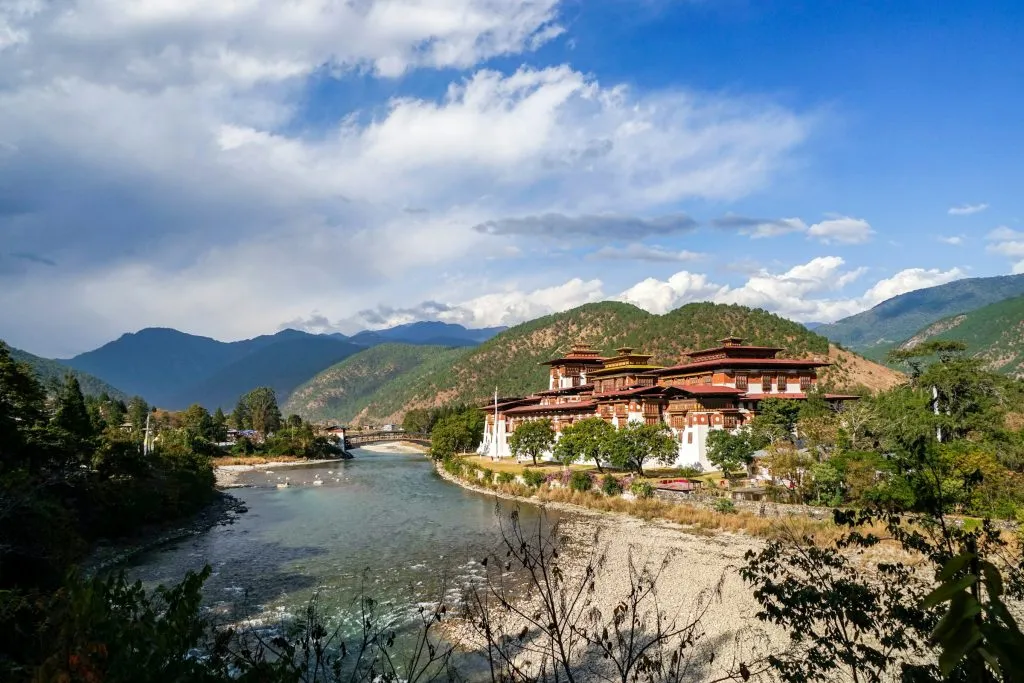
You cross Dochula and visit Punakha Dzong, winter home of the central monk body. If the monks are performing prayers, you may hear the dungchen, the long horns, and the drums and cymbals of the monastery orchestra. In the afternoon you walk to Chimi Lhakhang.
- Overnight: Punakha
- Drive: about 3 hours
- Walk: about 1 hour
Day 6
Songs of the village
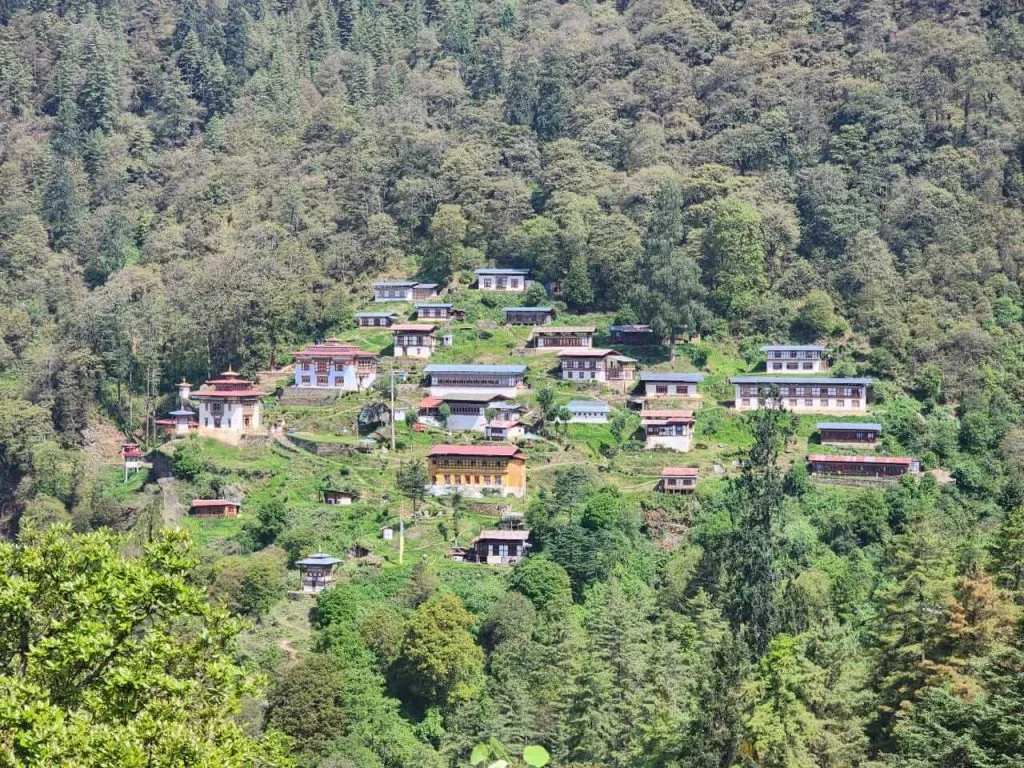
You spend the day in villages around Punakha. Depending on the season, you may hear work songs in the rice fields. In the evening a group of villagers sings and dances for you and teaches you a simple circle dance, often with ara and snacks.
- Overnight: Punakha
- Activity: village evening
- Meals: breakfast, lunch and dinner
Day 7
Over Pele La to Trongsa
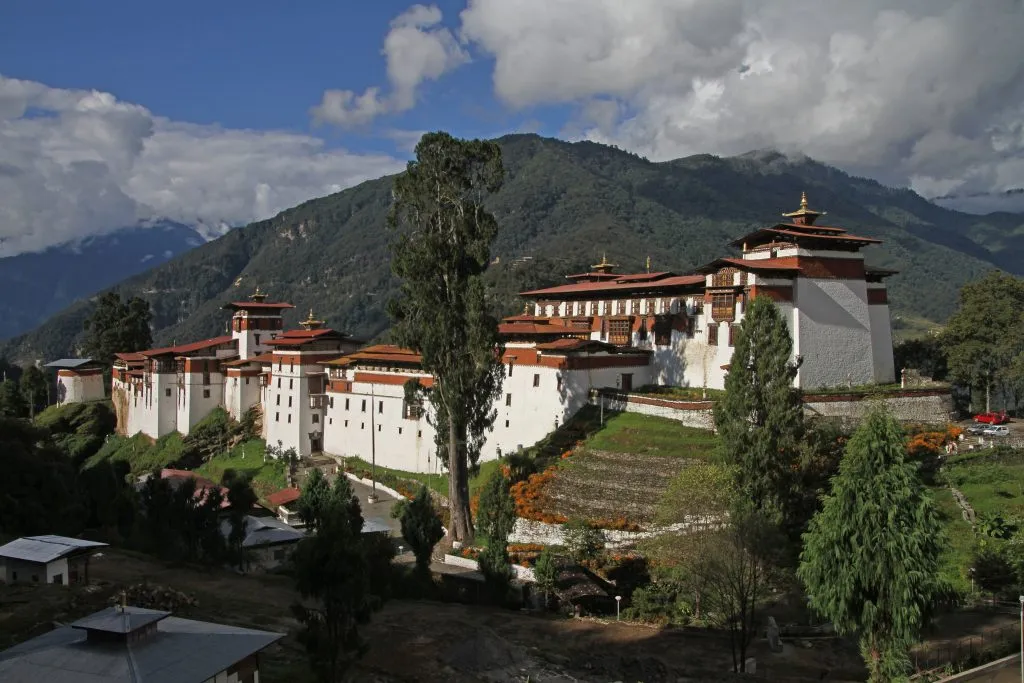
You drive over Pele La to Trongsa and visit the dzong and the Ta Dzong museum, which displays royal costumes and ritual objects. Trongsa is the ancestral seat of the Wangchuck dynasty.
- Overnight: Trongsa
- Drive: about 5 to 6 hours
- Meals: breakfast, lunch and dinner
Day 8
Pema Lingpa's Bumthang
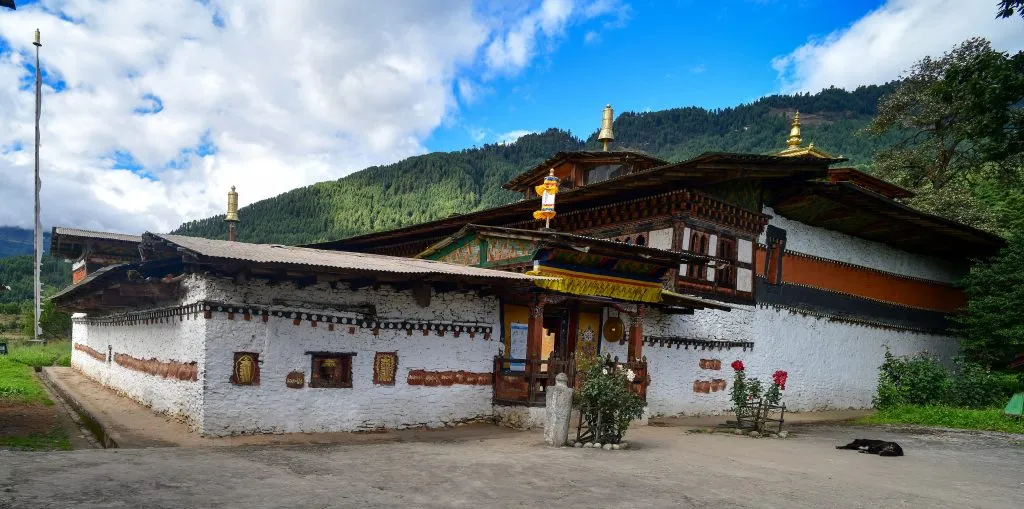
You cross Yotong La to Bumthang and visit Tamshing Lhakhang, founded in 1501 by Pema Lingpa, the treasure-revealer. According to tradition, several masked dances performed at Bhutan’s festivals were revealed by him in visions. The monks of Tamshing still perform them.
- Overnight: Bumthang
- Drive: about 3 hours
- Meals: breakfast, lunch and dinner
Day 9
Masks and dances
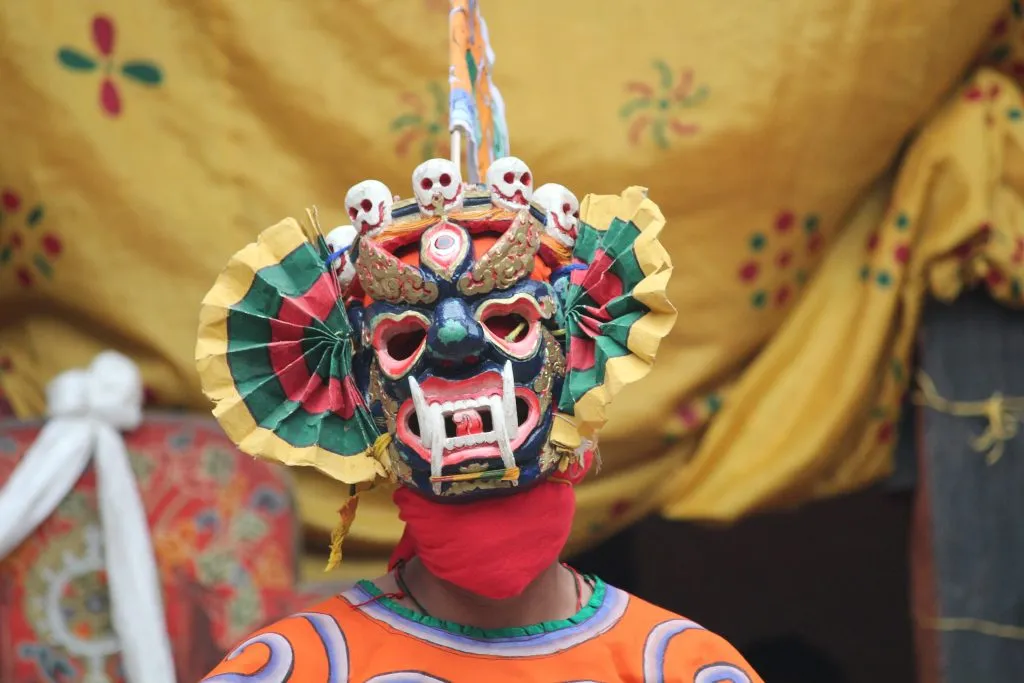
You meet a dance master or monk who explains the meaning of the main cham, such as the dance of the lords of the cremation ground and the dances of the ging, and visit Kurjey Lhakhang and Jambay Lhakhang. If your visit coincides with a festival, such as Jambay Lhakhang Drup or Kurjey Tshechu, you spend the day at the festival.
- Overnight: Bumthang
- Visits: temples and a dance master
- Meals: breakfast, lunch and dinner
Day 10
Back to Paro
You fly from Bumthang to Paro on the days that flights run. On the 17 day version, you instead drive east to Mongar and visit Drametse, home of the Drametse Ngacham, before continuing to Trashigang. On the 10 day version, the trip returns from Punakha to Paro after day 6.
- Overnight: Paro
- Flight: about 30 minutes
- Meals: breakfast, lunch and dinner
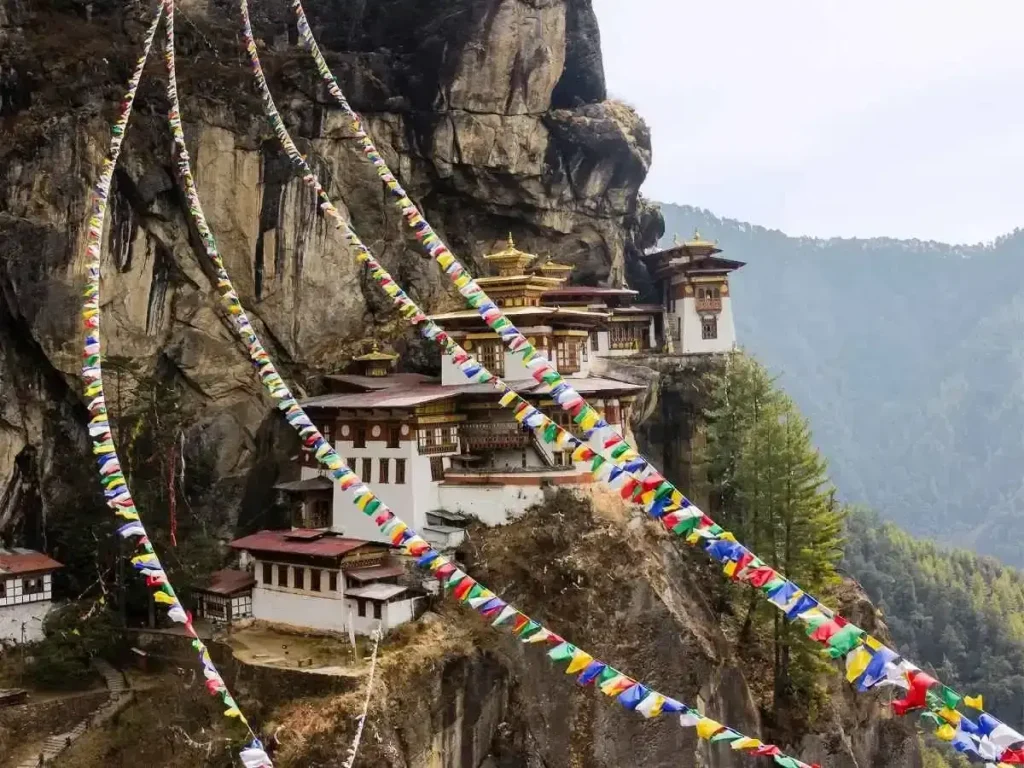
Day 11
Hike to the Tiger's Nest
The hike to Paro Taktsang, the Tiger’s Nest, takes five to six hours return. The path climbs through blue pine forest to a cafeteria with a clear view of the monastery, then on to the cliff itself at about 3,120 metres, where Guru Rinpoche is said to have meditated in the 8th century.
- Overnight: Paro
- Hike: 5 to 6 hours return
- Altitude: about 3,120 metres
Day 12
Fly home
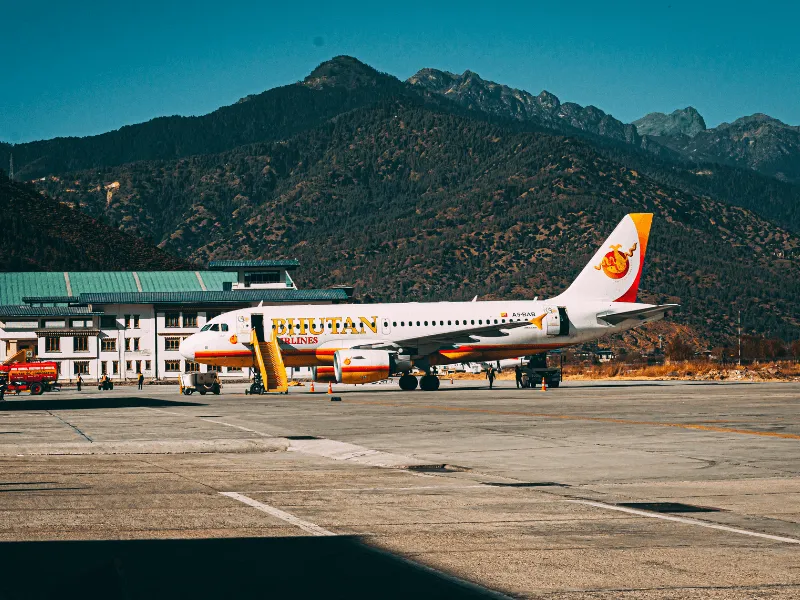
After breakfast your guide drives you to Paro airport for your flight home.
- Transfer: about 15 minutes
- Meals: breakfast
Where you stay
Where you stay
Comfortable hotels throughout.
| Nights | Place | Where you stay | Why we chose it |
|---|---|---|---|
| 1, 10 and 11 | Paro | 3-star or 4-star hotel | Luxury upgrades available |
| 2, 3 and 4 | Thimphu | 3-star or 4-star hotel | Central |
| 5 and 6 | Punakha | 3-star or 4-star hotel | Valley views |
| 7 | Trongsa | 3-star hotel | View of the dzong |
| 8 and 9 | Bumthang | 3-star or 4-star hotel | Chamkhar valley |
On the 17 day version, hotels in Mongar and Trashigang are simple.
What the price covers
Included and not included
Included
- Bhutan visa (USD 40) and the Sustainable Development Fee for every night
- Hotels as listed, 3-star as standard, with 4-star and luxury upgrades on request
- All meals: breakfast, lunch and dinner
- A licensed English-speaking guide for the whole trip
- Domestic flight from Bumthang to Paro
- Music lesson and village song evening
- Arranged visit to the Royal Academy of Performing Arts
- Private car or SUV with a Bhutanese driver, and all transfers
- Entry fees to dzongs, temples and museums
- Bottled water in the car
Not included
- International flights into and out of Paro (we can book them for you)
- Travel insurance, which we strongly recommend
- Drinks, laundry and other personal costs
- Tips for your guide and driver
- Anything not listed under included
- Instruments and purchases
Price on request
Tell us your budget and we will send our best price
We don’t publish one fixed price, because hotels, season and group size change the total a lot. Tell us your dates, who is travelling and the budget you have in mind. We will reply within 24 hours with our best price for this traditional music and cultural arts tour.
How we price
What decides the cost of this trip
Government fees
The SDF is USD 100 per adult per night until 31 August 2027, plus a USD 40 visa. These are fixed by the Government of Bhutan and paid through us.
Hotels you choose
Trip length (10, 12 or 17 days), hotel style and group size change the total most.
Season and dates
Spring and autumn are peak season. Winter and summer dates are often easier to price well.
Group size
Guide and car costs are shared, so the price per person drops for two, three or four travellers.
We send a written, itemised quote before you pay anything. No booking fees.
Good to know
Bhutan's music and dance
The main song styles
Zhungdra is the oldest surviving folk style, slow and solemn, sung at important occasions. Boedra is faster and lighter, often accompanied by the dramnyen and the yangchen. Rigsar, which developed from the 1980s, mixes Bhutanese melodies with keyboards and pop rhythms and is the music most Bhutanese listen to today. Each district also has its own folk songs and dances.
Masked dances
Cham are sacred dances performed by monks and trained laymen at tshechus and other festivals. Each tells a story or teaching from Buddhism, such as Guru Rinpoche’s victory over demons or the judgement of the dead. Watching them is believed to bring blessings. Dancers train for years, and the masks and costumes are made by skilled craftsmen.
Choosing 10, 12 or 17 days
The 10 day trip covers Paro, Thimphu and Punakha, with RAPA, the instrument maker and the village evening. The 12 day trip adds Trongsa and Bumthang, with Pema Lingpa’s dance traditions. The 17 day trip goes on to Mongar and Drametse in the east, home of the drum dance listed by UNESCO.
Timing with festivals
To see masked dances in full, plan your trip around a tshechu. Our festival calendar lists the dates. Many festivals follow the lunar calendar, so dates change each year.
Festival etiquette
A tshechu is a religious event first and a show second. Dress neatly, with shoulders and knees covered; a collared shirt or jacket is a good idea. Stay at the edge of the dance ground, never walk across it, and switch off your camera flash. Don’t climb on walls or temple roofs for a better angle. The atsara clowns may tease you or ask for a small note; laugh along, it is part of the blessing. Our guide to Bhutan’s festivals explains the dances in more detail.
Getting to Bumthang
Bumthang is about 270 km from Thimphu, but the road crosses three passes and the drive takes most of two days. We break it with a night in Punakha or Trongsa. Drukair also flies between Paro and Bumthang on set days of the week, in about 30 minutes, and on most of our central Bhutan trips we fly back to save a day on the road. The schedule changes by season, so we confirm the flight when you book.
Visa, SDF and guide rules
Every visitor except Indian nationals needs a visa, which costs USD 40 and is issued online before you fly. The Sustainable Development Fee is USD 100 per adult per night until 31 August 2027, with half rates for children aged 6 to 11. A Department of Tourism notice from April 2026 confirms that visitors travel with a licensed guide. We file the visa and pay the SDF for you. Read more in our Bhutan visa guide and SDF guide.
Flying into Paro
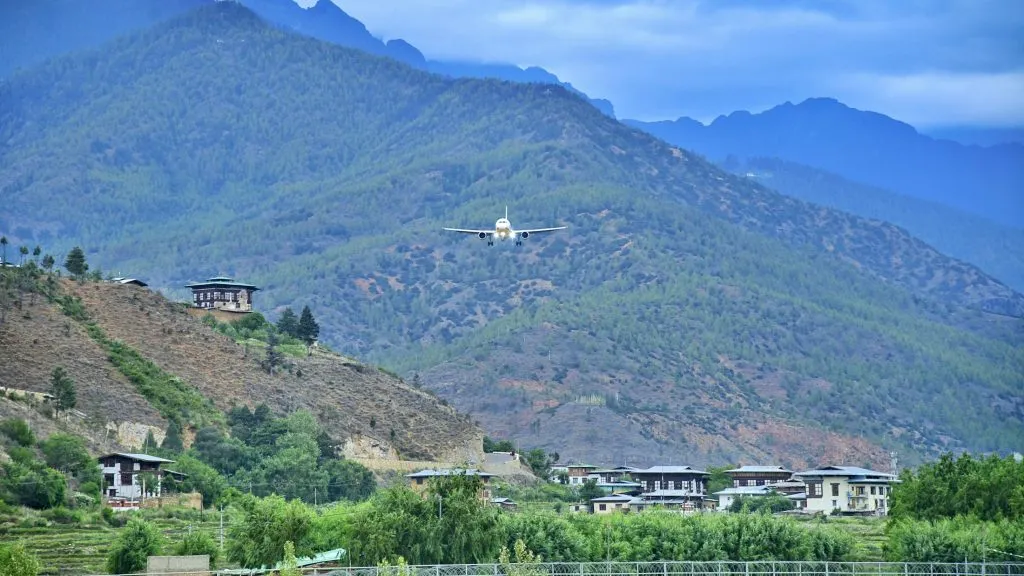
Only Drukair and Bhutan Airlines fly into Paro, mainly from Bangkok, Delhi, Kathmandu, Kolkata and Singapore. Pilots land by sight between the ridges, so morning flights are the most reliable. We suggest a night in your hub city on the way in. Our flights to Bhutan page lists every route.
Music and cultural arts tour: questions
It depends on your hotels, group size and dates. Tell us your budget and we will reply within 24 hours with our best price, including the SDF, visa, hotels, meals, guide and car.
Yes. You take a short lesson on the dramnyen or in traditional singing.
You see rehearsals at RAPA and, if your dates match, a festival.
Bhutan’s national school for traditional dance and music, founded in 1954 and formally established in 1967.
Yes. Dramnyen and other instruments can be bought from makers in Thimphu.
Twelve days as standard, with 10 and 17 day versions.
No. The lessons are for beginners.
Three to five months ahead, especially for festival dates.
Price on request
Ask for your best price
Tell us which version you want, your interest in music or dance and your budget. We will reply within 24 hours with our best price for this music and cultural arts tour.
- Share your budget, we shape the trip around it
- No booking fees, ever
- A reply within 24 hours
- Licensed Bhutanese tour operator
- +975 17533776
- +975 77495028
- info@deyabhutantours.com
- Thimphu, Bhutan
Let's plan your Bhutan journey
Tell us a little about your trip. Our team in Thimphu will reply with ideas, a day-by-day plan and a full price.
We’ll reply within 24 hours. No booking fees, and no obligation to book.