- Licensed Bhutanese tour operator
- Thimphu, Bhutan
Festival tour · 9 days, 8 nights
9 Day Talo Tshechu Festival Tour 2027: A Hilltop Village Festival Above Punakha
Three days at the Talo Tshechu, held at Talo Goenpa above the Punakha valley from 16 to 18 March 2027, then on to the Paro Tshechu, the Tiger’s Nest and Thimphu.
- 9 days, 8 nights
- Talo Tshechu: 16 to 18 March 2027
- Plus a day at the Paro Tshechu
16 to 18
March 2027, Talo Tshechu
2,800 m
Talo village, about
18 to 22
March 2027, Paro Tshechu
Spring
Peach and rhododendron season
Trip overview
A small festival with a big view
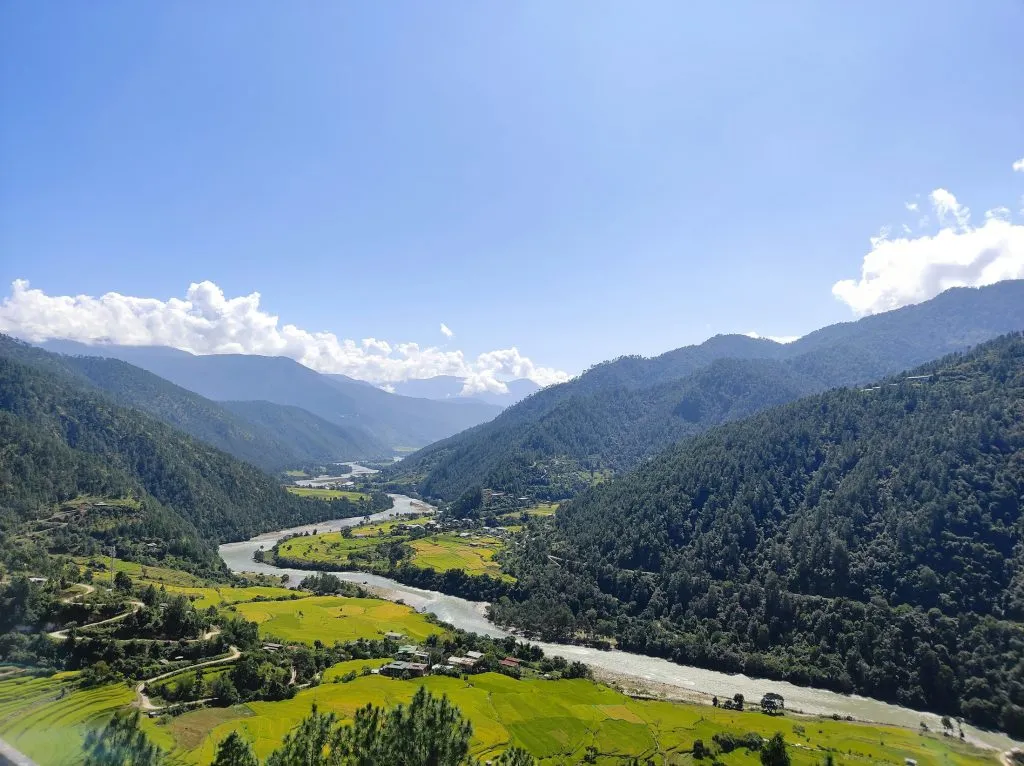
Talo is a village of large, carefully kept farmhouses spread over a ridge high above the Punakha valley. At its top stands Talo Goenpa, a monastery closely linked to the line of the Zhabdrung, the 17th-century lama who unified Bhutan. Every spring the monastery holds its tshechu, three days of masked dances in a courtyard that looks straight down to the rivers of Punakha.
Because Talo is a village festival, the setting is small and personal. You stand a few metres from the dancers, local families share food on blankets around the ground, and you may be the only foreign group there. The tentative 2027 calendar lists the Talo Tshechu from 16 to 18 March 2027, in early spring, when peach and plum trees flower around the farmhouses and the first rhododendrons open in the forest above.
The timing also lines up neatly with the Paro Tshechu, one of the biggest festivals in Bhutan, held at Rinpung Dzong from 18 to 22 March 2027. On this trip you see Thimphu and Punakha first, spend two full days at Talo, then drive back to Paro for a day at the Paro Tshechu and finish with the Tiger’s Nest. It is a rare chance to compare a village festival and a national one in the same week.
- Two days at the Talo Tshechu, close to the dancers
- A day at the Paro Tshechu at Rinpung Dzong
- Punakha Dzong, Chimi Lhakhang and the Tiger's Nest
Highlights
Highlights of the trip
Talo Tshechu
Masked dances at a hilltop monastery above Punakha.
Talo village
Big painted farmhouses and orchards in flower.
Paro Tshechu
A day at one of Bhutan's largest festivals.
Punakha Dzong
The 1637 fortress where two rivers meet.
Chimi Lhakhang
The temple of the Divine Madman, through rice fields.
Tiger's Nest
The cliff monastery above Paro.
Itinerary at a glance
Nine days at a glance
Dates are for the 2027 festival. We confirm them again before you fly.
Day 1: Arrive in Paro
Land in Paro, drive to Thimphu.
Day 2: Thimphu
A full day in the capital.
Day 3: To Punakha
Over Dochula to Punakha Dzong.
Day 4: Talo Tshechu, day one
Drive up to Talo for the opening dances.
Day 5: Talo Tshechu, day two
Morning at the festival, afternoon at Chimi Lhakhang.
Day 6: Khamsum Yulley, to Paro
A short hike, then back to Paro.
Day 7: Paro Tshechu
A day at the festival in Rinpung Dzong.
Day 8: Tiger's Nest
Hike to Paro Taktsang.
Day 9: Depart
Transfer to Paro airport.
Day 1
Arrive and drive to Thimphu
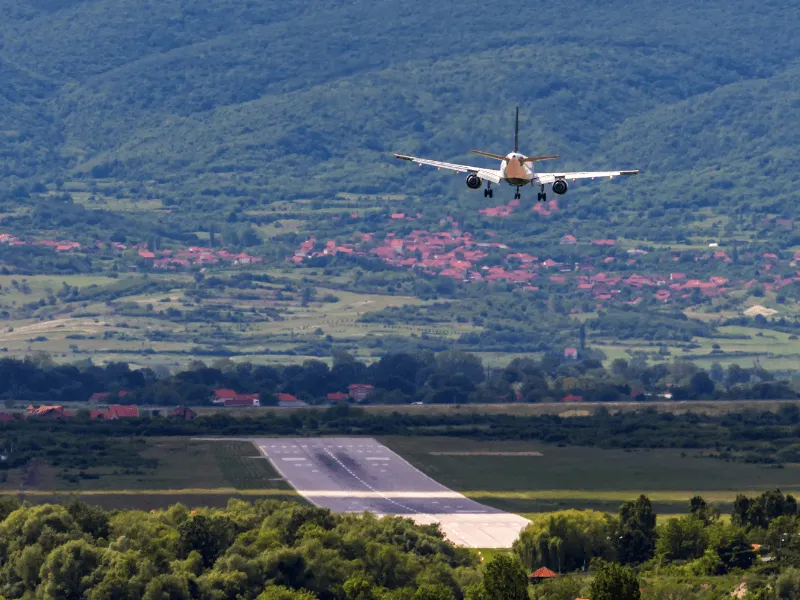
Your guide meets you at Paro airport. You drive to Thimphu, about an hour and a half, stopping at Tamchog Lhakhang and its iron chain bridge on the way. In the evening you can walk around the town centre and watch traffic police direct cars by hand at the main junction.
- Date: 13 March 2027
- Overnight: Thimphu
- Drive: about 1.5 hours
Day 2
A day in Thimphu
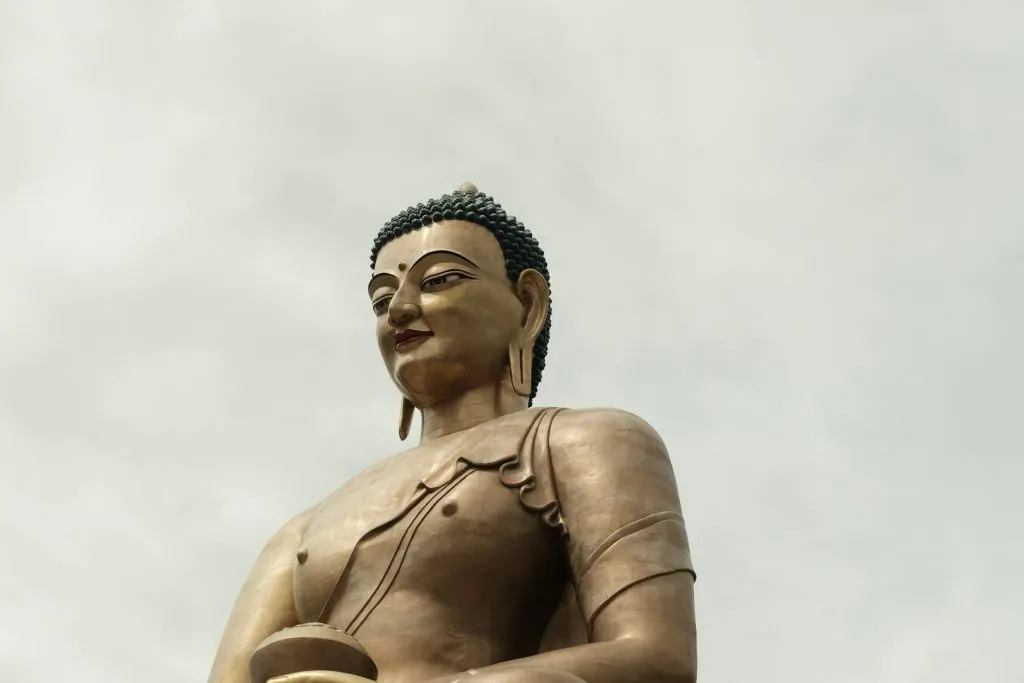
You visit the Memorial Chorten, the Buddha Dordenma above the city, the National Institute for Zorig Chusum, the traditional paper factory and the weekend market. In the afternoon you see Tashichho Dzong, the seat of government, and the takin, Bhutan’s national animal, at the Motithang preserve.
- Date: 14 March 2027
- Overnight: Thimphu
- Meals: breakfast, lunch and dinner
Day 3
Dochula and Punakha Dzong
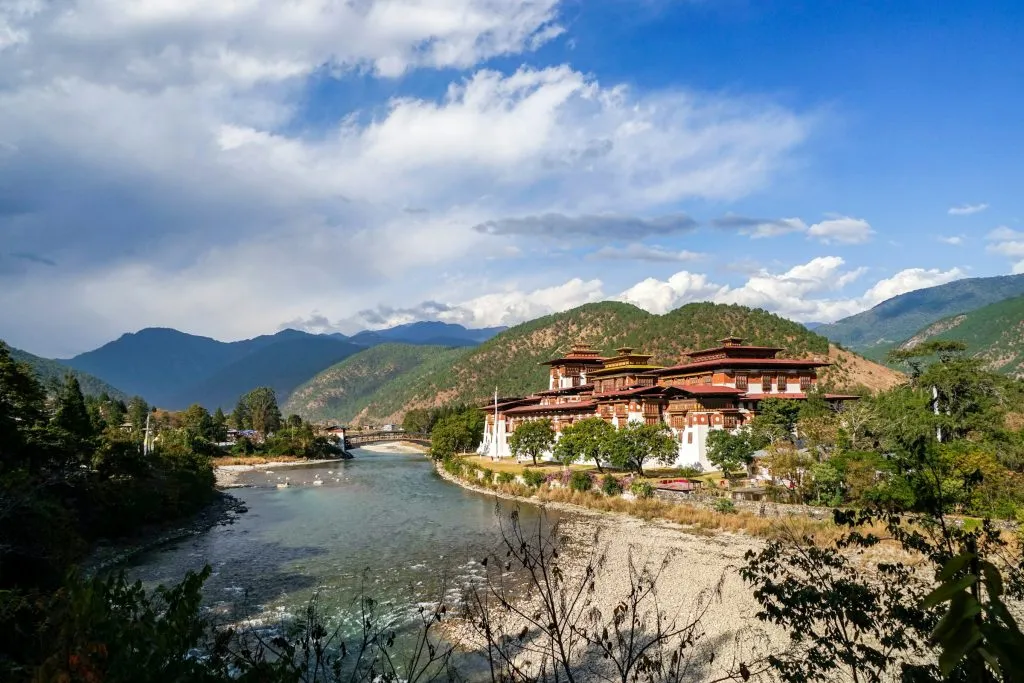
You cross Dochula, at about 3,100 metres, where 108 chortens stand among rhododendron trees, and drop down to the Punakha valley. In the afternoon you visit Punakha Dzong, built in 1637 at the meeting of the Pho Chhu and Mo Chhu. It was the capital of Bhutan until the 1950s, and in March its courtyard jacaranda trees start to bud.
- Date: 15 March 2027
- Overnight: Punakha
- Drive: about 3 hours
Day 4
The first day at Talo
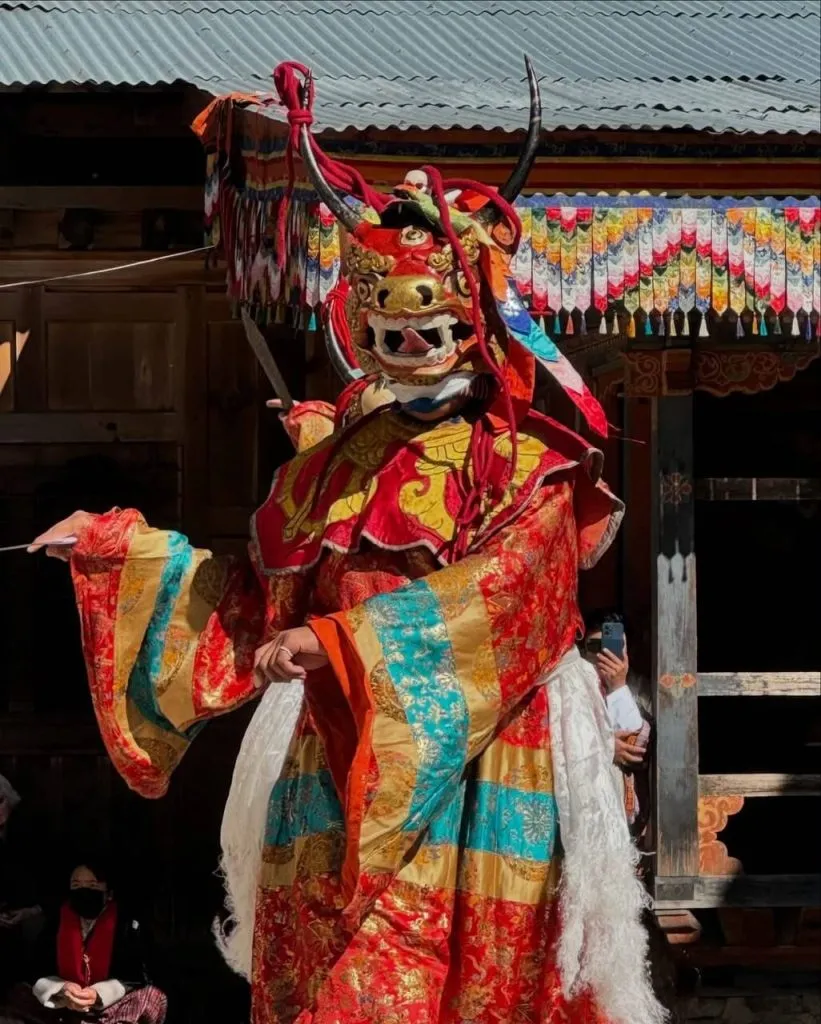
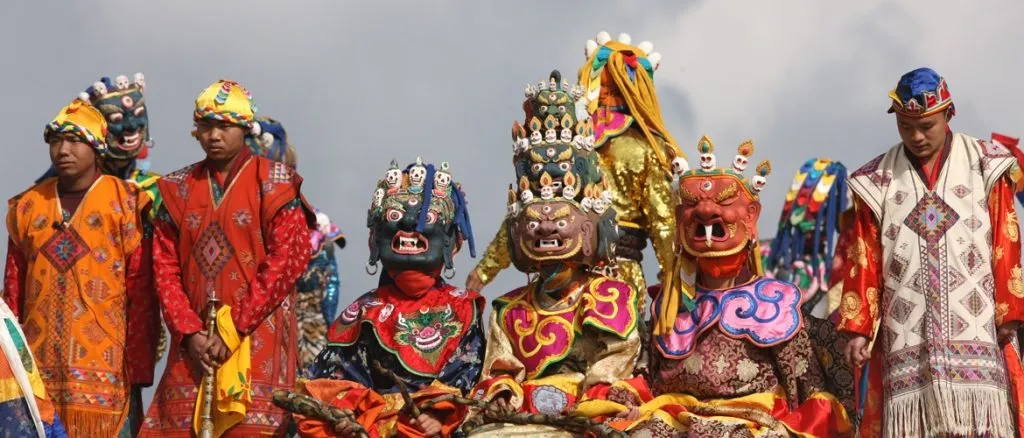
A winding road takes you up from the valley floor to Talo in about 45 minutes. The festival opens with prayers and the first masked dances in the monastery courtyard. Your guide finds a spot near the edge of the ground and explains each dance as it begins. Between dances you can walk through the village and see the large farmhouses that Talo is known for, many with carved and painted window frames.
- Date: 16 March 2027 (festival day 1)
- Overnight: Punakha
- Drive: about 45 minutes each way
Day 5
Talo again, then Chimi Lhakhang
You return to Talo for the morning dances, when the light is soft and the crowd is in full festival dress. After a picnic lunch you drive back down and walk through the rice terraces to Chimi Lhakhang, the temple of the Divine Madman, Drukpa Kunley. Couples come here from all over Bhutan to ask for a child.
- Date: 17 March 2027 (festival day 2)
- Overnight: Punakha
- Walk: about 1 hour to Chimi Lhakhang
Day 6
Khamsum Yulley and the drive to Paro
In the morning you hike through fields to Khamsum Yulley Namgyal Chorten, a temple on a ridge with a wide view of the valley, about an hour each way. If you would rather see the last day of the Talo Tshechu, we swap this hike for a final morning at Talo. After lunch you drive back over Dochula to Paro, where the Paro Tshechu has just begun.
- Date: 18 March 2027 (Talo final day)
- Overnight: Paro
- Drive: about 4.5 hours
Day 7
A day at the Paro Tshechu
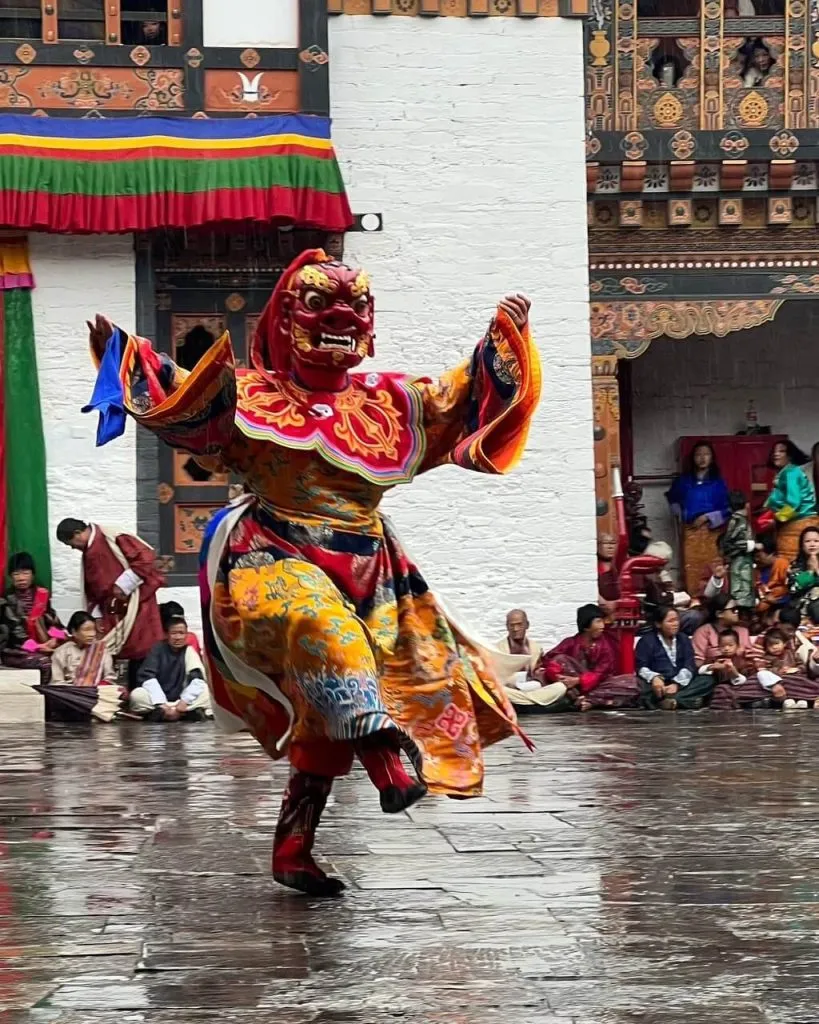
The Paro Tshechu is held in the courtyard of Rinpung Dzong and on the festival ground below it. It is much bigger than Talo: thousands of people come from across western Bhutan, and the colours of their clothes are as much a show as the dances. Your guide helps you find a good spot and explains the main dances. In the afternoon you visit the National Museum in the old watchtower above the dzong.
- Date: 19 March 2027
- Overnight: Paro
- Meals: breakfast, lunch and dinner
Day 8
Hike to the Tiger's Nest
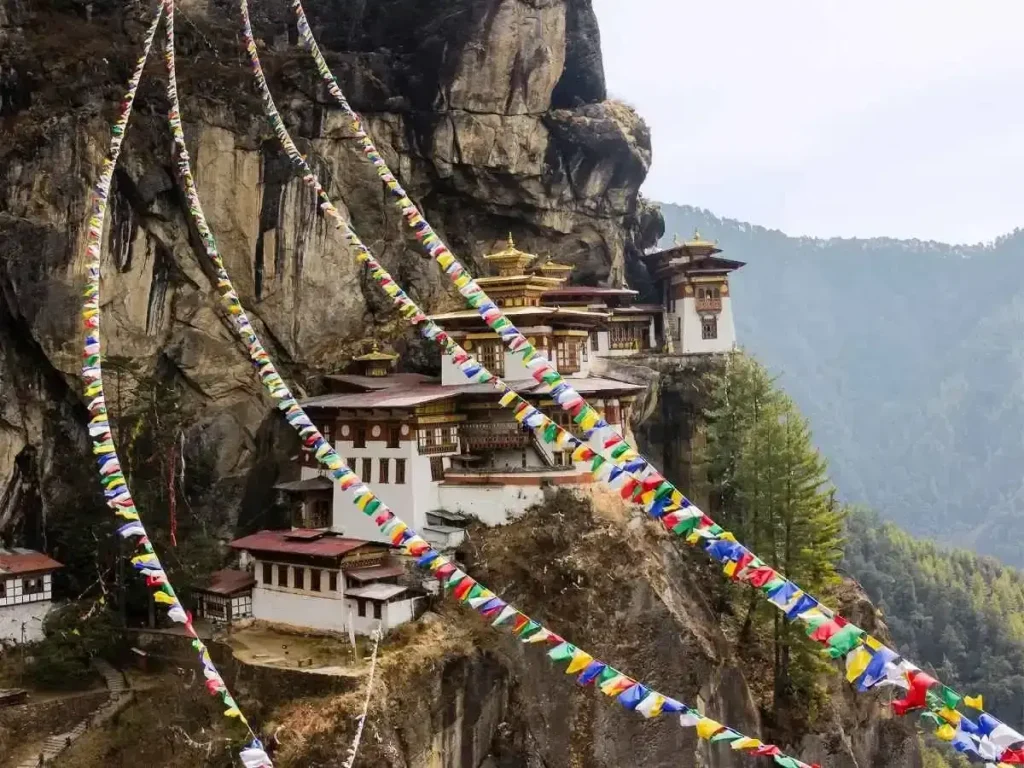
The hike to the Tiger’s Nest takes five to six hours return. The path climbs through blue pine forest to a viewpoint opposite the monastery, then on to the cliff at about 3,120 metres, where Guru Rinpoche is said to have meditated. In the evening you can book a hot stone bath at a farmhouse.
- Date: 20 March 2027
- Overnight: Paro
- Hike: 5 to 6 hours return
Day 9
Fly home
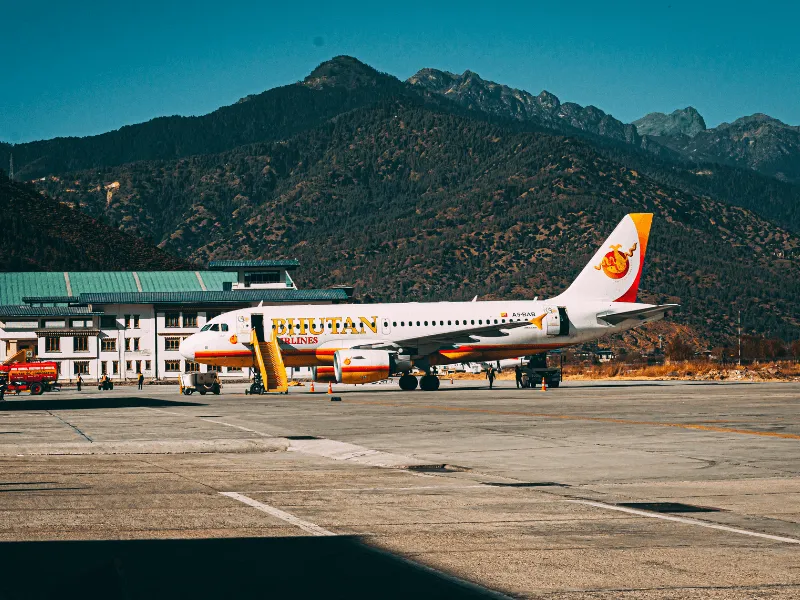
After breakfast your guide drives you to Paro airport. If you want to see the great Paro thongdrel at dawn on 22 March, we can add a night.
- Date: 21 March 2027
- Transfer: about 15 minutes
- Optional: extra night for the Paro thongdrel
Where you stay
Where you stay
Comfortable 3-star hotels as standard, with 4-star and luxury upgrades.
| Nights | Place | Where you stay | Why we chose it |
|---|---|---|---|
| 1 and 2 | Thimphu | 3-star or 4-star hotel | Central |
| 3, 4 and 5 | Punakha | 3-star or 4-star hotel | Valley views |
| 6, 7 and 8 | Paro | 3-star or 4-star hotel | Book early for the tshechu |
Paro hotels fill fast during the Paro Tshechu. We hold rooms as soon as you confirm.
What the price covers
Included and not included
Included
- Bhutan visa (USD 40) and the Sustainable Development Fee for every night
- Hotels as listed, 3-star as standard, with 4-star and luxury upgrades on request
- All meals: breakfast, lunch and dinner
- A licensed English-speaking guide for the whole trip
- Private car or SUV with a Bhutanese driver, and all transfers
- Entry fees to dzongs, temples and museums
- Bottled water in the car
Not included
- International flights into and out of Paro (we can book them for you)
- Travel insurance, which we strongly recommend
- Drinks, laundry and other personal costs
- Tips for your guide and driver
- Anything not listed under included
Price on request
Tell us your budget and we will send our best price
We don’t publish one fixed price, because hotels, season and group size change the total a lot. Tell us your dates, who is travelling and the budget you have in mind. We will reply within 24 hours with our best price for this Talo Tshechu tour.
How we price
What decides the cost of this trip
Government fees
The SDF is USD 100 per adult per night until 31 August 2027, plus a USD 40 visa. These are fixed by the Government of Bhutan and paid through us.
Hotels you choose
Hotel style and group size change the total most. Paro hotels are in high demand in festival week.
Season and dates
Festival weeks are the busiest of the year. Booking early holds better rooms and seats.
Group size
Guide and car costs are shared, so the price per person drops for two, three or four travellers.
We send a written, itemised quote before you pay anything. No booking fees.
Good to know
Planning your Talo Tshechu trip
About Talo and its monastery
Talo Goenpa sits at about 2,800 metres, on a ridge above the west bank of the Mo Chhu. The monastery is connected with the reincarnations of the Zhabdrung, and the village around it is one of the most prosperous in the Punakha district, with orchards and large, well-kept homes. The road up is narrow and winding but sealed, and it takes about 45 minutes from the valley floor.
Talo or Paro?
Paro is the bigger spectacle, with huge crowds, a large festival ground and the famous dawn thongdrel. Talo is small and calm, where you can watch the dances from a few metres away and talk with local families. This trip gives you both. If you want more of the big festival, our Paro Tshechu tour spends more time there.
March weather
March is early spring. Days in Punakha are warm, often in the low twenties Celsius, while Thimphu and Paro are cooler and mornings can be close to freezing. Talo, higher up, has a fresh breeze. Rain is rare. Bring layers, sunscreen and a warm jacket for early starts.
About the 2027 dates
Festival dates follow the Bhutanese lunar calendar, so they move every year. The dates on this page come from the tentative 2027 festival list released through Bhutan’s Department of Tourism. Tentative means what it says: a monastery or dzongkhag can still shift a day. We check again when you book and a few weeks before you fly, and if a date moves we move the trip with it. Our 2027 festival calendar lists every event in one place.
Festival etiquette
A tshechu is a religious event first and a show second. Dress neatly, with shoulders and knees covered; a collared shirt or jacket is a good idea. Stay at the edge of the dance ground, never walk across it, and switch off your camera flash. Don’t climb on walls or temple roofs for a better angle. The atsara clowns may tease you or ask for a small note; laugh along, it is part of the blessing. Our guide to Bhutan’s festivals explains the dances in more detail.
Village festivals and big tshechus
The big tshechus in Paro and Thimphu draw thousands of people, including many visitors. Village and temple festivals are different. The courtyard is smaller, the crowd is mostly local farmers in their best clothes, and the dancers are often villagers or monks from the nearest lhakhang. You stand closer, you see more of the ritual, and you will probably be offered butter tea or a cup of ara. The trade-off is fewer facilities: there may be no seats, no shade and only basic toilets nearby, so bring a cushion, a hat and patience.
Taking photos at the festival
Photography is allowed in the courtyard at most festivals, but not inside the shrine rooms. A zoom lens of 70 to 200 mm lets you stay back from the dancers and still fill the frame. The best light is in the first two hours of the morning. Ask before you photograph families or monks close up, and put the camera down during the most sacred moments, such as the unrolling of the thongdrel. If you want to make photos the focus of your trip, look at our festival photography tour.
Temple etiquette
Cover shoulders and knees in dzongs and temples, take off hats, and walk clockwise around chortens and prayer wheels. Photography is not allowed inside shrine rooms. Your guide explains each place before you go in. Read more in our Bhutan travel rules guide.
Visa, SDF and guide rules
Every visitor except Indian nationals needs a visa, which costs USD 40 and is issued online before you fly. The Sustainable Development Fee is USD 100 per adult per night until 31 August 2027, with half rates for children aged 6 to 11. A Department of Tourism notice from April 2026 confirms that visitors travel with a licensed guide. We file the visa and pay the SDF for you. Read more in our Bhutan visa guide and SDF guide.
Flying into Paro
Only Drukair and Bhutan Airlines fly into Paro, mainly from Bangkok, Delhi, Kathmandu, Kolkata and Singapore. Pilots land by sight between the ridges, so morning flights are the most reliable. We suggest a night in your hub city on the way in. Our flights to Bhutan page lists every route.
Talo Tshechu tour: questions
It depends on your hotels, group size and dates. Tell us your budget and we will reply within 24 hours with our best price, including the SDF, visa, hotels, meals, guide and car.
The tentative dates are 16 to 18 March 2027, at Talo Goenpa in Punakha. Festival dates follow the lunar calendar and we confirm them again before you travel.
On a ridge above the Punakha valley, about 45 minutes by road from Punakha Dzong.
Yes. The Paro Tshechu runs from 18 to 22 March 2027, and this trip includes a full day there.
No. It is a village festival with mostly local visitors.
Yes, if you add one night. The thongdrel is shown at dawn on 22 March 2027.
Only the Tiger’s Nest hike needs a reasonable level of fitness. Festival days involve standing and short walks.
Four to six months ahead, because of the Paro Tshechu.
Price on request
Ask for your best price
Tell us who is travelling and your budget. We will reply within 24 hours with our best price for this Talo Tshechu tour.
- Share your budget, we shape the trip around it
- No booking fees, ever
- A reply within 24 hours
- Licensed Bhutanese tour operator
- +975 17533776
- +975 77495028
- info@deyabhutantours.com
- Thimphu, Bhutan
Let's plan your Bhutan journey
Tell us a little about your trip. Our team in Thimphu will reply with ideas, a day-by-day plan and a full price.
We’ll reply within 24 hours. No booking fees, and no obligation to book.