- Licensed Bhutanese tour operator
- Thimphu, Bhutan
Special interest tour · 10 days, 9 nights (8 to 12 day options)
Bhutan Culinary and Farm-to-Table Tour: Red Rice, Datshi, Buckwheat and Butter Tea
Cook with farm families, shop in Thimphu’s market, make buckwheat dumplings in Haa and noodles in Bumthang, and taste Bhutan’s cheese, honey and beer at the source. Ten days as standard, with 8 and 12 day versions.
- 10 days, 9 nights
- 8 and 12 day options
- Hands-on cooking in five valleys
5
Valleys and their dishes
4
Cooking classes
2
Farmhouse meals in family kitchens
Easy
Grade
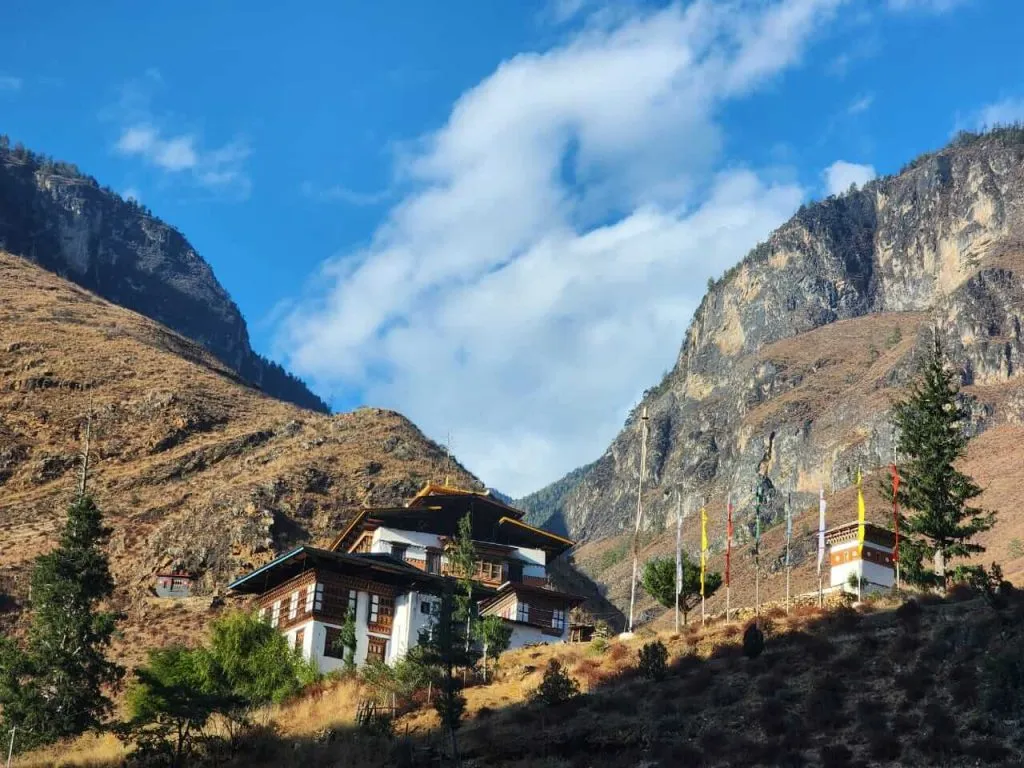
Trip overview
Bhutan through its kitchens
Bhutanese food is simple, seasonal and built around what grows nearby. Most of it is still cooked at home on wood-burning clay stoves, and many families grow their own rice, vegetables and chillies. Because so much of the farming is done without chemicals, the food tastes of the place: the nutty red rice of Paro, the buckwheat of Haa and Bumthang, the wild mushrooms of the summer forests, the cheese from yak and cow herders in the hills.
This tour follows food from field to table across five valleys. In Paro you cook ema datshi with a farm family and learn about red rice. In Haa you make hoentay, buckwheat dumplings filled with turnip greens and cheese. In Thimphu you shop with a local cook at the Centenary Farmers’ Market and take a full cooking class. In Punakha you eat in a rice-growing household, and in Bumthang you make puta, buckwheat noodles, and visit the valley’s cheese, honey and beer producers.
You still see the big sights, including Punakha Dzong and the Tiger’s Nest, but the days are built around kitchens, markets and meals. The 8 day version stays in the west, leaving out Bumthang. The 12 day version adds Phobjikha and an extra farm stay. Every class is hands-on, and you take home recipes for the dishes you cooked.
- Cooking classes in Paro, Haa, Thimphu and Bumthang
- Farmers' market, farmhouse meals and local producers
- 8, 10 and 12 day versions
Highlights
What you will cook and taste
Ema datshi
Chillies and cheese, the national dish.
Red rice
From the fields of Paro and Punakha.
Hoentay in Haa
Buckwheat dumplings with greens and cheese.
Farmers' market
Thimphu's weekend market with a local cook.
Butter tea
Churned the traditional way in a farmhouse.
Bumthang produce
Cheese, honey, buckwheat and local beer.
Itinerary at a glance
Ten days at a glance
Market days and seasonal produce shape the order of the days.
Day 1: Arrive in Paro
Land in Paro.
Day 2: Day trip to Haa
Over Chele La to make hoentay.
Day 3: To Thimphu, the farmers' market
The Centenary Farmers’ Market and a cooking class.
Day 4: Thimphu food and sights
Sights, a tea and snacks tasting.
Day 5: To Punakha
Over Dochula to a rice farm.
Day 6: To Bumthang
Over Pele La to Bumthang.
Day 7: Bumthang producers
Cheese, honey, beer and puta.
Day 8: Fly to Paro
Domestic flight to Paro, last cooking class.
Day 9: Tiger's Nest
Hike to Paro Taktsang.
Day 10: Depart
Transfer to Paro airport.
Day 1
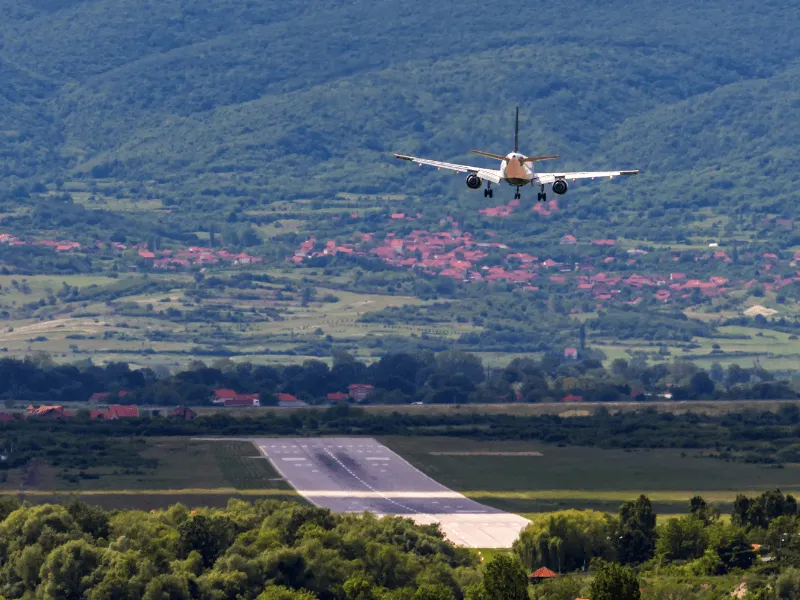
Arrive in Paro
Your guide meets you at Paro airport. After lunch you visit a Paro farmhouse to see how the family grows and stores its food. You learn about Bhutanese red rice, which grows well in the Paro valley, and help cook dinner: red rice, ema datshi and a vegetable dish, eaten with the family.
- Overnight: Paro
- Altitude: about 2,200 metres
- Meals: lunch and dinner
- Cooking: farmhouse dinner
Day 2
Hoentay in the Haa valley
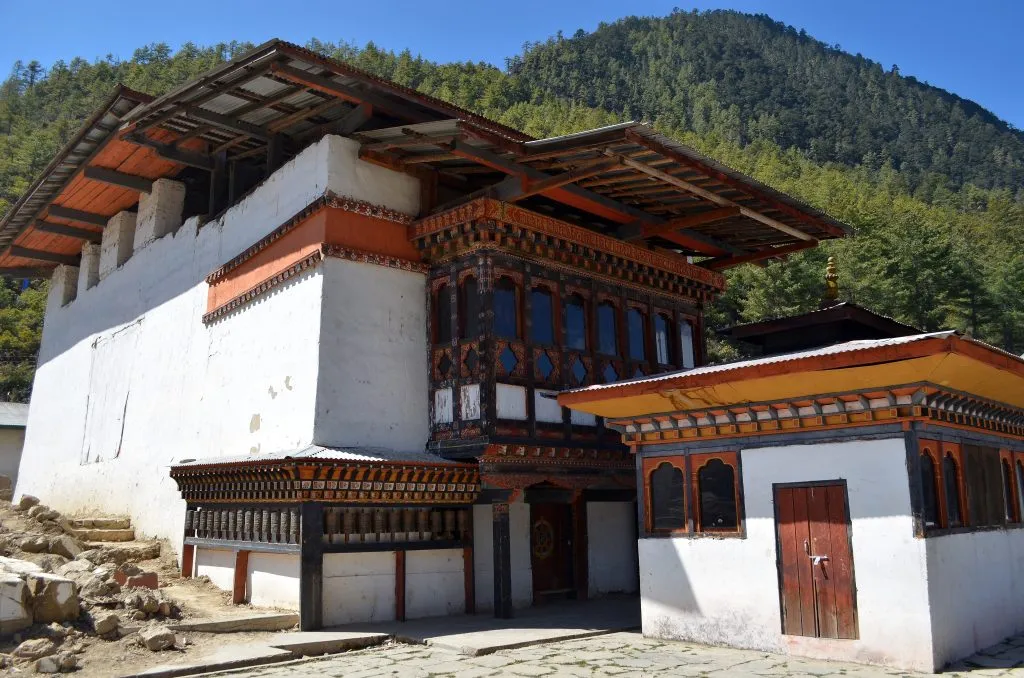
You drive over Chele La, at about 3,988 metres, to the Haa valley, home of hoentay, buckwheat dumplings filled with turnip leaves, cheese and chilli. A Haa family shows you how to make the dough, fill and fold the dumplings, then steam or fry them. After lunch you visit the White Temple and drive back to Paro.
- Overnight: Paro
- Drive: about 5 hours return
- Cooking: hoentay
Day 3
Market to kitchen in Thimphu
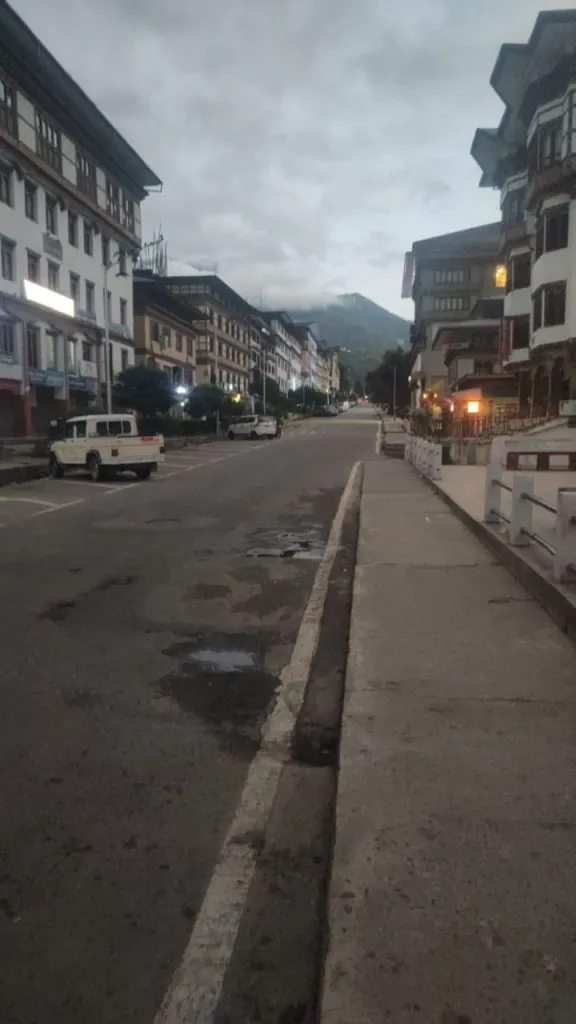
You drive to Thimphu and go shopping at the Centenary Farmers’ Market beside the river, where families from all over the country sell vegetables, fruit, dried fish, datshi cheese, chillies and incense. With a local cook you buy ingredients for lunch, then take a full cooking class: momos, kewa datshi, jasha maru (spicy chicken) and suja.
- Overnight: Thimphu
- Drive: about 1.5 hours
- Cooking: momos and datshi
Day 4
Thimphu between meals
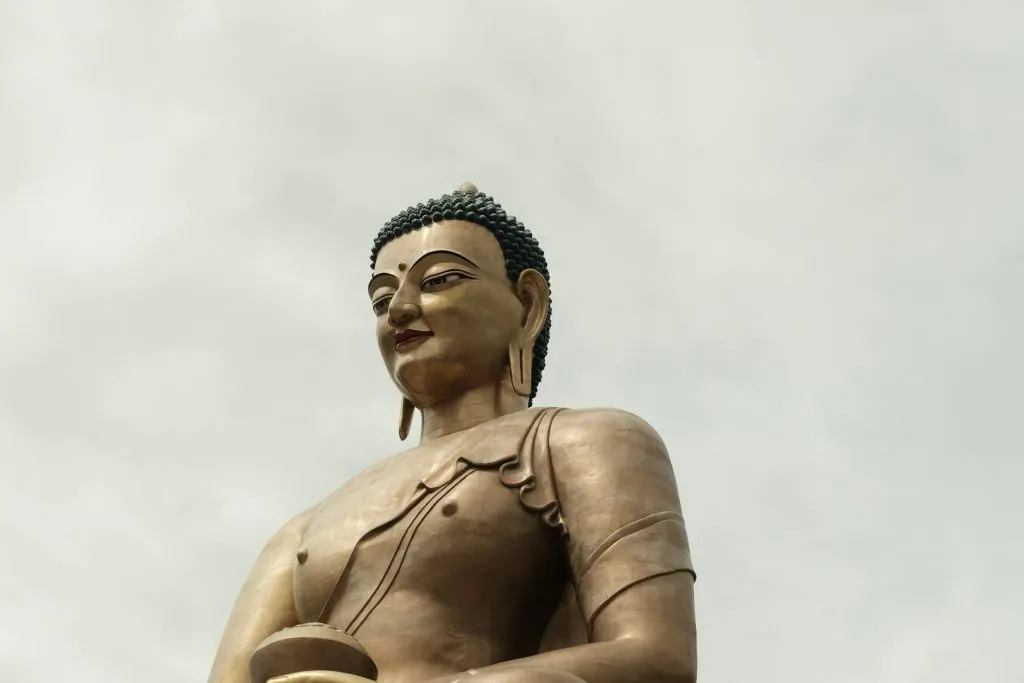
You visit the Buddha Dordenma, the Memorial Chorten and the Folk Heritage Museum, which has a traditional kitchen with a grain mill and butter churn. In the afternoon you taste traditional snacks such as zaw (puffed rice), sikam (dried pork) and khabzey (fried biscuits), and try ara, the local spirit, with an explanation of how it is made.
- Overnight: Thimphu
- Visits: museum and sights
- Tasting: snacks and ara
Day 5
A rice farm in Punakha
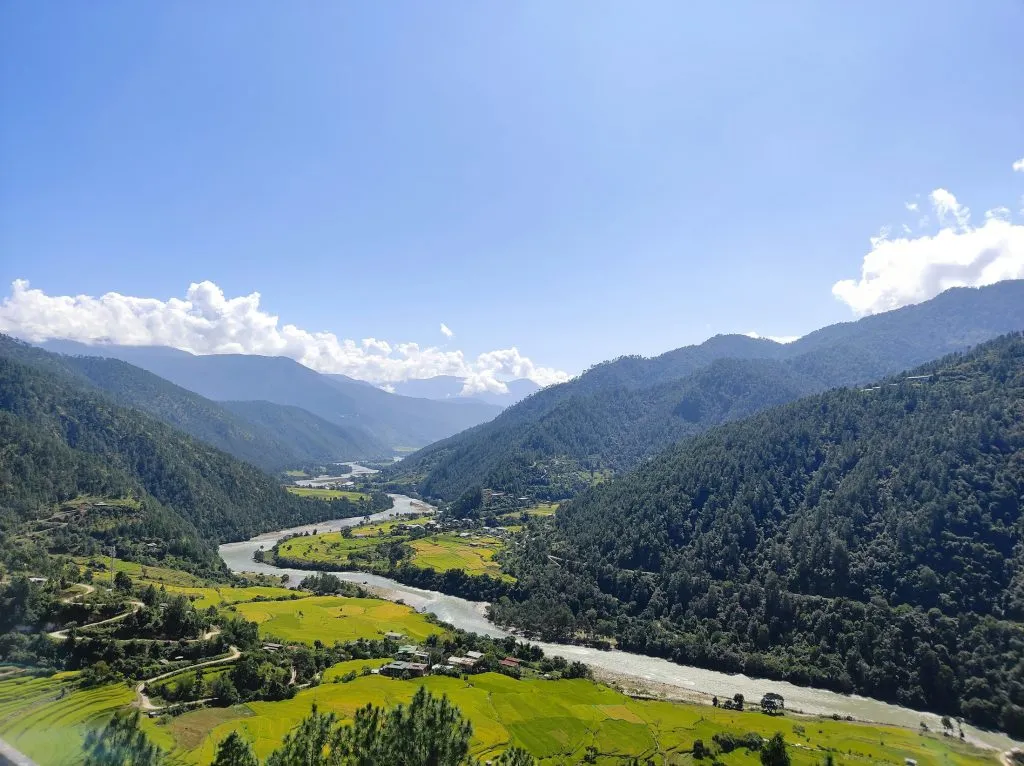
You cross Dochula to the warm Punakha valley, where rice grows in terraces along the rivers. You visit Punakha Dzong, then have dinner with a rice-farming family, who show you how rice is harvested, dried and husked. In season you may also see oranges, bananas and vegetables growing in the lower valley.
- Overnight: Punakha
- Drive: about 3 hours
- Meal: farmhouse dinner
Day 6
Over the passes to Bumthang
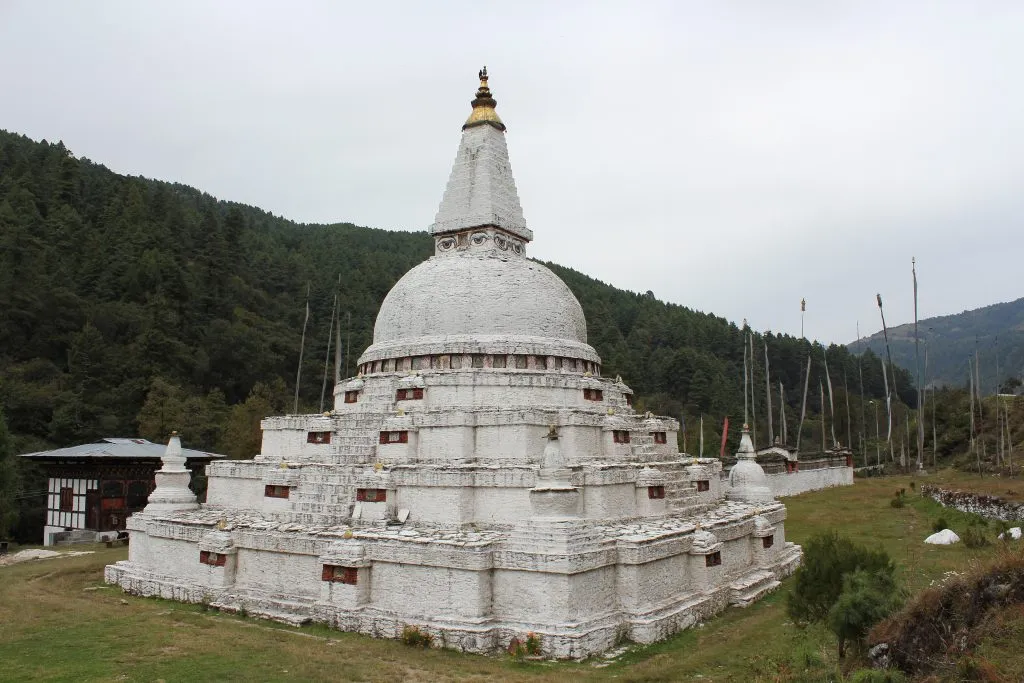
You drive over Pele La and Yotong La to Bumthang, stopping at Trongsa for lunch and a visit to the dzong. On the 8 day option, you instead spend a second day in Punakha and return to Paro. Bumthang is Bhutan’s highland valley of buckwheat, potatoes, dairy and apples, and its food is very different from the west.
- Overnight: Bumthang
- Drive: about 7 to 8 hours with stops
- Meals: breakfast, lunch and dinner
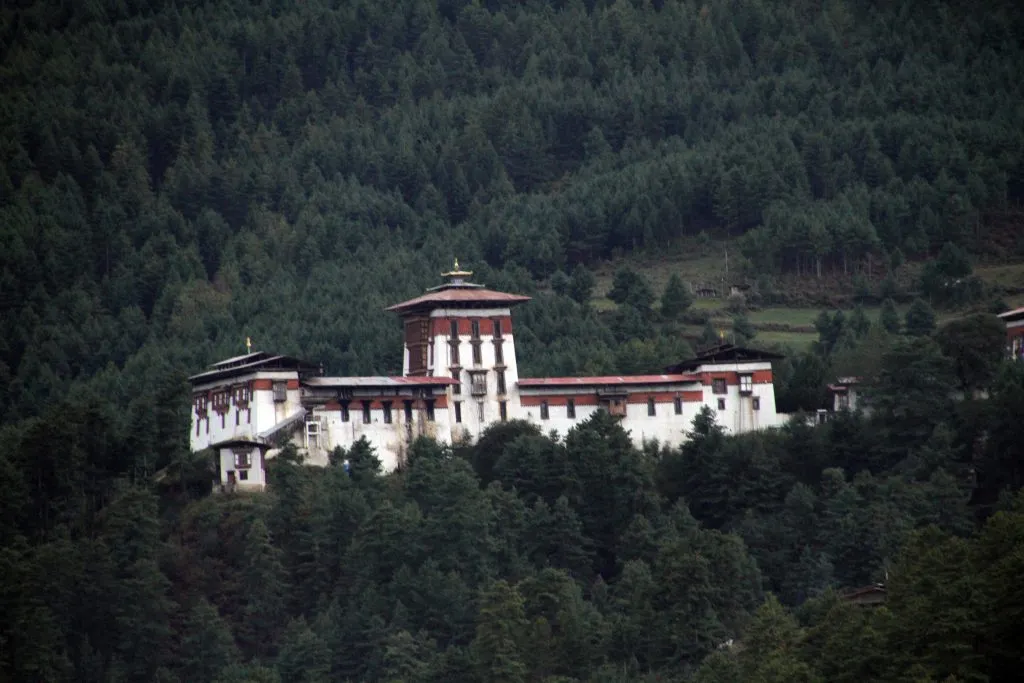
Day 7
Bumthang's producers
You visit the Swiss Farm area, where a Swiss settler helped start cheese making in the valley decades ago, and taste Bumthang cheese, honey and apple products. In the afternoon you make puta, buckwheat noodles pressed through a wooden press, and khuley, buckwheat pancakes, with a local family, and visit the Bumthang Brewery, maker of Red Panda wheat beer.
- Overnight: Bumthang
- Cooking: puta and khuley
- Tasting: cheese, honey and beer
Day 8
Back to Paro
You fly from Bumthang to Paro, about 30 minutes, on the days that flights run. In the evening you take your last class, putting together a full Bhutanese meal, and finish with a hot stone bath at the farmhouse. On the 12 day option, you spend two more days in Phobjikha and a Paro farmhouse before this.
- Overnight: Paro
- Flight: about 30 minutes
- Cooking: farewell dinner
Day 9
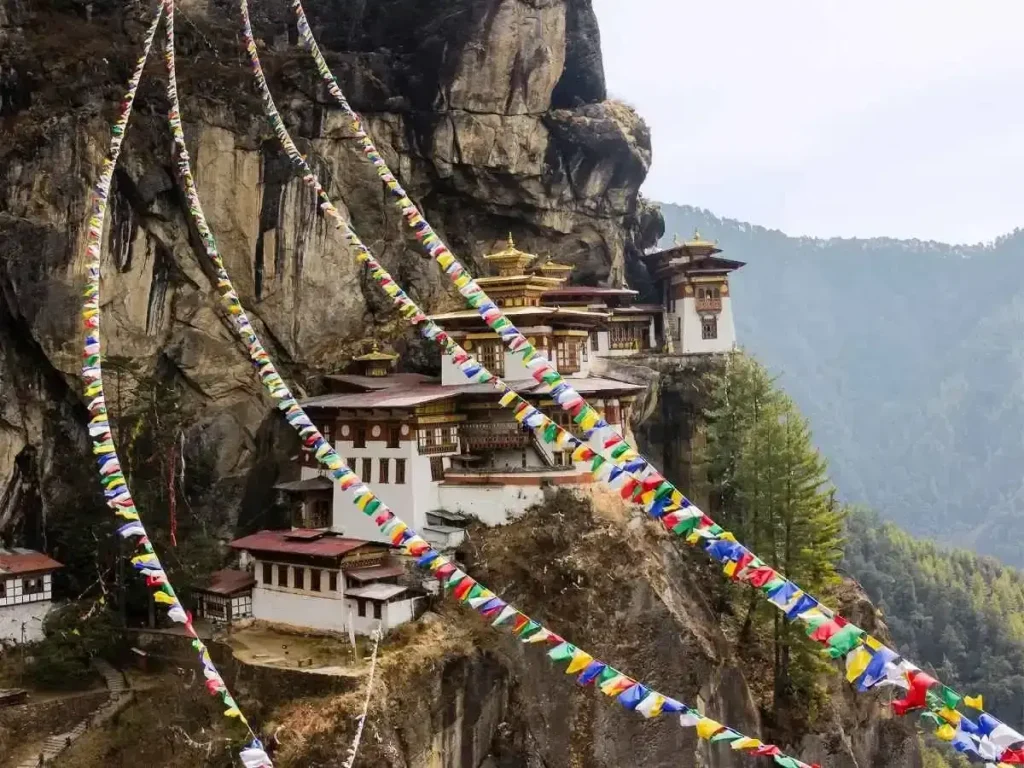
Hike to the Tiger's Nest
The hike to Paro Taktsang, the Tiger’s Nest, takes five to six hours return. The path climbs through blue pine forest to a cafeteria with a clear view of the monastery, then on to the cliff itself at about 3,120 metres, where Guru Rinpoche is said to have meditated in the 8th century. The cafeteria halfway up serves tea and biscuits with the best view of the monastery.
- Overnight: Paro
- Hike: 5 to 6 hours return
- Altitude: about 3,120 metres
Day 10
Fly home
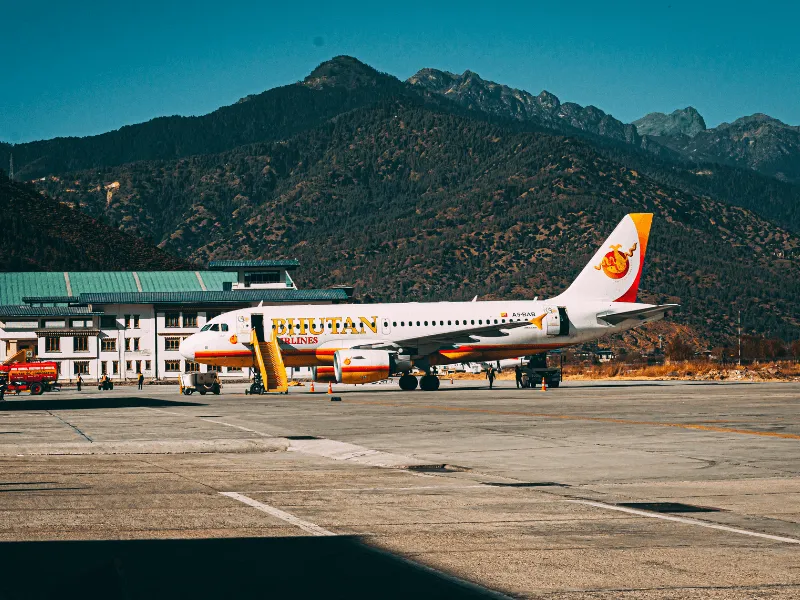
After breakfast your guide drives you to Paro airport for your flight home.
- Transfer: about 15 minutes
- Meals: breakfast
Where you stay
Where you stay
Comfortable hotels with farmhouse meals along the way.
| Nights | Place | Where you stay | Why we chose it |
|---|---|---|---|
| 1, 2, 8 and 9 | Paro | 3-star or 4-star hotel | Farmhouse night possible |
| 3 and 4 | Thimphu | 3-star or 4-star hotel | Near the market |
| 5 | Punakha | 3-star or 4-star hotel | Valley views |
| 6 and 7 | Bumthang | 3-star or 4-star hotel | Chamkhar valley |
Any night can be swapped for a licensed farmhouse stay.
What the price covers
Included and not included
Included
- Bhutan visa (USD 40) and the Sustainable Development Fee for every night
- Hotels as listed, 3-star as standard, with 4-star and luxury upgrades on request
- All meals: breakfast, lunch and dinner
- A licensed English-speaking guide for the whole trip
- Domestic flight from Bumthang to Paro
- Four cooking classes and two farmhouse meals
- Tastings at local producers
- Private car or SUV with a Bhutanese driver, and all transfers
- Entry fees to dzongs, temples and museums
- Bottled water in the car
Not included
- International flights into and out of Paro (we can book them for you)
- Travel insurance, which we strongly recommend
- Drinks, laundry and other personal costs
- Tips for your guide and driver
- Anything not listed under included
Price on request
Tell us your budget and we will send our best price
We don’t publish one fixed price, because hotels, season and group size change the total a lot. Tell us your dates, who is travelling and the budget you have in mind. We will reply within 24 hours with our best price for this culinary and farm-to-table tour.
How we price
What decides the cost of this trip
Government fees
The SDF is USD 100 per adult per night until 31 August 2027, plus a USD 40 visa. These are fixed by the Government of Bhutan and paid through us.
Hotels you choose
Trip length (8, 10 or 12 days), hotel style and group size change the total most.
Season and dates
Spring and autumn are peak season. Winter and summer dates are often easier to price well.
Group size
Guide and car costs are shared, so the price per person drops for two, three or four travellers.
We send a written, itemised quote before you pay anything. No booking fees.
Good to know
Planning your food tour
Regional dishes to look for
In the west, look for red rice, ema datshi and jasha maru. Haa is known for hoentay. Bumthang has puta, khuley and its own cheese and honey. In the east, people eat more maize, and dishes such as kharang (maize grits) are common. Across the country you will find momos, thukpa noodle soup, suja and dried meats. In summer, wild mushrooms such as matsutake appear in the markets.
Choosing 8, 10 or 12 days
The 8 day trip covers Paro, Haa, Thimphu and Punakha with three cooking classes and a farmhouse meal. The 10 day trip adds Bumthang and its producers, and flies back to Paro. The 12 day trip adds Phobjikha and an extra farmhouse night, and suits people who want a slower pace.
Diets and allergies
Many Bhutanese dishes are vegetarian, based on vegetables and cheese, and vegan versions are possible if you tell us in advance. Gluten-free travellers should be careful with buckwheat dishes, which are often mixed with wheat flour. Tell us about any allergies before you travel and we will brief every kitchen.
What Bhutanese people eat
Rice is at the centre of every meal, often the red rice of Paro and Punakha. Around it come dishes of vegetables, cheese and chilli: ema datshi, chillies in cheese, is the national dish, and kewa datshi (potatoes) and shamu datshi (mushrooms) are milder. In the highlands people eat buckwheat noodles and pancakes, and in the east, maize. Suja, salty butter tea, is served everywhere. If you do not eat much chilli, tell your guide on day one and the cooks will adjust. Our Bhutan food guide lists the dishes to try.
About Bhutanese farmhouse stays
Farmhouse stays in Bhutan are licensed. Under the Department of Tourism’s homestay guidelines, a family may let out no more than three rooms, and the house must meet basic standards for cleanliness, bedding and toilets. Rooms are simple: wooden floors, warm quilts, a shared or attached bathroom and often a bukhari stove. You eat with the family, usually sitting on cushions on the floor, and the food is what they grow. Our farmhouse homestay tour has more on what to expect.
The hot stone bath
A menchu, or hot stone bath, is a wooden tub of river water heated with stones that have been roasted in a fire, often with artemisia leaves added. Bhutan’s Department of Tourism lists it among the country’s traditional wellness experiences, and Bhutanese people use it to ease sore joints and tired muscles. Many farmhouses in Paro and Punakha offer one in the evening. Tell your guide if you have heart problems or high blood pressure before you book.
Getting to Bumthang
Bumthang is about 270 km from Thimphu, but the road crosses three passes and the drive takes most of two days. We break it with a night in Punakha or Trongsa. Drukair also flies between Paro and Bumthang on set days of the week, in about 30 minutes, and on most of our central Bhutan trips we fly back to save a day on the road. The schedule changes by season, so we confirm the flight when you book.
Visa, SDF and guide rules
Every visitor except Indian nationals needs a visa, which costs USD 40 and is issued online before you fly. The Sustainable Development Fee is USD 100 per adult per night until 31 August 2027, with half rates for children aged 6 to 11. A Department of Tourism notice from April 2026 confirms that visitors travel with a licensed guide. We file the visa and pay the SDF for you. Read more in our Bhutan visa guide and SDF guide.
Flying into Paro
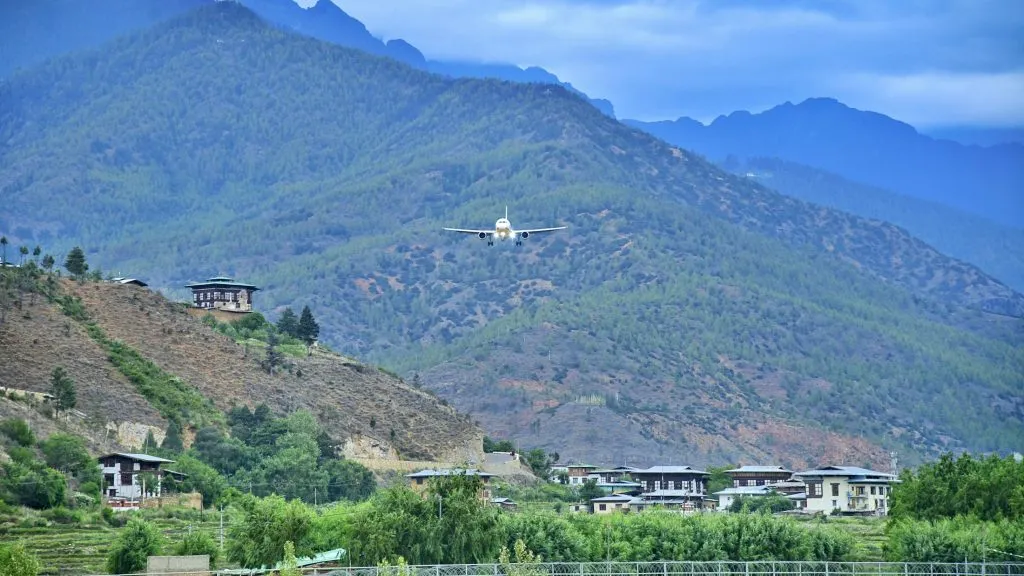
Only Drukair and Bhutan Airlines fly into Paro, mainly from Bangkok, Delhi, Kathmandu, Kolkata and Singapore. Pilots land by sight between the ridges, so morning flights are the most reliable. We suggest a night in your hub city on the way in. Our flights to Bhutan page lists every route.
Culinary tour: questions
It depends on your hotels, group size and dates. Tell us your budget and we will reply within 24 hours with our best price, including the SDF, visa, hotels, meals, guide and car.
Often, yes. Chillies are used as a vegetable, but cooks can make milder versions for you.
Yes. You cook every dish yourself with a local cook or family.
Yes. Many Bhutanese dishes are vegetarian.
Ten days as standard, with 8 and 12 day versions.
Yes, for every dish you cook.
Yes. July and August bring wild mushrooms, and some valleys hold mushroom festivals.
Two to four months ahead.
Price on request
Ask for your best price
Tell us which version you want, any dietary needs and your budget. We will reply within 24 hours with our best price for this culinary tour.
- Share your budget, we shape the trip around it
- No booking fees, ever
- A reply within 24 hours
- Licensed Bhutanese tour operator
- +975 17533776
- +975 77495028
- info@deyabhutantours.com
- Thimphu, Bhutan
Let's plan your Bhutan journey
Tell us a little about your trip. Our team in Thimphu will reply with ideas, a day-by-day plan and a full price.
We’ll reply within 24 hours. No booking fees, and no obligation to book.