- Licensed Bhutanese tour operator
- Thimphu, Bhutan
Cultural tour · 14 days, 13 nights
14 Day Eastern Bhutan Tour: Merak, Trashigang, Lhuentse and Bumthang
Bhutan’s least visited region: enter from Guwahati, meet the Brokpa herders of Merak, see the weavers of Radi and Khoma, the great stupa of Chorten Kora and Mongar, then cross Thrumshing La to Bumthang and fly to Paro.
- 14 days, 13 nights
- Enter from Guwahati, exit from Paro
- Few other visitors
6
Eastern districts visited
3,780 m
Thrumshing La, about
1
Domestic flight
Private
Guide and car
Trip overview
The other Bhutan
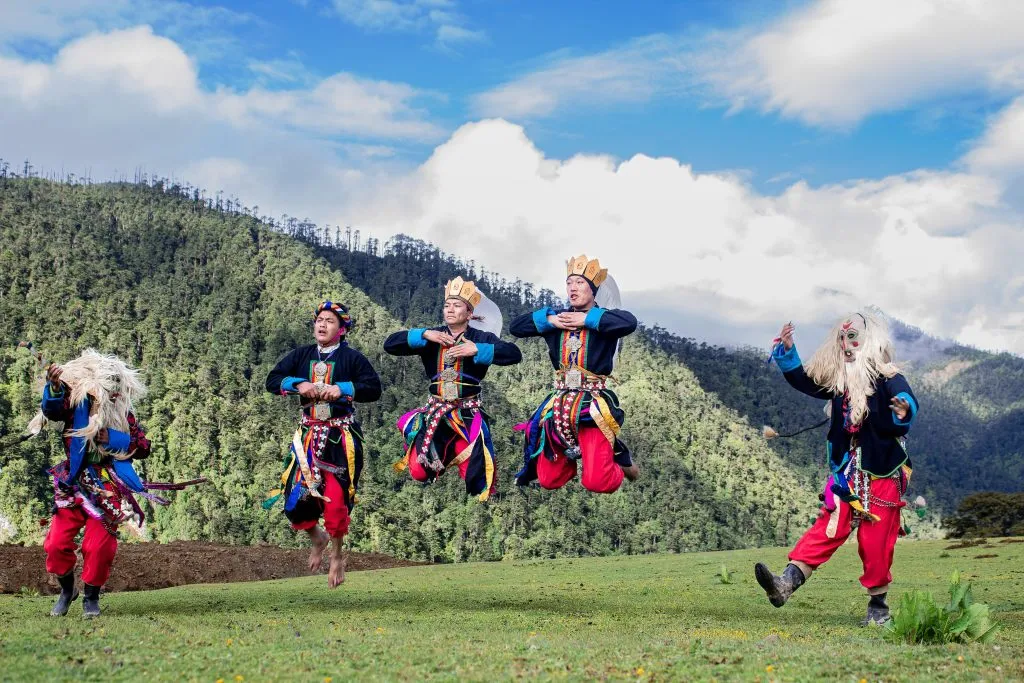
Most visitors to Bhutan never go further east than Bumthang. Beyond it lies a different country: steeper valleys, warmer forests, villages clinging to hillsides and some of the finest weaving traditions in the Himalaya. The east has fewer hotels and longer drives, but it also has almost no tourists, and people are curious and warm towards the few who come.
This trip starts in the south-east, entering Bhutan by road from Guwahati in Assam through Samdrup Jongkhar. You drive north to Trashigang, then up to Merak, a village of the Brokpa people, semi-nomadic yak herders with their own dress and customs. You visit Radi, where women weave raw silk, Trashi Yangtse with its great white stupa, Chorten Kora, and Lhuentse, the ancestral home of the royal family, where Khoma village weaves the famous kishuthara cloth.
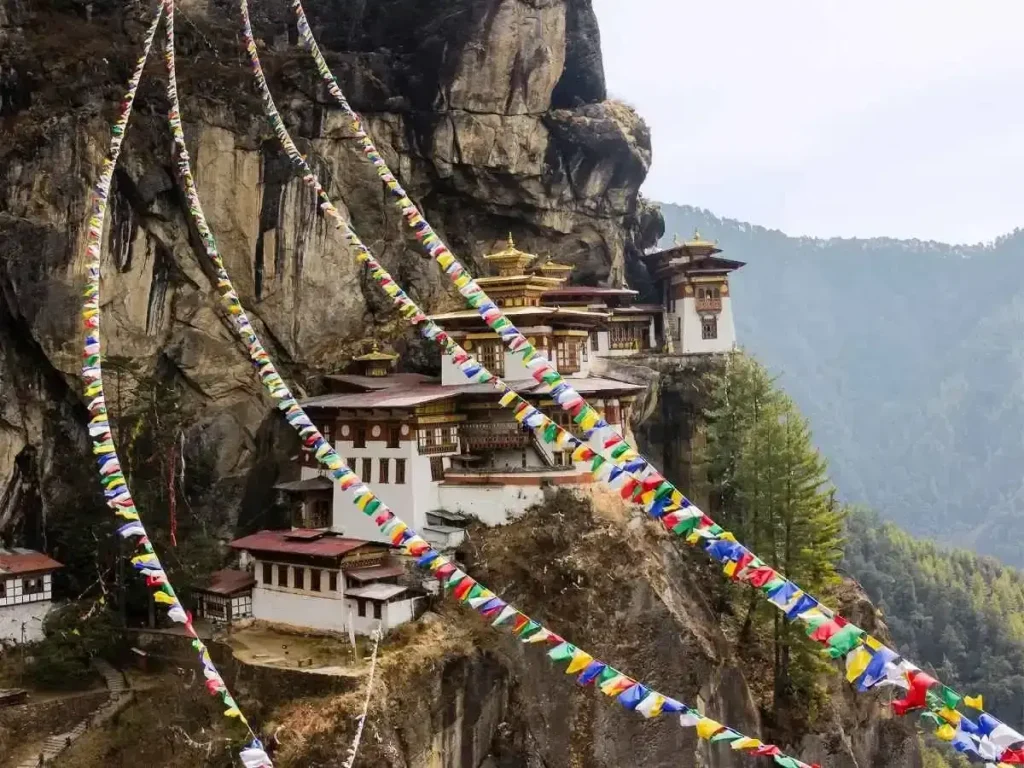
From Mongar you cross Thrumshing La, one of the highest road passes in Bhutan, through cloud forest to Bumthang, the spiritual heart of the country. After two days among Bumthang’s temples, you fly back to Paro, saving the long drive west, and finish with the Tiger’s Nest.
- Merak and the Brokpa herders
- Weaving villages of Radi and Khoma
- Chorten Kora, Lhuentse and Bumthang
Highlights
Highlights of the east
Merak
Home of the Brokpa, semi-nomadic yak herders.
Trashigang Dzong
A 17th century fortress on a ridge above two rivers.
Chorten Kora
A great white stupa in Trashi Yangtse.
Khoma weavers
Kishuthara silk weaving in Lhuentse.
Thrumshing La
A high pass through cloud forest.
Tiger's Nest
The cliff monastery above Paro, to finish.
Itinerary at a glance
Fourteen days, east to west
Eastern roads are slow; we keep driving days broken up with stops.
Day 1: Guwahati to Samdrup Jongkhar
Pick up at Guwahati, drive to the border.
Day 2: To Trashigang
Climb north through Deothang and Khaling to Trashigang.
Day 3: To Merak
Drive up to the Brokpa village of Merak.
Day 4: Merak
A day in the village, walks to the yak pastures.
Day 5: Back to Trashigang
Down from Merak, Trashigang Dzong, Radi weavers.
Day 6: Trashi Yangtse
Gom Kora, Chorten Kora, the wood-turning school.
Day 7: To Mongar
Over Kori La to Mongar.
Day 8: Lhuentse
Day trip to Lhuentse Dzong and Khoma village.
Day 9: Over Thrumshing La to Bumthang
Thrumshing La, Ura village.
Day 10: Bumthang
Jambay Lhakhang, Kurjey, Tamshing, Jakar Dzong.
Day 11: Tang valley
Mebar Tsho, the Burning Lake, Ogyen Choling.
Day 12: Fly to Paro
Domestic flight to Paro, Paro town.
Day 13: Tiger's Nest
Hike to Paro Taktsang.
Day 14: Depart
Transfer to Paro airport.
Day 1
Into Bhutan from Assam
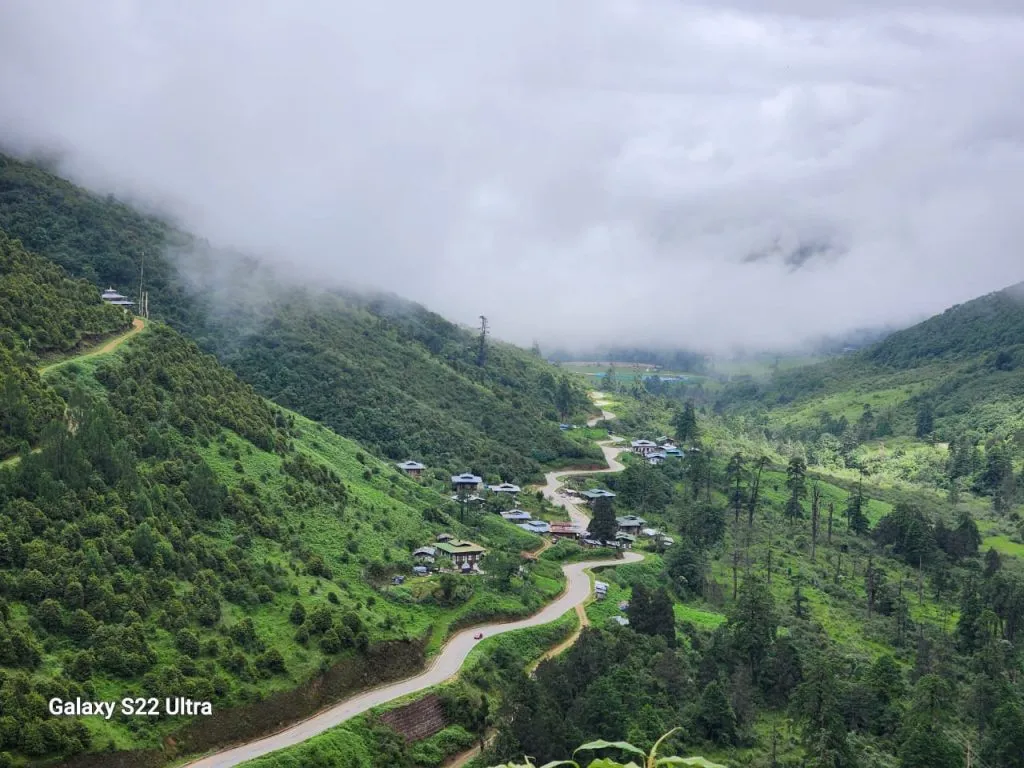
We collect you at Guwahati airport for the drive of about three hours to Samdrup Jongkhar, a quiet border town. Your Bhutan visa is arranged in advance, and your guide handles the entry formalities.
- Overnight: Samdrup Jongkhar
- Drive: about 3 hours
- Meals: lunch and dinner
Day 2
North to Trashigang
The road climbs through forest, past Deothang and the weaving town of Khaling, to Trashigang, the largest town in the east. You arrive in the late afternoon.
- Overnight: Trashigang
- Drive: about 7 hours with stops
- Meals: breakfast, lunch and dinner
Day 3
Up to Merak
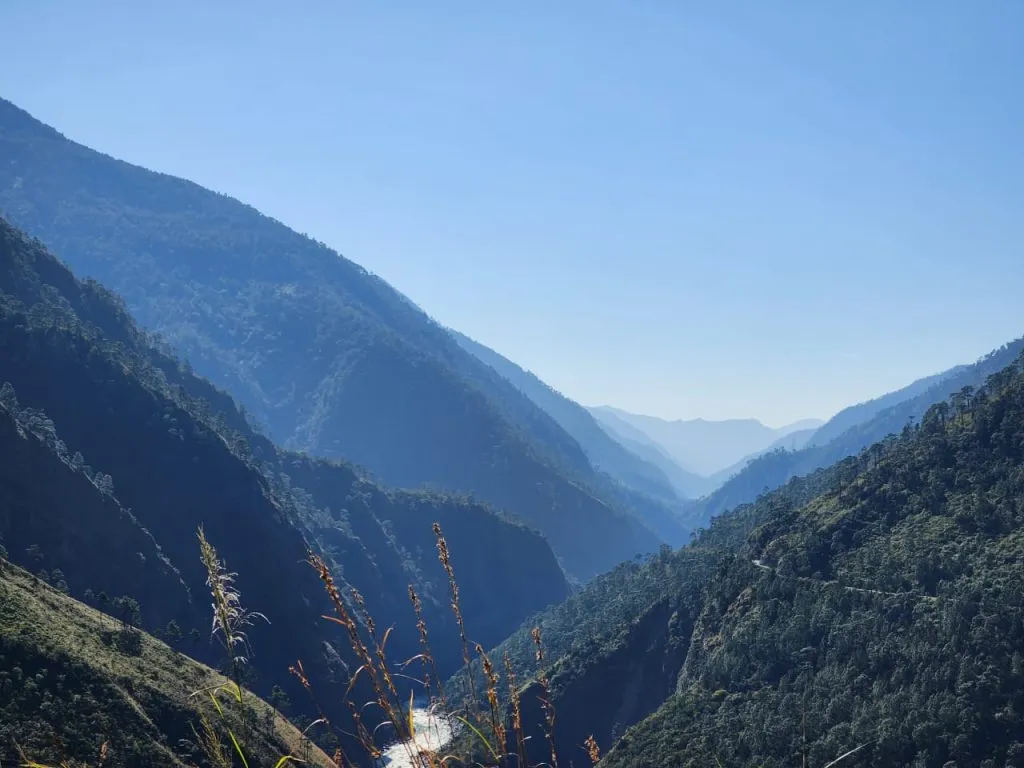
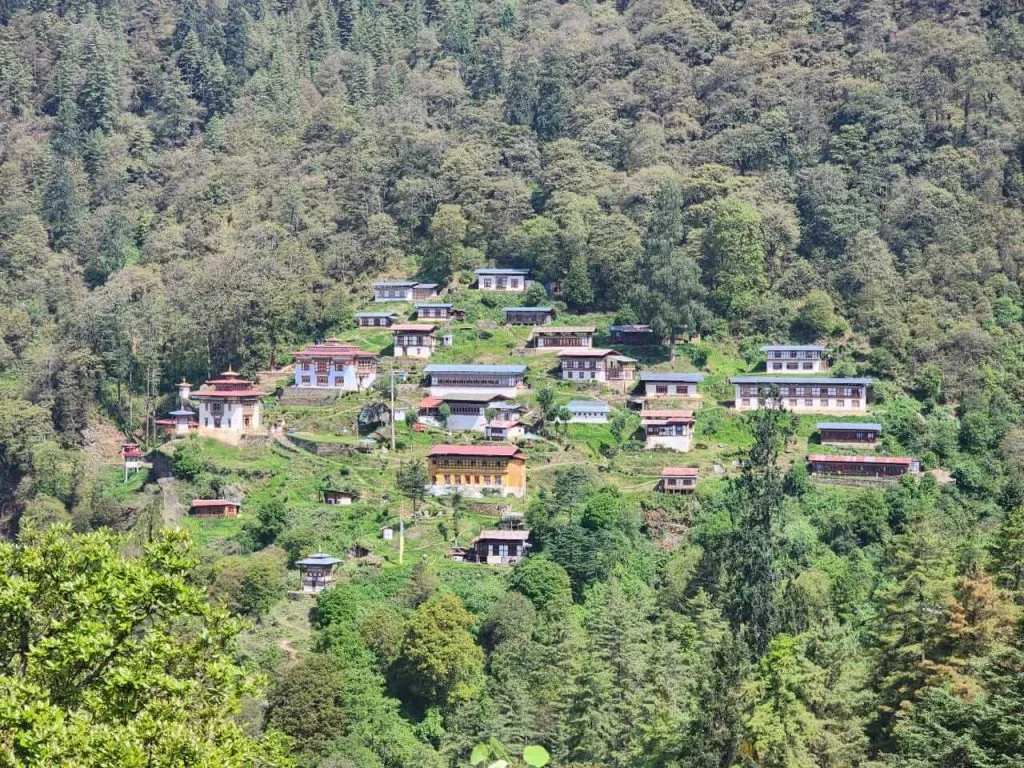
A rough road now climbs from the Trashigang area to Merak, at about 3,500 metres. Depending on conditions, part of the way may be on foot. Merak is home to the Brokpa, yak herders who wear red woollen clothes and felt hats with long tassels. You stay with a family in the village.
- Overnight: Merak homestay
- Drive: about 4 hours, rough road
- Note: permits arranged by us
Day 4
A day with the Brokpa
A full day in Merak. You walk to nearby pastures, see how the families make butter and cheese from yak milk, visit the village temple and, if you are lucky, see a Brokpa dance. The evening is spent by the fire with your host family.
- Overnight: Merak homestay
- Walking: easy to moderate
- Meals: home-cooked by your hosts
Day 5
Trashigang and Radi
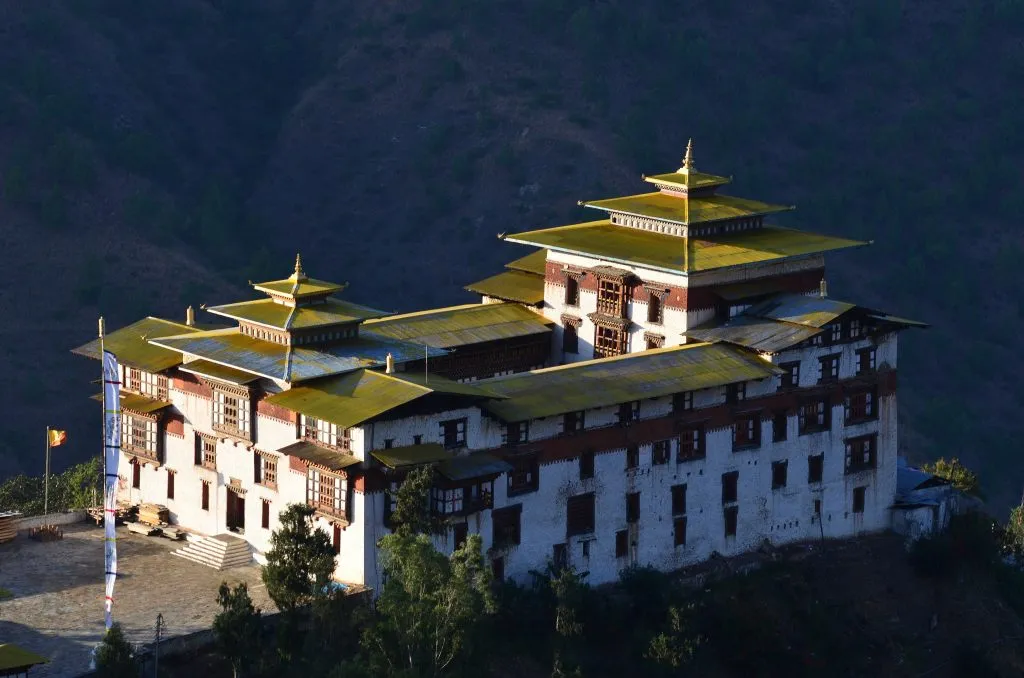
You return to Trashigang and visit Trashigang Dzong, built in 1659 on a spur above the Drangme Chhu and Gamri Chhu. In the afternoon you visit Radi, where women weave raw silk on back-strap looms, and the temple at Rangjung.
- Overnight: Trashigang
- Drive: about 4 hours
- Meals: breakfast, lunch and dinner
Day 6
Gom Kora and Chorten Kora
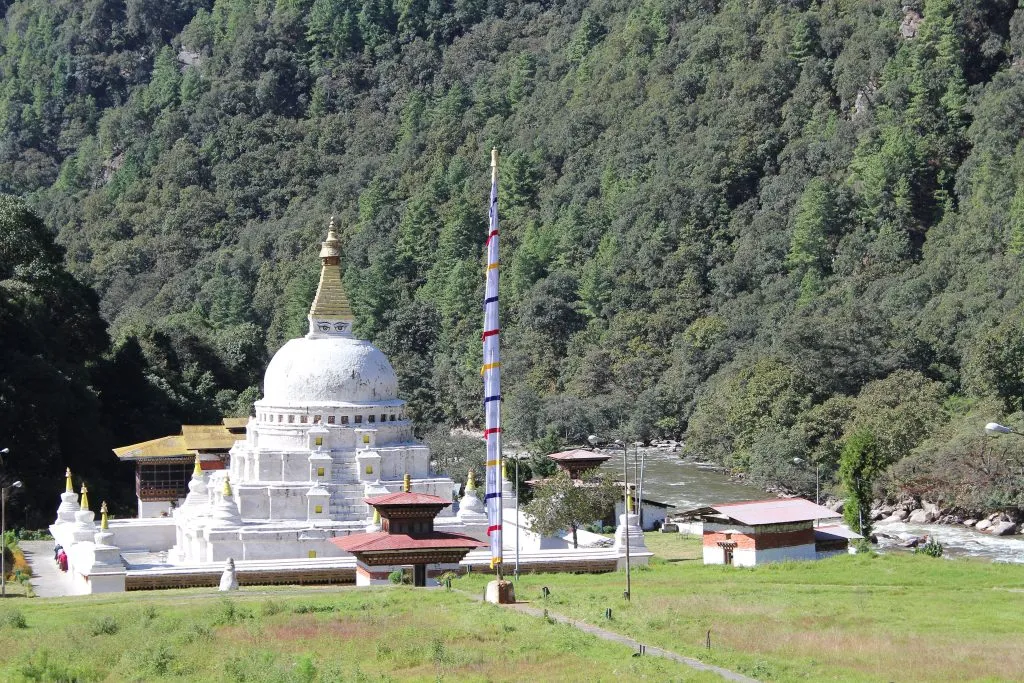
You drive north along the Drangme Chhu to Gom Kora, a temple beside the river where Guru Rinpoche is said to have meditated. Then you continue to Trashi Yangtse to see Chorten Kora, a great white stupa built in the 18th century, and the Institute for Zorig Chusum, known for its wooden bowls.
- Overnight: Trashi Yangtse or Trashigang
- Drive: about 4 hours return
- Meals: breakfast, lunch and dinner
Day 7
West to Mongar
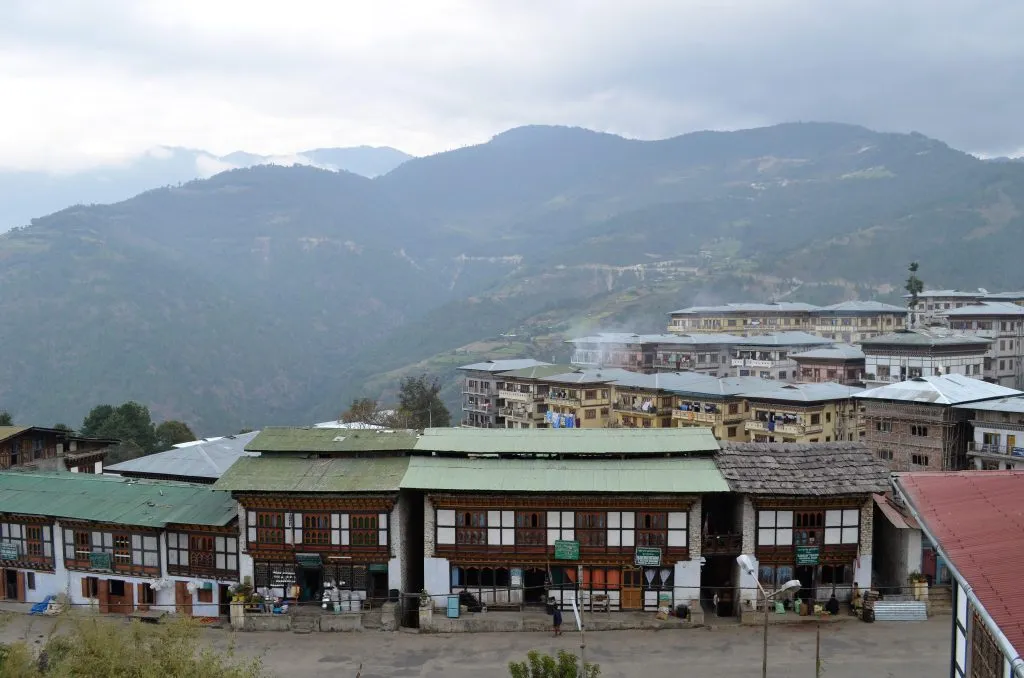
You drive west over Kori La, at about 2,400 metres, through forest full of birds, to Mongar. In the afternoon you visit Mongar Dzong, a 20th century dzong built in the traditional way without nails or drawings.
- Overnight: Mongar
- Drive: about 4 hours
- Meals: breakfast, lunch and dinner
Day 8
Lhuentse and the Khoma weavers
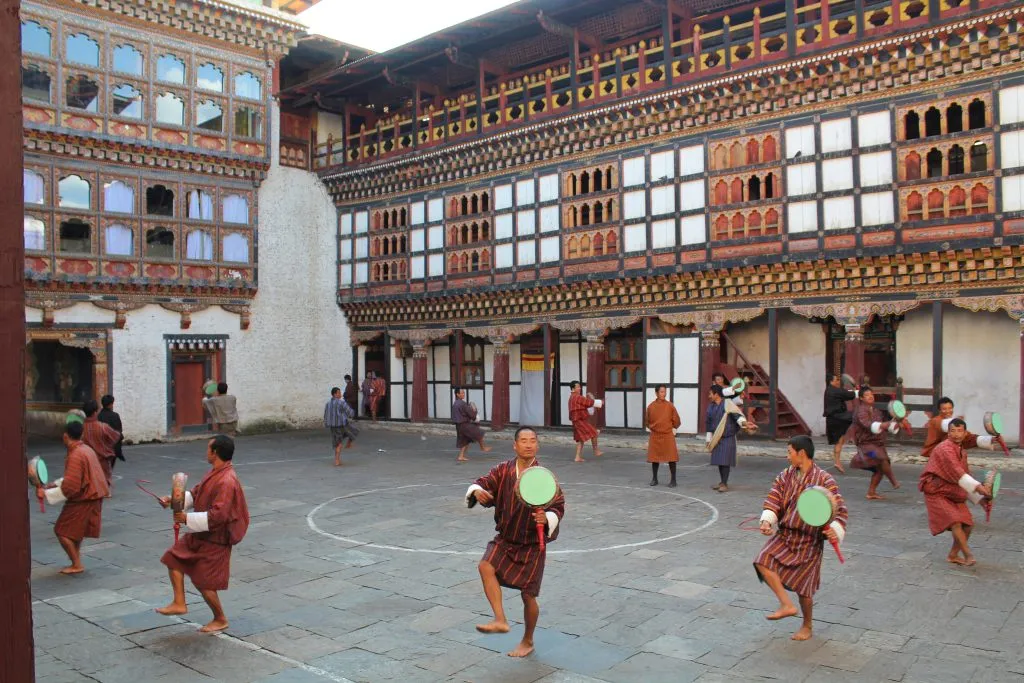
A day trip north along the Kuri Chhu to Lhuentse, the ancestral home of Bhutan’s royal family. You visit Lhuentse Dzong on its ridge and walk to Khoma village, where women weave kishuthara, the most prized of Bhutan’s silk textiles.
- Overnight: Mongar
- Drive: about 6 hours return
- Highlight: Khoma weaving village
Day 9
Over Thrumshing La
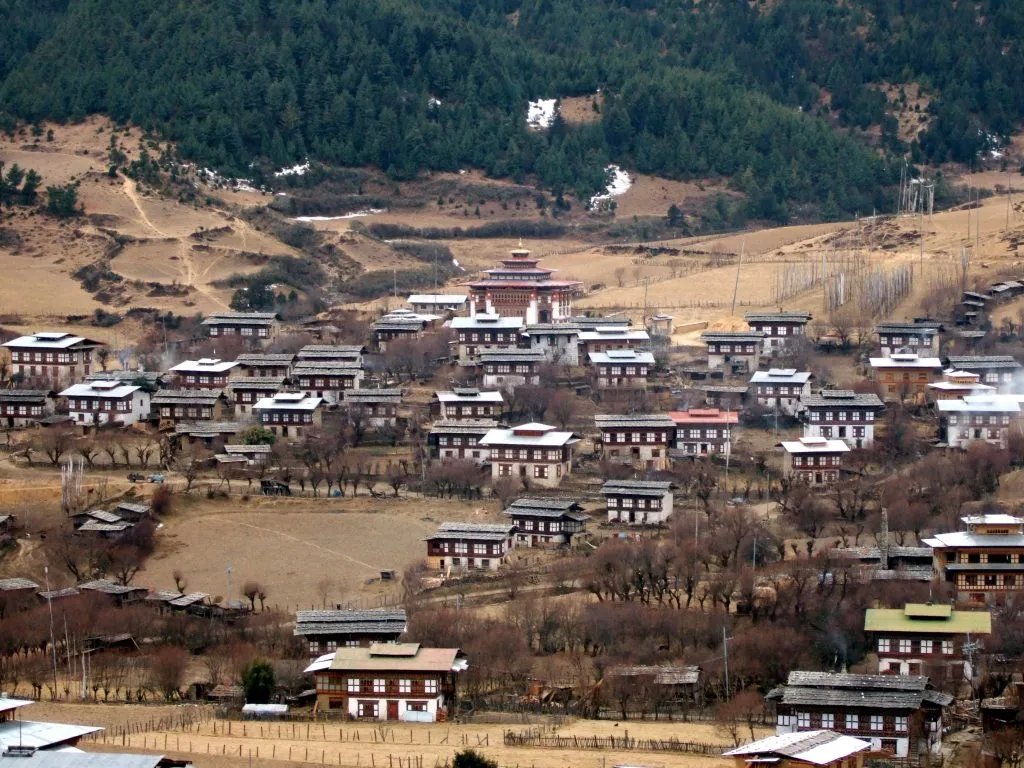
A spectacular drive. The road climbs from warm valleys through cloud forest to Thrumshing La, at about 3,780 metres, one of the highest road passes in Bhutan. On the other side you descend to Ura, a village of stone houses, and on to Jakar in Bumthang.
- Overnight: Bumthang
- Drive: about 7 hours with stops
- Highest point: about 3,780 metres
Day 10
Bumthang's sacred temples
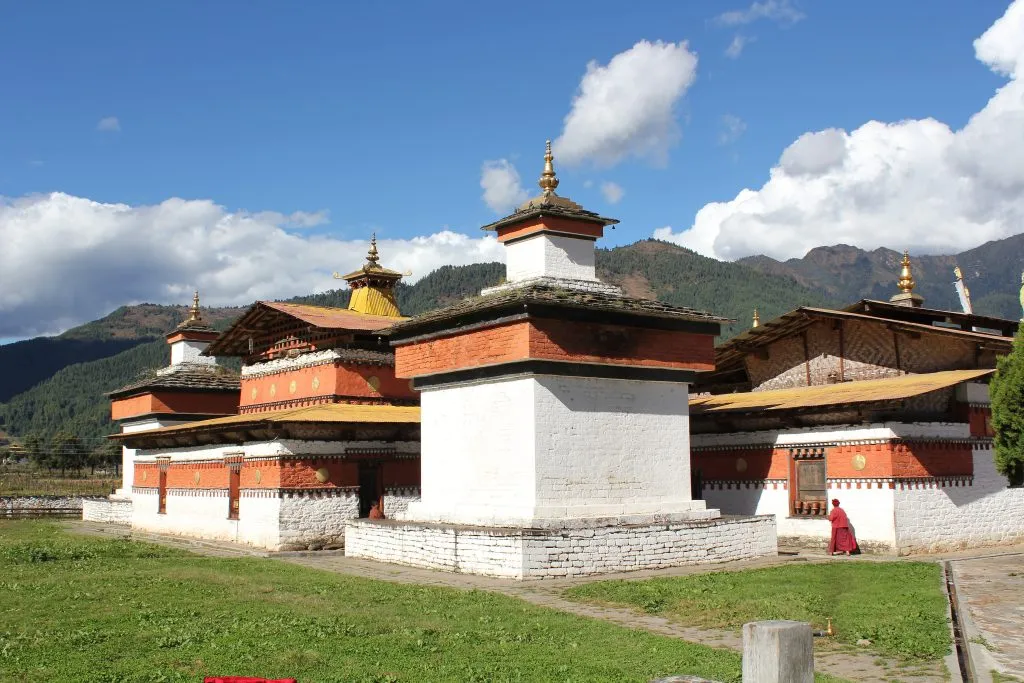
A day in the spiritual heart of Bhutan: Jambay Lhakhang, said to date from the 7th century, Kurjey Lhakhang with Guru Rinpoche’s body print, Tamshing Lhakhang, founded in 1501, and Jakar Dzong above the valley.
- Overnight: Bumthang
- Walking: easy village walks
- Meals: breakfast, lunch and dinner
Day 11
The Tang valley
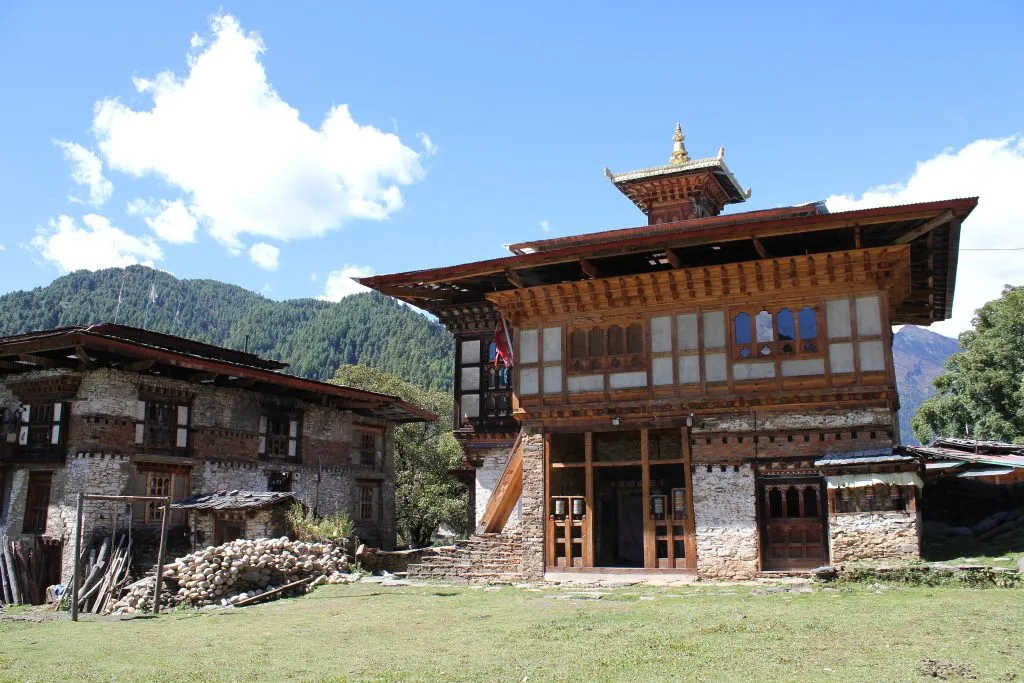
You visit Mebar Tsho, the Burning Lake, where Pema Lingpa is said to have found sacred treasure, and drive up the Tang valley to Ogyen Choling, an old manor house that is now a museum of rural life.
- Overnight: Bumthang
- Drive: about 3 hours return
- Meals: breakfast, lunch and dinner
Day 12
Fly back west
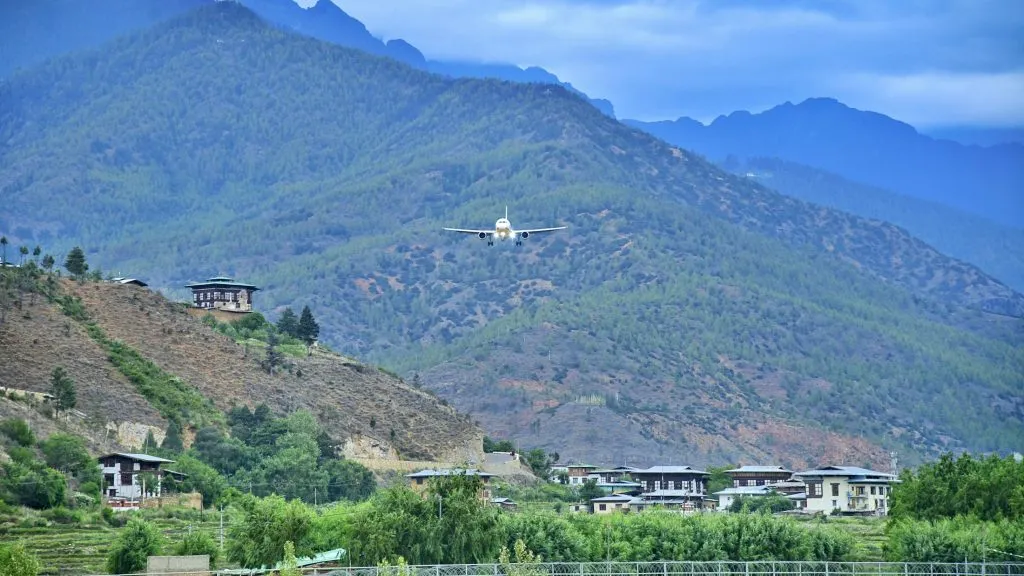
You fly from Bumthang to Paro, about 30 minutes, instead of two long days on the road. In the afternoon you visit Rinpung Dzong and Kyichu Lhakhang.
- Overnight: Paro
- Flight: about 30 minutes
- Meals: breakfast, lunch and dinner
Day 13
Hike to the Tiger's Nest
The hike to the Tiger’s Nest takes five to six hours return. In the evening, a farewell dinner and an optional hot stone bath.
- Overnight: Paro
- Hike: 5 to 6 hours return
- Altitude: about 3,120 metres
Day 14
Fly home
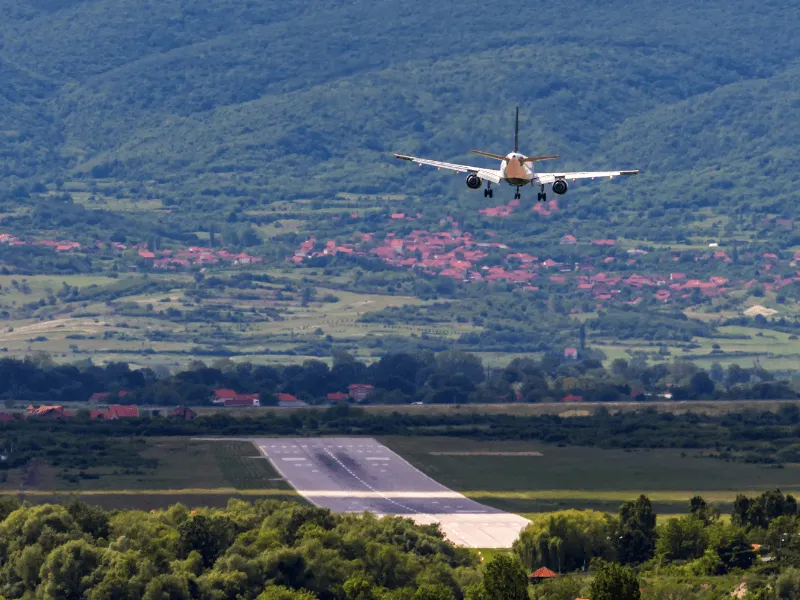
After breakfast your guide drives you to Paro airport for your flight.
- Transfer: about 15 minutes
- Meals: breakfast
Where you stay
Where you stay
The best available hotels in the east, and two nights with a Brokpa family.
| Nights | Place | Where you stay | Why we chose it |
|---|---|---|---|
| 1 | Samdrup Jongkhar | 3-star hotel | Border town |
| 2, 5 and 6 | Trashigang | 3-star hotel | Eastern hub |
| 3 and 4 | Merak | Homestay | With a Brokpa family |
| 7 and 8 | Mongar | 3-star hotel | Base for Lhuentse |
| 9 to 11 | Bumthang | 3-star or 4-star hotel | Chamkhar valley |
| 12 and 13 | Paro | 3-star or 4-star hotel | Near the trailhead |
Hotels in the east are simple but clean. The homestay in Merak is basic, with shared facilities.
What the price covers
Included and not included
Included
- Bhutan visa (USD 40) and the Sustainable Development Fee for every night
- Hotels as listed, 3-star as standard, with 4-star and luxury upgrades on request
- All meals: breakfast, lunch and dinner
- A licensed English-speaking guide for the whole trip
- Domestic flight from Bumthang to Paro
- Homestay in Merak
- Transfer from Guwahati airport
- Private car or SUV with a Bhutanese driver, and all transfers
- Entry fees to dzongs, temples and museums
- Bottled water in the car
Not included
- Flights into Guwahati and out of Paro
- Travel insurance, which we strongly recommend
- Drinks, laundry and other personal costs
- Tips for your guide and driver
- Anything not listed under included
Price on request
Tell us your budget and we will send our best price
We don’t publish one fixed price, because hotels, season and group size change the total a lot. Tell us your dates, who is travelling and the budget you have in mind. We will reply within 24 hours with our best price for this Eastern Bhutan tour.
How we price
What decides the cost of this trip
Government fees
The SDF is USD 100 per adult per night until 31 August 2027, plus a USD 40 visa. These are fixed by the Government of Bhutan and paid through us.
Hotels you choose
Long drives and few hotels make the east different to price. Group size makes the biggest difference.
Season and dates
Spring and autumn are peak season. Winter and summer dates are often easier to price well.
Group size
Guide and car costs are shared, so the price per person drops for two, three or four travellers.
We send a written, itemised quote before you pay anything. No booking fees.
Good to know
Planning an Eastern Bhutan tour
Why go east?
Eastern Bhutan is where most Bhutanese live, but very few visitors go there. You see farming villages, weaving traditions and festivals that have changed little, and you rarely meet another tourist. The trade-off is long drives on winding roads and simpler hotels. If you have been to western Bhutan before, or simply want to see the country beyond the usual route, the east is the place.
The Brokpa of Merak and Sakteng
The Brokpa are semi-nomadic yak herders who live in the high valleys of Merak and Sakteng. They have their own language, and their red woollen clothes and yak-felt hats with long tassels are unlike anything else in Bhutan. The area is part of the Sakteng Wildlife Sanctuary. Visits need permits, which we arrange, and homestays are simple, so come with an open mind.
Weaving in the east
Eastern Bhutan is the home of Bhutan’s finest weaving. In Radi, women weave raw silk. In Khoma village in Lhuentse, they weave kishuthara, a finely patterned silk textile worn for special occasions, which can take months to make. Buying directly from the weavers supports them and gives you a piece of real Bhutanese craft.
Entering from Guwahati
Samdrup Jongkhar is one of Bhutan’s land entry points open to international visitors. Your Bhutan visa is arranged online before you travel. If you need an Indian visa to reach Guwahati, you apply for that yourself; we can send a letter with your itinerary to help.
Best seasons
March to May and October to November are the best months. Many eastern festivals, including the Trashigang and Mongar tshechus, take place in early December. The monsoon, June to September, brings heavy rain and landslides to eastern roads.
Temple etiquette
Cover shoulders and knees in dzongs and temples, take off hats, and walk clockwise around chortens and prayer wheels. Photography is not allowed inside shrine rooms. Your guide explains each place before you go in. Read more in our Bhutan travel rules guide.
Visa, SDF and guide rules
Every visitor except Indian nationals needs a visa, which costs USD 40 and is issued online before you fly. The Sustainable Development Fee is USD 100 per adult per night until 31 August 2027, with half rates for children aged 6 to 11. A Department of Tourism notice from April 2026 confirms that visitors travel with a licensed guide. We file the visa and pay the SDF for you. Read more in our Bhutan visa guide and SDF guide.
Eastern Bhutan tour: questions
It depends on your hotels, group size and dates. Tell us your budget and we will reply within 24 hours with our best price, including the SDF, visa, hotels, meals, guide and car.
Yes, for culture, weaving and remote villages with very few tourists. Roads are long and hotels simple.
Yes, through Samdrup Jongkhar, with a Bhutan visa arranged in advance.
Yes. We arrange it with your other permits.
They are simple but clean. The Merak homestay is basic.
Yes. Trashigang and Mongar tshechus are held in early December.
It saves two days of driving and ends the trip in Paro.
Three to five months ahead.
Price on request
Ask for your best price
Tell us your dates, who is travelling and your budget. We will reply within 24 hours with our best price for this Eastern Bhutan tour.
- Share your budget, we shape the trip around it
- No booking fees, ever
- A reply within 24 hours
- Licensed Bhutanese tour operator
- +975 17533776
- +975 77495028
- info@deyabhutantours.com
- Thimphu, Bhutan
Let's plan your Bhutan journey
Tell us a little about your trip. Our team in Thimphu will reply with ideas, a day-by-day plan and a full price.
We’ll reply within 24 hours. No booking fees, and no obligation to book.