- Licensed Bhutanese tour operator
- Thimphu, Bhutan
Special interest tour · 9 days, 8 nights
9 Day Bhutan Life Release and Spiritual Journey: Tshethar, Prayer Flags and Sacred Temples
Take part in the Buddhist practices Bhutanese use to make merit and seek blessings: a tshethar life release ceremony, raising prayer flags, lighting butter lamps and visiting the country’s holiest temples with a lama and your guide.
- 9 days, 8 nights
- Tshethar ceremony with a lama
- Paro, Thimphu and Punakha
108
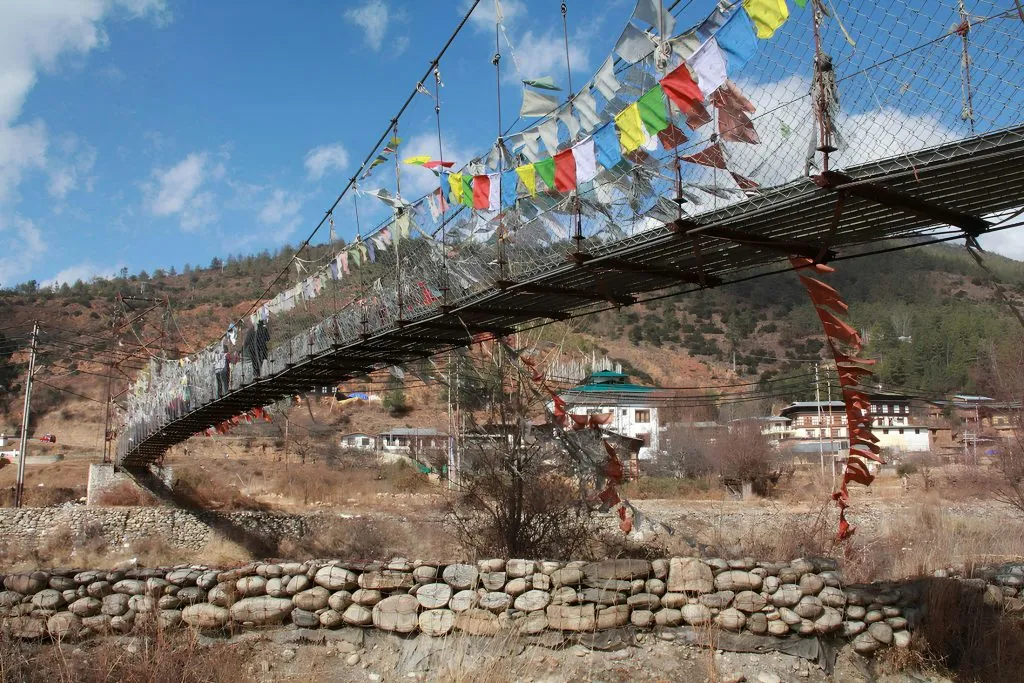
Prayer flags in a manidar row
3
Merit rituals you take part in
8th
Century of Guru Rinpoche’s visits
Easy to moderate
Grade
Trip overview
Making merit the Bhutanese way
For most Bhutanese, Buddhism is something you do as well as believe. People walk around chortens, spin prayer wheels, light butter lamps, raise prayer flags on hilltops and make offerings at temples, all to gather merit, sonam, and to send good wishes to others. One of the most valued practices is tshethar, life release. A family or a community saves animals that would otherwise be killed, such as fish bought from the market or cattle due to be sold for meat, and releases them with prayers. Saving a life is seen as one of the best ways to gain merit and to pray for long life, health or the welfare of someone who is ill or has died.
This 9 day journey lets you take part in these practices with respect and understanding. A lama or monk joins you for the key rituals and explains their meaning. You raise a row of prayer flags on a ridge above Thimphu, consult an astrologer if you wish, light butter lamps in temples, and take part in a tshethar ceremony by a river in Punakha. In between, you visit the holiest places of western Bhutan: Kyichu Lhakhang, the Memorial Chorten, Changangkha, Tango and Cheri monasteries, Punakha Dzong, Chimi Lhakhang and the Tiger’s Nest.
You do not need to be a Buddhist to join. Bhutanese are happy for visitors of any faith to take part, as long as it is done sincerely. The pace is gentle, with two longer hikes to Cheri and the Tiger’s Nest. The trip also works as a pilgrimage to remember a loved one, and we can arrange prayers and white prayer flags in their name.
- A tshethar life release ceremony with a lama
- Prayer flags, butter lamps and an astrology reading
- Tango, Cheri, Punakha and the Tiger's Nest
Highlights
Highlights of the journey
Tshethar
A life release ceremony by the river.
Prayer flags
Raise lungta or manidar on a ridge above Thimphu.
Butter lamps
Offerings of light in Bhutan's holy temples.
Astrology
A reading with a Bhutanese astrologer.
Tango and Cheri
Monasteries above the Thimphu valley.
Tiger's Nest
Bhutan's holiest cliff temple.
Itinerary at a glance
Nine days at a glance
Ceremonies are arranged with a lama and timed on auspicious days where possible.
Day 1: Arrive in Paro
Land in Paro.
Day 2: To Thimphu
The Memorial Chorten and Changangkha.
Day 3: Tango and Cheri
Hikes to two monasteries.
Day 4: Prayer flags and astrology
Raise prayer flags, meet an astrologer.
Day 5: To Punakha
Over Dochula to Punakha.
Day 6: Tshethar ceremony
Life release by the river.
Day 7: Back to Paro
Drive to Paro, Dungtse and a quiet evening.
Day 8: Tiger's Nest
Hike to Paro Taktsang.
Day 9: Depart
Transfer to Paro airport.
Day 1
Arrive in Paro
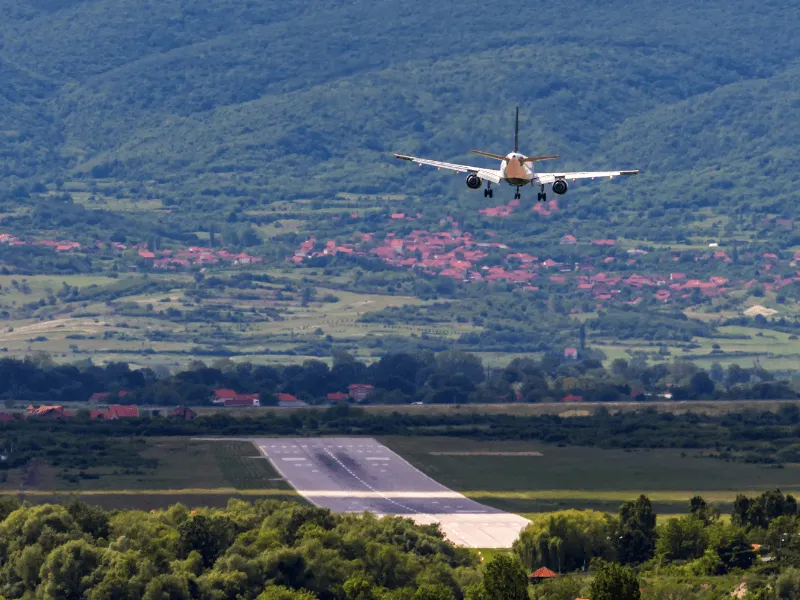
Your guide meets you at Paro airport. In the afternoon you visit Kyichu Lhakhang, one of the oldest temples in Bhutan, said to have been built in the 7th century to pin down a demoness. You light your first butter lamps and your guide explains the practices you will take part in.
- Overnight: Paro
- Altitude: about 2,200 metres
- Meals: lunch and dinner
Day 2
Thimphu's holy places
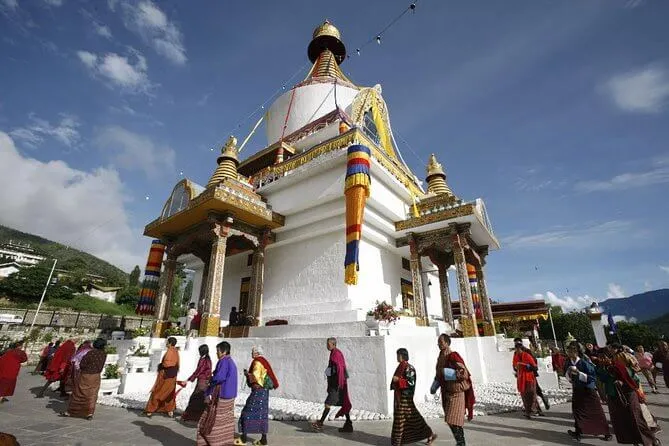
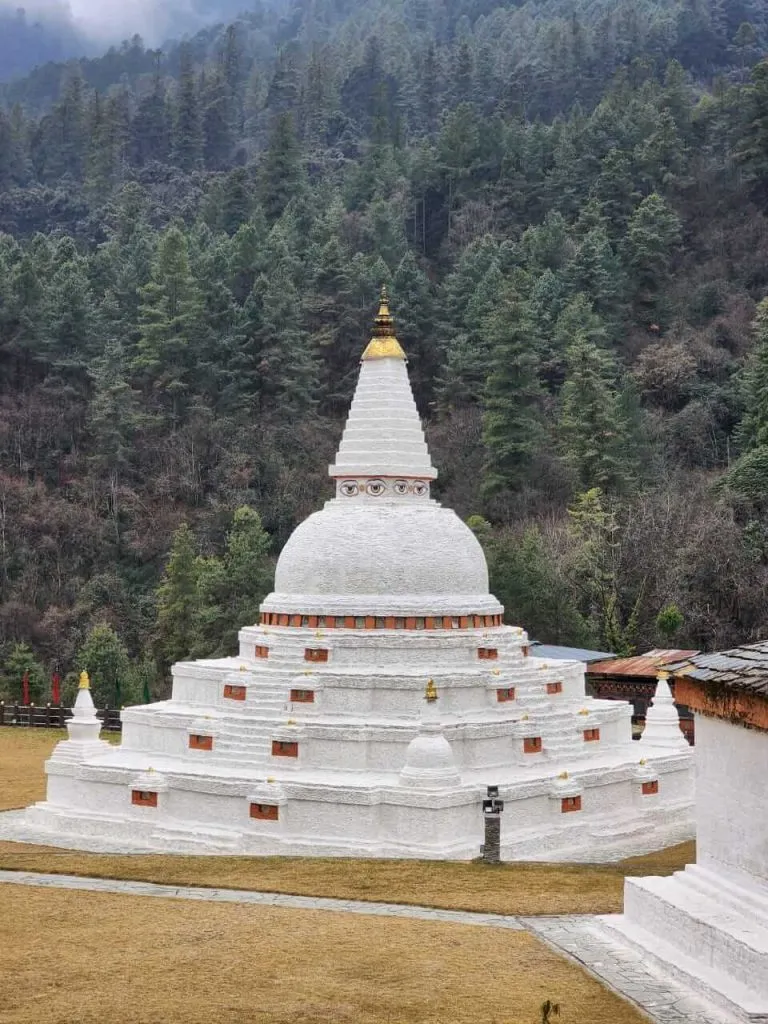
You drive to Thimphu and join the circuits around the Memorial Chorten, built in 1974 in memory of the Third King. Then you visit Changangkha Lhakhang, where parents bring newborn babies for blessings and names, and the Buddha Dordenma.
- Overnight: Thimphu
- Drive: about 1.5 hours
- Meals: breakfast, lunch and dinner
Day 3
Tango and Cheri
You drive north of Thimphu and hike to Cheri Monastery, founded by the Zhabdrung in 1620, crossing a covered bridge and climbing about an hour through forest. Later you visit Tango Monastery, a centre of Buddhist study, where you may meet young monks. Both are places of retreat and meditation.
- Overnight: Thimphu
- Hikes: about 1 hour up to each
- Meals: breakfast, picnic lunch and dinner
Day 4
Prayer flags on the ridge
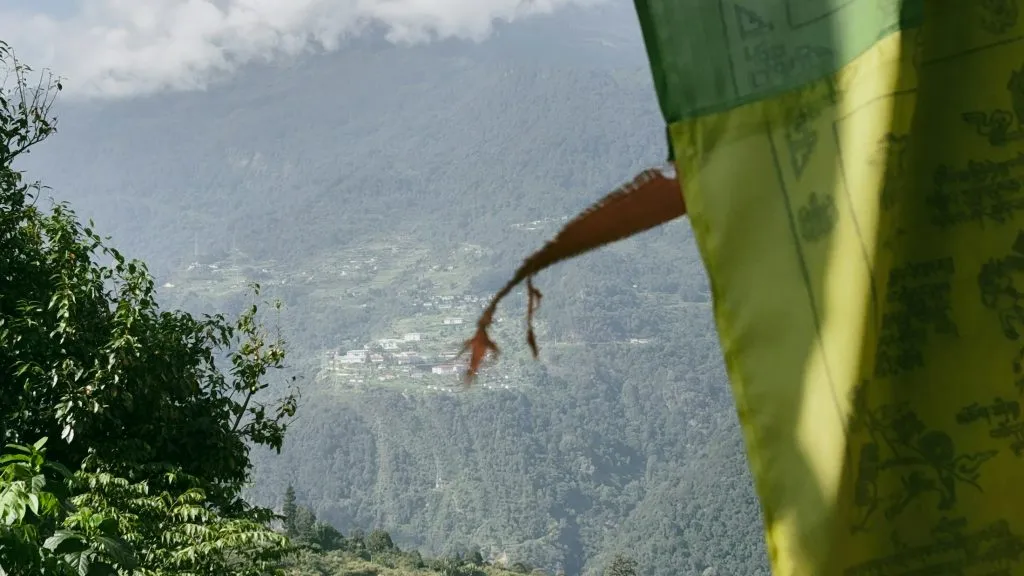
With a monk, you raise prayer flags on a ridge above Thimphu. You can choose lungta, wind horse flags for good fortune, or manidar, tall white flags raised in rows of 108 for someone who has died. The monk blesses them before they are raised. In the afternoon you can visit an astrologer, who may advise on auspicious days and practices.
- Overnight: Thimphu
- Ceremony: about 2 hours
- Optional: astrology reading
Day 5
Dochula and Punakha Dzong
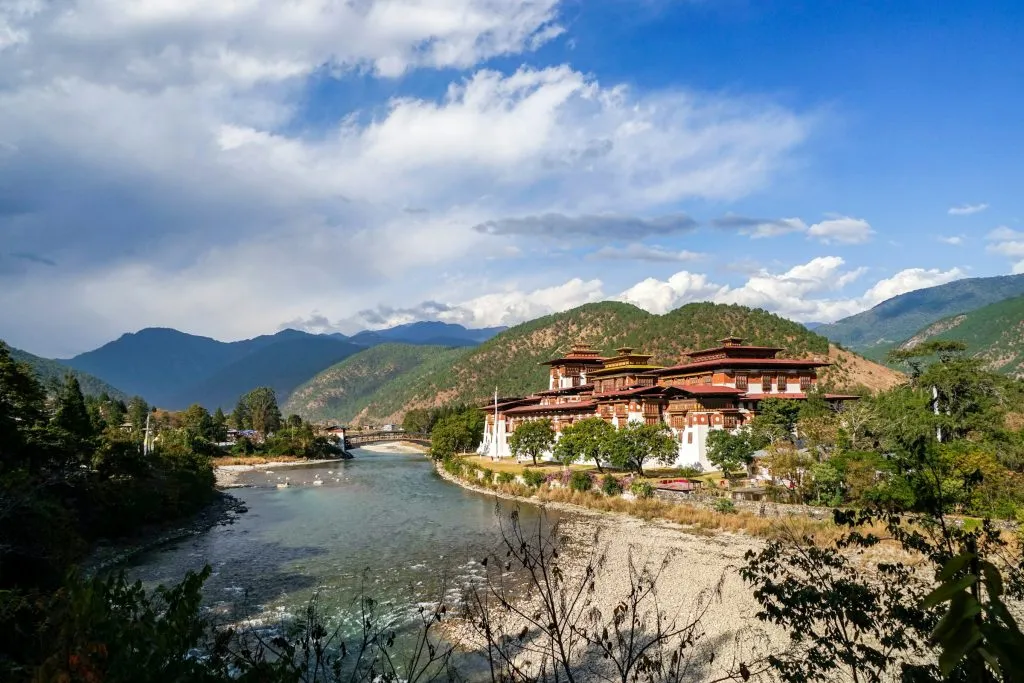
You stop at Dochula, where 108 chortens were built in memory of soldiers who died in 2003, and light a lamp at Druk Wangyal Lhakhang. In Punakha you visit the dzong, where the Zhabdrung’s remains are kept, and light butter lamps in its main temple.
- Overnight: Punakha
- Drive: about 3 hours
- Meals: breakfast, lunch and dinner
Day 6
The life release
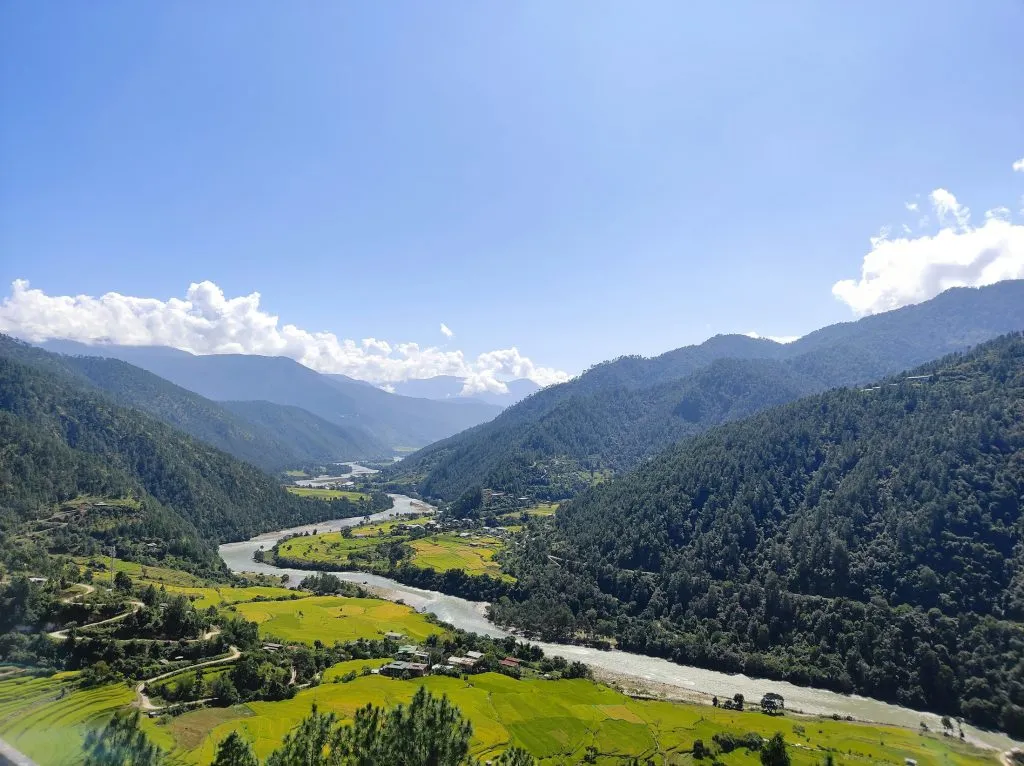
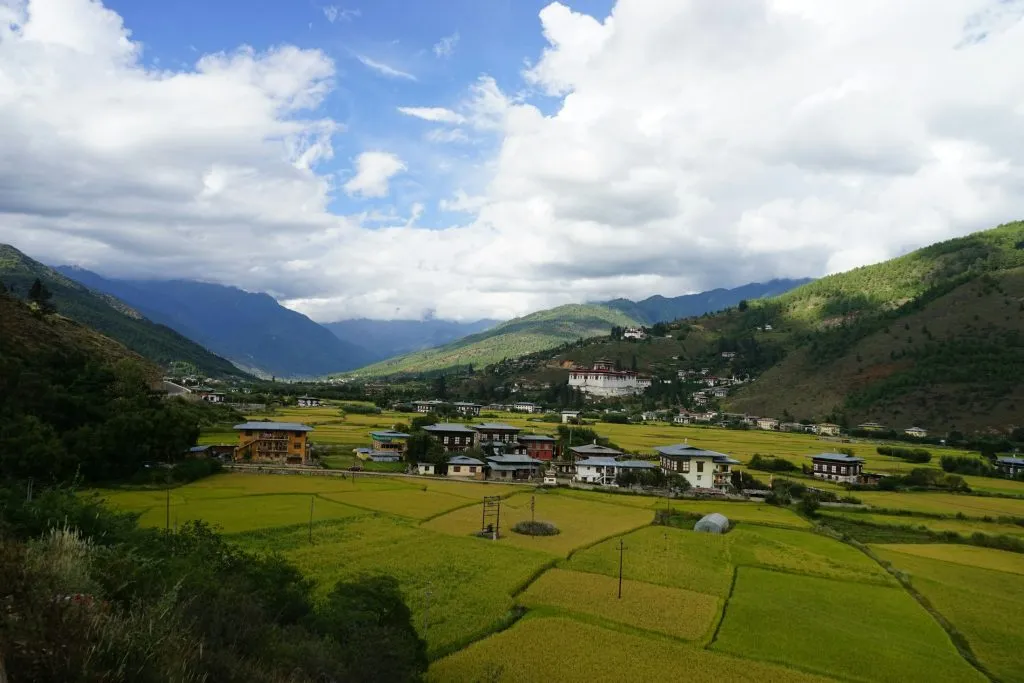
With a lama, you take part in a tshethar. Usually fish bought from the market are carried in water to the river, the lama recites prayers, and you release them one by one. If you wish, the merit is dedicated to someone close to you. In the afternoon you walk to Chimi Lhakhang and Khamsum Yulley Namgyal Chorten, which was built to bring peace to the world.
- Overnight: Punakha
- Ceremony: about 2 hours
- Walk: about 1 to 2 hours
Day 7
Back to Paro
You drive back over Dochula to Paro. In the afternoon you can visit a farmhouse altar room and see how families make daily offerings, or simply rest before tomorrow’s hike.
- Overnight: Paro
- Drive: about 4.5 hours
- Optional: hot stone bath
Day 8
Hike to the Tiger's Nest
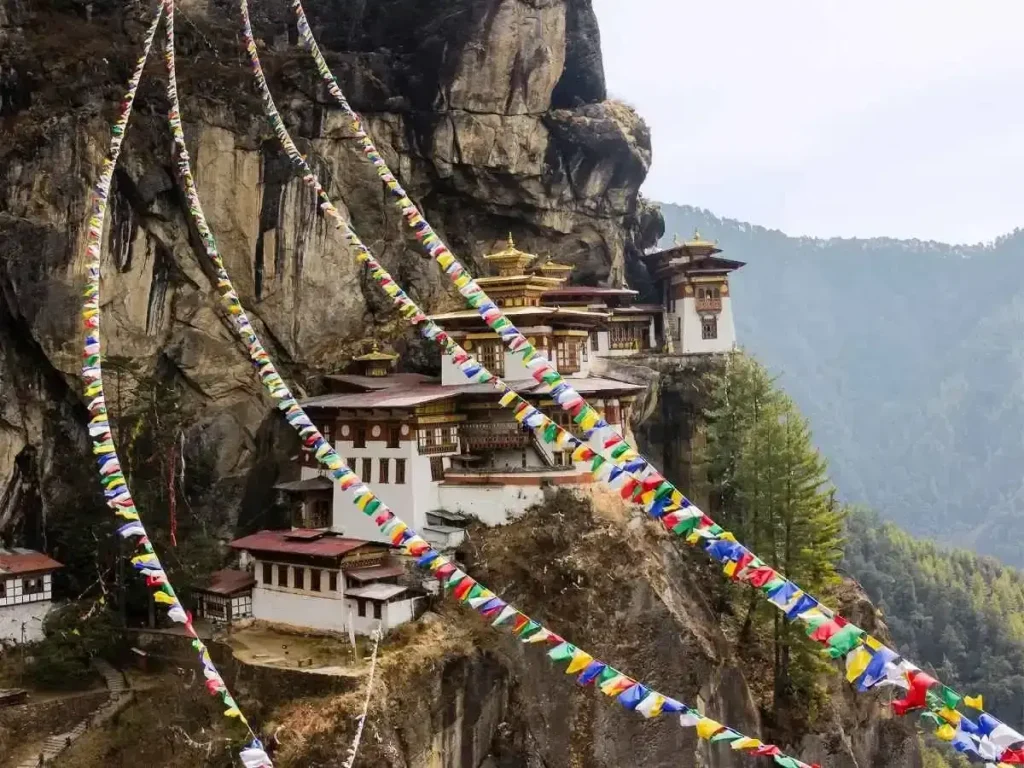
The hike to Paro Taktsang, the Tiger’s Nest, takes five to six hours return. The path climbs through blue pine forest to a cafeteria with a clear view of the monastery, then on to the cliff itself at about 3,120 metres, where Guru Rinpoche is said to have meditated in the 8th century. Pilgrims believe a visit here helps clear negative karma, and many light lamps and offer prayers in each of the shrines.
- Overnight: Paro
- Hike: 5 to 6 hours return
- Altitude: about 3,120 metres
Day 9
Fly home
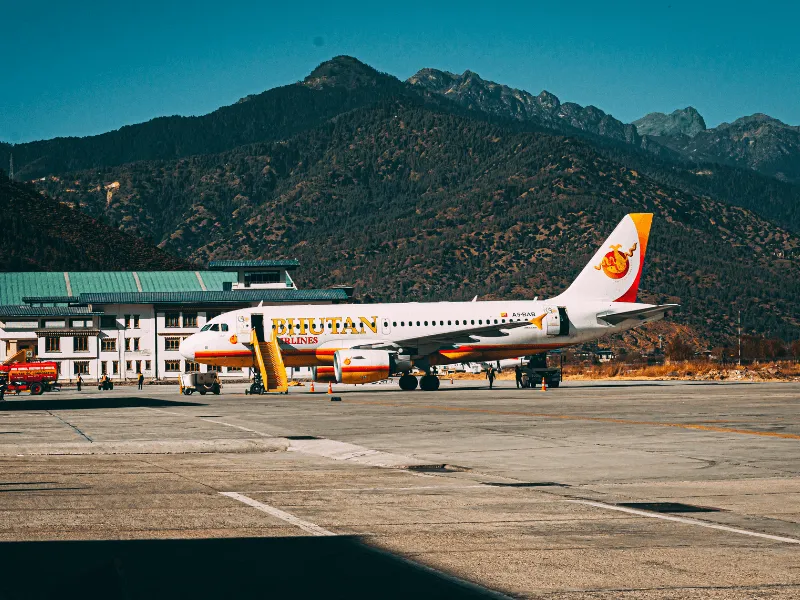
After breakfast your guide drives you to Paro airport for your flight home.
- Transfer: about 15 minutes
- Meals: breakfast
Where you stay
Where you stay
Comfortable hotels, with quiet retreat-style options on request.
| Nights | Place | Where you stay | Why we chose it |
|---|---|---|---|
| 1, 7 and 8 | Paro | 3-star or 4-star hotel | Luxury upgrades available |
| 2, 3 and 4 | Thimphu | 3-star or 4-star hotel | Central |
| 5 and 6 | Punakha | 3-star or 4-star hotel | Valley views |
We can arrange stays near monasteries for travellers who want more time for practice.
What the price covers
Included and not included
Included
- Bhutan visa (USD 40) and the Sustainable Development Fee for every night
- Hotels as listed, 3-star as standard, with 4-star and luxury upgrades on request
- All meals: breakfast, lunch and dinner
- A licensed English-speaking guide for the whole trip
- Private car or SUV with a Bhutanese driver, and all transfers
- Entry fees to dzongs, temples and museums
- Bottled water in the car
- A lama or monk for the tshethar and prayer flag ceremonies
- Prayer flags, butter lamps and offerings
Not included
- International flights into and out of Paro (we can book them for you)
- Travel insurance, which we strongly recommend
- Drinks, laundry and other personal costs
- Tips for your guide and driver
- Anything not listed under included
- Personal donations to temples
- Astrology reading fee if any
Price on request
Tell us your budget and we will send our best price
We don’t publish one fixed price, because hotels, season and group size change the total a lot. Tell us your dates, who is travelling and the budget you have in mind. We will reply within 24 hours with our best price for this life release and spiritual journey.
How we price
What decides the cost of this trip
Government fees
The SDF is USD 100 per adult per night until 31 August 2027, plus a USD 40 visa. These are fixed by the Government of Bhutan and paid through us.
Hotels you choose
Group size, the ceremonies you choose and hotel style change the total most.
Season and dates
Spring and autumn are peak season. Winter and summer dates are often easier to price well.
Group size
Guide and car costs are shared, so the price per person drops for two, three or four travellers.
We send a written, itemised quote before you pay anything. No booking fees.
Good to know
About the practices
What is tshethar?
Tshethar means life release. By saving animals destined for slaughter and letting them live out their lives, Bhutanese believe they gain merit and can dedicate it to others, for example to someone who is sick or has died. Fish are often released into rivers. Cattle are sometimes bought and kept in tshethar herds, with a coloured ribbon to show they must not be killed. Large tshethar events are held on auspicious days, and sometimes on the birthdays of the royal family.
Prayer flags
Lungta flags come in five colours, for the five elements, and carry prayers printed from woodblocks. The wind is believed to carry the prayers across the land. Manidar are tall white flags on poles, raised in groups, often 108, to help the dead in the bardo, the state between death and rebirth. Flags are raised on auspicious days chosen with an astrologer.
Taking part with respect
Dress modestly, with long sleeves and trousers or a long skirt, and remove hats and shoes in temples. Walk clockwise around chortens and temples. Offer money or lamps with your right hand, or both hands. It is fine to ask your lama questions, and many people find the rituals moving whatever their faith.
Temple etiquette
Cover shoulders and knees in dzongs and temples, take off hats, and walk clockwise around chortens and prayer wheels. Photography is not allowed inside shrine rooms. Your guide explains each place before you go in. Read more in our Bhutan travel rules guide.
Best time to go
March to May brings rhododendrons and warm valley days. October and November have the clearest skies and the best mountain views. December to February is cold, bright and quiet, with cranes in Phobjikha. June to August is the monsoon: green and peaceful, with rain most afternoons. Our month-by-month guide has more detail.
Visa, SDF and guide rules
Every visitor except Indian nationals needs a visa, which costs USD 40 and is issued online before you fly. The Sustainable Development Fee is USD 100 per adult per night until 31 August 2027, with half rates for children aged 6 to 11. A Department of Tourism notice from April 2026 confirms that visitors travel with a licensed guide. We file the visa and pay the SDF for you. Read more in our Bhutan visa guide and SDF guide.
Flying into Paro
Only Drukair and Bhutan Airlines fly into Paro, mainly from Bangkok, Delhi, Kathmandu, Kolkata and Singapore. Pilots land by sight between the ridges, so morning flights are the most reliable. We suggest a night in your hub city on the way in. Our flights to Bhutan page lists every route.
Life release and spiritual journey: questions
It depends on your hotels, group size and dates. Tell us your budget and we will reply within 24 hours with our best price, including the SDF, visa, hotels, meals, guide and car.
No. Visitors of any faith are welcome to take part sincerely.
Usually fish bought from the market, released into a river with prayers.
Yes. Prayers, lamps and white prayer flags can be dedicated to someone who has died.
Two hikes: about an hour each to Cheri and Tango, and 5 to 6 hours to the Tiger’s Nest.
We can arrange stays near monasteries. Ask about our meditation retreat.
Any time of year. We choose auspicious days for the ceremonies where possible.
Two to four months ahead.
Price on request
Ask for your best price
Tell us your dates, any person you want the prayers dedicated to and your budget. We will reply within 24 hours with our best price for this spiritual journey.
- Share your budget, we shape the trip around it
- No booking fees, ever
- A reply within 24 hours
- Licensed Bhutanese tour operator
- +975 17533776
- +975 77495028
- info@deyabhutantours.com
- Thimphu, Bhutan
Let's plan your Bhutan journey
Tell us a little about your trip. Our team in Thimphu will reply with ideas, a day-by-day plan and a full price.
We’ll reply within 24 hours. No booking fees, and no obligation to book.