- Licensed Bhutanese tour operator
- Thimphu, Bhutan
Festival tour · 11 days, 10 nights
11 Day Tangsibi Mani Festival Tour 2027: Winter in the Highlands of Bumthang
A village festival in the high Ura valley from 22 to 24 February 2027, with the Punakha Tshechu, the cranes of Phobjikha and the Tharpaling Thongdrol on the way.
- 11 days, 10 nights
- Tangsibi Mani: 22 to 24 February 2027
- Three festivals, plus winter cranes
22 to 24
February 2027, Tangsibi Mani
3,100 m
Ura valley, about
3
Festivals on the route
Winter
Cranes in Phobjikha
Trip overview
A village festival at the top of Bumthang
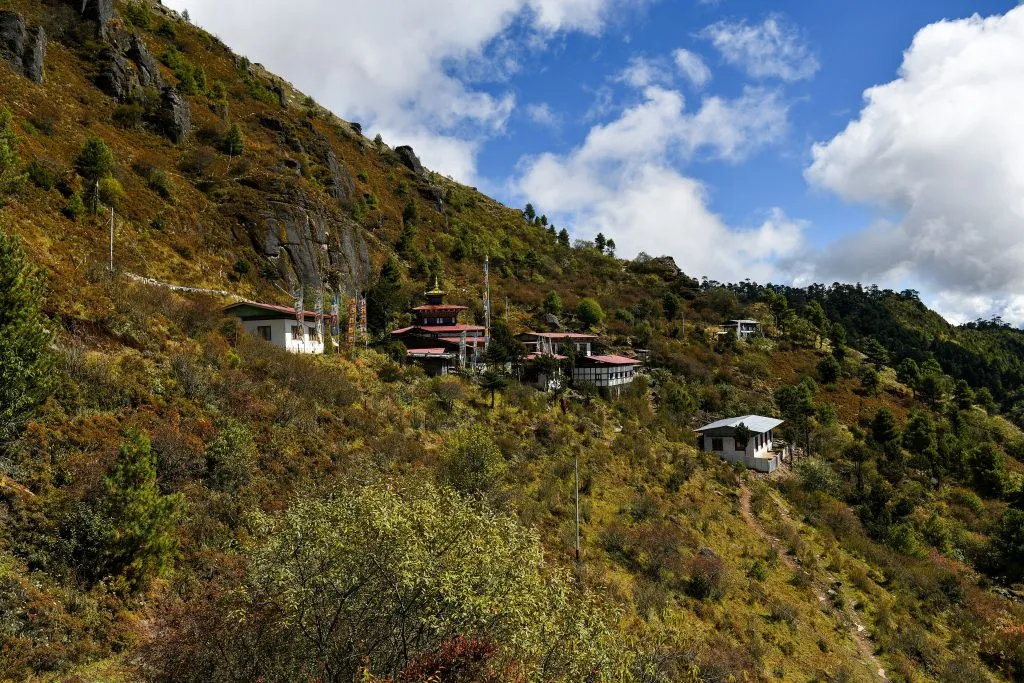
Tangsibi is a small village in the Ura area, the highest of Bumthang’s valleys, where stone farmhouses cluster on open slopes at over 3,000 metres. Its lhakhang holds the Tangsibi Mani, a three-day festival of prayers and masked dances performed by local people. The tentative 2027 dates are 22 to 24 February, at the end of winter, when the fields are bare, the light is sharp and the villagers have time to spare before spring ploughing.
Very few visitors reach Tangsibi. That is the point of the trip. You stand among farmers and herders in thick woollen clothes, share tea and snacks with families, and watch dances that have been passed down in the village for generations. Mani festivals centre on the mantra of compassion, om mani padme hum, and much of the festival is prayer and blessing as well as dance.
February is also a lucky month for festival lovers. On the way east you catch the second day of the Punakha Tshechu on 17 February, see the black-necked cranes wintering in the Phobjikha valley, and climb to Tharpaling Monastery for the Tharpaling Thongdrol on 20 February. After three days at Tangsibi you fly back to Paro from Bumthang.
- Two days at the Tangsibi Mani in Ura
- Punakha Tshechu and the Tharpaling Thongdrol on the way
- Black-necked cranes in Phobjikha
Highlights
Highlights of the trip
Tangsibi Mani
A village festival in the high Ura valley.
Tharpaling Thongdrol
A great thangka shown at a mountain monastery.
Punakha Tshechu
A day at the festival in Punakha Dzong.
Black-necked cranes
Winter visitors in the Phobjikha valley.
Ura village
Stone houses and narrow lanes around Ura Lhakhang.
Bumthang temples
Jambay Lhakhang, Kurjey and Tamshing.
Itinerary at a glance
Eleven days at a glance
Dates are for the 2027 festivals. We confirm them before you fly.
Day 1: Arrive in Paro
Land in Paro, drive to Thimphu.
Day 2: Thimphu
A full day in the capital.
Day 3: Punakha Tshechu
Over Dochula to the Punakha Tshechu.
Day 4: To Phobjikha
Drive to the crane valley.
Day 5: To Bumthang
Over Pele La and Yotong La to Bumthang.
Day 6: Tharpaling Thongdrol
Up to Tharpaling for the thongdrel.
Day 7: Bumthang temples
Jambay Lhakhang, Kurjey, Tamshing and Jakar Dzong.
Day 8: Tangsibi Mani, day one
Drive to Ura and Tangsibi for the opening.
Day 9: Tangsibi Mani, day two
A full day at the festival.
Day 10: Fly to Paro
Domestic flight from Bumthang to Paro.
Day 11: Depart
Transfer to Paro airport.
Day 1
Arrive and drive to Thimphu
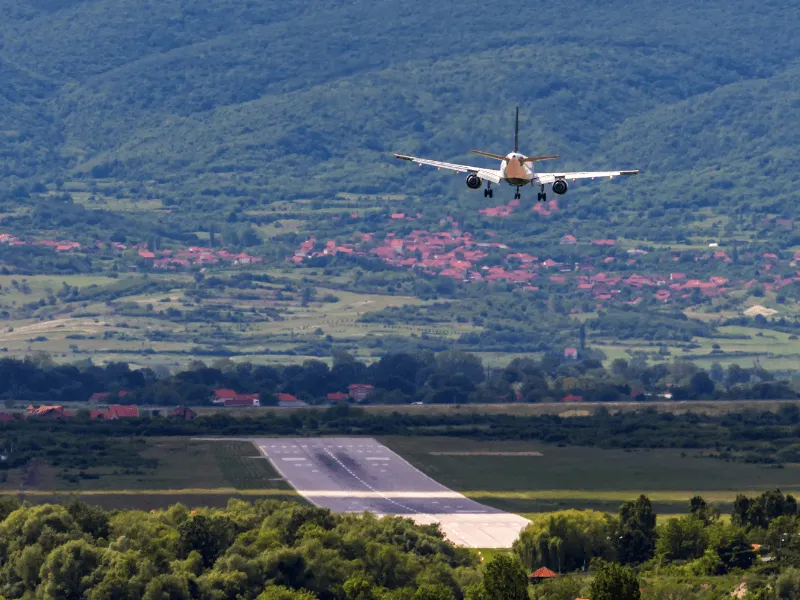
Your guide meets you at Paro airport and drives you to Thimphu, about an hour and a half. In the afternoon you visit the Memorial Chorten and walk through the town.
- Date: 15 February 2027
- Overnight: Thimphu
- Drive: about 1.5 hours
Day 2
A day in Thimphu
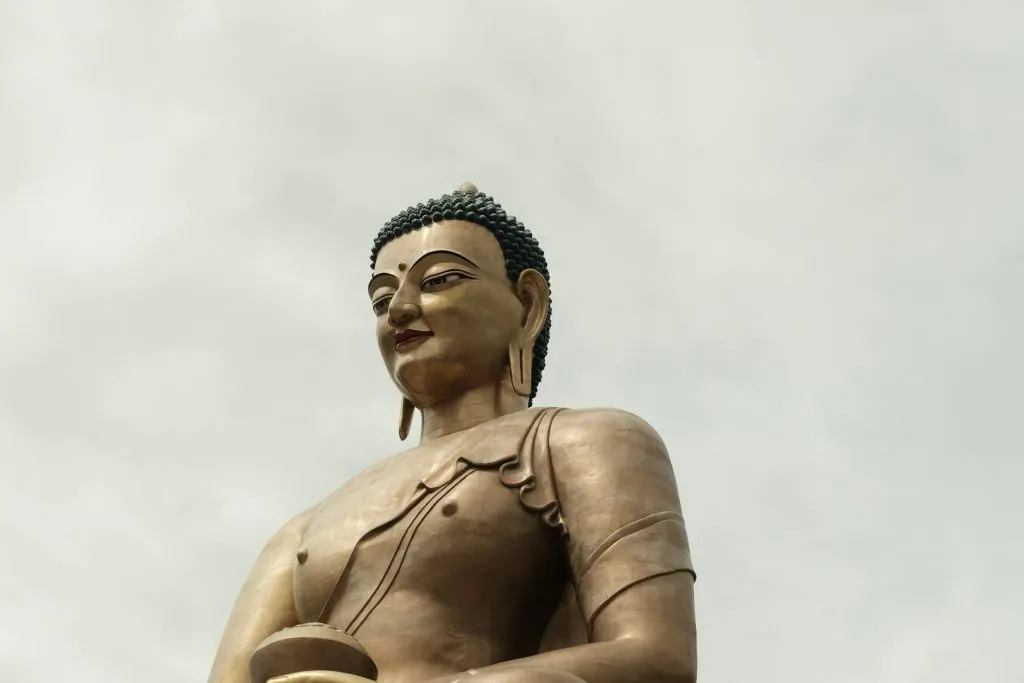
You see the Buddha Dordenma, the National Institute for Zorig Chusum, the traditional paper factory, the takin preserve and Tashichho Dzong. Winter days in Thimphu are often sunny and clear.
- Date: 16 February 2027
- Overnight: Thimphu
- Meals: breakfast, lunch and dinner
Day 3
Dochula and the Punakha Tshechu
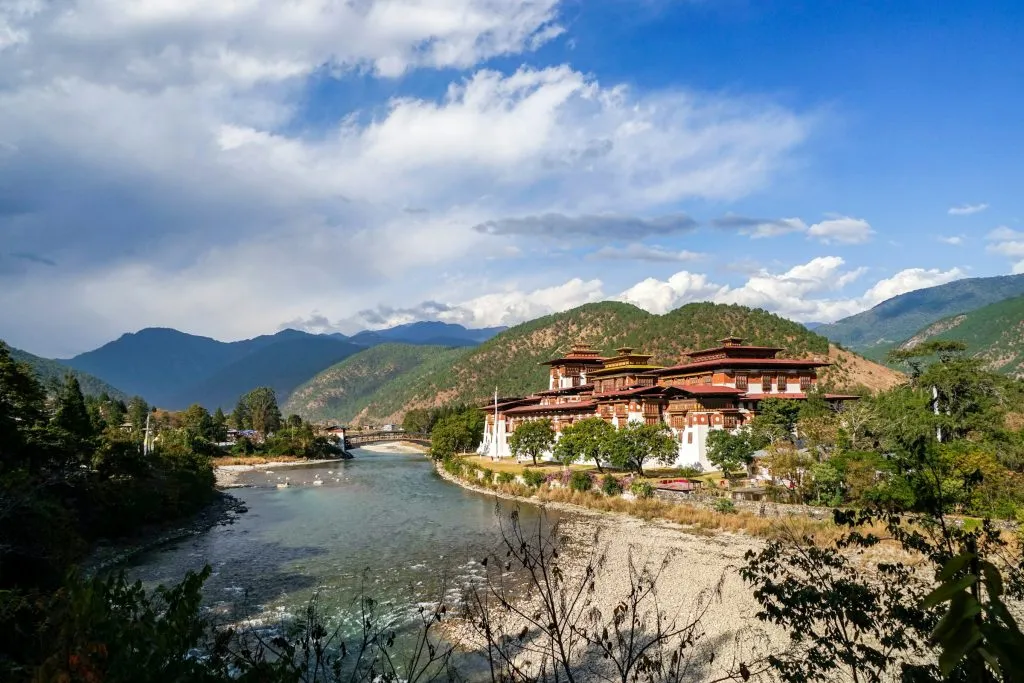
You cross Dochula, where the winter view of the high Himalaya is at its best, and drive down to Punakha. The Punakha Tshechu, held from 16 to 18 February 2027, is on its second day. You spend the afternoon in the courtyard of Punakha Dzong, one of the most beautiful settings for a festival in Bhutan.
- Date: 17 February 2027
- Overnight: Punakha
- Drive: about 3 hours
Day 4
The cranes of Phobjikha
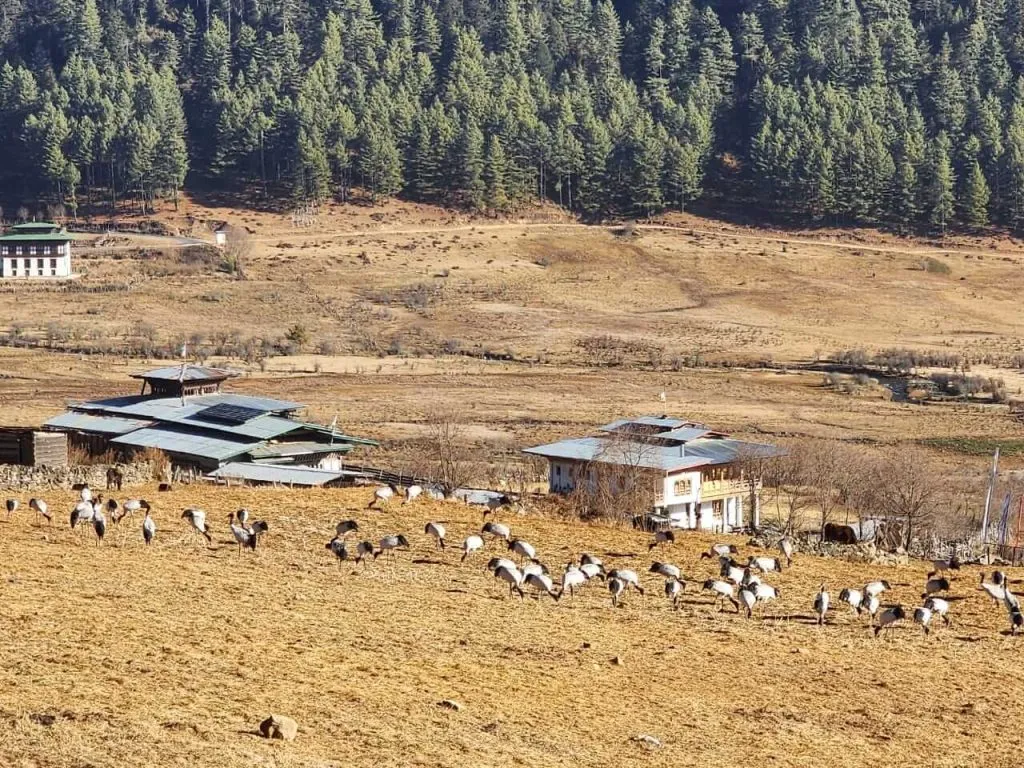
You drive up to the Phobjikha valley, a wide glacial bowl at about 3,000 metres where several hundred black-necked cranes spend the winter. You visit the crane information centre, walk part of the Gangtey nature trail and see Gangtey Goenpa above the valley. In the evening you can hear the cranes calling as they fly in to roost.
- Date: 18 February 2027
- Overnight: Phobjikha
- Drive: about 3 hours
Day 5
Into Bumthang
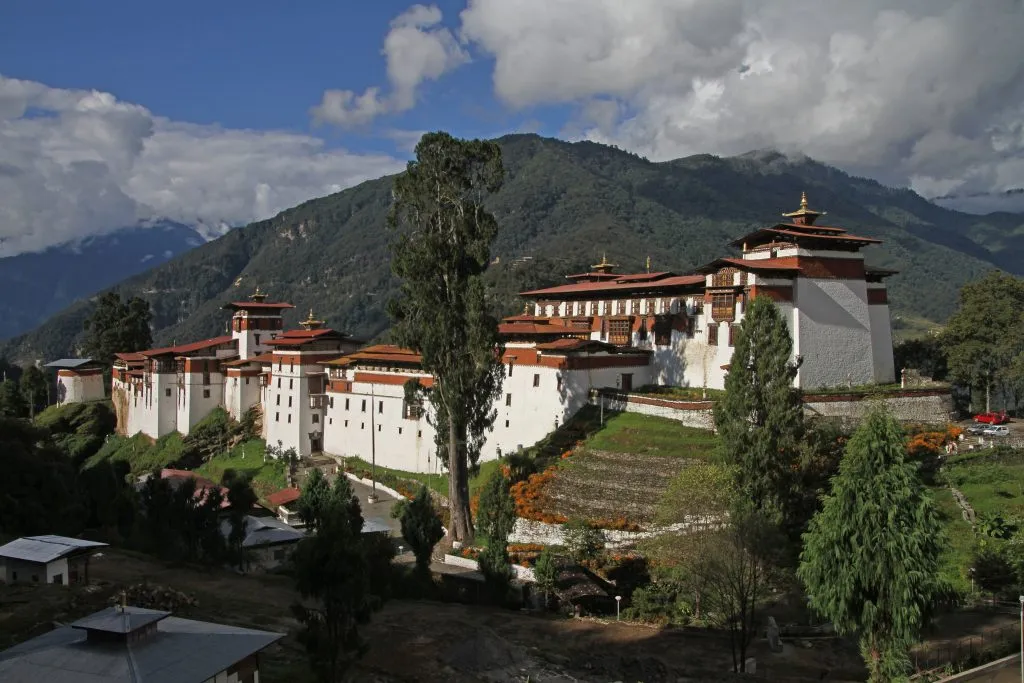
A long but beautiful day: over Pele La to Trongsa, where you stop to see the dzong from the viewpoint, then over Yotong La into Bumthang. Snow is possible on the passes in February, and we leave early to allow for it.
- Date: 19 February 2027
- Overnight: Bumthang
- Drive: about 6 to 7 hours
Day 6
The Tharpaling Thongdrol
Tharpaling Monastery sits at about 3,600 metres above the Chhume valley, on a slope where the 14th-century master Longchenpa meditated. Once a year the monks display a great thongdrel, and the Tharpaling Thongdrol is listed for 20 February 2027. You drive up on a rough road and walk the last part, then spend the morning with the monks and pilgrims. On the way back you stop at Zungney to see yathra weaving.
- Date: 20 February 2027
- Overnight: Bumthang
- Drive and walk: half a day
Day 7
A day in the Choekhor valley
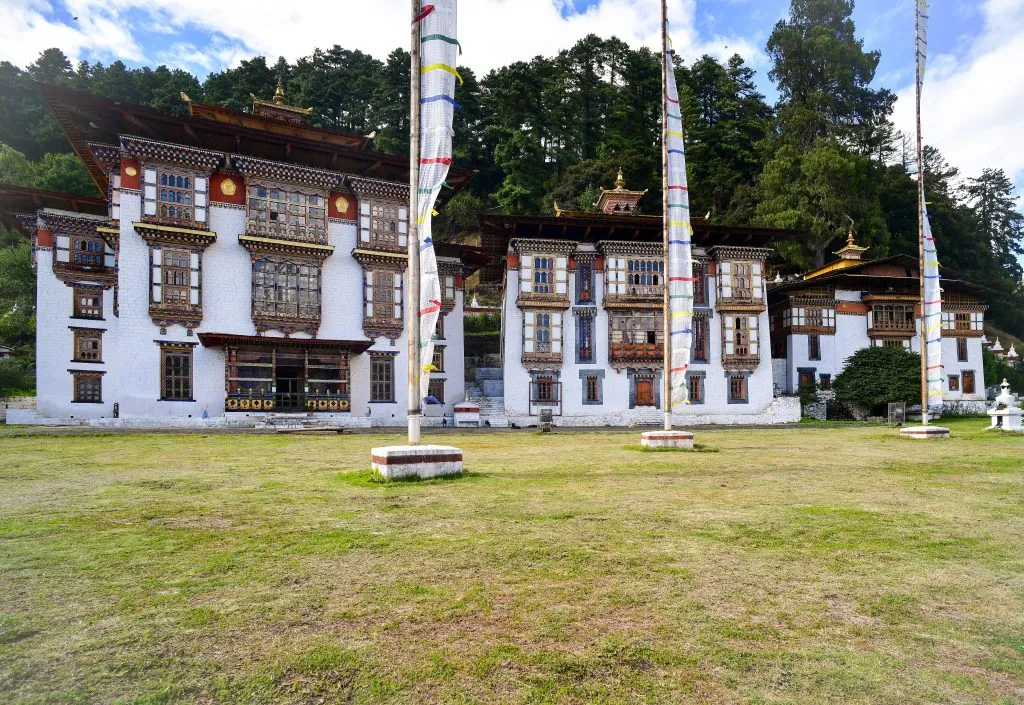
You visit Jambay Lhakhang, built in the 7th century, Kurjey Lhakhang, with Guru Rinpoche’s body print, and Tamshing Lhakhang, founded by Pema Lingpa in 1501. In the afternoon you see Jakar Dzong and walk through Chamkhar town. You might try the local apple brandy or buckwheat pancakes.
- Date: 21 February 2027
- Overnight: Bumthang
- Walk: about 2 hours in total
Day 8
The first day at Tangsibi
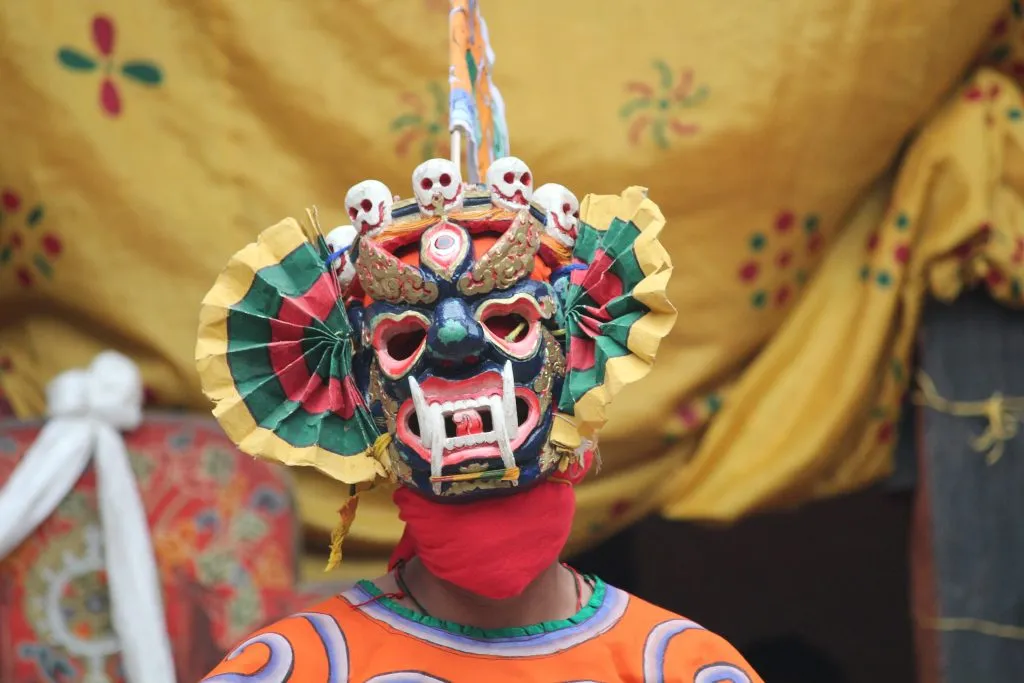
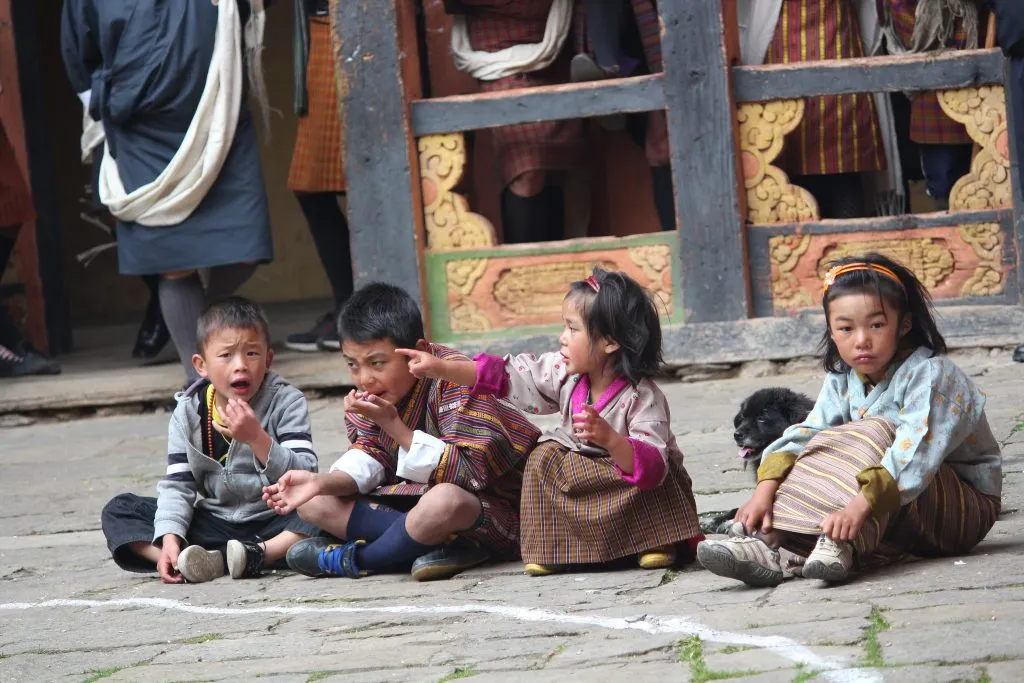
You drive east over Shertang La to the Ura valley, about an hour and a half. The Tangsibi Mani opens with prayers and the first dances at the village lhakhang. You stand with the villagers around the small dance ground and watch the masked dancers, who are mostly local men. In the afternoon you walk through Ura village, with its stone houses, narrow lanes and Ura Lhakhang.
- Date: 22 February 2027 (festival day 1)
- Overnight: Bumthang or a farmhouse in Ura
- Drive: about 1.5 hours each way
Day 9
A full day at Tangsibi
You spend the day at the festival. Mani festivals include long sessions of chanting and blessing as well as dances, and villagers queue to receive blessings from the lama. If you stay in a farmhouse in Ura, you share dinner with the family and sit around the bukhari stove in the evening.
- Date: 23 February 2027 (festival day 2)
- Overnight: Bumthang or Ura farmhouse
- Meals: breakfast, lunch and dinner
Day 10
Fly back to Paro
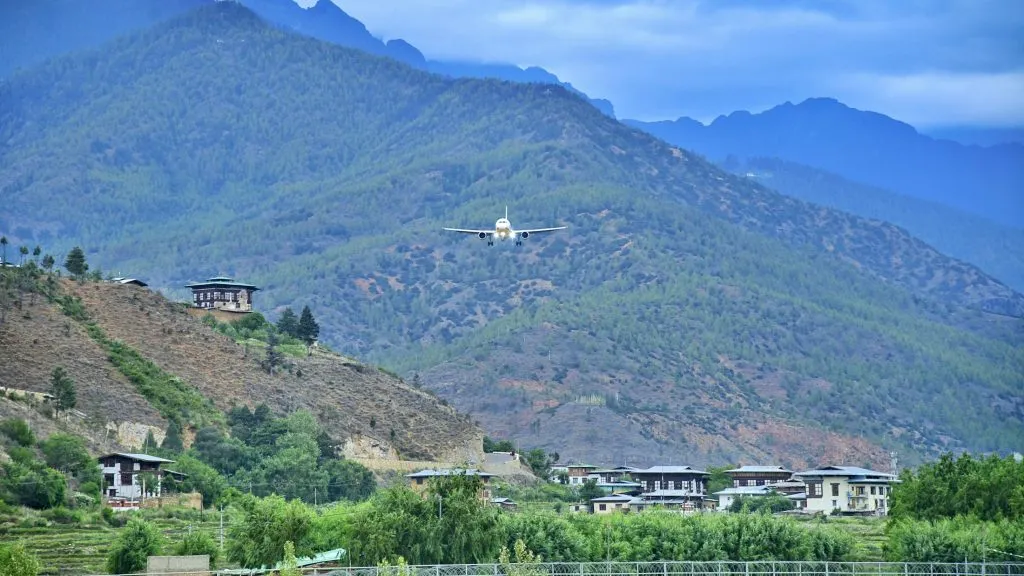
You fly from Bumthang to Paro in about 30 minutes, with views of the mountains on a clear day. In the afternoon you visit Kyichu Lhakhang and Rinpung Dzong, or book a hot stone bath.
- Date: 24 February 2027
- Overnight: Paro
- Flight: about 30 minutes, on set days
Day 11
Fly home
After breakfast your guide drives you to the airport. If you have one more day, we strongly suggest adding the Tiger’s Nest hike.
- Date: 25 February 2027
- Transfer: about 15 minutes
- Optional: extra day for the Tiger's Nest
Where you stay
Where you stay
Comfortable hotels, with the option of a farmhouse night in Ura.
| Nights | Place | Where you stay | Why we chose it |
|---|---|---|---|
| 1 and 2 | Thimphu | 3-star or 4-star hotel | Central |
| 3 | Punakha | 3-star or 4-star hotel | Valley views |
| 4 | Phobjikha | Lodge or farmhouse | Close to the cranes |
| 5 to 9 | Bumthang | 3-star or 4-star hotel | Option of a farmhouse in Ura |
| 10 | Paro | 3-star or 4-star hotel | Upgrades available |
Bumthang in February is cold. All our hotels have heaters, and farmhouses use a wood-burning bukhari.
What the price covers
Included and not included
Included
- Bhutan visa (USD 40) and the Sustainable Development Fee for every night
- Hotels as listed, 3-star as standard, with 4-star and luxury upgrades on request
- All meals: breakfast, lunch and dinner
- A licensed English-speaking guide for the whole trip
- Domestic flight from Bumthang to Paro
- Private car or SUV with a Bhutanese driver, and all transfers
- Entry fees to dzongs, temples and museums
- Bottled water in the car
Not included
- International flights into and out of Paro (we can book them for you)
- Travel insurance, which we strongly recommend
- Drinks, laundry and other personal costs
- Tips for your guide and driver
- Anything not listed under included
Price on request
Tell us your budget and we will send our best price
We don’t publish one fixed price, because hotels, season and group size change the total a lot. Tell us your dates, who is travelling and the budget you have in mind. We will reply within 24 hours with our best price for this Tangsibi Mani festival tour.
How we price
What decides the cost of this trip
Government fees
The SDF is USD 100 per adult per night until 31 August 2027, plus a USD 40 visa. These are fixed by the Government of Bhutan and paid through us.
Hotels you choose
Hotel style, group size and the domestic flight change the total most. February is a quiet month.
Season and dates
Festival weeks are the busiest of the year. Booking early holds better rooms and seats.
Group size
Guide and car costs are shared, so the price per person drops for two, three or four travellers.
We send a written, itemised quote before you pay anything. No booking fees.
Good to know
Planning your Tangsibi Mani trip
About Ura and Tangsibi
Ura is the highest of the main valleys of Bumthang, at about 3,100 metres. Its people traditionally farmed buckwheat and barley and herded yaks and sheep, and the village still has a compact, almost medieval feel. Tangsibi lies in the same area, a short drive from Ura village. The festival is organised by the community, so the programme can change slightly from year to year.
What is a mani festival?
Mani festivals take their name from the mantra om mani padme hum, linked with Chenrezig, the bodhisattva of compassion. They mix masked dances with recitation of prayers and blessings, and local people often make offerings of food and butter lamps. The mood is warm and informal. Visitors are welcome, as long as they respect the ritual parts and follow the guide’s lead.
Combining festivals in February
February 2027 is busy. The Punakha Dromchoe runs from 13 to 15 February and the Punakha Tshechu from 16 to 18 February. The Tharpaling Thongdrol is listed for 20 February, and the Tangsibi Mani for 22 to 24 February. If you want the Dromchoe too, start the trip two days earlier, or look at our Punakha Dromche tour.
Getting to Bumthang
Bumthang is about 270 km from Thimphu, but the road crosses three passes and the drive takes most of two days. We break it with a night in Punakha or Trongsa. Drukair also flies between Paro and Bumthang on set days of the week, in about 30 minutes, and on most of our central Bhutan trips we fly back to save a day on the road. The schedule changes by season, so we confirm the flight when you book.
Travelling in winter
December to February is cold, dry and clear. Days are often sunny and pleasant in the valleys, but mornings and evenings drop close to freezing, and colder still in Bumthang and the high passes. Hotels have heaters and many have electric blankets. Pack thermal layers, a down jacket, gloves and a warm hat. In return you get blue skies, sharp mountain views, few other visitors and, in Phobjikha, the black-necked cranes.
About the 2027 dates
Festival dates follow the Bhutanese lunar calendar, so they move every year. The dates on this page come from the tentative 2027 festival list released through Bhutan’s Department of Tourism. Tentative means what it says: a monastery or dzongkhag can still shift a day. We check again when you book and a few weeks before you fly, and if a date moves we move the trip with it. Our 2027 festival calendar lists every event in one place.
Festival etiquette
A tshechu is a religious event first and a show second. Dress neatly, with shoulders and knees covered; a collared shirt or jacket is a good idea. Stay at the edge of the dance ground, never walk across it, and switch off your camera flash. Don’t climb on walls or temple roofs for a better angle. The atsara clowns may tease you or ask for a small note; laugh along, it is part of the blessing. Our guide to Bhutan’s festivals explains the dances in more detail.
Village festivals and big tshechus
The big tshechus in Paro and Thimphu draw thousands of people, including many visitors. Village and temple festivals are different. The courtyard is smaller, the crowd is mostly local farmers in their best clothes, and the dancers are often villagers or monks from the nearest lhakhang. You stand closer, you see more of the ritual, and you will probably be offered butter tea or a cup of ara. The trade-off is fewer facilities: there may be no seats, no shade and only basic toilets nearby, so bring a cushion, a hat and patience.
Visa, SDF and guide rules
Every visitor except Indian nationals needs a visa, which costs USD 40 and is issued online before you fly. The Sustainable Development Fee is USD 100 per adult per night until 31 August 2027, with half rates for children aged 6 to 11. A Department of Tourism notice from April 2026 confirms that visitors travel with a licensed guide. We file the visa and pay the SDF for you. Read more in our Bhutan visa guide and SDF guide.
Flying into Paro
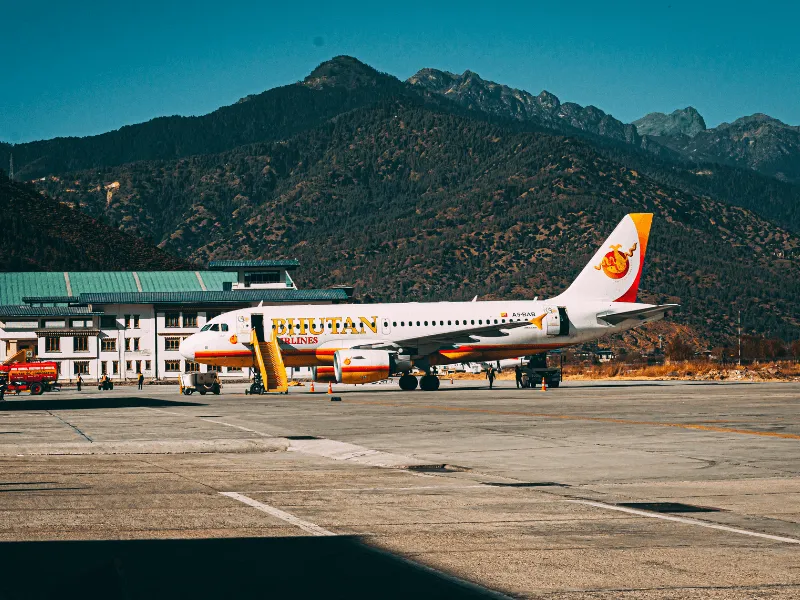
Only Drukair and Bhutan Airlines fly into Paro, mainly from Bangkok, Delhi, Kathmandu, Kolkata and Singapore. Pilots land by sight between the ridges, so morning flights are the most reliable. We suggest a night in your hub city on the way in. Our flights to Bhutan page lists every route.
Tangsibi Mani tour: questions
It depends on your hotels, group size and dates. Tell us your budget and we will reply within 24 hours with our best price, including the SDF, visa, hotels, meals, guide and car.
The tentative dates are 22 to 24 February 2027, at Tangsibi Lhakhang in Ura, Bumthang. Festival dates follow the lunar calendar and we confirm them again before you travel.
In the Ura area, the highest valley of Bumthang, about 1.5 hours by road from Jakar.
The Punakha Tshechu on 17 February and the Tharpaling Thongdrol on 20 February 2027 are on the route.
Yes. Black-necked cranes winter in Phobjikha from about November to February.
Yes, especially in Ura. Days are often sunny, but nights fall below freezing. Bring warm clothes.
Yes. We can arrange a farmhouse night in Ura during the festival.
Three to five months ahead, mainly to secure the domestic flight.
Price on request
Ask for your best price
Tell us who is travelling and your budget. We will reply within 24 hours with our best price for this Tangsibi Mani festival tour.
- Share your budget, we shape the trip around it
- No booking fees, ever
- A reply within 24 hours
- Licensed Bhutanese tour operator
- +975 17533776
- +975 77495028
- info@deyabhutantours.com
- Thimphu, Bhutan
Let's plan your Bhutan journey
Tell us a little about your trip. Our team in Thimphu will reply with ideas, a day-by-day plan and a full price.
We’ll reply within 24 hours. No booking fees, and no obligation to book.