- Licensed Bhutanese tour operator
- Thimphu, Bhutan

Blog · Updated November 2026
Gasa Tshechu: a festival at the edge of Bhutan's high north
Gasa is Bhutan’s most remote district headquarters, a hillside dzong looking towards the mountains of the north. Its tshechu is small, local and very different from the big valley festivals.
- Tentatively 16 to 18 March 2027
- Gasa Dzong, built 1646
- Hot springs nearby
1646
Gasa Dzong built by the Zhabdrung
3 days
Of festival dances
Largest
District by area, smallest by population
Hot springs
Gasa Tsachu by the Mo Chhu
The place
Why Gasa is different
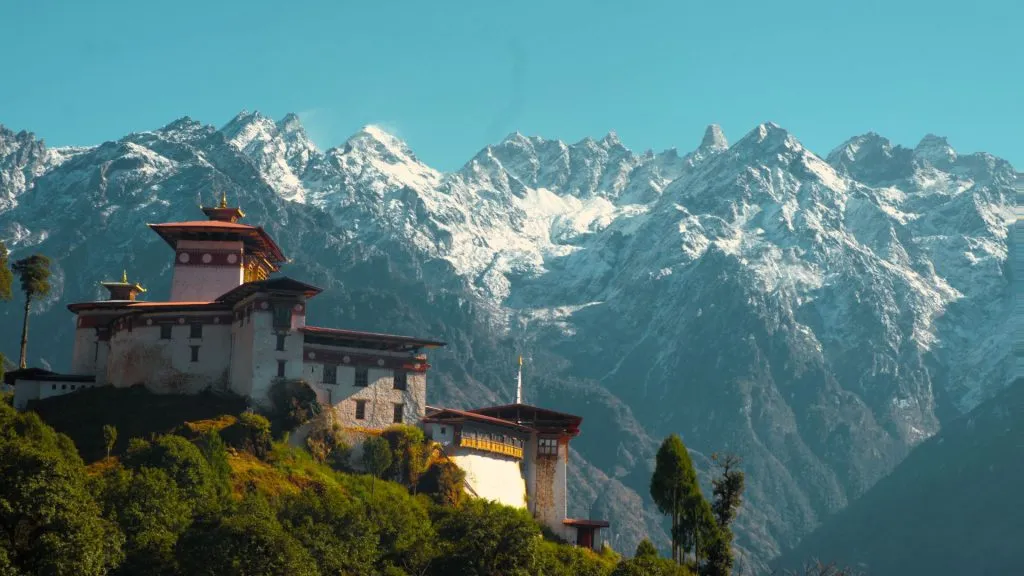
Gasa is Bhutan’s largest district by area and its least populated. Much of it lies within Jigme Dorji National Park, and it reaches north to the high villages of Laya and Lunana and the border mountains with Tibet. For centuries the main trade route from Punakha to Tibet ran through here.
Gasa Dzong was built in 1646 by Zhabdrung Ngawang Namgyal, the founder of the Bhutanese state, to guard the northern approach against invasions from the north. It stands on a ridge above the village with a view down the valley and, on clear days, towards snow peaks. The dzong is the seat of the district administration and of its monk body.
Because so few visitors make the trip, Gasa Tshechu feels like a village gathering. Families come down from surrounding settlements, sometimes after long walks, and herders from the north may join them. There are no grandstands and no tour groups crowding the best spots.
- Built in 1646 to guard the north
- Gateway to Laya and Lunana
- A small, local festival
At the festival
What to expect at Gasa Tshechu
Dances in the dzong
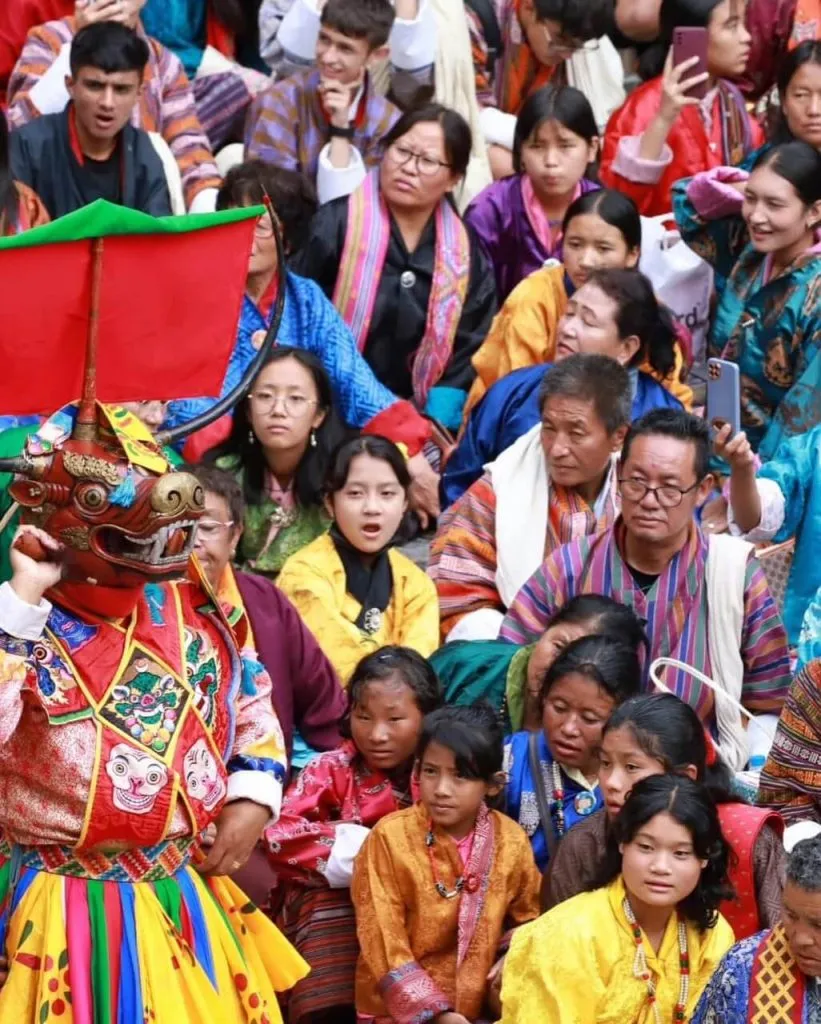
Like other tshechus, Gasa’s festival honours Guru Rinpoche with sacred masked dances performed by monks and lay dancers. The courtyard of the dzong is compact, so you sit close to the dancers, close enough to hear the rustle of the brocade and see the detail on the masks. Your guide will explain what each dance means.
The people
The crowd is the special part of Gasa. You may see Layap women in their distinctive conical bamboo hats, and families from villages across the district who make the festival a chance to meet, trade and pray together. Many have walked or driven a long way. Be respectful with photographs and ask first, especially with older people.
The pace
Everything is slower and quieter here than in Paro or Thimphu. Food is shared, tea is poured, and the dances go on through the day with breaks for the atsaras’ jokes. There is time to talk with people, to walk around the dzong and to take in the setting.
Getting there
How to reach Gasa
| From | How | Good to know |
|---|---|---|
| Punakha | By road, north along the Mo Chhu valley | The usual approach. The road is narrow and can be rough in places |
| Thimphu | Via Dochula and Punakha | Best broken with a night in Punakha |
| Gasa village | Short walk up to the dzong | The dzong sits above the village on a ridge |
| Laya | Trek, usually two days from Gasa | Part of the Laya Gasa and Snowman routes |
Road conditions change with the season. Spring is usually dry, but landslides can happen after rain. We check conditions before every trip.
Hot springs
Gasa Tsachu: the hot springs below the dzong
A short distance from Gasa, beside the Mo Chhu river, are the Gasa Tsachu hot springs. Bhutanese people have bathed here for generations, believing the waters ease aches, joint pain and skin problems. Pools are shared with local bathers, many of whom come for several days.
The springs were badly damaged by a flood in 2008 and have since been rebuilt. Facilities are simple, so bring a towel, sandals and a swimsuit. A soak after a day sitting on the stones of the festival courtyard is hard to beat.
Ask your guide about the current state of the path and the pools before you go, and be prepared to share the water. It is a social place, and bathers are usually happy to chat.
- Traditional healing springs
- Rebuilt after the 2008 flood
- Bring towel, sandals and swimwear
Practical tips
Before you go to Gasa
Allow time for the road
The drive from Punakha takes several hours on a narrow road. Start early and stay overnight rather than making it a long day trip.
Simple places to stay
Accommodation near Gasa is basic, with small guesthouses and farmhouses. Many visitors base themselves in Punakha and stay one night in Gasa.
Pack warm layers
Gasa is higher and colder than Punakha. Mornings and evenings in spring can be chilly.
Dress for the dzong
Long sleeves and long trousers or skirts. Remove hats inside the dzong.
Ask before photographs
Especially of Layap and highland visitors. No flash and no stepping onto the dance ground.
Bring basic medicines
There are few shops in Gasa. Carry anything you might need, including for an upset stomach.
Sample plan
A week with Gasa Tshechu
A gentle route that combines the festival with western Bhutan’s highlights.
Day 1: Paro to Thimphu
Arrive in Paro and drive to Thimphu.
Day 2: Thimphu to Punakha
Over Dochula to Punakha. Visit Punakha Dzong.
Day 3: Punakha to Gasa
Drive north along the Mo Chhu. Evening at the hot springs.
Day 4: Gasa Tshechu
A full day of dances at Gasa Dzong.
Day 5: Back to Punakha
Return south. Walk to Chimi Lhakhang in the afternoon.
Day 6: Paro and Tiger's Nest
Drive to Paro and hike to Taktsang.
Day 7: Depart
Transfer to Paro airport.
Go further
Gasa and the Laya trek
Gasa is the starting or finishing point for some of Bhutan’s great treks. The Laya Gasa trek crosses high passes from the Paro valley, passes below Jomolhari and reaches Laya, one of the highest villages in the country, before descending to Gasa and its hot springs. The much longer Snowman trek continues from Laya into remote Lunana.
If you are a keen walker, it is possible to plan a trek that ends near Gasa around festival time, so you finish with a soak in the springs and a day of dances. These treks need good fitness and careful planning, and they depend on season and conditions, so talk to us early.
For travellers who prefer to stay on the road, Gasa is still worth the effort. Few visitors get this far north. Villages are small and far apart, the mountains feel close, and many families still herd yaks or trade with the highland villages beyond.
Background
A short history of Gasa
On the old route from Tibet
For centuries the trail from Punakha north through Gasa and Laya was one of the main routes between Bhutan and Tibet. Traders carried rice, butter and cloth north and brought salt and wool south. Tradition holds that Zhabdrung Ngawang Namgyal came into Bhutan from Tibet along this way in 1616, and the region has been tied closely to him ever since.
A dzong built for defence
The Zhabdrung built Gasa Dzong in 1646 to defend the northern frontier after the Tibetan invasions of the period. Its round shape, unusual for a dzong, suits its position on a ridge. Over the centuries it has been damaged by fire and restored several times. Today it is still a working dzong with monks and district offices, and it comes alive at festival time.
Nature all around
Most of Gasa lies inside Jigme Dorji National Park, one of the largest protected areas in Bhutan. The park runs from subtropical forest in the south to glaciers and high peaks in the north. It is home to the takin, Bhutan’s national animal, as well as blue sheep, red pandas and the rarely seen snow leopard. Even on the drive from Punakha you pass through thick forest with waterfalls and orchids in season.
The people of the north
Gasa district includes Laya and Lunana, two of the highest and most remote communities in the country. The Layap people have their own dress, including the women’s pointed bamboo hats, and a way of life built around yak herding and seasonal migration. Some come down to Gasa for the tshechu and for trade. Meeting them is one of the reasons travellers make the long trip north.
When to go
Visiting Gasa through the year
| Season | Conditions | Good for |
|---|---|---|
| Spring (March to May) | Mild days, cold mornings | The tshechu, forest flowers, trek starts |
| Summer (June to August) | Monsoon rain, risk of landslides | Not recommended for the road |
| Autumn (September to November) | Clear skies, cool and dry | Treks, the hot springs, the Royal Highlander Festival at Laya |
| Winter (December to February) | Cold, sometimes snow | The hot springs at their busiest with Bhutanese bathers |
Autumn and spring are the best times to visit. Winter is popular with Bhutanese bathers at the hot springs, so pools can be crowded.
Why go
What Gasa Tshechu gives you that the big festivals cannot
At Paro or Thimphu you share the festival with thousands of people, including many other visitors. In Gasa you may be one of only a handful of foreigners there. That changes the experience. People are curious and friendly, children come to say hello, and your guide has time to introduce you to families and explain what is going on.
The setting helps too. Instead of a town, you are surrounded by forest and mountains. The dzong is small enough that you can feel the drums through the stones. After the dances you can walk down to the hot springs, sit in warm water and watch the river.
The trade-off is comfort. Roads are slower, rooms are simpler and the weather is less predictable. For travellers who have already seen the main sights, or who want a festival that feels local, it is worth it.
Staying over
Food, rooms and evenings in Gasa
Gasa has no hotels in the usual sense. Visitors stay in small guesthouses, simple lodges near the hot springs or licensed farmhouses, and rooms are clean but basic. Expect shared bathrooms in some places, thick blankets and a wood stove or electric heater. Because rooms are few, book well ahead for festival dates.
Meals are home-style Bhutanese food: red rice, ema datshi (chilli and cheese), vegetables from the garden, sometimes dried meat, and plenty of butter tea or sweet milk tea. If you have dietary needs, tell us before you travel so we can arrange them with your hosts.
Evenings are quiet. There is little electric light outside, so on a clear night the stars are bright. Many visitors spend the evening at the hot springs or by the stove with their hosts, which is often the moment the trip feels most Bhutanese.
Gasa Tshechu: questions
The Department of Tourism’s tentative dates are 16 to 18 March 2027. Dates follow the lunar calendar and are confirmed closer to the time.
By road from Punakha, a drive of several hours on a narrow mountain road. Most visitors stay at least one night.
No. It is a small, local festival with few foreign visitors.
Yes. The Gasa Tsachu springs are near the Mo Chhu below Gasa. Facilities are simple and shared with local bathers.
There are small guesthouses and farmhouses. Many visitors base themselves in Punakha and spend one night in Gasa.
Yes, Gasa is a start or end point for the Laya Gasa trek. Talk to us early to plan the timing.
Yes, if you are comfortable with a long drive on a winding road and simple rooms. The dzong and the festival ground are a short walk from the road, and the hot springs are reached on foot from nearby lodges. Tell us about any mobility needs and we will plan the days around them.
Your tour includes the route permits you need, which we arrange with your visa. Treks further north to Laya and Lunana need additional trekking permits, which we also handle.
It depends on how many days you travel, your hotels in the rest of Bhutan and the size of your group. The government fees are fixed. Tell us your budget and we will send our best price.
Plan a trip to Gasa Tshechu
Tell us your dates and how you like to travel. We will plan the road trip, the hot springs and the festival, and send our best price for your budget.