- Licensed Bhutanese tour operator
- Thimphu, Bhutan

Blog · Updated November 2026
Gom Kora festival: an all-night pilgrimage in eastern Bhutan
A small temple among rice fields near Trashigang, a rock where Guru Rinpoche meditated, and a festival where pilgrims walk around the temple through the night. This is eastern Bhutan at its most devout.
- Tentatively 16 to 18 March 2027
- Near Trashigang
- Pilgrims from Merak and Sakteng
About 1 hour
Drive from Trashigang
2nd month
8th to 11th day of the lunar calendar
All night
Pilgrims circle the temple
East
Bhutan’s least visited region
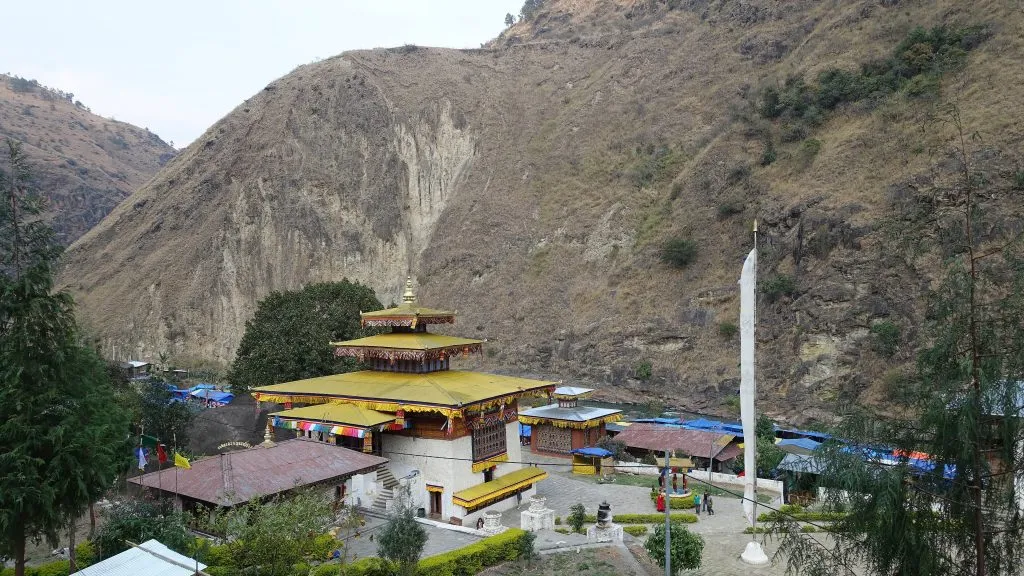
The temple
Gom Kora and its legend
Gom Kora is a temple about an hour’s drive from Trashigang, sitting below the road to Trashi Yangtse among paddy fields beside the Drangme Chhu. The name comes from gomphu, a place of meditation, and kora, circumambulation. Both describe what happens here.
According to the Trashi Yangtse district administration, Guru Rinpoche meditated under a large rock at this spot and subdued a demon that had been troubling the area. The rock, with marks said to be left by the Guru and the demon, stands beside the temple. Inside, the temple keeps relics including what is described as a garuda’s egg and chains linked to the old Doksum iron bridge.
Pilgrims climb up a narrow passage through the rock and crawl out at the top. Squeezing through is believed to test your sins: those with a heavy burden of bad actions are said to find the passage harder. It is a lighthearted moment for many visitors and a serious one for many Bhutanese.
- Guru Rinpoche meditated here
- A rock passage pilgrims crawl through
- Relics include a garuda egg
The festival
What to expect at Gom Kora
A festival of pilgrims
The Gom Kora festival is held from the 8th to the 11th day of the second month of the Bhutanese lunar calendar, usually in March or April. There are masked dances in front of the temple, as at other festivals, but the heart of Gom Kora is the kora itself. Pilgrims walk clockwise around the temple and the rock, many of them through the whole night, turning prayer wheels and chanting.
Who comes
The festival draws people from across eastern Bhutan. Families from Trashigang, Trashi Yangtse and Mongar come in their best clothes. Brokpa herders from Merak and Sakteng arrive in their red and black wool and their distinctive yak-hair hats. Pilgrims also come from across the border in Arunachal Pradesh. The mix of dress, languages and faces makes it one of the most colourful gatherings in the country.
The night
As darkness falls, the crowd grows rather than shrinks. Families camp around the temple grounds, cook over small fires and keep up the kora by torchlight. Traditionally the festival has also been a place where young people meet, and there is plenty of singing and laughing alongside the prayers. If you can, stay late into the evening with your guide to feel the atmosphere, then return to your hotel to sleep.
The dances
Masked dances are performed on the open ground in front of the temple during the day, with atsaras clowning between them. The dances are similar to those at other tshechus, and they are watched by a crowd that has often travelled a long way. Your guide can explain the meaning of each one.
Getting there
How to reach Gom Kora
| Route | How | Good to know |
|---|---|---|
| From Paro | Domestic flight to Yonphula, then drive to Trashigang | Saves several days of driving across the country |
| By road from the west | Drive across Bhutan over several high passes | A full cross-country trip of about a week, with stops in Bumthang and Mongar |
| From Guwahati, India | Enter at Samdrup Jongkhar, drive north to Trashigang | A long day's drive through forest and hills |
| From Trashigang | About an hour by road | Gom Kora is below the road to Trashi Yangtse |
Domestic flights depend on weather and seat availability. We always keep a road plan ready.
Eastern Bhutan
Why visit the east
Eastern Bhutan receives a small share of the country’s visitors, and that is a big part of its appeal. Villages are spread across steep valleys, roads wind through forest, and traditional life feels very close. People here mostly speak Tshangla (Sharchop) rather than Dzongkha, and weaving is an important craft, with some of the finest silk textiles in Bhutan made in the east.
Trashigang, the largest town in the east, sits on a hillside above the Drangme Chhu with its 17th-century dzong on a ridge. From there you can visit Gom Kora, Trashi Yangtse and its large white Chorten Kora, the weaving village of Radhi, and, with the right permits, the highland communities of Merak and Sakteng.
Accommodation in the east is simpler than in Paro or Punakha, but comfortable, and the welcome is warm. It suits travellers who have already seen western Bhutan or who want a quieter, more rural trip.
- Few visitors and traditional villages
- Famous for weaving
- Base yourself in Trashigang
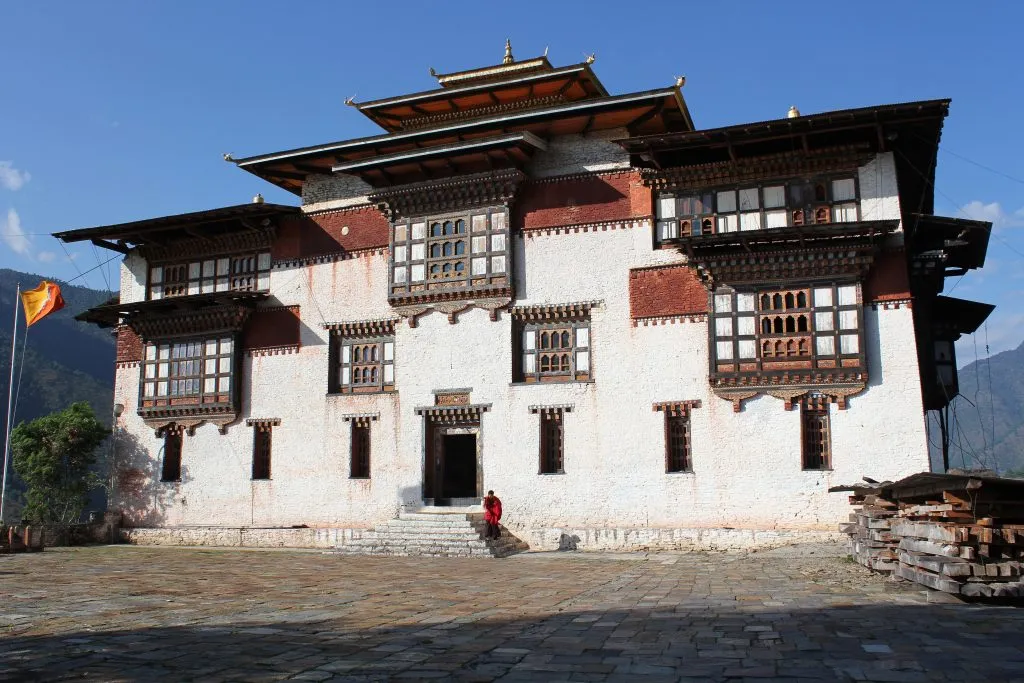
Practical tips
Before you go to Gom Kora
Fly part of the way
A domestic flight to Yonphula saves days of driving. Book it early, as seats are limited.
Stay in Trashigang
Trashigang has the best choice of hotels in the area. Gom Kora is an easy day trip.
Bring a torch
If you stay for the evening kora, a small torch helps on uneven ground.
Dress for the temple
Long sleeves and trousers or a long skirt. Spring evenings in the valley are mild, but bring a layer.
Ask before portraits
Brokpa visitors and older pilgrims may not want photographs. Your guide can ask for you.
Wear practical shoes
You will walk on dusty paths and grass, and may want to try the rock passage.
Sample plan
A trip to Gom Kora by air and road
A shorter way to see the festival using a domestic flight. A longer road trip across the country is also possible.
Day 1: Arrive in Paro
Land in Paro and rest. Evening walk in town.
Day 2: Fly to Yonphula
Domestic flight east, then drive to Trashigang.
Day 3: Gom Kora
A full day at the festival, staying into the evening for the kora.
Day 4: Trashi Yangtse
Chorten Kora and the craft school, then back to Trashigang.
Day 5: Radhi and weaving
Visit weaving families in Radhi.
Days 6 to 7: South to Samdrup Jongkhar
Drive south and exit to Guwahati, or fly back west.
Going further
Gom Kora, Chorten Kora and Merak
Spring is a special season in the east. Chorten Kora in Trashi Yangtse, a large white stupa built in the 18th century in the style of Boudhanath in Kathmandu, holds its own kora festivals in the same lunar month. Pilgrims, including many from Arunachal Pradesh, walk around the stupa in prayer. Combining the two gives you a strong sense of how important pilgrimage is to life in eastern Bhutan.
For travellers with more time, the semi-nomadic Brokpa communities of Merak and Sakteng can be reached by road and on foot from Trashigang. Their dress, houses and yak-herding life are unlike anywhere else in the country. Many of them come down to Gom Kora for the festival, so seeing them there and then visiting their villages makes a fascinating pairing.
A note on comfort
Gom Kora is not a polished event. Toilets are basic, food comes from simple stalls and family picnics, and the crowd can be dense at night. Bring tissues, hand sanitiser and water. Go with an open mind, follow your guide’s lead, and you will see a side of Bhutan most visitors never reach.
A day at the festival
How a day at Gom Kora unfolds
Morning
Leave Trashigang after breakfast and drive along the Drangme Chhu. As you come close, you see people walking along the road with bundles of food and bedding, and cars parked along the verge. Your guide will take you down to the temple, where the morning dances start on the ground in front of it.
Midday
By midday the grounds are full. Families settle on mats with rice, chillies and dried meat, and sellers offer tea, sweets and snacks. This is a good time to visit the temple, see the rock and, if you want, try the passage through it. Take your time. The queue moves slowly and people are patient and good-humoured.
Afternoon
The afternoon brings more dances and the atsaras’ jokes. It is also a good time to walk around the paddy fields and look back at the temple and the crowd from a distance. Notice the different dress: Brokpa wool, eastern silk kira, and the everyday clothes of farmers who have walked in from nearby villages.
Evening
As the light goes, the kora becomes the focus. Pilgrims light butter lamps and incense and start their circuits around the temple. Stay for an hour or two to walk with them, then drive back to Trashigang. Many Bhutanese continue walking until dawn.
Culture
Respecting a living pilgrimage
Gom Kora is first a religious event. For many of the people there, this is the most important pilgrimage of the year, and some have saved and travelled for days to attend. As a visitor you are welcome, but you are a guest at someone else’s act of faith.
Walk clockwise around the temple and the rock, never against the flow. Do not climb on the rock except through the pilgrims’ passage. Keep your voice down near the temple and do not photograph people while they pray. If you join the kora, walk at the pace of the crowd. A small offering at the temple, such as a note left on the altar, is a respectful gesture, and your guide can show you how.
Planning
When to book a Gom Kora trip
Because the east has fewer hotels, rooms in Trashigang fill up during festival week, and domestic flights to Yonphula have very few seats. Plan four to six months ahead if you can. If you prefer to drive across the country, allow at least ten to twelve days for the whole trip so you are not spending every day in the car.
Spring weather in the east is usually warm and dry in the valleys, though showers can come in. Trashigang sits lower than Paro, so days are pleasant, but higher passes on the road from Bumthang can still be cold. Pack for both.
Gom Kora festival: questions
The Department of Tourism’s tentative dates are 16 to 18 March 2027. The festival follows the lunar calendar and is held from the 8th to the 11th day of the second month.
About an hour’s drive from Trashigang in eastern Bhutan, below the road to Trashi Yangtse.
Masked dances by day, and pilgrims walking around the temple and the sacred rock through the night.
Yes, if you are able. It is narrow, so take care and follow your guide’s advice.
Fly from Paro to Yonphula, drive across the country, or enter by road at Samdrup Jongkhar from Guwahati.
Trashigang has the best hotels nearby. Gom Kora is an easy day trip from there.
It can be, if you are happy with long drives or a domestic flight and simpler hotels. Many first-time visitors combine it with a few days in Paro and Thimphu.
It depends on whether you fly or drive, the length of your trip and your hotels. The government fees are fixed. Tell us your budget and we will send our best price.
Plan a trip to Gom Kora
Eastern Bhutan needs careful planning. Tell us your dates and we will build a route by air or road and send our best price for your budget.