- Licensed Bhutanese tour operator
- Thimphu, Bhutan
Bhutan festivals · 2027 guide
Paro Tshechu 2027: five days of masked dances at Rinpung Dzong
Bhutan’s best-known festival fills Paro’s dzong and its dance ground for five days. Expected on 18 to 22 March 2027, with the giant thongdrol shown at dawn on the last day.
- 18 to 22 March 2027
- Rinpung Dzong, Paro
- Thongdrol on 22 March
18 to 22 Mar
Expected dates in 2027
5 days
Length of the festival
2,200 m
Approximate altitude of Paro
10 min
Drive from Paro airport
About the festival
The festival most visitors plan around
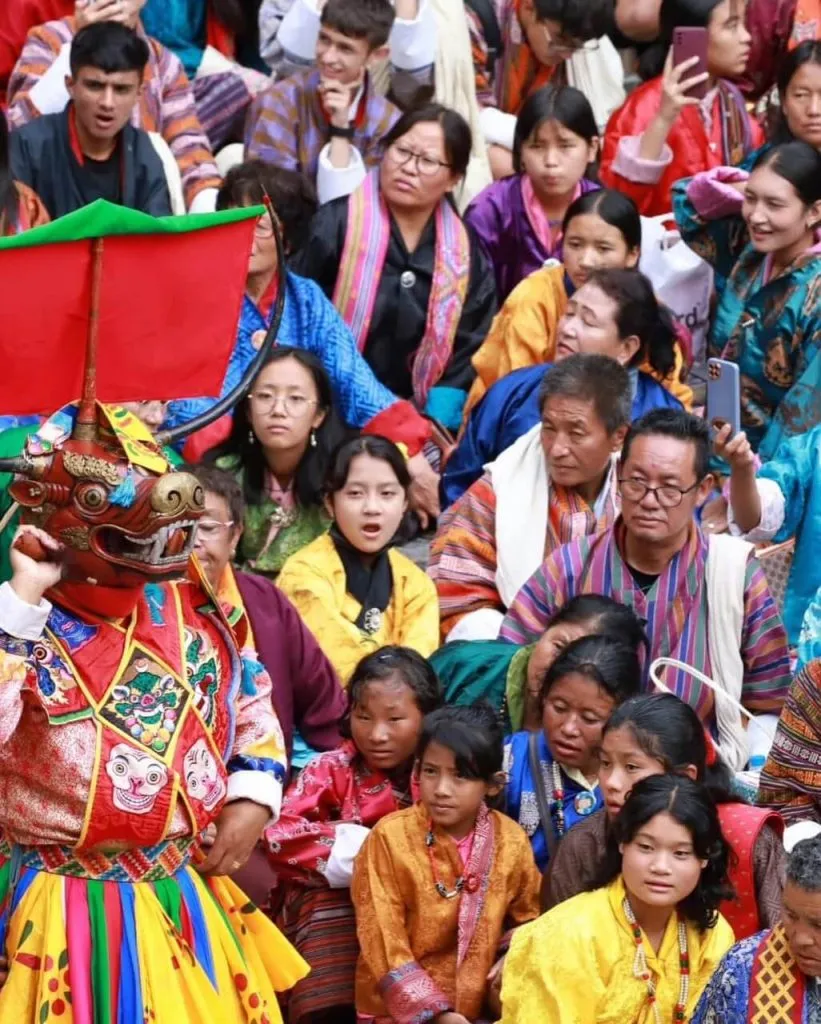
The Paro Tshechu is held each spring at Rinpung Dzong, the fortress above the Paro Chhu that Zhabdrung Ngawang Namgyel built in the 1640s. On the first day the dances take place in the dzong courtyard. From the second day they move to Deyangkha, the open dance ground below the dzong, where there is room for the crowds that come from across western Bhutan.
Paro is ten minutes from the country’s only international airport, so this is the easiest major festival to reach and the one most visitors choose. That also makes it the busiest. In 2027 the festival is expected from 18 to 22 March, when the valley is mild and the first peach and pear blossom is out. Hotels in Paro fill months ahead, so plan early.
- Ten minutes from Paro airport
- The thongdrol at dawn on the last day
- Spring weather and blossom
Festival facts
Paro Tshechu 2027 at a glance
| Topic | Details |
|---|---|
| Dates in 2027 | 18 to 22 March 2027 |
| Venue | Rinpung Dzong and Deyangkha dance ground |
| District | Paro (western Bhutan) |
| Altitude | About 2,200 m |
| Getting there | Fly into Paro; the dzong is about 10 minutes from the airport and 1 hour from Thimphu |
| Thongdrol | Shown before sunrise on the final day, 22 March 2027 |
| Weather | Mild days around 15 to 18 °C, cold mornings |
| Crowds | The busiest festival of the year; book hotels 4 to 6 months ahead |
| Entry | Free and open to visitors with a licensed guide; the SDF and visa rules apply as on any day |
Dates follow the Department of Tourism’s tentative festival list for 2027 and the lunar calendar. They can shift by a day or two, so we confirm them before you book flights.
What you will see
Highlights of Paro Tshechu
Masked dances
Black Hat, Pawo and Raksha Mangcham dances in the courtyard.
The thongdrol
A huge appliqué thangka of Guru Rinpoche, shown at dawn.
Rinpung Dzong
The 17th-century fortress that hosts the first day.
Atsaras
Masked jesters who tease the crowd and keep order.
Festival dress
Families in their best gho and kira.
Tiger's Nest
Hike to Taktsang on a day between festival sessions.
History and meaning
About the festival
Rinpung Dzong
Rinpung Dzong, the ‘fortress on a heap of jewels’, was built under Zhabdrung Ngawang Namgyel in the 1640s and still houses the district administration and the monk body. Its covered bridge, Nyamai Zam, is the classic approach on foot. Read more in our Paro travel guide.
The thongdrol
On the last morning, before the sun reaches the dance ground, monks unroll a thongdrol several storeys high on the wall above Deyangkha. Seeing it is believed to bring blessings, and it is rolled away again early in the morning, so you need to be there before dawn. Our guide to tshechu festivals explains the dances and what they mean.
Planning
How to plan your visit
Planning a Paro Tshechu trip
Most travellers arrive a day before the festival starts and add Thimphu, Punakha and the Tiger’s Nest hike. The Talo Tshechu and Gasa Tshechu end on 18 March, so you can see a village festival first and Paro after. Our 6 day Paro Tshechu tour is built around these dates.
Etiquette
How to behave at a Bhutanese festival
Festivals are religious events first, so dress as you would for a temple: long sleeves and long trousers or a long skirt, and no hats inside the dzong or temple. Never walk across the dance ground, even when it looks empty between dances. Photography is usually allowed from the edges without flash, but some rituals and inner temples are off limits; your guide will tell you when to put the camera away. Ask before taking close-up portraits.
Arrive early for a good spot, bring water, a hat and a cushion or mat, and expect to be teased by the atsaras, the masked clowns who keep the crowd in order. If someone offers you food or a cup of tea, it is polite to accept. Our guide to Bhutanese festivals explains the dances in more detail.
Trips
Build a trip around Paro Tshechu
Every trip is private, so we can time it to the festival dates and add the places nearby.
Before you go
Travel rules for 2027
Every visitor except Indian, Bangladeshi and Maldivian nationals needs a visa, which costs USD 40 and is arranged by your tour operator. The Sustainable Development Fee is USD 100 per adult per night until 31 August 2027; children under 6 pay nothing and children aged 6 to 12 pay half. Indian visitors pay INR 1,200 per night. Tourists travel with a licensed guide beyond the first checkpoint and stay in certified hotels or homestays.
The SDF does not change during festival weeks, but hotel rooms near popular festivals fill early. See our visa and SDF guide and Bhutan travel rules.
Travel with us
See Paro Tshechu on a guided tour
Paro Tshechu: questions
Expected on 18 to 22 March 2027, with the thongdrol shown before sunrise on 22 March.
No. Entry is free, but foreign visitors need a booked tour with a licensed guide and must dress modestly.
Paro hotels fill 4 to 6 months before the festival. Book flights and rooms as soon as your dates are set.
Yes. Many travellers hike on a festival day and return for the afternoon dances or the final morning.
No. Bhutanese festivals are free. You attend with your licensed guide, who also explains the dances.
The Department of Tourism lists 18 to 22 March 2027 as the tentative 2027 dates. Lunar dates are occasionally adjusted, so we reconfirm before you book flights.
See Paro Tshechu in 2027
Tell us your dates and who is travelling. We will check the festival date, hold hotels nearby and send a day-by-day plan with one price that includes the SDF, visa, guide and car.
Photo credits, via Wikimedia Commons: Gasa Dzong below snow peaks (Choying Leki Drukpa, CC BY-SA 4.0); Gom Kora temple beside the Drangme Chhu (Franzfoto, CC BY-SA 3.0).